White Deer Cave Academy
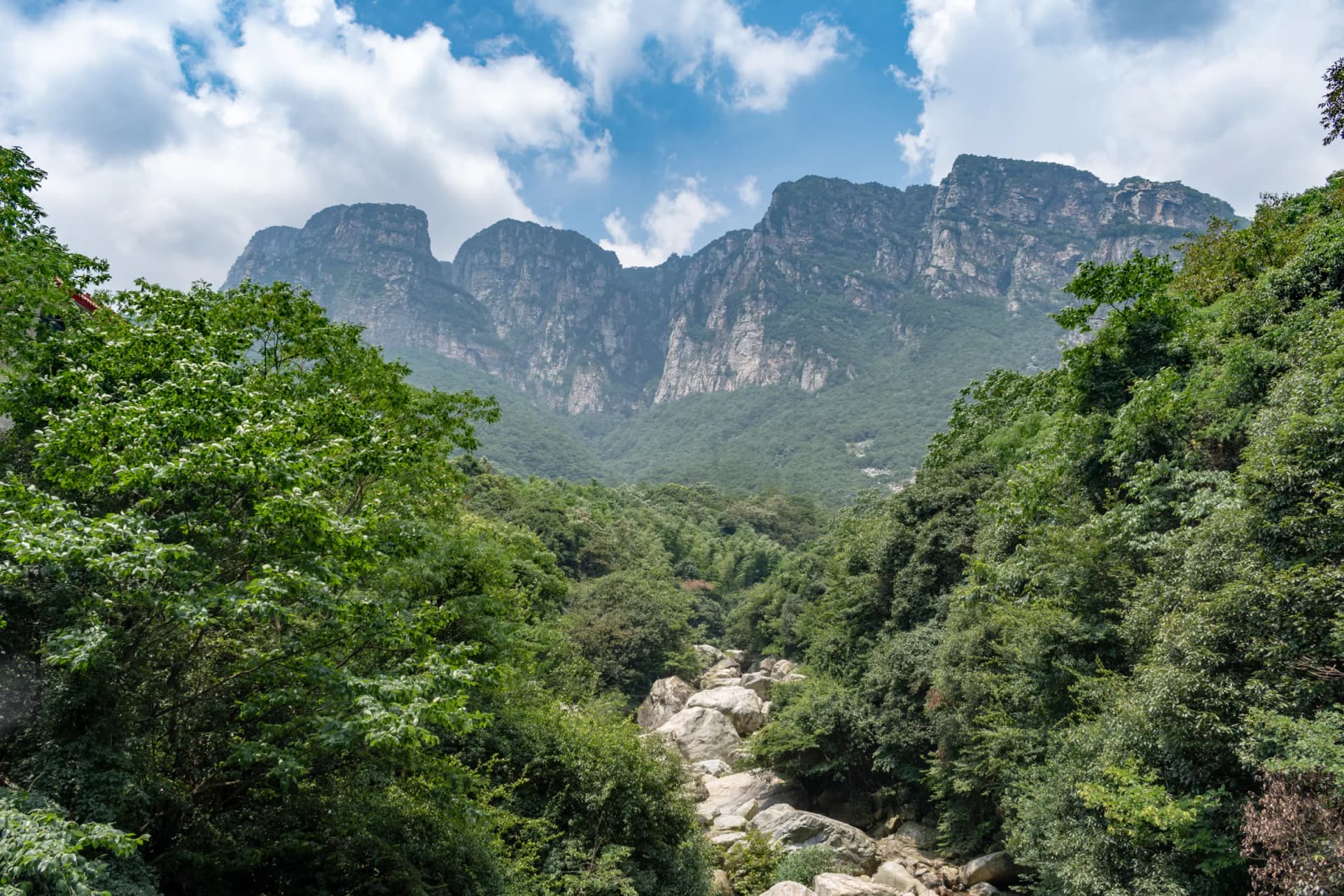
White Deer Cave Academy (白鹿洞书院) sits below Wulao Peaks on Lushan's southeastern foot. Its value is an educational institution shaped across centuries: it began around a Tang scholar's retreat, developed into an academy, and was revived by the Southern Song thinker Zhu Xi, whose teaching rules influenced later academies.
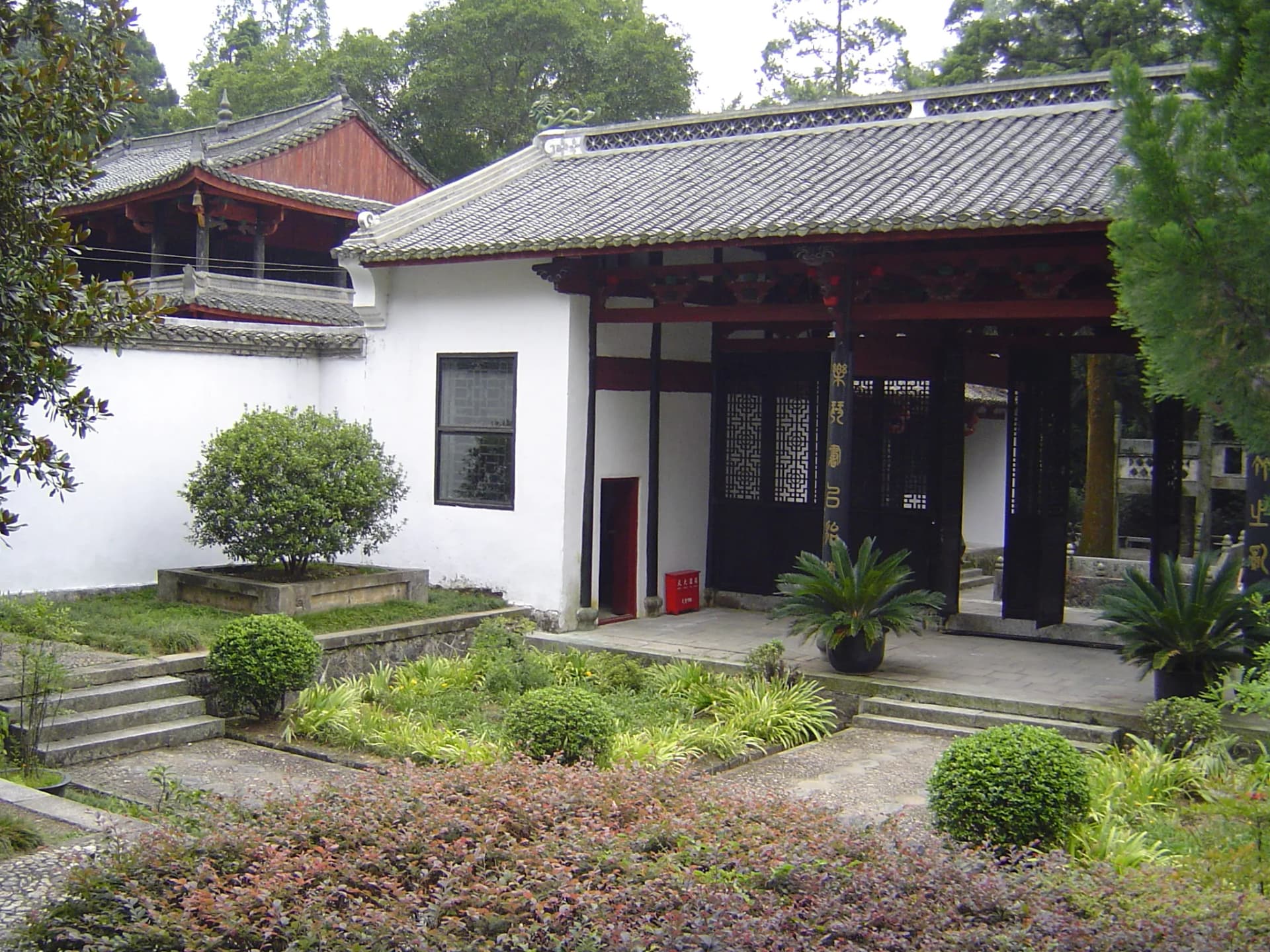
The name can mislead. Do not expect a dramatic cavern. The White Deer Cave stop is a shallow stone setting with a deer figure. The meaningful visit is the sequence of gates, teaching halls, ritual spaces, shrines, inscriptions and stream landscape that explains how learning, ethics and place were joined.
Follow one interpretation-first circuit
Allow about 1.5–2 hours for a thoughtful core visit, longer if you read Chinese or use a guide. Exact room access can change during conservation and group events, so follow the current marked direction.
- Entrance and Lingxing Gate: establish that the site contains several courtyard groups rather than one schoolroom. Notice the shift from mountain road to a formal scholarly enclosure.
- Lisheng Hall: read this as a ritual and Confucian space. The academy formed moral conduct as well as examination knowledge.
- Minglun Hall and the academy rules: this is the intellectual centre. Look for the White Deer Cave Academy Instructions associated with Zhu Xi and ask what duties they placed on student, teacher and community.
- White Deer Cave: see the stone deer and connect the name to the Tang scholar Li Bo, who was traditionally linked with a white deer here. Keep the stop short; it is a symbol, not a natural cave excursion.
- Ziyang, shrines and stele areas: compare teaching, commemoration and later layers instead of assuming every building dates from one dynasty.
- Guandao Stream and the quieter edge: finish by observing how flowing water, forest and enclosed courtyards made the academy a place for study away from an urban centre.
Recent visitor reports mention a free internal transfer to the academy gate and QR or rented audio interpretation. Treat both as day-specific services. Ask at the visitor centre before walking past the desk, and download any Chinese text while signal is reliable.
Bring translation or a human guide
Without interpretation, the site can become a pleasant but repetitive series of white walls and dark timber halls. A good guide should explain four questions:
- why Li Bo and the white deer matter to the name;
- what Zhu Xi changed when he revived the academy;
- how the instructions connect learning with conduct;
- why the site continued through later dynasties despite repeated rebuilding.
Photographing a text is not the same as understanding it. Use camera translation for labels, but keep a short note of names in Chinese: 朱熹 (Zhu Xi), 白鹿洞书院揭示 (Academy Instructions), 明伦堂 (Minglun Hall) and 礼圣殿 (Lisheng Hall). Do not touch, rub or trace old steles unless an explicit supervised activity permits it.
Keep it separate from Guling's core circuit
The academy is about 12 km from Lushan City at the mountain's eastern foot. It is not a walk from Guling Town, and descending from the core only to return uphill wastes much of the day. Winding roads can also cause motion sickness.
Lushan City opened an around-the-mountain tourist connection linking the North Gate, East Gate, White Deer Cave Academy, Guanyin Bridge and Xiufeng, but current departure times, capacity and ticket recognition must be checked on the day. Recent visitors report that buses can be sparse and that a private driver simplifies a foot-of-mountain circuit. Confirm the return before entering, not after the last courtyard.
The strongest pairings are:
- Academy + Sandiequan via East Gate, only after resolving the waterfall's one-way effort and exit;
- Academy + Xiufeng, for a cultural stop and a separate landscape walk;
- Academy on arrival or departure day, with luggage and driver already arranged.
Do not combine it with the full Lushan core route. Visitors who tried to collect Sandiequan, the academy, Xiufeng and other lower sites in a single day found the plan exhausting.
Verify admission, passport and transport
Open the exact White Deer Cave Academy shelf on Trip.com, then check the official Lushan notice page or call the listed ticket line 0792-8793902. Confirm:
- whether your Lushan admission includes the academy on the selected dates;
- passport scanning or manual registration for a foreign visitor;
- opening, last entry and any conservation or study-group closure;
- the internal shuttle, guided tour and audio-guide options;
- the exact ring-bus stop, final return and refund rule;
- whether a package actually returns to your hotel, rail station or mountain gate.
Online claims that the academy is “free” often refer to a promotion, a combined Lushan ticket or a visitor category. Do not make the journey on that assumption. The exact dated product and official gate policy control.
Protect the quiet setting
Wear grippy shoes: courtyards, stone thresholds and streamside paths can be wet. The core is compact, but step-free access to every historic threshold cannot be assumed. Ask for the most accessible route before boarding any shuttle.
Keep voices low around lectures and study groups, do not stage loud costume shoots in active teaching spaces, and never enter closed rooms for a photograph. The academy rewards slow reading. If you only have 20 minutes, save it for a future visit rather than reducing a major intellectual landscape to the deer statue.