He Garden
He Garden feels different from Yangzhou's other private gardens because domestic rooms and garden circulation remain tightly connected. Two-level corridors create changing views, while Pianshi Mountain House compresses rock, water and framed openings into a more theatrical sequence.
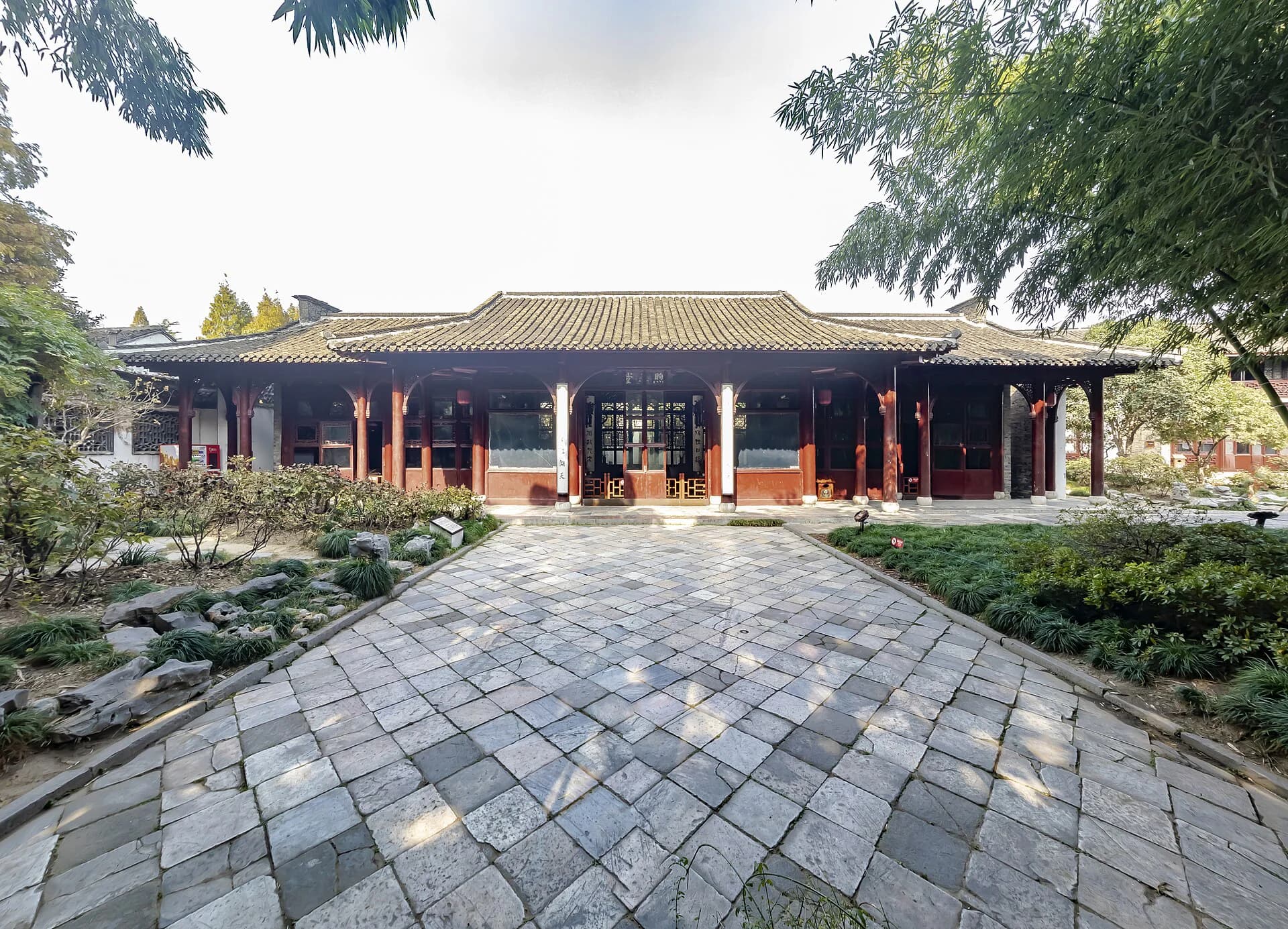
Photo: ScareCriterion12 · Source · CC BY-SA 4.0
Late-Qing residence and layered corridors
Begin by understanding the house before rushing to the rockery. Residential rooms, courtyards and Chinese/Western details show how a wealthy late-Qing household organised movement, privacy and display. The elevated corridor then lets the same spaces be read from a second level.
Give the visit about two hours
One visitor allowed 1.5–2 hours for He Garden. Use that as a starting allowance for the residence, corridor and rockery, adding time if you want detailed interpretation or encounter queues. Choose a few spaces to examine closely instead of repeatedly crossing the garden for photographs.
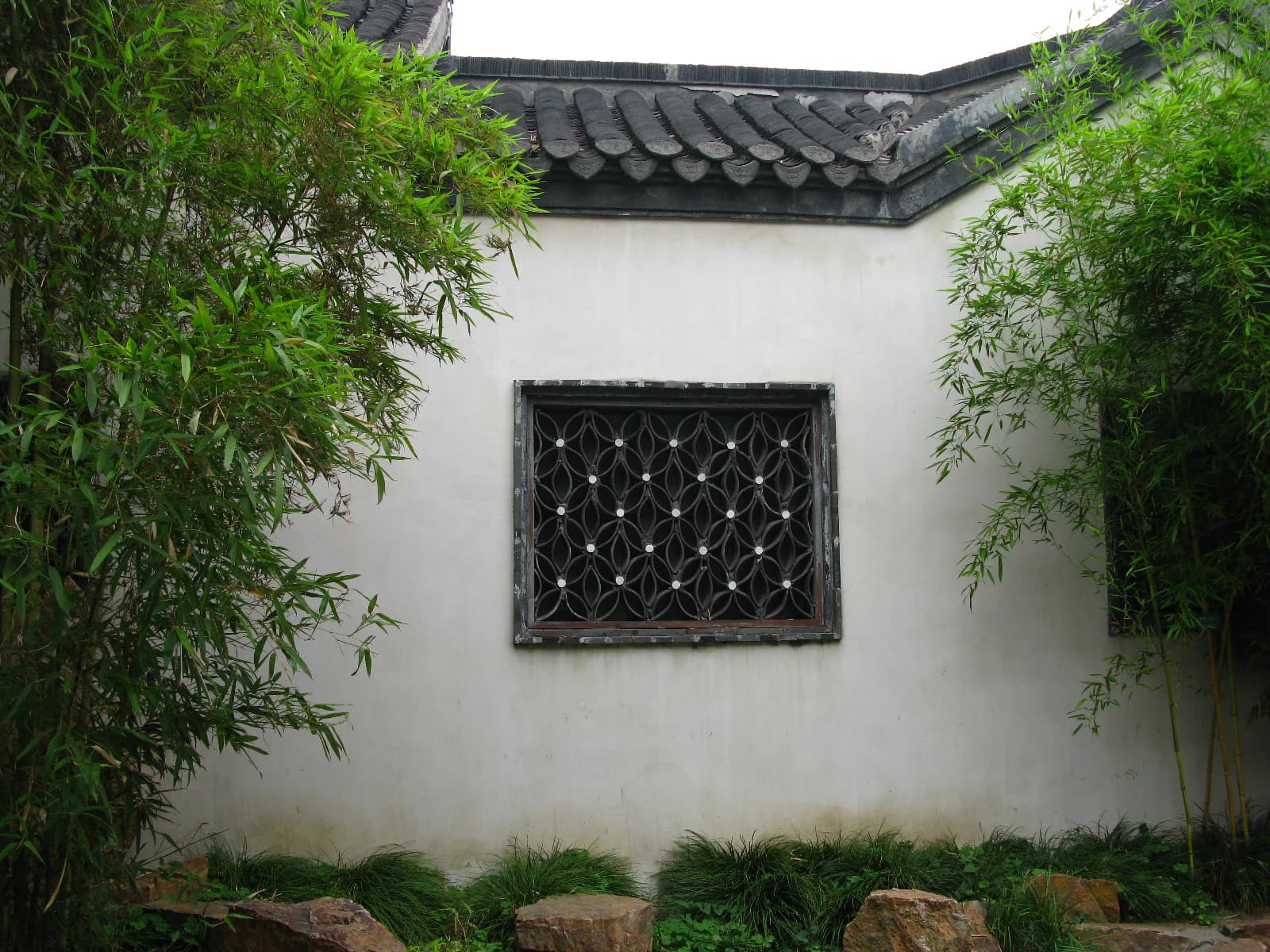
In the residence, compare carved wood with the different window treatments rather than looking only at room size. In the garden, choose one pond view at ground level and, where the upper corridor is open, look at the same scene again from above. The changing height makes the relationship between house and garden easier to understand.
Pause at a corridor turn or framed opening, then move aside so others can pass. Finish with Pianshi Mountain House while you still have energy for its smaller-scale views. If stairs are a concern, ask for the ground-level alternative at the entrance and concentrate on courtyard, pond and window compositions rather than treating the upper circuit as essential.
Follow the house-garden sequence
Move from the residential halls into the garden and covered-corridor system. Watch how doors, windows and changes in height repeatedly reframe the pond and buildings. This sequence is more useful than pursuing every room name.
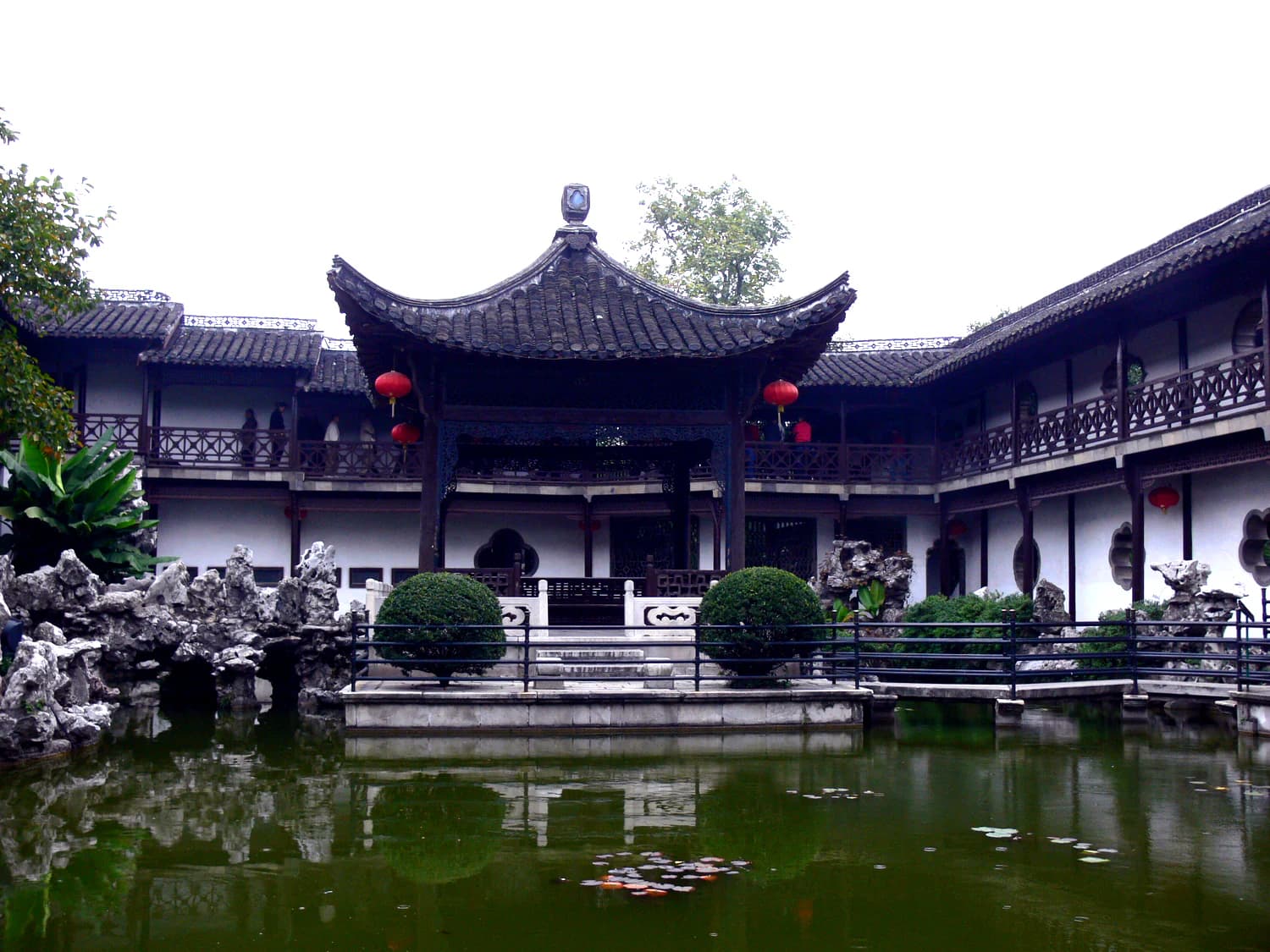
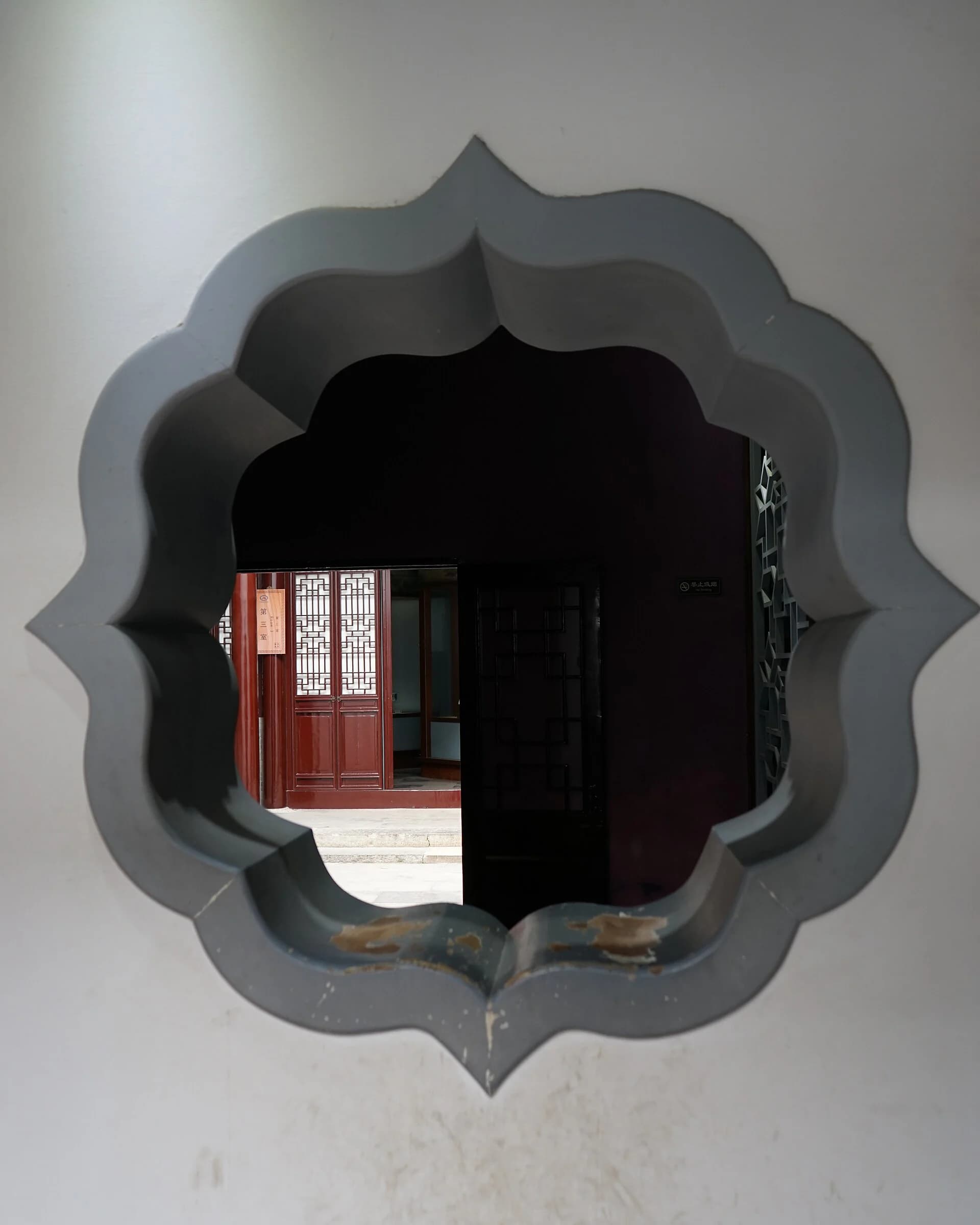
Photo: 大买家 · Source · CC BY-SA 4.0
Read Pianshi rockery and framed views
Pianshi Mountain House is the interpretive core: rock creates apparent depth, narrow passages change scale, and windows edit the view. Pause at different heights instead of treating the rockery as a shortcut between rooms.
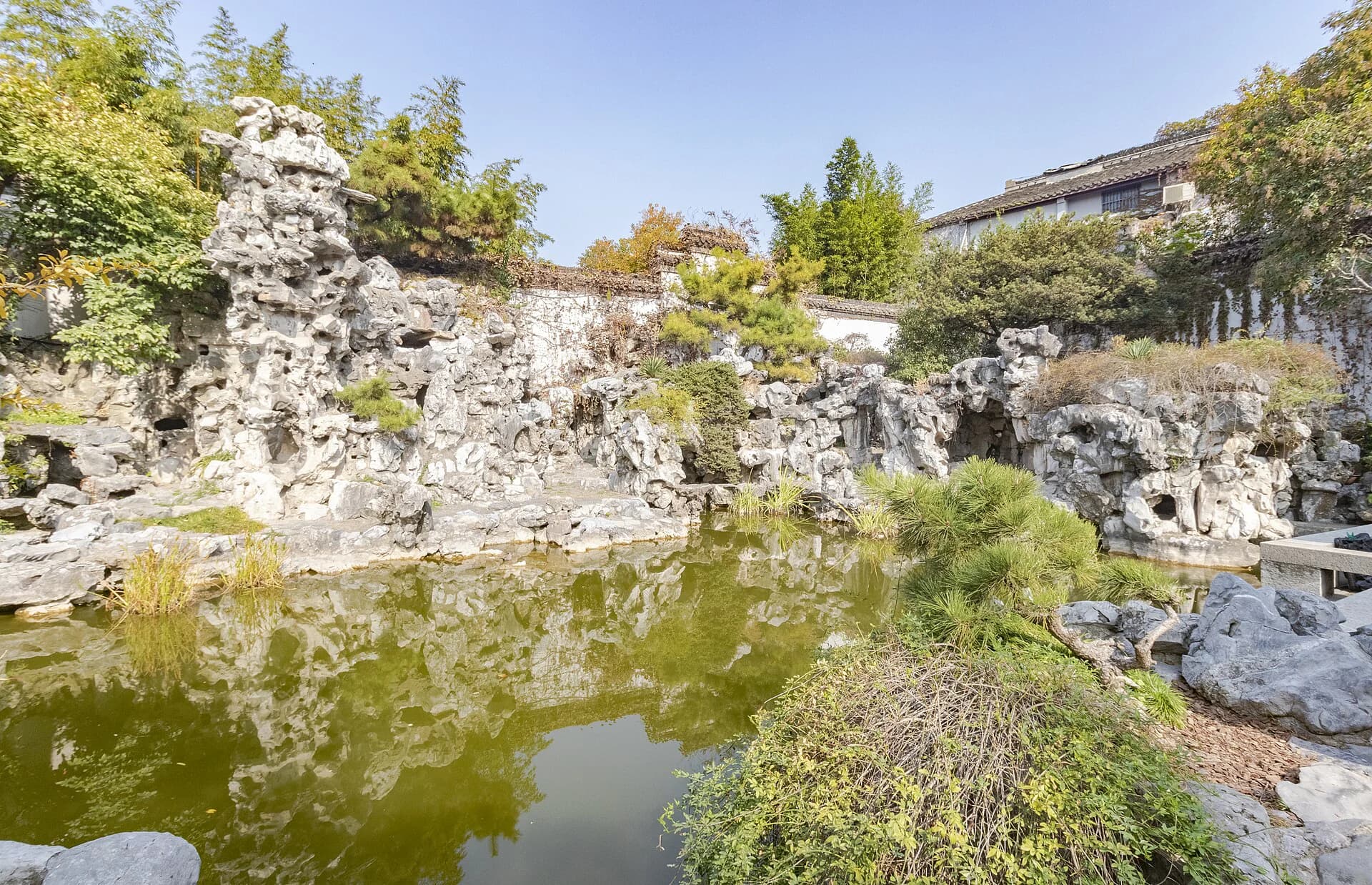
Photo: ScareCriterion12 · Source · CC BY-SA 4.0
Continue toward Pishi Street
The Pishi Street visitor-centre area was about 0.8 km / 11 minutes on foot from He Garden in the dated model. Use it as a public old-city continuation for cafés, small shops and an evening walk, checking current businesses rather than following a fixed list.
Dongguan Street and Ge Garden are also reachable, but they form a different old-city branch.
Tickets, open rooms and access
Check the exact He Garden admission on Trip.com. Confirm the date, daytime versus night resource, entrance, last admission, accepted passport, redemption and any room closures.
The two-level circulation is a strength but also creates stairs and uneven surfaces. Ask about the current accessible route when needed; do not assume every historic room or upper corridor is open.
Choose He versus Ge
Choose He for layered residential architecture, corridors, framed views and Chinese/Western domestic detail. Choose Ge Garden for bamboo, four-season rockery thinking and the Dongguan Street continuation.
Visit both only with a full garden-led day. Otherwise, one garden plus morning tea or the Grand Canal Museum creates a more varied Yangzhou experience.