China Grand Canal Museum
The museum turns the Grand Canal from a line on a map into a human system of engineering, vessels, trade, food, cities and changing landscapes. Its contemporary architecture and substantial permanent galleries deserve a dedicated half day rather than a rainy-day afterthought.
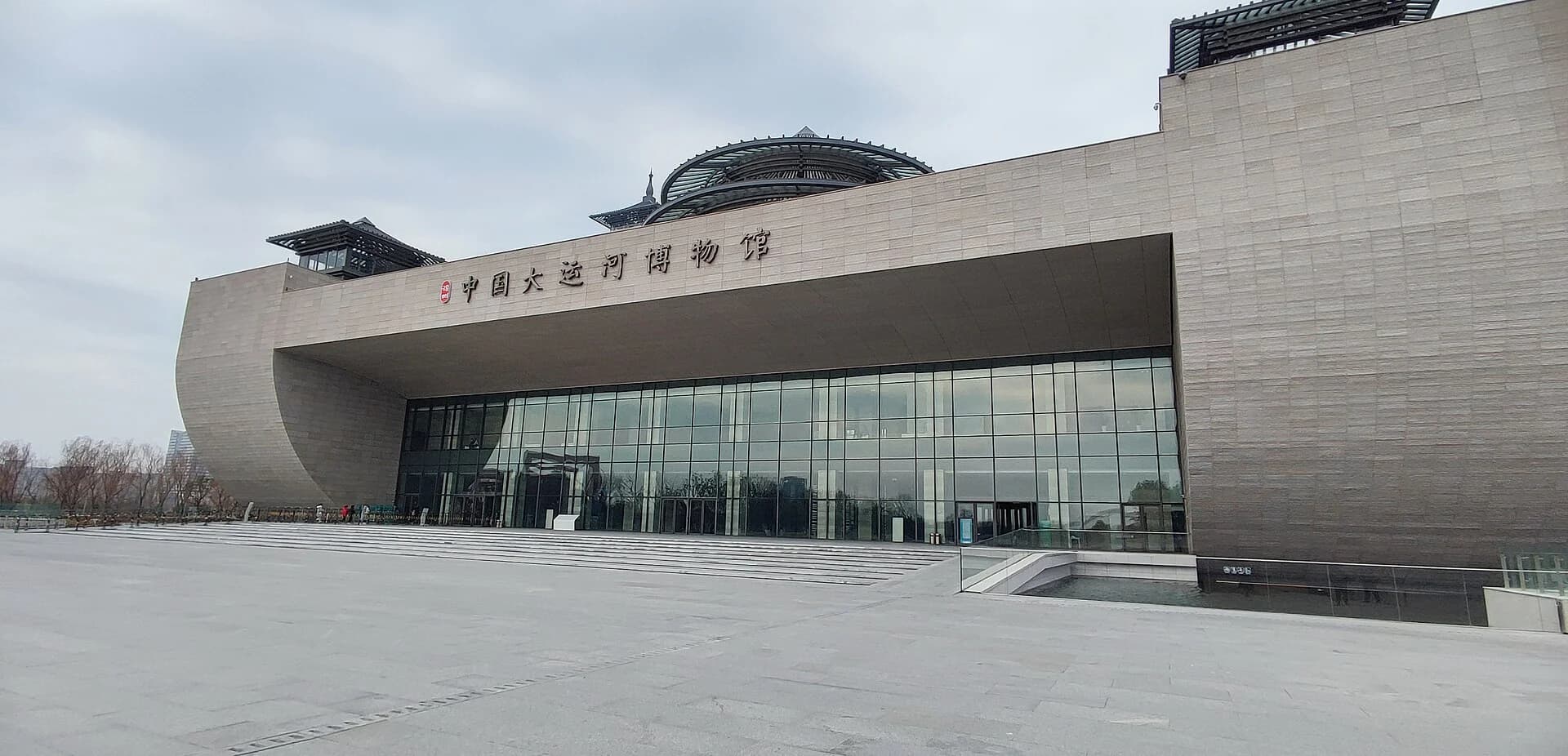
Photo: Fool Piasar · Source · CC BY-SA 4.0
Understand the Grand Canal at Sanwan
Start with the canal's geography and historical development, then follow the relationship between water control, transport and urban life. The museum explains why Yangzhou's gardens, salt-merchant residences and canal streets belong to a much larger network.
Ordinary permanent and collection-based thematic exhibitions are free. Some temporary exhibitions, events and the separate tower can have their own access.
Choose architecture, permanent galleries or depth
Choose a two-to-three-hour first visit for the building and main canal-history sequence. Choose a deeper half day for vessels, regional life, ecology or temporary layers. Families can prioritize the most interactive permanent rooms rather than pursuing every floor.
Several ordinary visitors found an all-gallery visit exhausting. Selection improves the museum.
A selective museum route
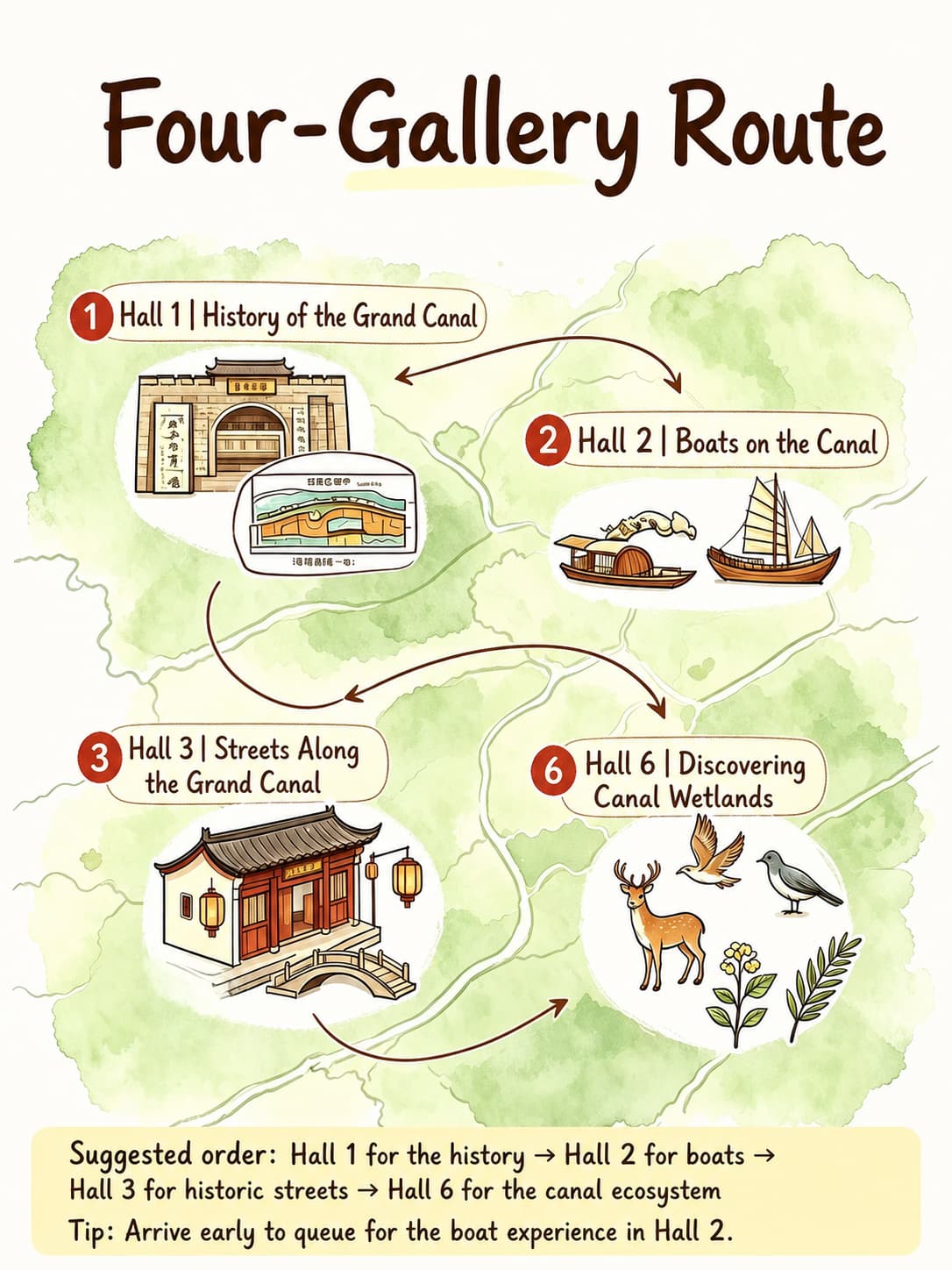
For a first visit, use Hall 1 → Hall 2 → Hall 3, adding Hall 6 if children still have energy. This gives the canal a clear story: how it developed, what travelled along it, how people lived beside it, and what lives in its wetlands. Allow around three hours for this selective visit, including pauses; queues and interest in individual displays can extend it.
- Hall 1 — the canal's history. Start with the overview map and trace where Yangzhou fits into the waterway. Then choose a few displays about water control and transport to understand how the canal worked. With children, make the task concrete: find Yangzhou, identify a connected city, and look for one example of how people managed the water. Leave time for the next galleries instead of reading every label here.
- Hall 2 — boats on the canal (运河上的舟楫). Compare the vessel models before joining the immersive shafei boat experience. Look at differences in hull shape and carrying space: the useful question is what each boat was built to do. The replica boat and projected scenery add a sense of travelling along the canal, but this is an indoor museum experience. If its queue would consume the rest of your visit, the models still make this a worthwhile stop.
- Hall 3 — canal street life (因运而生——大运河街肆印象). Walk through the recreated commercial street with the boats in mind: what would arrive by water, and who would sell or use it? This is a change of pace from display cases, with shopfronts and street scenes to explore. Treat shopping and snacks as optional; you can enjoy the setting without making purchases.
- Hall 6 — wetlands (运河湿地寻趣), for families. Finish with animal and plant displays and the interactive elements that are available. Ask children to choose one wetland creature and explain how it depends on the water. This gives the visit an ending rather than turning it into a search for every remaining room.
Add one theme, or take a break
Adults who want more can choose the world-canals or canal-crafts displays according to their interests. The immersive River Love (河之恋) film is another possible finish when a session is available; check the current programme before waiting. It need not be an extra compulsory stop after the four-gallery route.
Pause after the street-life gallery to decide whether everyone wants another room. Use the museum's current signs to locate seating, drinking water and food rather than pushing through hungry. Keep some energy for the walk out and the Sanwan surroundings; visiting every gallery and then adding the tower makes a substantially longer outing.
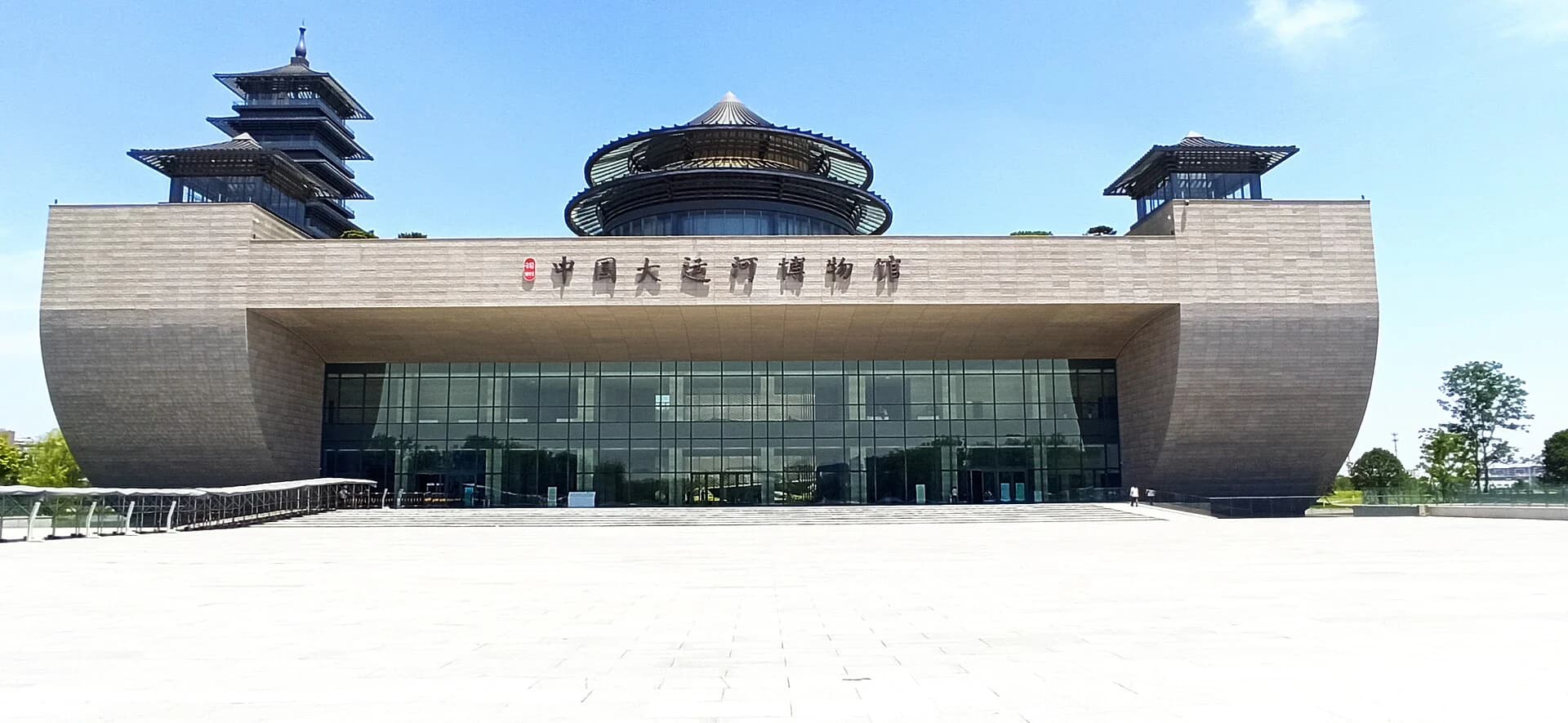
Photo: Cz2018764171 · Source · CC BY-SA 4.0
Temporary films, roof or tower access and paid experiences should be treated as optional current products.
Reservation and foreign-passport workflow
The current official process requires a timed real-name reservation through the museum's WeChat account and explicitly accepts foreign passports. Reservations open seven days ahead at 19:00 under the July 2026 notice. Bring the same original passport used to reserve.
Check the exact visit date because release time, summer hours and inventory can change. Ordinary opening is Tuesday–Sunday, 09:00–17:00 with last admission at 16:00, closed Monday except statutory holidays.
Reach the south-city museum
This is a Sanwan destination, not part of the old-city garden walk. The dated road models placed it about 11.8 km / 24 minutes from Yangzhou Station, 14.4 km / 29 minutes from Yangzhou East, and 4.9 km / 15 minutes from Wenchang Pavilion.
Use the exact museum entrance and leave a return buffer; temporary evening transport is not a year-round service.
Pair it without backtracking
Pair the museum with a slower arrival/departure layer or Sanwan, not with Slender West Lake and both private gardens. He Garden was 6.7 km / 18 minutes by road away in the dated model, so it is a deliberate transfer.
Ordinary museum admission is free. If you want interpretation, consider the optional English Grand Canal Museum guide after confirming the language, meeting point, reservation responsibility and whether transport is included.