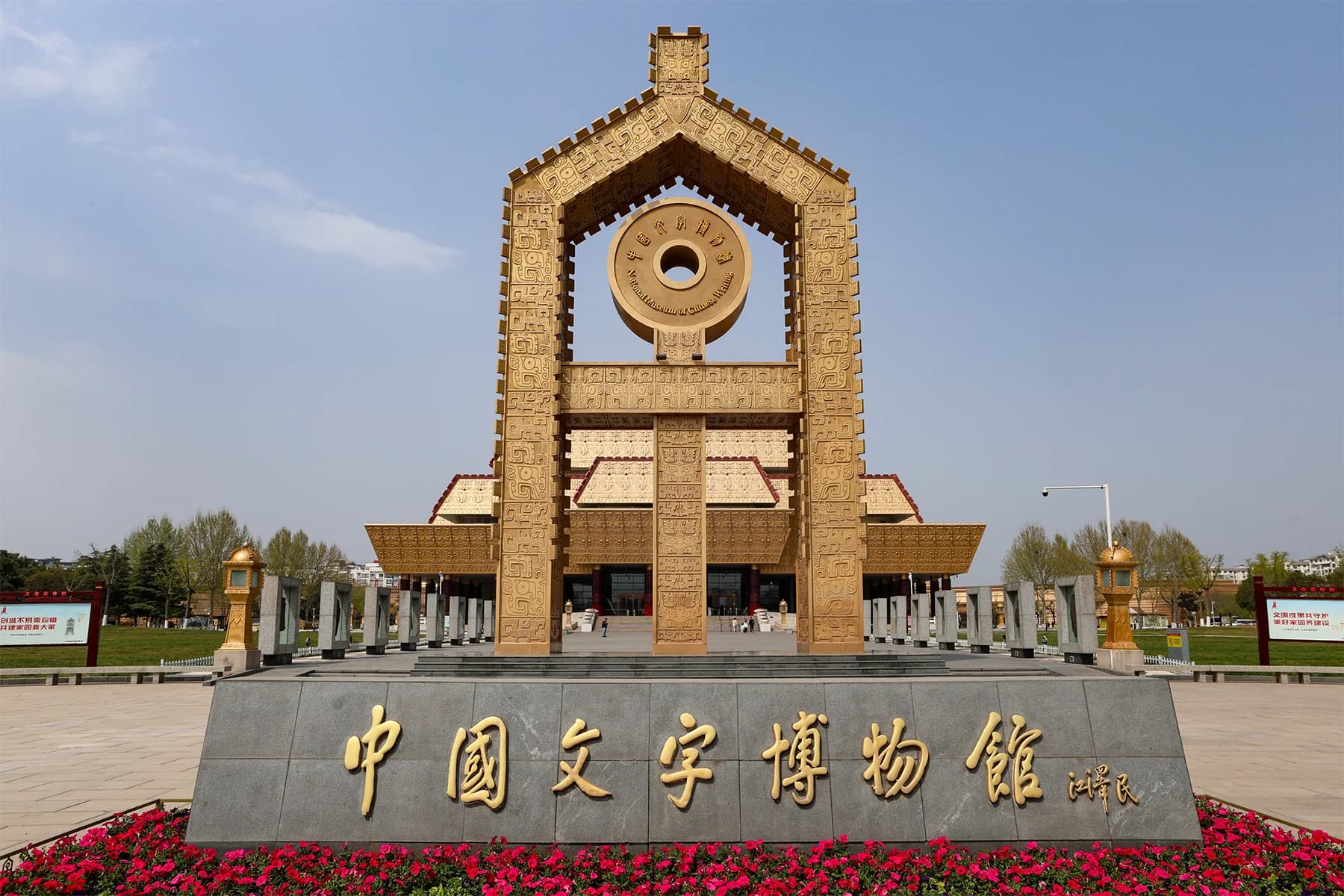
National Museum of Chinese Writing
The National Museum of Chinese Writing (中国文字博物馆) is not simply a second oracle-bone museum. It follows how Chinese writing changed with material, administration and society—from divination records and bronze inscriptions to later scripts, dictionaries, calligraphy and minority writing systems. It is free for the core buildings, intellectually dense, and best approached with a chosen question rather than a mission to read every label.
Choose a visit before entering
- Core story, 90–120 minutes: concentrate on Xuanwen Hall's history of Chinese writing and oracle-bone discovery displays.
- Selective full visit, about 2.5 hours: add one later-writing theme in Xuanwen Hall, then the folk-custom and dictionary material in Huiwen Hall.
- Family visit: make the paid, digital-interactive Bowen Hall the priority, then add only a compact pass through the core exhibition. It is a separate product, not part of the free-building promise.
Recent independent visitors commonly report that a selective two-and-a-half-hour visit feels substantial. A complete label-by-label circuit can take much longer and creates avoidable museum fatigue.
The most coherent route
Begin in Xuanwen Hall with the discovery of oracle bones, then follow the main development of character forms. Pause over a few examples: ask how bone, bronze, bamboo, silk and paper change what can be recorded and who can read it. If energy remains, choose either minority scripts or the movement of Chinese writing beyond China rather than collecting every gallery.
Move to Huiwen Hall for folk customs around characters, dictionaries and calligraphy. These themes are more rewarding after the chronological spine is secure. Some exhibits require more reading than visual spectacle, and the quality of English support can vary; a camera-based translation app helps, but respect any current photography restrictions.
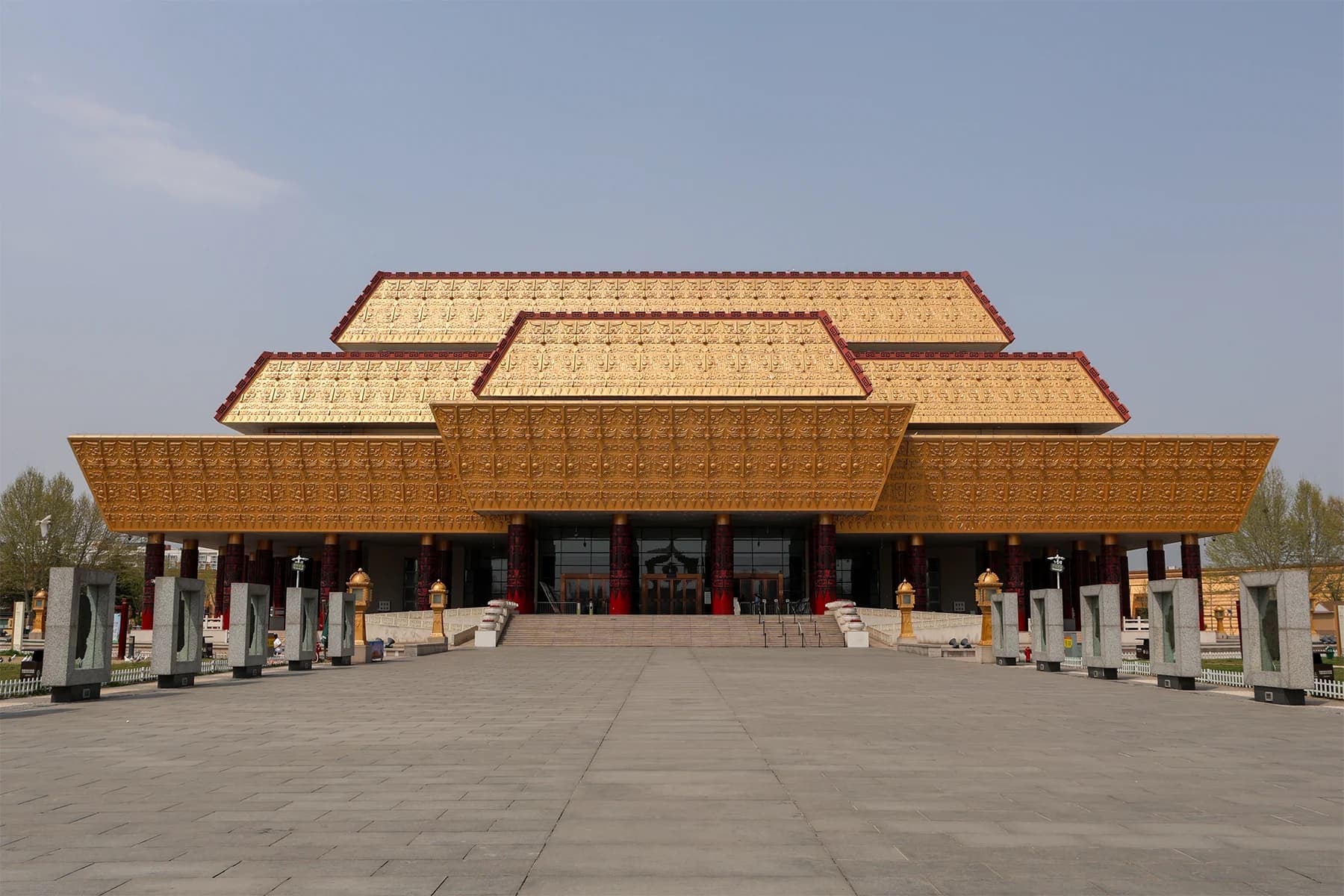
Photo: Windmemories · Source · CC BY-SA 4.0
Free admission, reservation and passport
The museum's official visitor guide currently states that Xuanwen Hall and Huiwen Hall are free with a real-name reservation, while Bowen Hall requires a paid ticket. Individual visitors can reserve through the official website or WeChat channel from one to three days ahead, including the same day when capacity remains. The official document list includes passports and foreign permanent-residence identity cards.
Use the same original passport at entry. Check the confirmation for whether you should present the document, a QR code or both; do not rely on a screenshot copied from another traveler.
The current general schedule is 09:00–17:00 with last entry at 16:30, closed Mondays except public holidays. Xuanwen Hall's first and second floors currently extend to 20:00, with evening entry ending earlier; Huiwen Hall keeps the daytime schedule. Holiday notices and maintenance override this pattern, so confirm the current announcement before building an evening plan.
How it differs from Yinxu
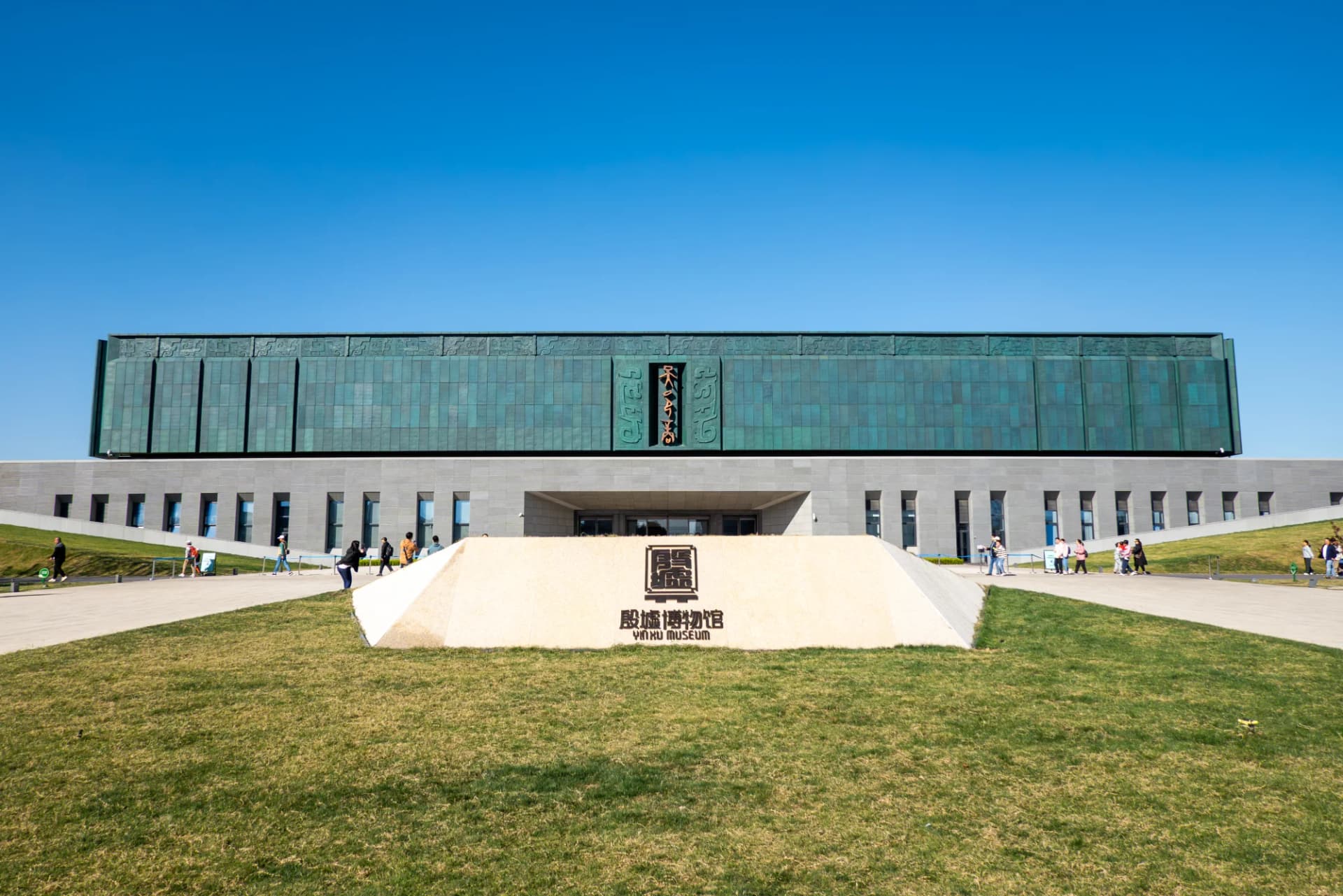
Yinxu is place-led: the Shang capital, excavated objects, royal figures and archaeological sectors. This museum is idea-led: it lets you compare writing across periods and communities. They complement each other, but two deep museum visits on the same day are exhausting. If time is short, make Yinxu the main day and use this museum as a focused 90-minute introduction or a separate half-day.
There is no decision-critical affiliate ticket for the free core visit. Reserve through the official museum channel; pay only if you intentionally choose Bowen Hall or another clearly described optional service.
Return to the Anyang guide or continue with the archaeology-led Cao Cao Mausoleum Museum.