Cao Cao Mausoleum Museum
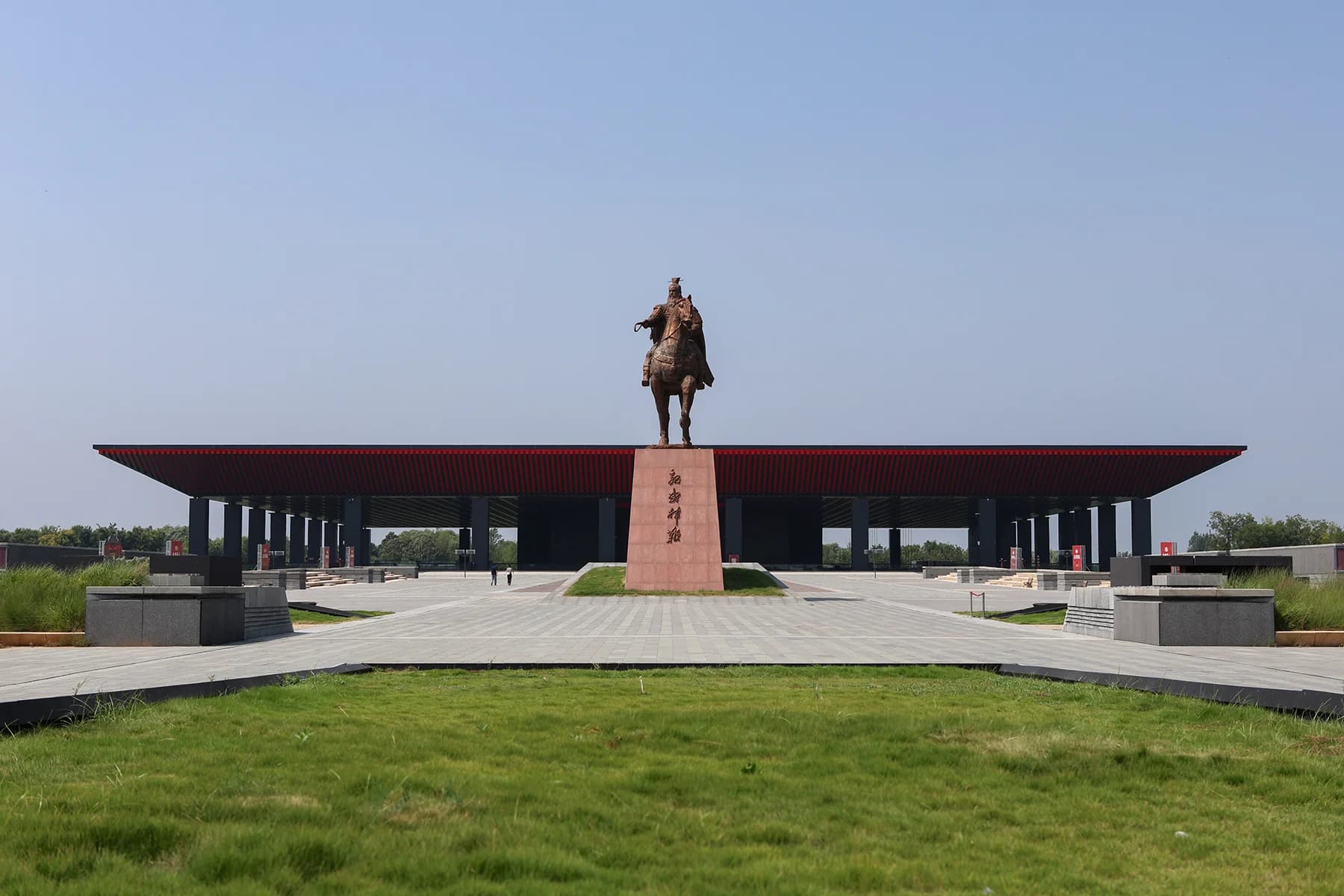
Cao Cao Mausoleum Museum (曹操高陵遗址博物馆) is a focused archaeology stop, not a sprawling Three Kingdoms theme park. It presents how the tomb was excavated and attributed, what the burial structure reveals, and how evidence differs from the later literary Cao Cao familiar from the Romance of the Three Kingdoms. The museum is outside central Anyang, so transport—not gallery size—is the decisive planning issue.
Is it worth the detour?
Choose it if you are interested in excavation, historical method or the transition from the Han to the Wei period. Allow about 1–1.5 hours inside, plus the outdoor walk and a generous road-transfer buffer. Travelers whose priority is Shang archaeology should first protect enough time for Yinxu; this is a different period and a secondary city excursion.
The site opened to the public in 2023 and has since received a national 4A rating. The official Yindu district description divides it into the museum, the archaeological site and a companion-tomb area, with nearly 500 displayed objects and a full-scale reconstruction used to explain the tomb structure.
A useful sequence inside
Start with the discovery and identification evidence. Look for how archaeologists connect inscriptional, structural and object evidence rather than accepting a famous name as the conclusion. Continue through the historical sections on Cao Cao's political, military and literary life, keeping contemporary evidence separate from later reputation.
Then study the tomb plan and reconstruction before approaching the surviving site. This order makes corridors, chambers and robbed or fragmentary finds easier to read. The reconstruction is interpretive: it helps visualize space but should not be mistaken for an intact original interior.
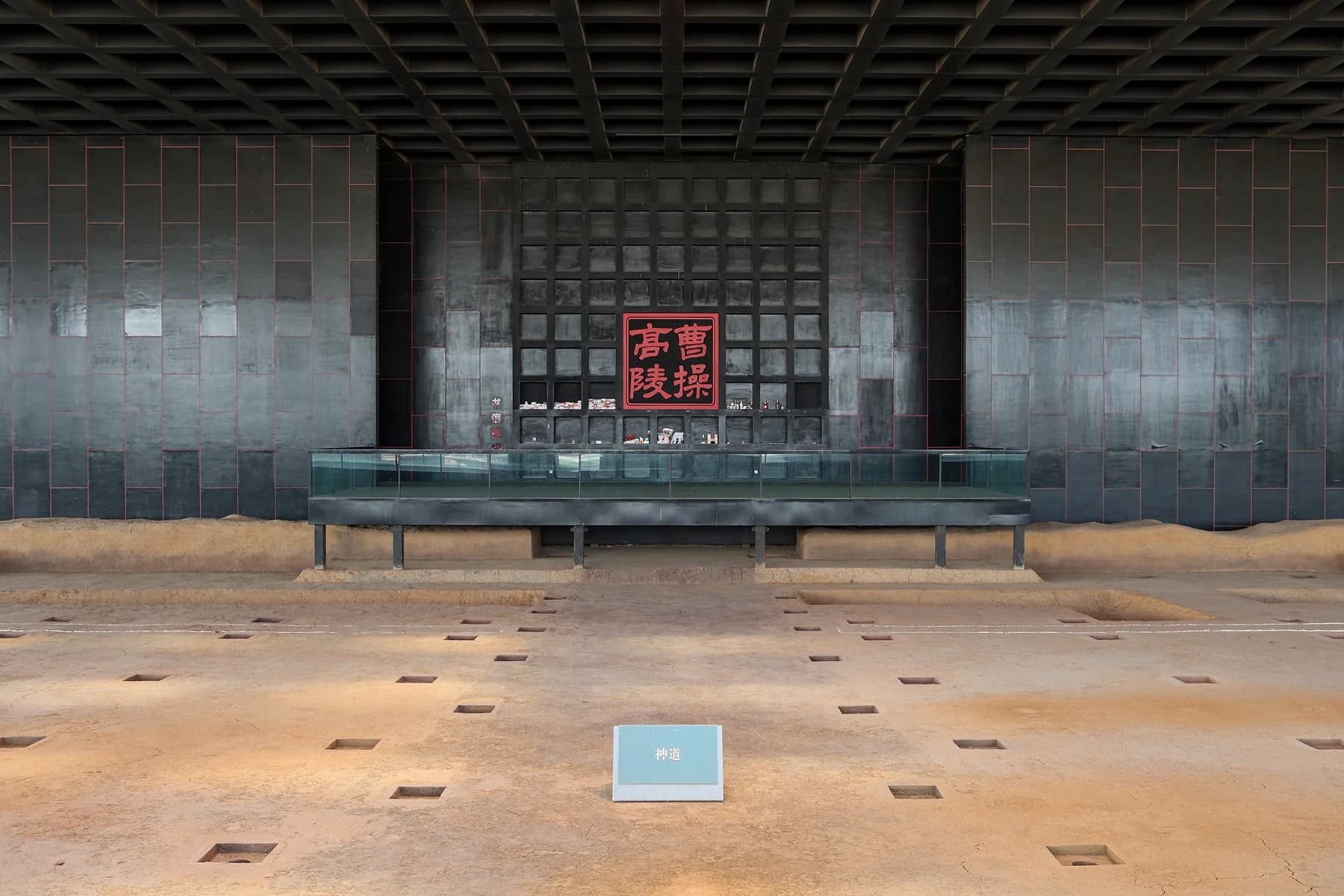
Photo: Windmemories · Source · CC BY-SA 4.0
Finish by asking which claims the objects support and which belong to literature, popular culture or current internet jokes. The much-shared offerings and memes can be amusing context, but they are not a reliable substitute for the archaeological narrative and may not be permanent displays.
Getting there and back
The museum lies beyond central Anyang. A taxi or hired car gives the simplest control over the return. Arrange the pickup or keep a working ride-hailing and Chinese phone/payment setup; do not assume an empty taxi will be waiting at closing time.
Recent visitor reports describe a Yinxu-linked shuttle or combined product taking roughly half an hour from the palace sector, but routes and departures can change. Trip.com currently lists some Yinxu combinations that may include Cao Cao's mausoleum. Check the dated Yinxu product only if it explicitly names the Cao Cao site, included Yinxu sectors, shuttle, validity and final return. A Yinxu ticket alone must not be assumed to cover this museum.
Admission and practical checks
Use the official Yindu district attraction page for site identity and watch the district's current notices for opening, reservation, passport handling and weather controls. Promotional events—such as temporary free-entry activities—are date-specific and should never be treated as the normal admission rule.
Part of the approach is outdoors and exposed. In heat, rain or strong wind, carry water and protection and expect the walk between the museum and tomb area to feel longer. If the official channel reports weather restrictions, it overrides any third-party listing.
Pairing the visit
With a private car, Cao Cao can follow a selective Yinxu museum-and-palace morning. Without confirmed through-transport, give it a separate half-day and keep the National Museum of Chinese Writing for another central-city block.
Return to the Anyang guide for the wider route.