Hebei Museum
Hebei Museum (河北博物院) is the strongest first stop for understanding the province beyond Great Wall clichés. Its permanent galleries connect the Zhongshan kingdom, the Han tombs at Mancheng, Northern Dynasties murals, Quyang sculpture and regional ceramics. Admission is free, but the collection is large enough that an unfocused visit becomes tiring.
Set aside 2.5 to 3.5 hours and choose one historical spine. Recent visitors consistently find three hours useful; the museum's broad “three to five hours” recommendation is realistic only if you enjoy reading dense displays.
Start at the top of the South Wing
For a first visit, begin on the third floor of the South Wing and descend. This keeps the narrative roughly chronological and reduces repeated lifts and corridors.
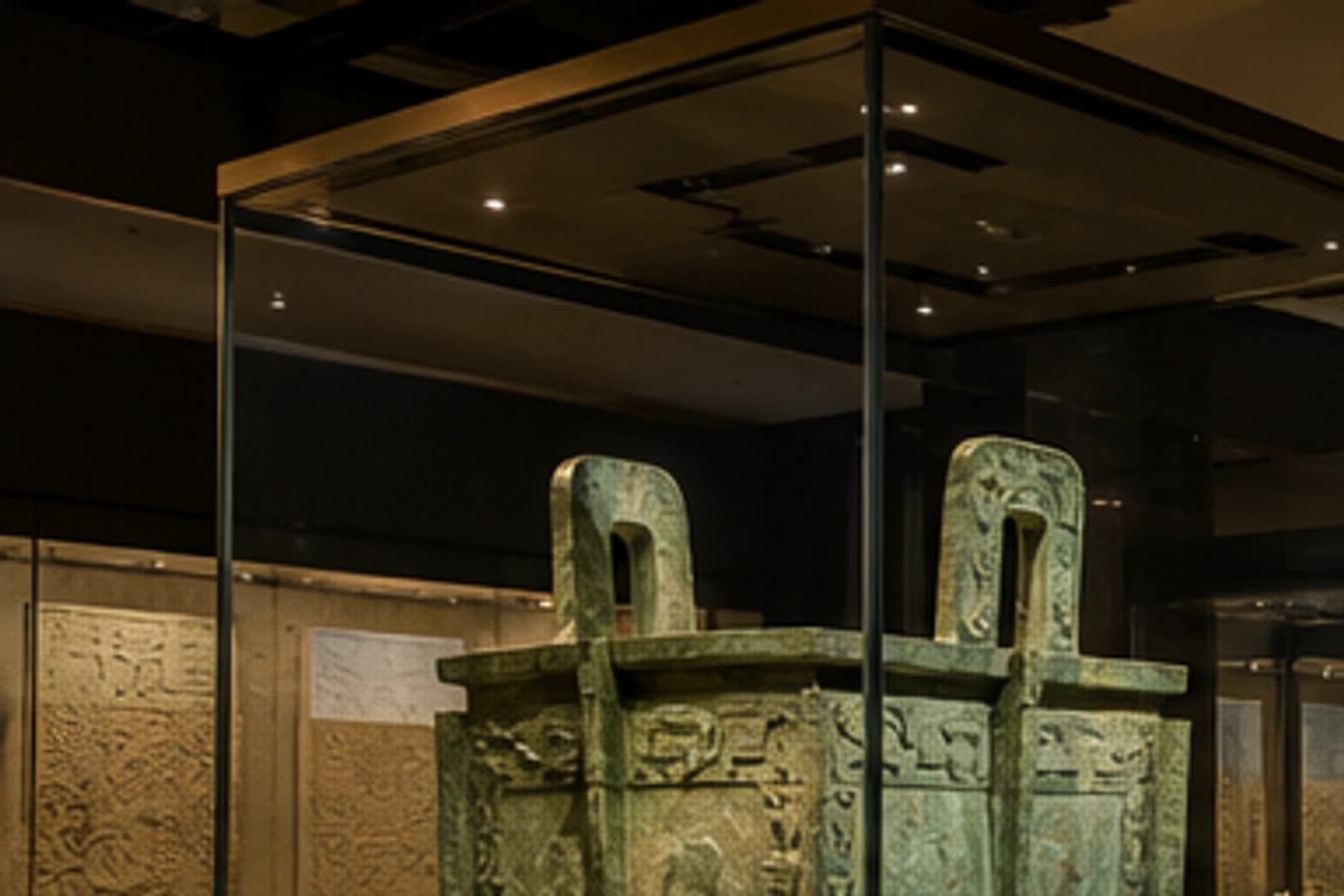
Give priority to the Ancient Zhongshan State material, whose bronzes and tomb finds explain a kingdom often missing from general China histories. Continue to the Mancheng Han Tombs galleries for the Changxin Palace Lamp, Liu Sheng's jade burial suit and the gilt Boshan incense burner. Object loans and conservation rotations happen, so check the gallery label rather than promising yourself that every signature piece will be on display.
On the lower floor, choose one contrasting section: Northern Dynasties murals for funerary painting or Quyang stone carving for sculpture. If a temporary exhibition is exceptional, substitute it for that final section instead of extending the visit indefinitely.
Reservation and entry
The museum's live reservation site currently states Tuesday–Sunday, 09:00–17:00, with last admission at 16:30, and Monday closure except where a public-holiday notice changes the schedule. It opens real-name reservations up to seven days ahead. These are operating details, so let the booking page for your selected date override this guide.
Reserve through the official Hebei Museum ticket site and carry the original document used. The page is designed primarily around Chinese identity documents and still contains some obsolete health-code text. Travellers using foreign passports should confirm the current reservation or staffed-entry route rather than entering invented document details. The museum enquiry number shown by its international listing is +86 311 966 518.
Do not confuse Hebei Museum on East Street with Shijiazhuang Museum on Jianshe North Street. Search maps for 河北博物院 and check the pin before setting out.
Inside the building
Large bags and security checks add time. Photography rules can vary by gallery and object: follow the sign, never use flash where prohibited, and do not assume a social-media photography tip overrides museum staff. English labels are uneven, so translating a title card on your phone helps; download an offline language pack before arrival.
Rest before fatigue sets in. A short break after the Zhongshan galleries will make the Han material more memorable than racing through every room. The museum sits by Shijiazhuang's metro network, making it easy to combine with lunch or another city-centre stop without adding a car journey.
Keep Zhengding on another day
Longxing Temple and Zhengding's pagodas deserve their own outdoor block. A recent visitor combined both Zhengding and Hebei Museum in one day but described a roughly 20,000-step schedule; it is possible, not pleasant. Keep the museum on the city day, then use the Zhengding architecture route and Longxing Temple guide for a separate day.
Return to the Shijiazhuang guide for the wider plan.