Guangji Bridge
Guangji Bridge (广济桥, Guǎngjì Qiáo) is worth more than a landmark photograph. Originating in 1171, it combines fixed beam and arch sections with a floating central element that can be opened for river passage. Pavilions, stone piers and the removable boat section make the bridge an unusually legible piece of working infrastructure between Chaozhou's old-city and east banks.
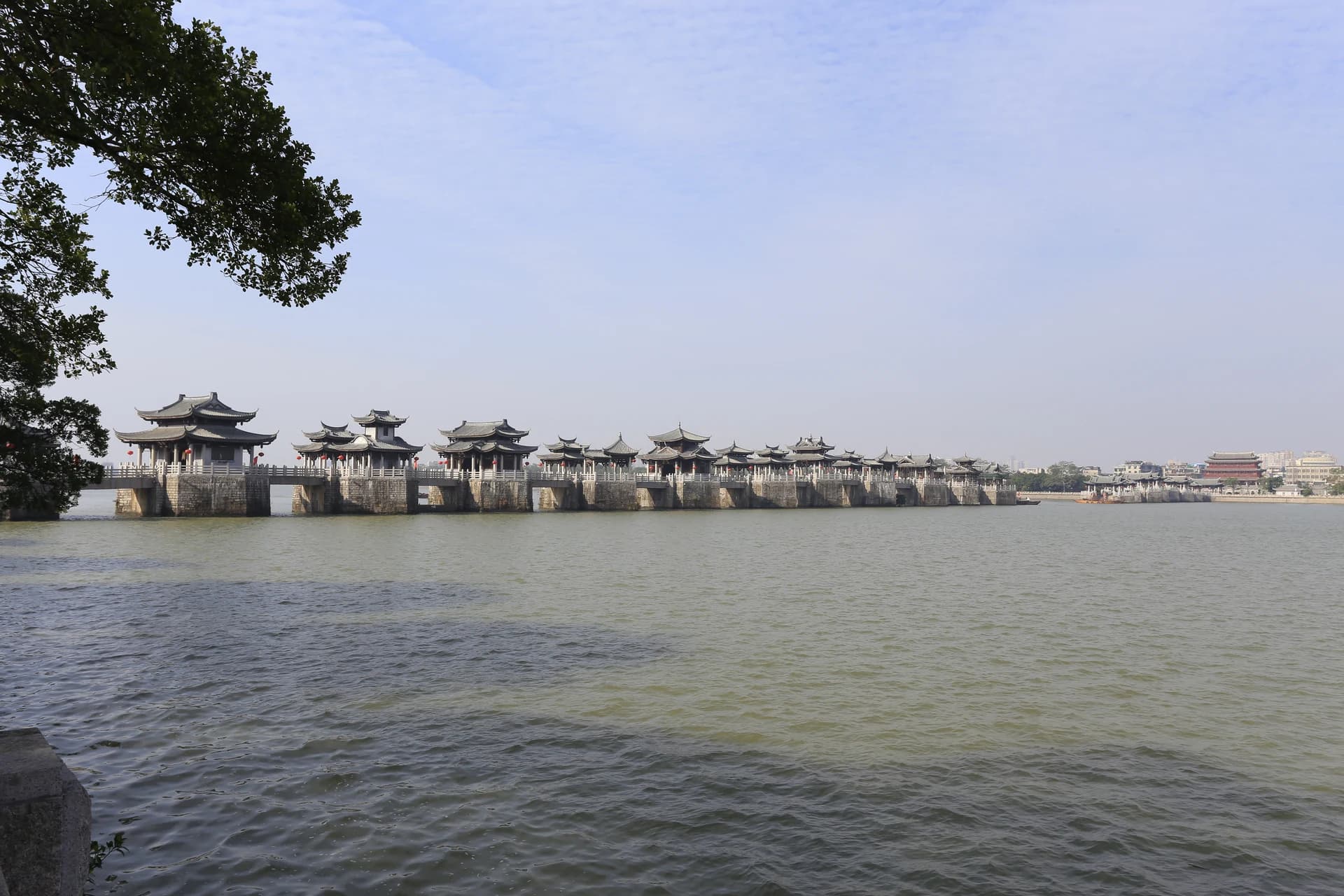
Photo: Zhangzhugang · Source · CC BY-SA 4.0
Choose the product before buying or entering: a riverbank structure view, a close structural visit that returns to the same side, or a through-crossing that continues to Han Wengong Shrine. The last option depends on the floating section being connected and the current ticket and exit rules.
Choose how to experience the bridge
| Product | Best for | Decision to make first |
|---|---|---|
| Riverbank structure view | A short old-city walk, uncertain weather or no need to enter | View the pavilion-and-pier line from Guangji Gate or the opposite bank; no crossing implied |
| Structural visit | Visitors who want to inspect the fixed sections, pavilions and craft displays | Confirm the live entry side and whether you can leave where your onward route begins |
| Through-crossing | An east-bank continuation to Han Wengong Shrine | Confirm that the floating section is joined, through-passage is allowed and your return does not depend on unverified re-entry |
A mechanical or evening display is an optional fourth layer, not the reason every visitor must go. Its timing, crowd control and exit conditions are more volatile than the bridge's structural value.
Read the fixed and floating structure
The fixed sides use piers, beam and arch construction to carry a sequence of pavilions toward the middle of the Han River. The central floating element can be moved to restore a navigation channel. This is why a photograph of a joined bridge does not prove the same-day crossing state, and a disconnected centre is not simply a closure of the monument's entire architectural story.
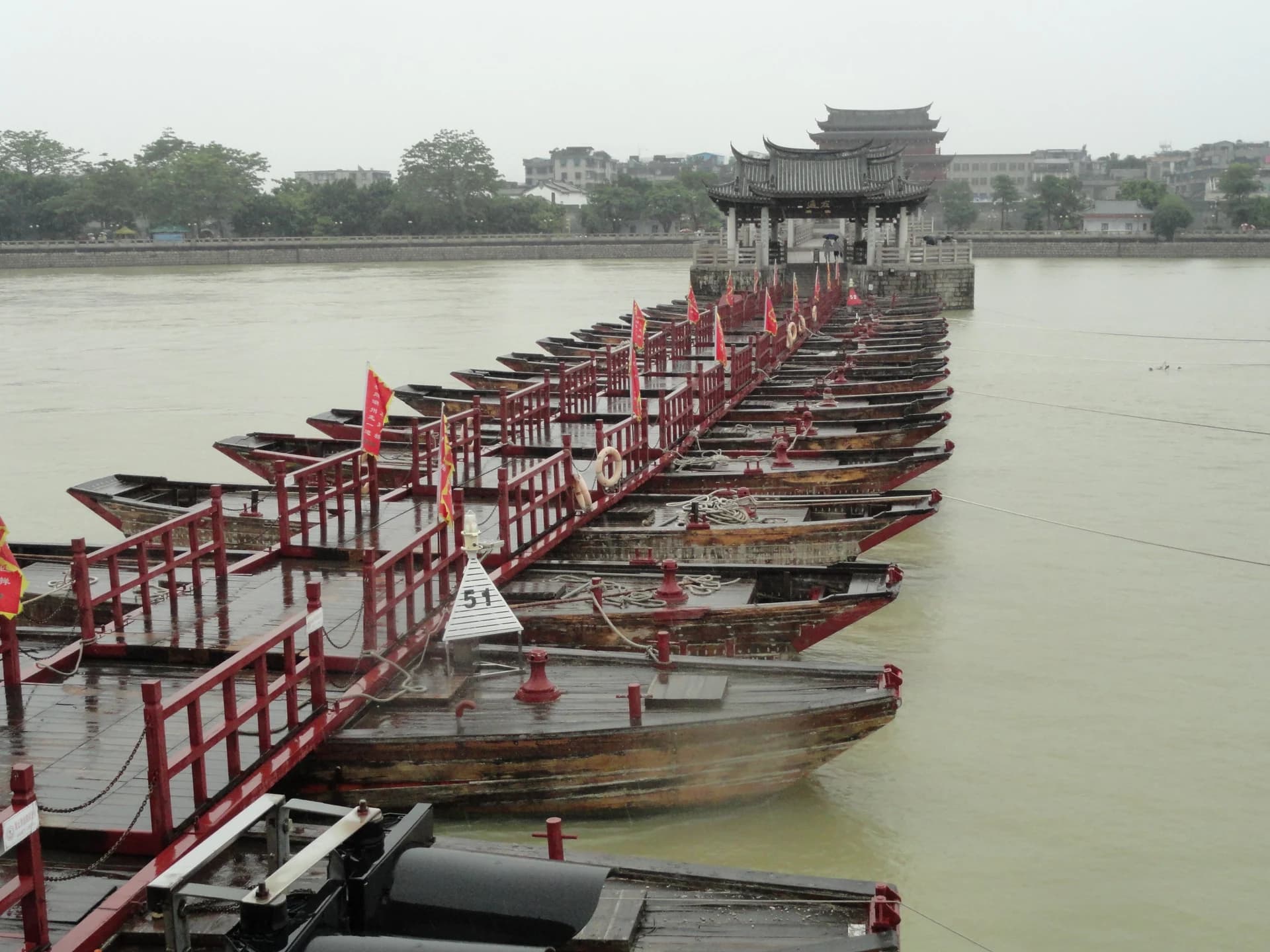
Photo: Luis Evers · Source · CC BY-SA 2.0
As you move along a fixed section, compare the heavy stone supports with the lighter pavilion rhythm above. Current displays may add ceramics, embroidery, woodcarving or teaware context, but the surviving structure should remain the route spine.
A route that works from either bank
From the old-city west side
Use the west ticket office, beside the Guangji Gate and Ancient City visitor-centre cluster, for an old-city-led visit. Inspect the pavilions and pier sequence, then decide at the live connection whether to continue east or return west under the current ticket rules.
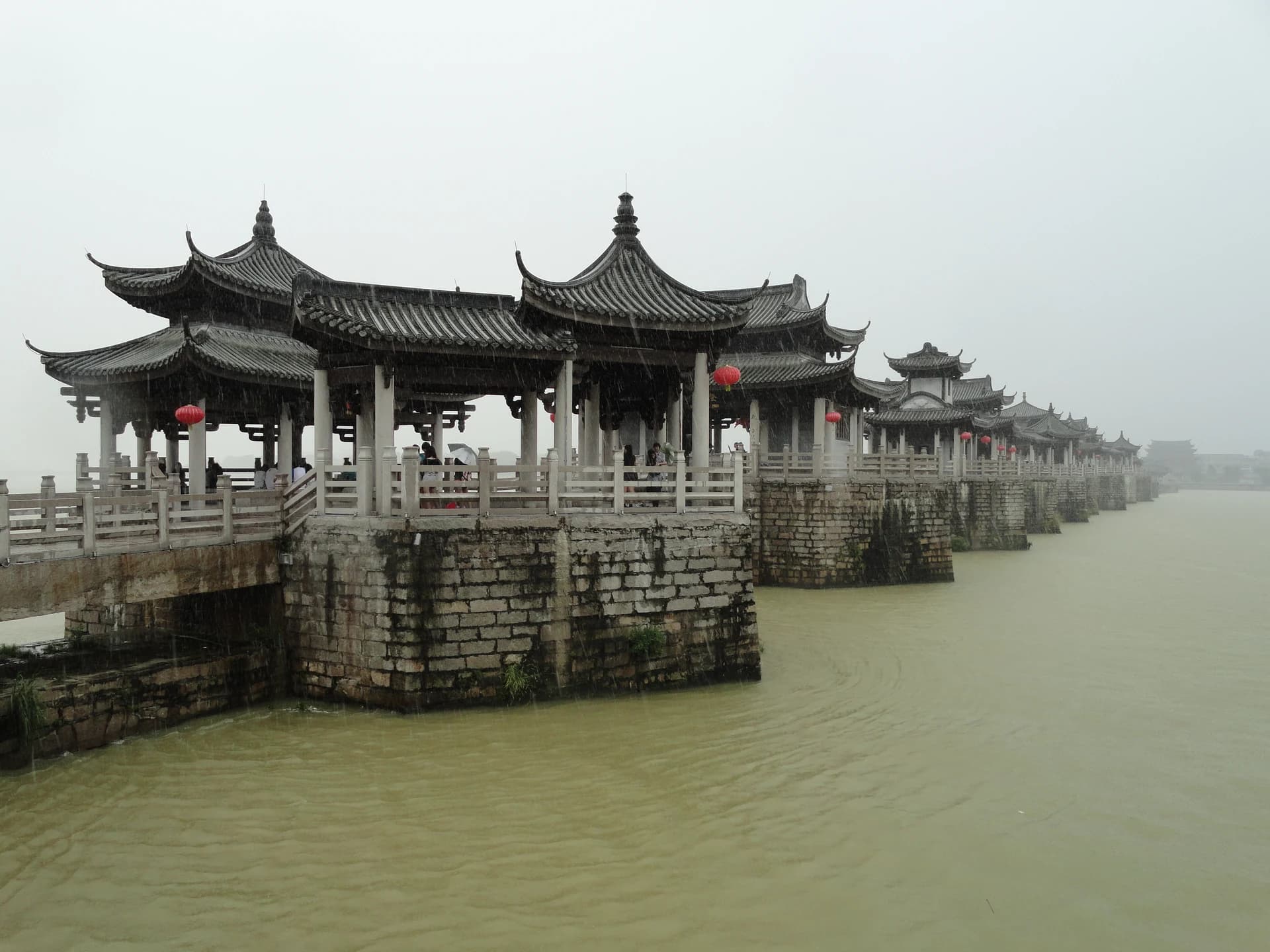
Photo: Luis Evers · Source · CC BY-SA 2.0
From the east bank
Use the east ticket office when Han Wengong Shrine or an east-bank route comes first. AMap modeled only about 0.1 km / 2 minutes on foot from the east ticket office to the shrine's reception centre on 21 August 2026, but the two places keep separate opening and admission rules.
AMap also modeled the two ticket offices about 0.6 km / 9 minutes on foot apart. That is geometry, not proof that the floating connection is joined, weather-safe or open. Decide the desired exit side before entering, especially when a night return depends on it.
Current tickets and ordinary-season baseline
The dated admission baseline remains CNY 20, visible on current booking surfaces but not confirmed through a captured 2026 first-party checkout. Recheck the live official channel before arrival; foreign-passport fields, concessions, one-way passage and re-entry remain unconfirmed.
For 1 February–31 October 2026, the operator's ordinary-season notice stated:
- Monday–Friday: 10:00–17:30, with ticketing and entry ending at 17:00;
- weekends and statutory holidays: 09:00–17:30, with ticketing and entry ending at 17:00;
- the floating boats open at 17:30.
These are dated 2026 baselines, not guarantees for a particular day. A maintenance interruption opened only the two half-bridges around the May holiday; a later notice restored the connection from 20 June 2026. Check the current connection and entry notice again on the visit date.
Trip.com and Klook do not currently expose an exact admission checkout for Guangji Bridge. A place listing or tour shelf is not a bridge ticket; use the current official ticket channel.
Pavilions, displays and the city relationship
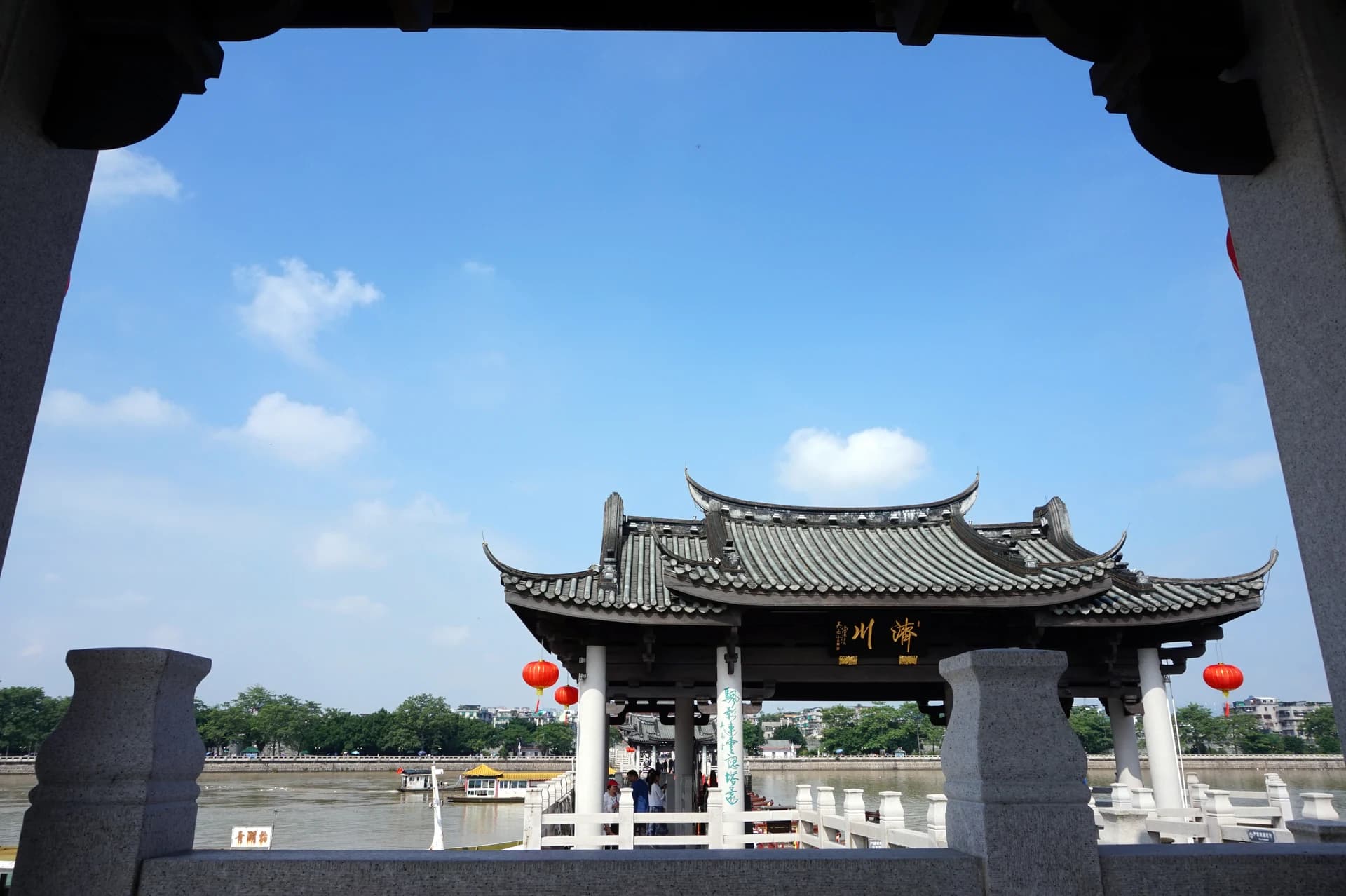
Photo: 三猎 · Source · CC BY-SA 4.0
The pavilions create repeated framed views of water, the old-city wall and the opposite bank. Take time to look outward as well as along the bridge. If display rooms are open, use them as a cultural layer rather than trying to complete every room before the entry cutoff.
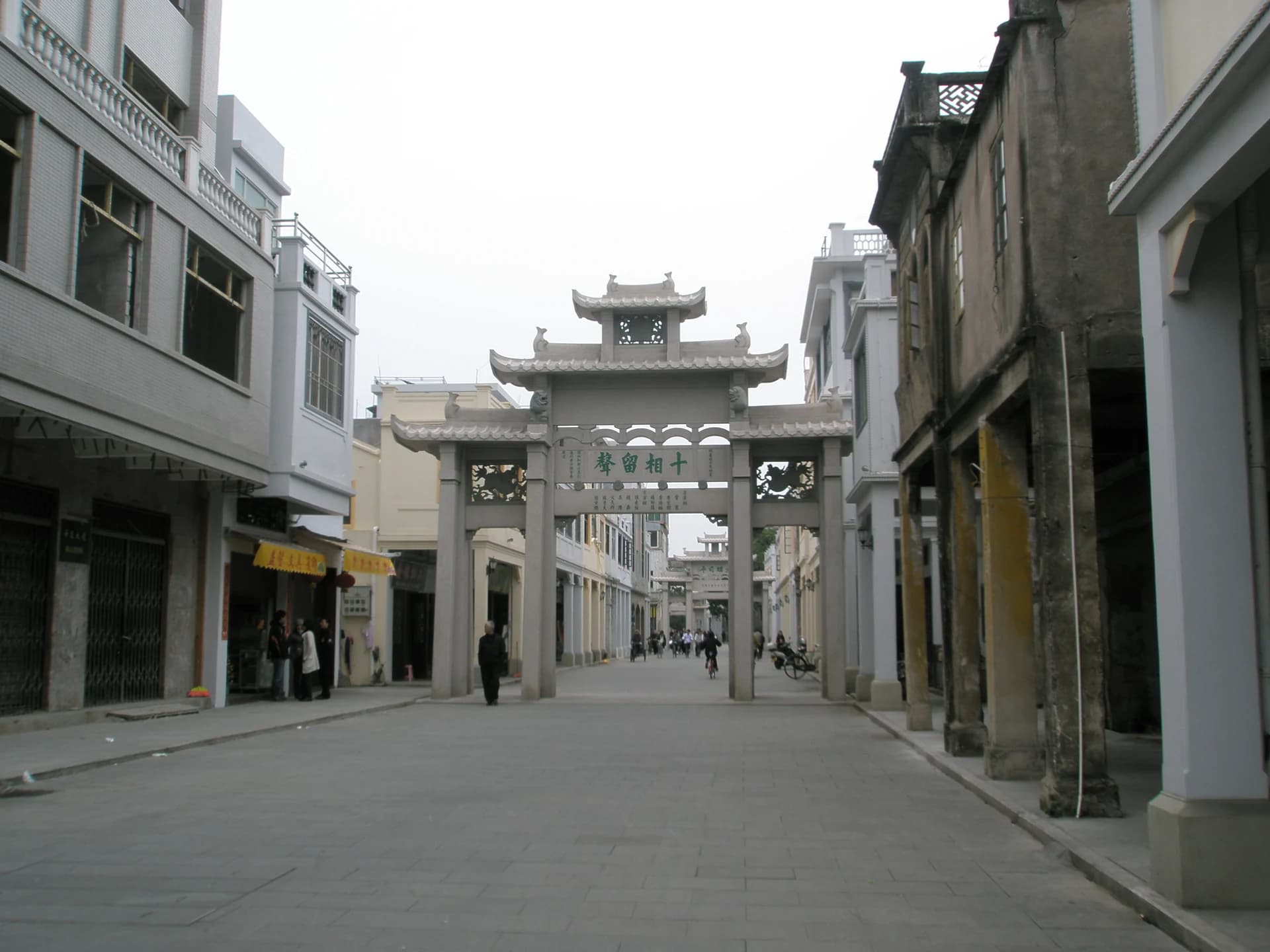
On the west side, continue into the Chaozhou Ancient City and Paifang Street walk. On the east side, add Han Wengong Shrine (韩文公祠) only when its current access works. The public-service baseline currently indicates Tuesday–Sunday opening and Monday closure, but holiday exceptions and the exact entry requirements still need a same-day check.
Weather, moving section and evening choice
River level, navigation, maintenance, heavy rain and special events can interrupt the floating connection or change crowd control. Check before setting out and keep a west-bank old-city alternative ready. A mapped walking line does not guarantee that the centre is joined that day.
Watching the moving section can be interesting for engineering-minded visitors, but it is not a guaranteed spectacle. Current display and light-program times should come from that day's notice. If you stay for an evening event, choose the exit side and return method first; crowded dispersal can make an improvised ride difficult.
The strongest visit remains useful in any operating state: understand the fixed-and-floating system, inspect one section closely, and connect the bridge to the city bank that suits the rest of your day.