Seeing a doctor in China: choose the right door, then protect the paperwork
Medical care in mainland China is not one uniform product. A public-hospital emergency department, a scheduled outpatient clinic, an international medical department, a private international clinic and a retail pharmacy solve different problems. The most expensive or English-friendly door is not automatically the medically appropriate one. In a life-threatening emergency, reach emergency care first. For a stable problem, choose the department and payment route before travelling across a city.
This guide explains process, not diagnosis or treatment. It cannot tell you whether a symptom is harmless, which medicine to take or whether you are fit to continue a trip. A licensed clinician who assesses you controls those decisions. Hospital services, appointment methods, language coverage, fees, direct billing and opening hours change; confirm the exact facility on the day.
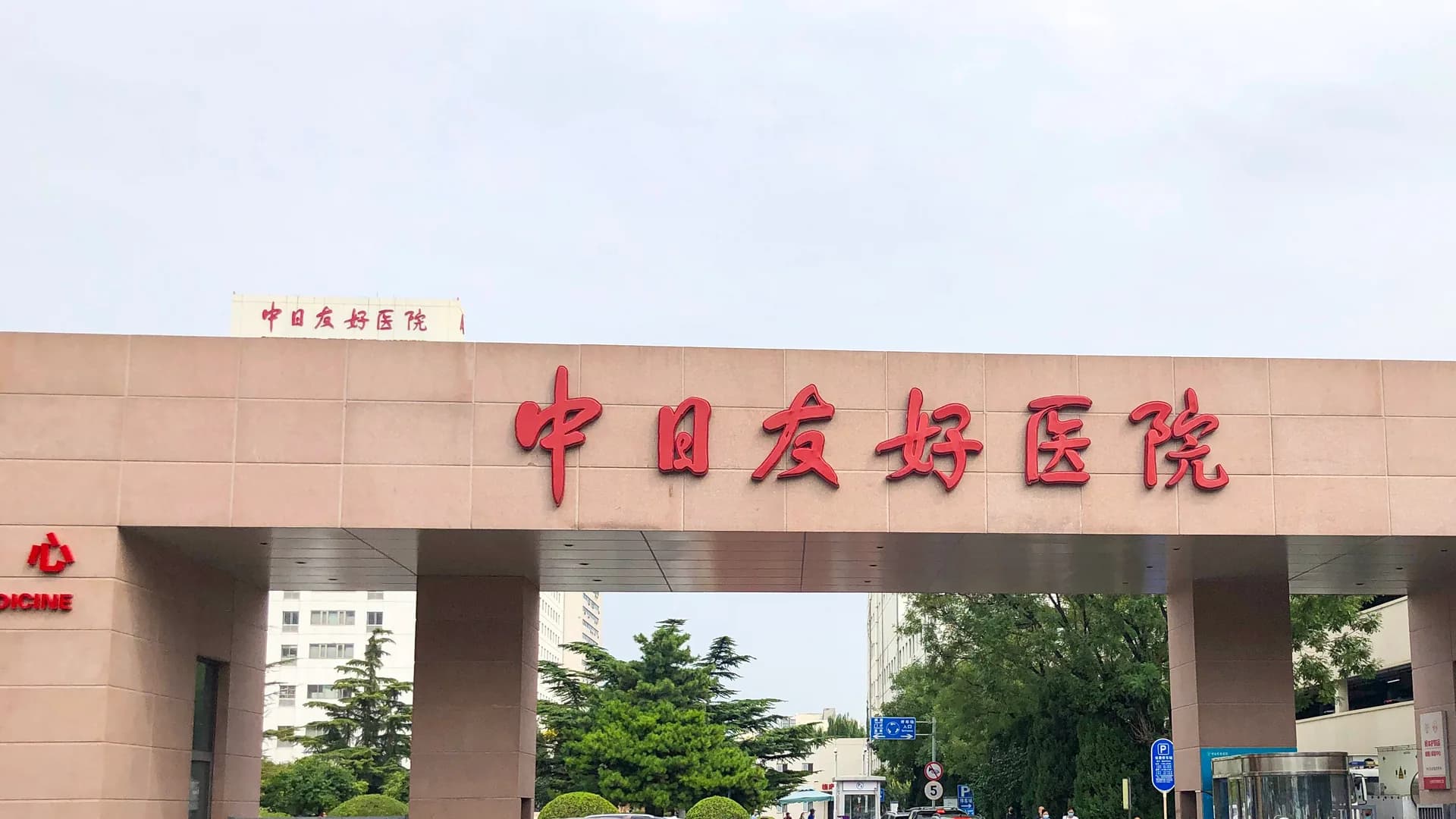
A large public hospital may have several campuses, gates and separate outpatient, emergency and international-medical entrances. Navigate to the named department rather than the hospital name alone, and let an emergency dispatcher choose the receiving route when you call 120. Photo by N509FZ, licensed under CC BY-SA 4.0.
Choose the care route in 60 seconds
| Route | Use it for | What it does not guarantee | First action |
|---|---|---|---|
| 120 ambulance / pre-hospital emergency care | A condition that may threaten life, organ or limb, severe injury, unconsciousness, chest pain, difficulty breathing, seizure, drowning, poisoning or another acute crisis | English dispatch, a chosen hospital, free transport or an insurer's automatic approval | Call 120, give the Chinese address or map pin, number of patients, what happened and callback number |
| Emergency department — 急诊 | Urgent assessment that should not wait for a routine appointment | Immediate treatment in arrival order; triage severity controls priority | Go to the nearest appropriate emergency department or follow 120 instructions |
| Ordinary outpatient clinic — 门诊 | A stable problem, follow-up or planned specialist visit | Walk-in availability, English service or same-day tests | Check the hospital's current official appointment channel and select the correct campus and department |
| International medical department — 国际医疗部 / 特需门诊 | A stable patient who values language help, a clearer administrative pathway or more privacy | That every clinician speaks your language, your insurer pays directly, or the service is open overnight | Confirm scope, language, appointment, fee basis and insurance arrangement directly |
| Retail pharmacy — 药店 / 大药房 | Buying permitted over-the-counter products or filling a prescription the pharmacy can lawfully accept | Diagnosis, emergency assessment, a substitute for a foreign medicine, or sale of every prescription drug | Show the generic name, strength and prescription; ask the pharmacist to confirm the exact product |
| Insurer assistance line | Opening a case, identifying network facilities, pre-authorization, payment coordination or evacuation planning | Medical diagnosis, ambulance dispatch or claim approval before the policy review | In an emergency get help first; contact assistance as soon as practical and save the case number |
The National Health Commission's emergency guidance identifies 120 as the number for urgent pre-hospital medical help and gives examples including unconsciousness, chest pain, breathing difficulty, seizures and serious injury. Its regulations establish 120 as the national pre-hospital emergency number. Do not delay a call while comparing hospital reviews, translating a complete history or seeking insurance approval.
Calling 120
Call from a phone that can receive a callback. If you cannot communicate in Mandarin, ask a hotel desk, station employee, attraction staff member, colleague or nearby Mandarin speaker to help without delaying the call. Show them this line:
请帮我打120。这里有医疗急症。地址是[地址]。
Please help me call 120. There is a medical emergency here. The address is [address].
Give the dispatcher:
- exact Chinese address, building, gate, floor and room, plus a map pin;
- the patient's age or approximate age;
- what happened and the main observable problem;
- whether the patient is conscious and breathing;
- hazards such as traffic, fire, electricity or chemicals;
- your callback number and a person waiting at the entrance.
Answer the dispatcher's questions and follow their instructions. Keep the line open until the dispatcher ends the call and send someone to the stated entrance when possible.
If the call cannot connect, ask a nearby staffed place to call and use the fastest safe route to an appropriate emergency department. A taxi or ride-hailing car is not an ambulance: it has no medical crew or equipment. Use it only when the situation is stable enough and local help considers that appropriate.
Public outpatient, international department or private clinic?
Ordinary public-hospital outpatient care
This route gives access to the hospital's regular departments and diagnostics. It may be the most direct option when you know the specialty and can manage a Chinese-language registration system. Large hospitals can be crowded; English-speaking staff are not guaranteed. The National Health Commission's patient guidance says non-emergency visits use real-name registration and recognizes a passport as valid identification. It also recommends carrying previous records and test results.
Use the hospital's own website, official account, mini-program or appointment telephone. Search results and map listings can show the wrong campus or an unofficial appointment agent. If the online system rejects a foreign phone number or passport format, call the hospital's patient-service desk or go to the staffed registration counter early enough to ask what same-day capacity remains. Do not assume a failed mini-program means the department is closed.
International medical department inside a public hospital
Many major hospitals run an international, special needs (特需) or VIP service with a separate appointment and fee structure. This can reduce navigation friction and may provide interpreters, bilingual coordinators or more private consultation space. Services vary by hospital and specialty. A department name does not promise 24-hour emergency care, direct insurance settlement or an English-speaking clinician at every shift.
Ask four questions before travelling across the city:
- Is this the international outpatient clinic, emergency service or inpatient office?
- Does it handle the medical specialty and age group needed today?
- Which languages are available at the booked time, and is interpretation charged separately?
- Does the hospital have a current direct-billing agreement with your exact insurer and policy administrator?
Private international hospital or clinic
A private facility may offer easier English booking, more privacy and a familiar administrative process. It may also have a narrower specialty or diagnostic range and substantially higher fees. Confirm whether the site has the required imaging, laboratory, paediatric, obstetric or emergency capability rather than relying on the word “international.” If transfer becomes necessary, ask who contacts the receiving hospital, who sends the records and how transport is arranged.
Consular lists can be a useful starting point. The UK government's China medical-facility list, updated in May 2025, marks public/private status, specialty and reported English availability. It explicitly does not endorse a provider and can change. Your own embassy or consulate may publish a newer list for its nationals.
A realistic outpatient sequence
The exact order changes by hospital, but this model prevents the most common administrative loop.
1. Choose the campus and department
Hospital names may cover several campuses. Save the Chinese campus name, department, building and entrance. If you do not know the department, ask the 导诊台 (dǎozhěn tái, patient-guidance desk) instead of choosing a specialist from a social-media recommendation.
2. Register with the patient's real identity
Bring the original passport. Enter the name and passport number consistently; a spelling or number mismatch can separate appointment, test and pharmacy records. The NHC's current outpatient-record standard links a patient's unique hospital identifier to an identity-document number and includes passport as an accepted document type.
Keep the hospital card, QR code or patient number created at registration. It is an identifier for that institution, not a national health-insurance card. A companion should also carry identification when the hospital needs consent or record-release paperwork.
3. Pay the registration charge and find the waiting area
The counter or app may ask you to choose ordinary, specialist, expert, special-needs or international service. Those labels affect price and access; they are not quality scores. Show the appointment confirmation at the correct floor and ask whether you must 报到 (bàodào, check in) before your number joins the department queue. After tests, some systems require another check-in before the follow-up consultation. Emergency departments use triage, so a later arrival with greater urgency may be seen first.
4. Give a short clinical summary
Lead with what started, when it started and what changed. Show:
- allergies and previous serious reactions;
- diagnosed conditions and relevant past procedures;
- medicine generic names, strengths and dosing schedule;
- pregnancy possibility where relevant;
- recent test reports and imaging;
- the local contact and insurer case number, if opened.
Do not translate a brand name into a guessed Chinese equivalent. A photograph of the original package and a clinician's letter can help the treating team identify the active ingredient.
5. Pay for and complete ordered tests
Some facilities require payment between consultation, laboratory, imaging, procedure and pharmacy stages. Ask where the result appears and whether you must return to the same doctor, take a new number or book another day. A scan or blood-test result by itself is not a treatment plan; return to the responsible clinician for interpretation.
6. Confirm the plan before leaving
Ask the clinician to write the diagnosis or working diagnosis, medication generic name, strength, dose, duration, warning signs and follow-up timing clearly. If you do not understand, ask again or request an interpreter. Do not sign a consent form based only on machine translation of a complex procedure.
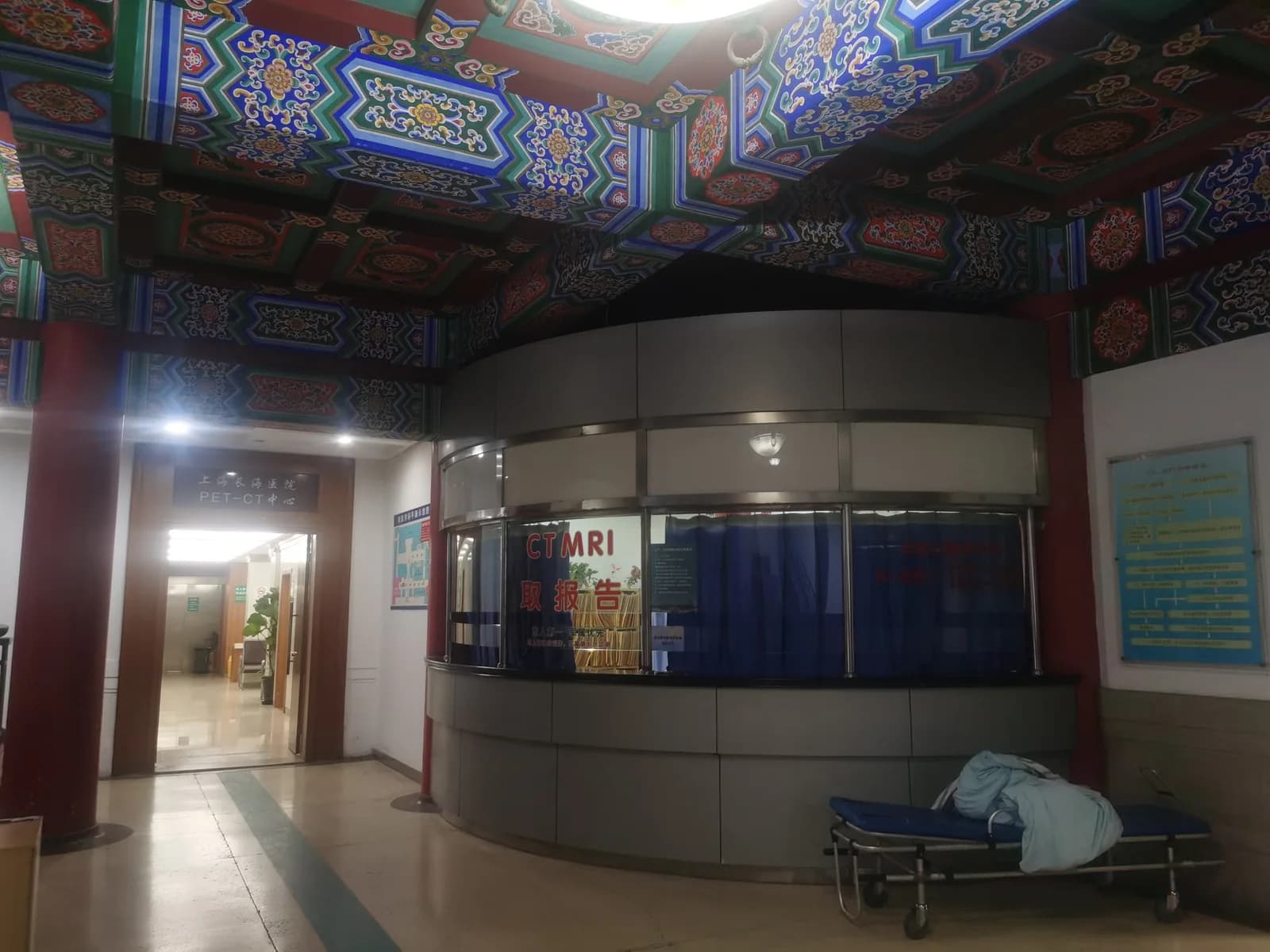
Tests can involve a separate payment, appointment, examination and report-collection route. Before leaving a counter, confirm where the result appears, when it will be ready and which clinician will interpret it. Photo by Shwangtianyuan, licensed under CC BY-SA 4.0.
Build a language bridge before the consultation
Prepare one screen of plain Chinese and English. Keep it factual and avoid self-diagnosis:
我是外国游客。我的主要问题是[主要问题],从[时间]开始。我的过敏是[过敏]。我正在使用的药物是[药物通用名]。请安排翻译,或用简单文字写下检查、诊断和用药方法。
I am a foreign visitor. My main problem is [main problem], and it started [time]. My allergies are [allergies]. My current medicines are [generic names]. Please arrange an interpreter, or write the tests, diagnosis and medicine instructions in simple terms.
Useful questions:
- 这里是急诊还是门诊? — Is this emergency or outpatient care?
- 我应该挂哪个科? — Which department should I register for?
- 有英语服务或医疗翻译吗? — Is English service or medical interpretation available?
- 这个检查今天能完成吗?结果在哪里看? — Can this test be completed today, and where do I see the result?
- 请写药品通用名、剂量和用法。 — Please write the medicine's generic name, dose and directions.
- 我需要病历、诊断证明和费用明细。 — I need the medical record, diagnosis certificate and itemized charges.
A travel companion can interpret ordinary logistics if the patient agrees, but complex consent, prognosis and discharge instructions deserve qualified language support. Ask the patient which information may be shared. Avoid putting a passport page, full medical record or intimate photograph into a public translation chat when an offline or hospital-supported option is available.
Payment: assume you may need to pay first
Medical care is not free to foreign visitors. Payment timing and accepted methods vary by hospital. The UK government's current medical-treatment guidance for China warns that deposits or payment may be required, international cards are not universally accepted, and a direct-billing arrangement exists only at some facilities. The exact deposit figures in any consular guide can age quickly, so this guide does not reproduce them.
Carry two independent payment methods and some accessible emergency funds. Alipay or WeChat Pay may work at many counters, but a phone failure, foreign-card verification or hospital system can still block a transaction. Our Alipay setup guide helps with travel payments; it does not prove that a specific hospital counter accepts them.
China's medical-institution price rules require price disclosure and an itemized fee-list system covering services, medicines and consumables. Ask for the 费用清单 (itemized charge list) as well as the formal 发票 (invoice) and payment receipt. They serve different claim and accounting purposes.
Before a non-emergency test or admission, ask:
- What is the current estimated range and what can change it?
- Is a deposit required, and how is an unused balance refunded?
- Which payment methods work at this exact cashier?
- Is the selected international or special-needs service covered by my policy?
- Can the hospital issue the documents and stamps my insurer requires?
In an emergency, do not negotiate line items while urgent assessment is being delayed. Ask a companion to contact the insurer and payment desk once care is underway.
Travel insurance assistance and the claim file
Save the policy number and 24-hour assistance line offline before the trip. Insurance assistance can identify a network facility, open a case, discuss pre-authorization, arrange a guarantee of payment when the policy permits, or coordinate a medically approved transfer. It cannot promise that every charge will be covered. Only the insurer can decide a claim under the policy.
When you call, ask for:
- case or reference number;
- whether the insurer requires a network hospital or prior authorization;
- whether outpatient, emergency, inpatient, ambulance and prescribed medicine costs are handled differently;
- which documents, translations and original stamps are required;
- whether you pay and claim later or the insurer is seeking direct settlement;
- who approves transfer, medical escort, changed flights or evacuation.
Collect documents before leaving the city. Your insurer's checklist controls, but a robust file usually includes the hospital's itemized charges, formal invoice, proof of payment, outpatient or emergency record, diagnosis certificate, prescriptions, test and imaging reports, admission record and discharge summary where applicable. Keep the medicine sales slip and packaging label. Ask whether documents are available electronically and whether an official hospital seal is needed.
The NHC's medical-record management rules protect patient records and allow patients or authorized representatives to apply for copies of specified outpatient, emergency and inpatient materials with identification. A record may need to be finalized before the complete copy is available. Ask the hospital's 病案室 (medical-records office) about timing, identity documents, authorization and collection before you leave China.
Pharmacy: useful, but a different boundary
A hospital pharmacy dispenses medicines from that hospital's prescription and system. A licensed retail pharmacy sells permitted over-the-counter products and dispenses prescription medicines under applicable rules. Neither replaces an emergency department or a clinician's assessment.
If you are considering acupuncture, medical tuina, cupping or prescribed herbs, the traditional Chinese medicine experiences guide explains how to distinguish a museum or leisure service from clinical care and how to check provider identity, consent, sterile practice and records.
The State Administration for Market Regulation's current drug retail rules, effective since 1 January 2024, require prescription drugs to be sold by prescription and reviewed by qualified pharmacy personnel. If the pharmacist is not on duty, the store must say so and cannot sell prescription drugs without the required review. A foreign prescription may not be accepted, and the medicine may have a different approval status, formulation or brand.
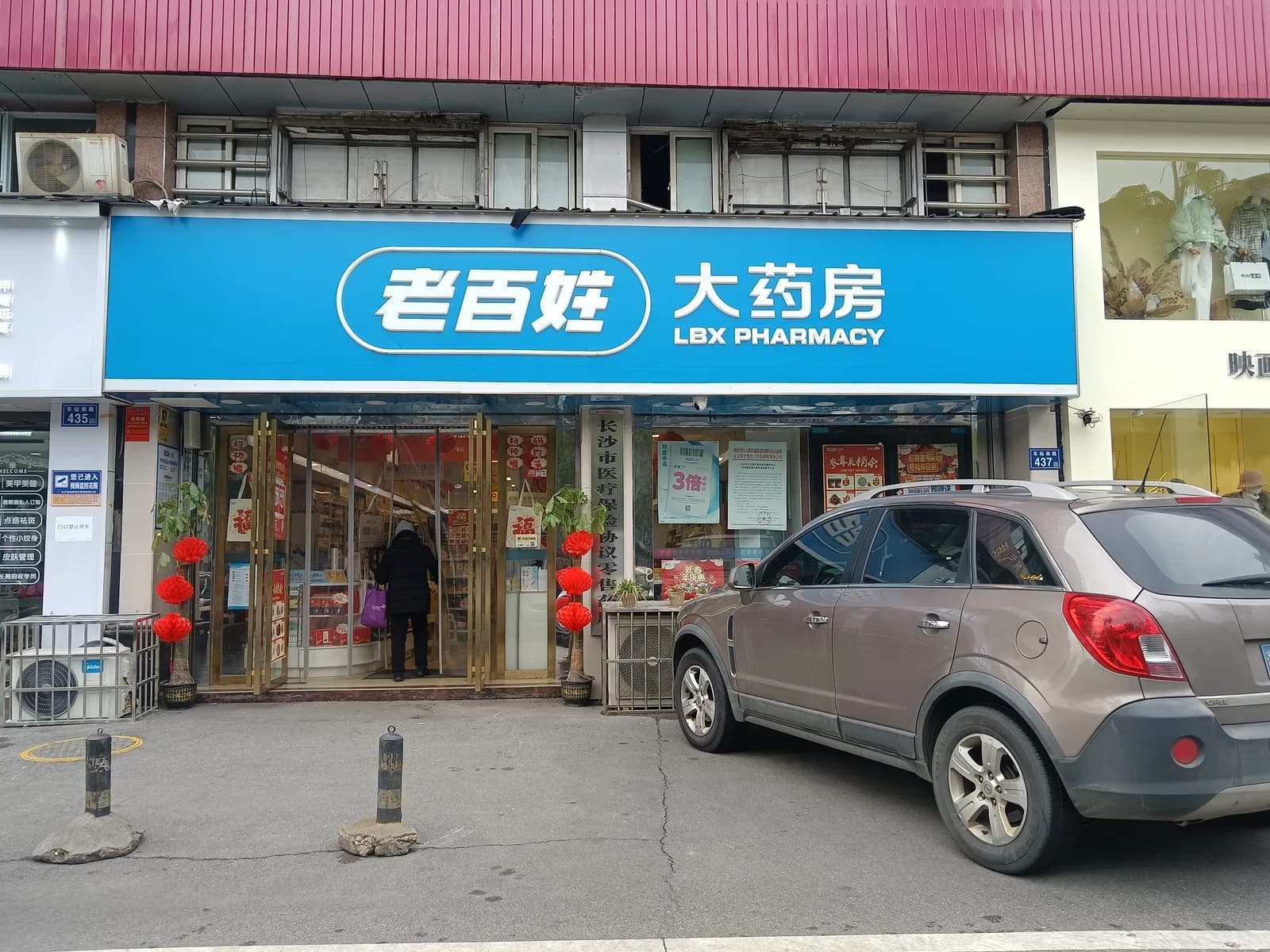
A large pharmacy sign does not mean every medicine is over the counter or that a foreign brand has a like-for-like substitute. Ask the pharmacist to match the generic ingredient, strength, dosage form and package, and seek clinical care when assessment is needed. Photo by Huangdan2060, licensed under CC BY 3.0.
At the counter, show the generic ingredient, dose form and strength. Check all four on the box before paying. Also check expiry, storage conditions and the Chinese instructions. Do not accept “same medicine” based only on a similar package or brand sound. If the replacement, interaction, dose or reason for use is uncertain, stop and ask a clinician or pharmacist rather than experimenting during the trip.
For medicines brought from home, the arrival and customs guide explains why original packaging, a prescription or medical letter and a reasonable personal quantity matter. Import permission and local prescription status are separate questions.
Privacy, consent and companions
NHC record rules require medical institutions and staff to protect patient privacy and prohibit disclosure of records for non-medical, non-teaching or non-research purposes. The physical experience can still be less private than some visitors expect: a public consultation or waiting area may include other patients and relatives. Ask whether the door can close, whether a private room or international department is available, and who needs to remain during examination.
You can say:
- 请让其他人先出去。 — Please ask the other people to step outside.
- 我同意我的同伴翻译。 — I consent to my companion interpreting.
- 这部分我想单独和医生谈。 — I would like to discuss this part alone with the doctor.
- 请先解释,再让我签字。 — Please explain it before asking me to sign.
Ask before recording audio, photographing a screen or video-calling an overseas clinician. Never photograph another patient, a hospital work screen or a medical document belonging to someone else. If an insurer or overseas doctor requests records, ask the patient and hospital how to transmit them securely.
Transfer and referral are separate decisions
A clinician may recommend a different department, campus or hospital. A transfer requires more than a destination name: the receiving team must be appropriate and willing to accept the patient, transport must fit the clinical condition, records must travel, and payment must be addressed. Do not discharge yourself or arrange an ordinary car for a medically unstable transfer solely because an insurer, hotel or friend prefers another hospital.
For a planned second opinion or follow-up, ask for a referral note if used, the outpatient or discharge record, imaging files rather than only screenshots, laboratory reports, pathology material instructions and the current medication list. Call the receiving hospital to confirm department, campus and appointment. China's system does not create one universal referral rule for every self-paying foreign visitor, while an insurer may impose its own network or referral requirement.
Medical evacuation is a clinical and logistics project, not a flight change. The treating team, receiving facility, insurer's medical assistance team and carrier may all need to agree on fitness to travel, escort, oxygen, stretcher or timing. An embassy can provide information and contact help for its nationals; it does not normally pay medical bills or arrange evacuation.
Fever, diarrhoea and possible infectious illness
Tell triage immediately about fever, significant diarrhoea, rash, breathing symptoms, a known exposure or recent animal bite. Do not hide symptoms to stay in an ordinary queue. The NHC's patient guidance directs people with fever or diarrhoea to follow dedicated fever-clinic or intestinal-clinic pathways where provided; current local hospital signs and public-health notices control because these pathways can change.
Wear a well-fitting mask when respiratory infection is possible, keep distance where practical, clean hands and follow staff instructions on testing, isolation or transfer. These steps protect other patients; they do not identify the illness. If emergency warning signs are present, use 120 or emergency care rather than searching for a particular fever clinic.
For an animal bite, needle exposure, sexual assault or another time-sensitive exposure, seek urgent professional assessment. Do not use a general article to decide whether a preventive treatment is needed or whether a time window has passed.
Special cases to plan before travel
Children
Save the nearest facility that currently treats the child's age group and the insurer's paediatric route. Bring the child's passport, medicine and allergy list, vaccination record where relevant, and evidence of the accompanying adult's relationship or authority if available. Current guardian and consent requirements are hospital-specific. A general emergency department may stabilize a child and arrange specialist transfer; do not drive past urgent help solely for a famous children's hospital.
Pregnancy
Identify a facility with the relevant obstetric and emergency capability, not just a clinic advertising maternity packages. Bring prenatal records, blood group information if documented, current medicines and the treating clinician's contact. Ask the insurer about pregnancy-related exclusions and gestational limits before travel. This page cannot assess whether travel or an activity is suitable.
Mental-health crisis
Immediate risk of self-harm, harm to others, severe confusion or inability to stay safe is an emergency. Call 120 and ask a trusted person to remain nearby if it is safe. Routine English-language mental-health care and inpatient arrangements vary substantially; contact the insurer and your embassy or consulate for current provider information without delaying emergency help.
Existing conditions or complex medication
Before departure, ask your regular clinician for a concise English letter with diagnoses, generic medicine names, doses, allergies, devices and important baseline information. If possible, add a checked Chinese translation. Keep it offline and share it only when needed. Our China safety guide covers the wider emergency-contact and medicine preparation layer.
Before you leave the hospital
Do not let relief or travel pressure erase the handover. Confirm:
- diagnosis or working diagnosis in writing;
- which warning signs require immediate return;
- medicine generic name, strength, route, timing and duration;
- which old medicines continue, stop or change;
- test results still pending and how you will receive them;
- follow-up department, campus and date;
- activity, food, wound-care or travel restrictions written by the clinician;
- itemized charges, formal invoice and payment receipt;
- medical-record copies, prescriptions, reports, imaging files and discharge summary;
- a contact route for questions and the insurer case number.
Ask an airline directly whether it requires a medical clearance or fit-to-fly form after illness, injury, surgery, oxygen use or hospitalization. A hospital discharge does not automatically confirm airline fitness. If plans change, keep transport and accommodation receipts only when the insurer says they may be relevant.
Prepare one offline medical folder
Before the trip, store these securely on the phone and with a trusted contact:
- passport identity page and visa or entry record copy;
- policy number, assistance line and exclusions relevant to the trip;
- diagnoses, allergies and medicine generic names;
- treating clinician and emergency-contact details;
- hospital options for the actual route, including paediatric or pregnancy capability where needed;
- a Chinese hotel address and live map pin;
- the short bilingual summary and the phrase 请帮我打120;
- a way to access money if the main phone or payment app fails.
Copies do not replace the original passport at registration. The folder does not replace a clinician. Its job is to keep identity, communication, payment and records from becoming a second emergency when care is needed.