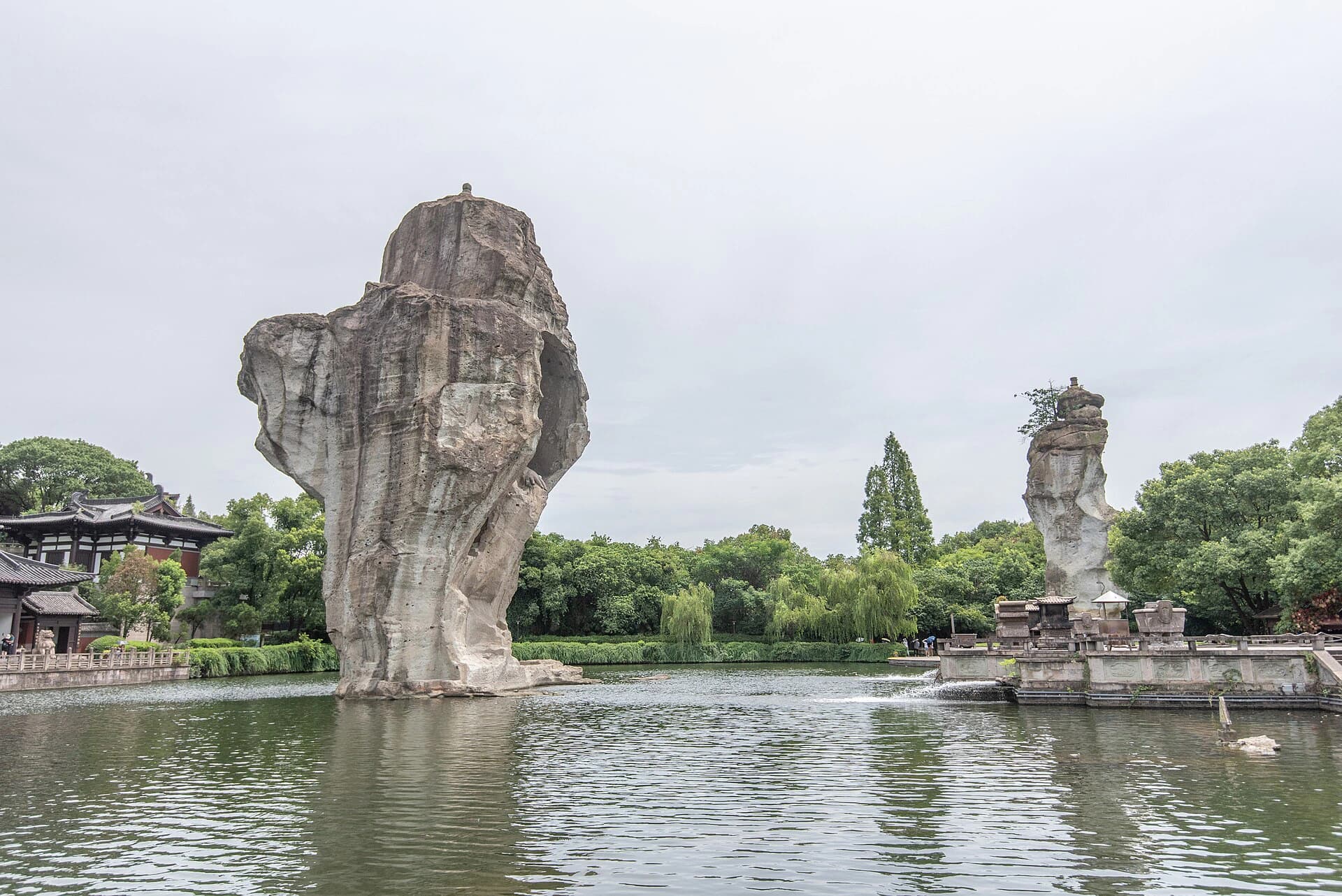
Anchang Ancient Town
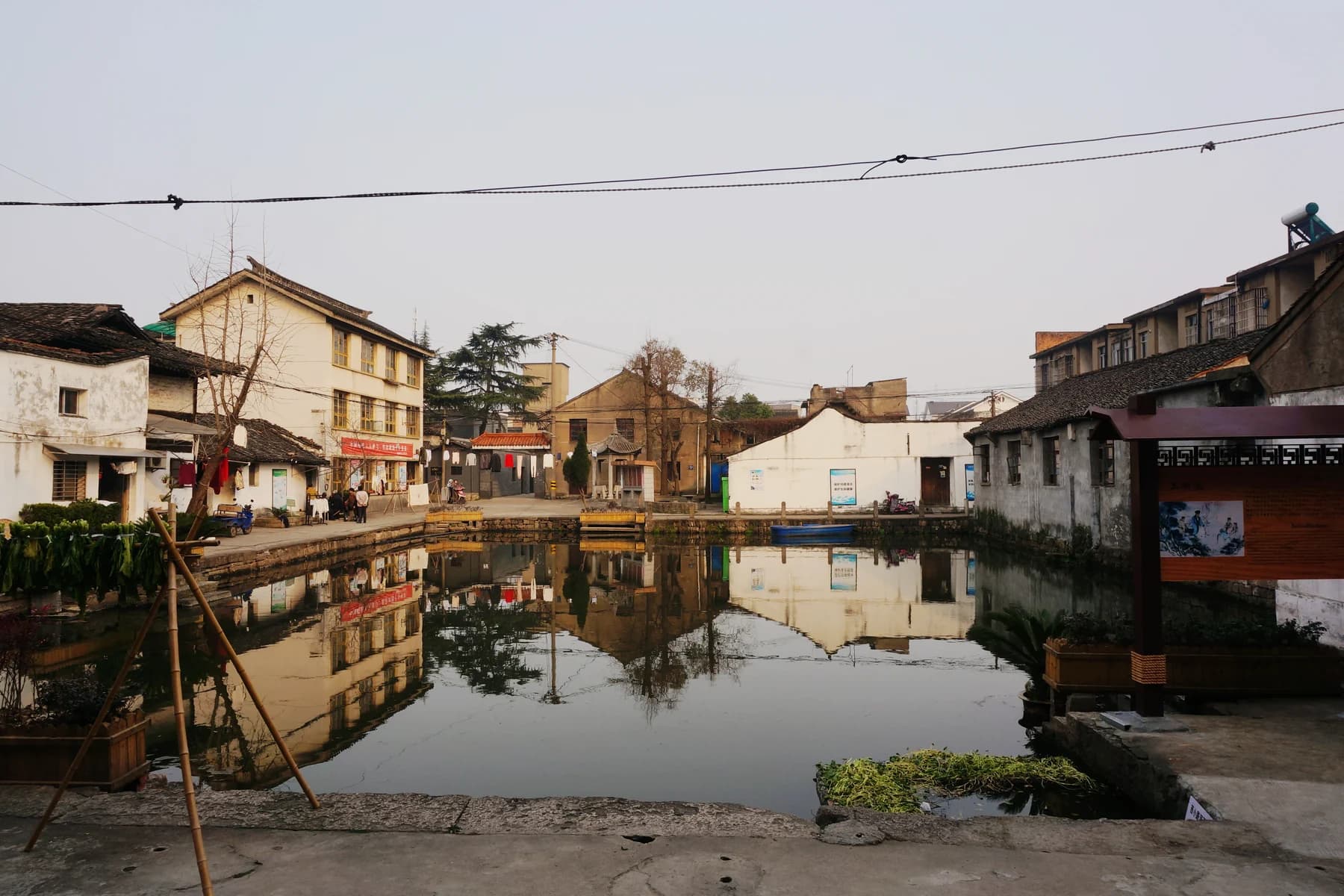
Anchang is not a sealed heritage park or an immaculate Wuzhen substitute. It is a canal town where residential life, food production, small paid halls, visitor shops and ordinary market activity share the same narrow space. The scenery is intermittent rather than cinematic—but that is precisely why a calm, cooler-weather visit can feel more grounded than a polished water-town attraction.
Plan a half day. Come to walk both banks, look at bridges and waterside houses, taste selectively and observe how food and daily trade use the canal street. Do not come expecting every facade to be historic, every cured product to be locally made or every open doorway to welcome tourists.
Who will enjoy Anchang?
Choose it if food, residential texture and unhurried street observation matter more than landmark architecture. It is particularly atmospheric in cooler months, when cured meats and savoury snacks fit the weather and walking is comfortable.
Skip it during a very short first trip if you still have not explored central Shaoxing. Avoid peak national holidays if crowd control, one-way flow and restaurant queues would erase the reason you came.
A three- to four-hour route
- Enter without buying everything at once. Establish which public streets are free and which halls, boats or temporary activities need separate tickets.
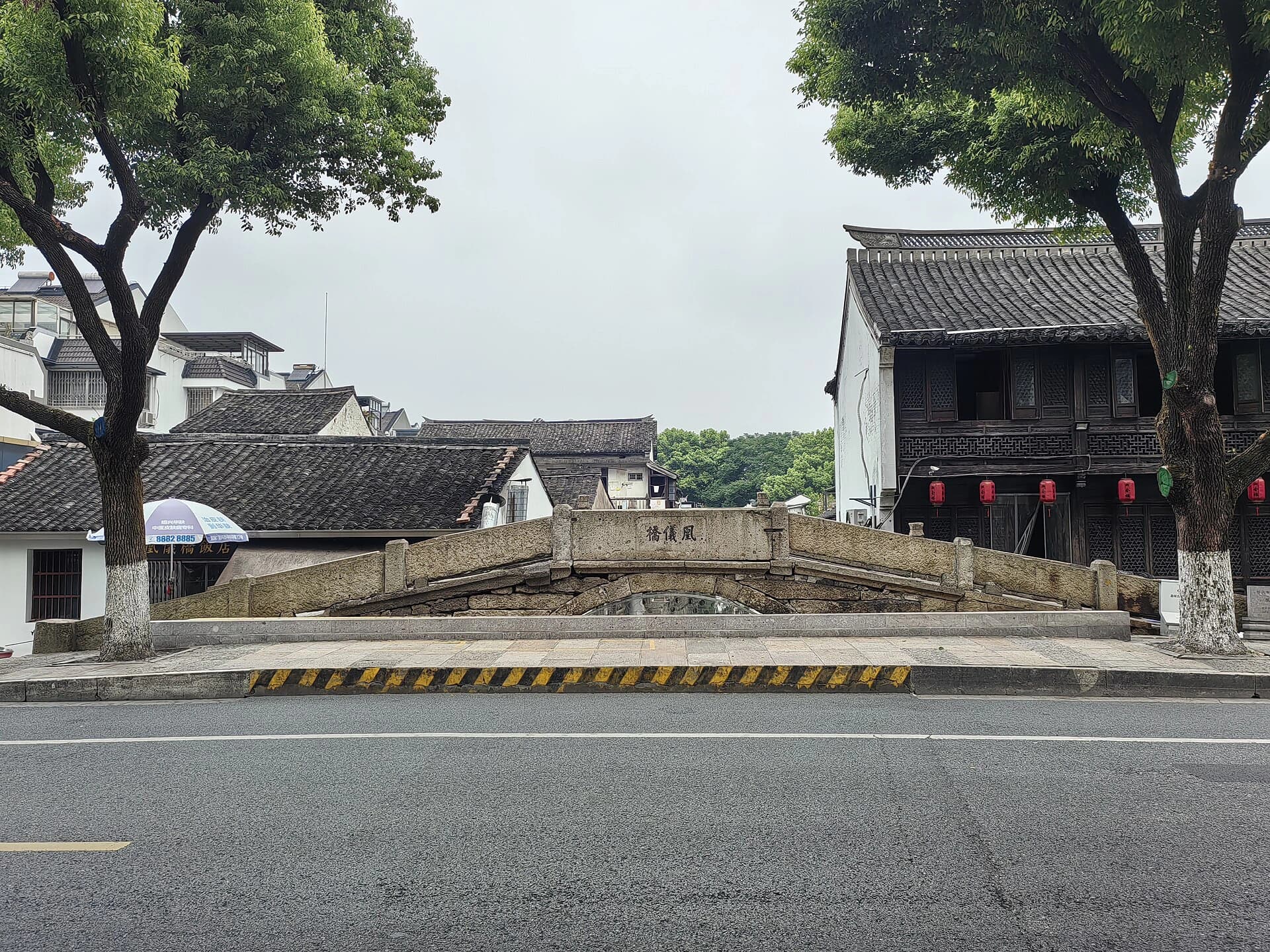
- Walk one canal bank slowly. Look across the water rather than photographing only storefronts. Notice bridge forms, loading edges, household thresholds and where active trade interrupts the heritage image.
- Choose one or two paid interiors. Small halls can be meaningful for a specific craft or local-history interest, but visitors without that context often find them slight. Ask what is actually open before buying a bundle.
- Cross and return on the other bank. This creates different light and facade views without inventing a long circuit.
- Eat after comparing stalls. Order one unfamiliar item first, then add more if the flavour and hygiene suit you.
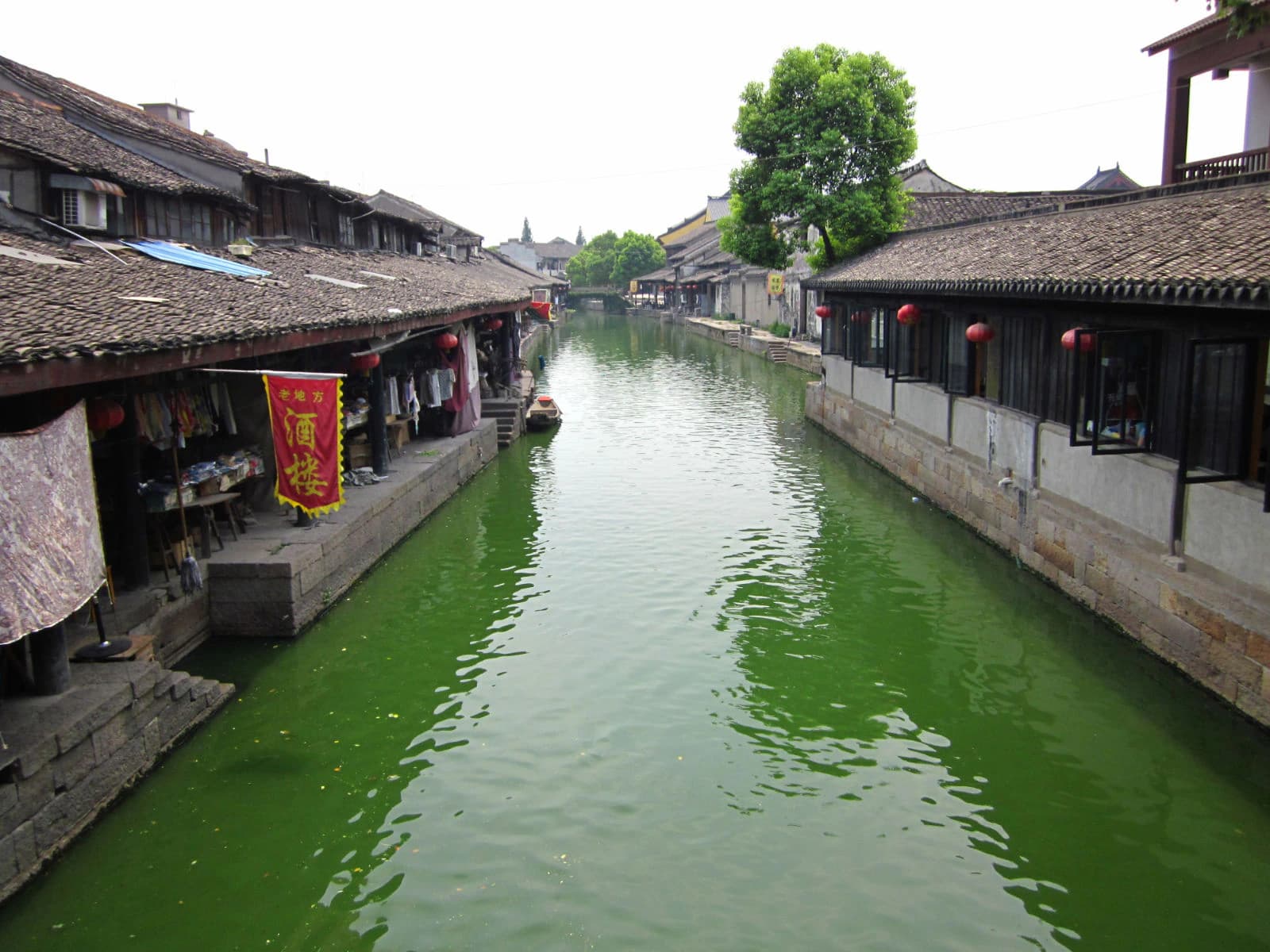
Three hours is enough for browsing and a snack meal on a quiet day. Extend toward evening only after confirming return transport and whether the town remains active; a calm daytime market can become very quiet after businesses close.
Which small museums should you choose?
Choose by subject before buying a hall bundle, then check which rooms are open that day. One or two interiors can give the canal walk context without turning the visit into a collection of ticket checks.
For local history, choose the Shaoxing Shiye Museum (绍兴师爷博物馆). A shiye was an adviser assisting an official with administrative work. Look for the different roles described in the displays and the tools associated with that work, including the abacus. Ask how those roles connected Shaoxing people with government service beyond their hometown. The city's museum introduction describes these themes.
For commerce, consider Suikang Money Shop (穗康钱庄). The saved visitor account describes recreated bookkeeping and money-transfer scenes. Use the visit to ask how a trading town handled payments before modern banking, and distinguish reconstructed displays from surviving objects. It is one of the historic interiors identified in the provincial account of Anchang.
For a visual or everyday-life focus, ask about the Stone Carving Hall or Folk Customs Hall. The same visitor describes stone objects in the former and household scenes in the latter. These can be alternatives to a second administrative-history stop. Choose a few objects to examine closely rather than assuming that completing every small hall will make the day better.
Eat with curiosity, not blind trust
Anchang is strongly associated with cured, fermented and savoury foods. That makes it rewarding for adventurous eaters and difficult for travellers who avoid pork, high salt, offal or strong aromas. Ask what an item is, whether it is sold by piece or weight, how it should be stored, and whether the displayed product was made by that shop.
Visible drying or hanging does not prove safe handling, local origin or a specific ageing claim. Choose busy, clean counters with clear prices; avoid raw or poorly protected food; and do not buy more cured product than you can store safely during the trip.
Visitor reports are sharply divided on meals in the tourist zone. A famous queue can still produce rushed service or poor value. Use a menu, confirm portion size, and consider eating one substantial meal outside the most crowded strip.
Boats are optional, not the definition of the town
A boat can supply a low canal perspective, but walking already delivers most of Anchang's residential and food character. Before boarding, confirm the exact pier, route, duration, capacity, fare unit, life-jacket practice, child rule, weather policy and final service. Do not assume the operating model matches an old-city or East Lake black-awning boat.
For travellers with limited mobility, the boat is not automatically an accessible shortcut: boarding may involve a low step and unstable transfer. Ask about boarding assistance and a step-free street route before paying.
Peak holidays change the experience
National-holiday visitors report temporary codes, one-way pedestrian systems, packed bridges, food queues and cleanliness problems. These conditions are not a permanent description of Anchang, but they show how quickly a lived street can fail under festival-scale demand.
Check the current town notice before a peak date. If crowd management is active, arrive early, follow the signed flow and avoid a tight onward train. Ordinary weekdays and non-holiday weekends can feel like a different place.
Respect homes and working spaces
People live behind the photogenic facades. Do not point cameras through windows, block a bridge or doorway, stage someone else's laundry, or enter a food workshop without permission. Ask before photographing a person or production process. A resident is not an attraction simply because their home sits inside a named old town.
Keep voices low in narrow lanes and carry your rubbish until you find a proper bin. These small choices preserve the ordinary life that differentiates Anchang from a theme park.
Getting there and fitting it into the trip
Use Anchang Ancient Town in AMap. Shaoxing North is the practical rail gateway: the checked baseline is about 8.9 km and 16 minutes by car, or roughly 33 minutes using the mapped transit option before live waiting and traffic.
This makes Anchang a useful arrival- or departure-day half trip if luggage storage and the current return are confirmed. It does not belong inside the central Lu Xun–Shen Garden walking day. Stay into evening only with a written route back to your hotel or station.
Final verdict
Choose Anchang for flavour, canals and ordinary town life in cooler weather outside peak holidays. Allow three to four hours, buy selectively and treat boats and paid halls as optional. Skip it if you want a controlled heritage museum or uninterrupted postcard scenery.