Northern Qi Mural Museum
Taiyuan Northern Qi Dynasty Mural Museum (太原北齐壁画博物馆) is a specialised site museum centred on the tomb of Xu Xianxiu and Northern Dynasties mural archaeology. It is not a miniature version of the provincial museum. The strongest reason to come is to read painted processions, costume, animals and architecture as evidence of a society where steppe and Central Plains traditions met.
Allow 60–90 minutes without a guide or 1.5–2.5 hours with good interpretation. The museum occupies a focused circuit rather than many floors. Visitors indifferent to archaeology or painting may find it too narrow; mural and Northern Dynasties enthusiasts often rank it among Taiyuan's best visits.
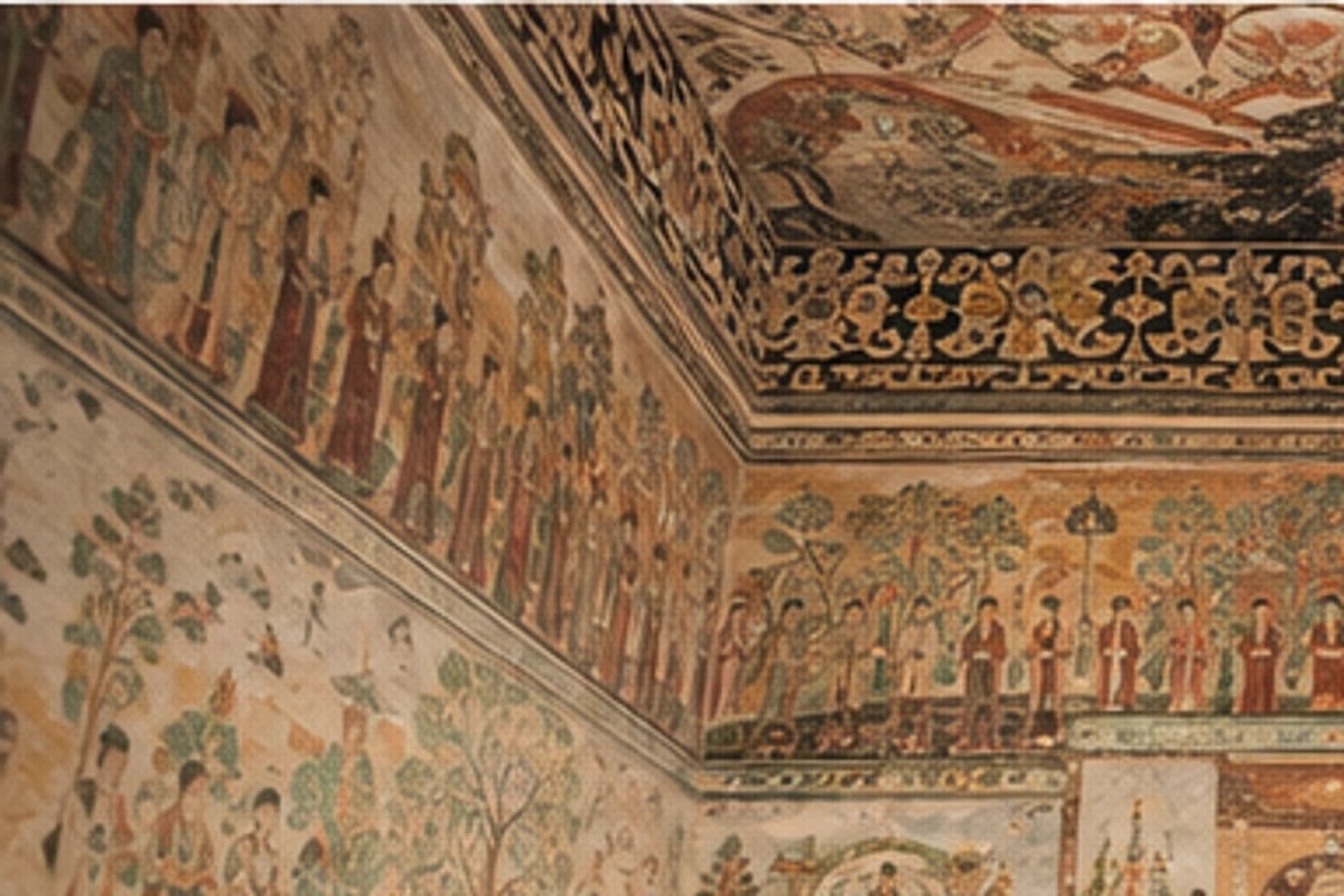
Read the museum in three parts
Follow the current one-way circuit and posted gallery order. A useful mental structure is:
- Northern Qi and Jinyang context: establish the short dynasty, Taiyuan's political importance and the elite identity of Xu Xianxiu. Without this, the painted figures become an attractive but disconnected parade.
- The tomb and its archaeology: study the mound, passage, chamber arrangement, excavation record and conservation problems. Distinguish the protected original site from reproductions, projections and explanatory reconstructions; each serves a different purpose.
- The mural language: compare attendants, guards, horses, ox carts, musicians, garments and architectural motifs. Look for hierarchy through scale and position, and for cultural exchange through costume and riding equipment.
Displays also introduce murals from other important Shanxi tombs. Read the provenance on each label rather than assuming every fragment belongs to Xu Xianxiu. Lighting is deliberately low and access to sensitive areas can change for conservation.
Important: admission changed in September 2026
Older guides that describe the museum as free are now outdated. For the period September 1, 2026–June 30, 2027, the published full-price admission is CNY 35 and the half-price category is CNY 17.50. The notice publishes Tuesday–Sunday opening from 09:00 to 17:00, final entry at 16:30, with Monday closure except statutory holidays. A later museum notice always overrides these figures.
Open the exact Northern Qi Mural Museum listing on Trip.com to inspect selected-date inventory. Confirm passport or QR admission, collection method, entry window, guide inclusion and cancellation before payment. Trip's cached visitor text may still repeat the old free-reservation system, so rely on the dated product checkout and current admission announcement, not an old review.
Tickets are sold through designated official channels and the onsite counter, subject to remaining capacity. Carry the original passport used for booking. If the platform does not accept a foreign document, contact the museum or arrive early enough to ask at the counter; do not enter a false Chinese ID number.
Pay for interpretation, not access promises
This is one of Taiyuan's museums where a guide can double the value of the visit. Recent visitors who went alone often finished quickly; those with strong interpretation understood how a procession, saddle or garment revealed status and exchange.
Use the official guide service or a clearly licensed pre-booked guide. Confirm language, duration, group size, headset and total price. A 60–90 minute explanation is enough for most first visits. No legitimate guide can promise touching distance, entry to a closed conservation area or unrestricted photography.
If visiting independently, read a short introduction to the Northern Qi and Xu Xianxiu before arrival. Translate object labels selectively: identity, findspot, original versus replica and date matter more than every decorative term.
Photography and conservation etiquette
Assume no flash anywhere. Follow room-specific signs for photography and video; rules may differ between explanatory displays and original murals. Low light is a conservation decision, not a defect to solve with a bright lamp. Do not lean over barriers, touch walls or place a phone through openings.
Crowds concentrate around a few sightlines. If a guide group blocks one, move forward and return rather than squeezing between listeners. Early afternoon can be quiet on some weekdays, but group arrivals are irregular, so the opening session is the safer choice for unhurried viewing.
Getting there and pairing it well
The museum is near Wangjiafeng in Yingze District, east of central Taiyuan. Search the full Chinese name 太原北齐壁画博物馆 and verify the pin at the intersection area of Nanshifang Street and Dongfeng Road. A taxi or ride-hail is simplest. Public routes and the dedicated tourist line change; confirm the live stop and last service instead of preserving a bus timetable from a post.
The most coherent pairing is Twin Pagoda Temple, subject to its own admission and transfer, because both are on the eastern side. The Shanxi Museum provides excellent broader context but sits across the city; combining both requires secure slots and a generous traffic buffer. Jinci is southwest and deserves another half day rather than a three-way museum race.
There are fewer food and rest options immediately around this specialised venue than in central commercial districts. Eat beforehand, carry water for outside the galleries and use the toilet before departure. The museum is compact, but dim rooms, standing and detailed looking still create fatigue.