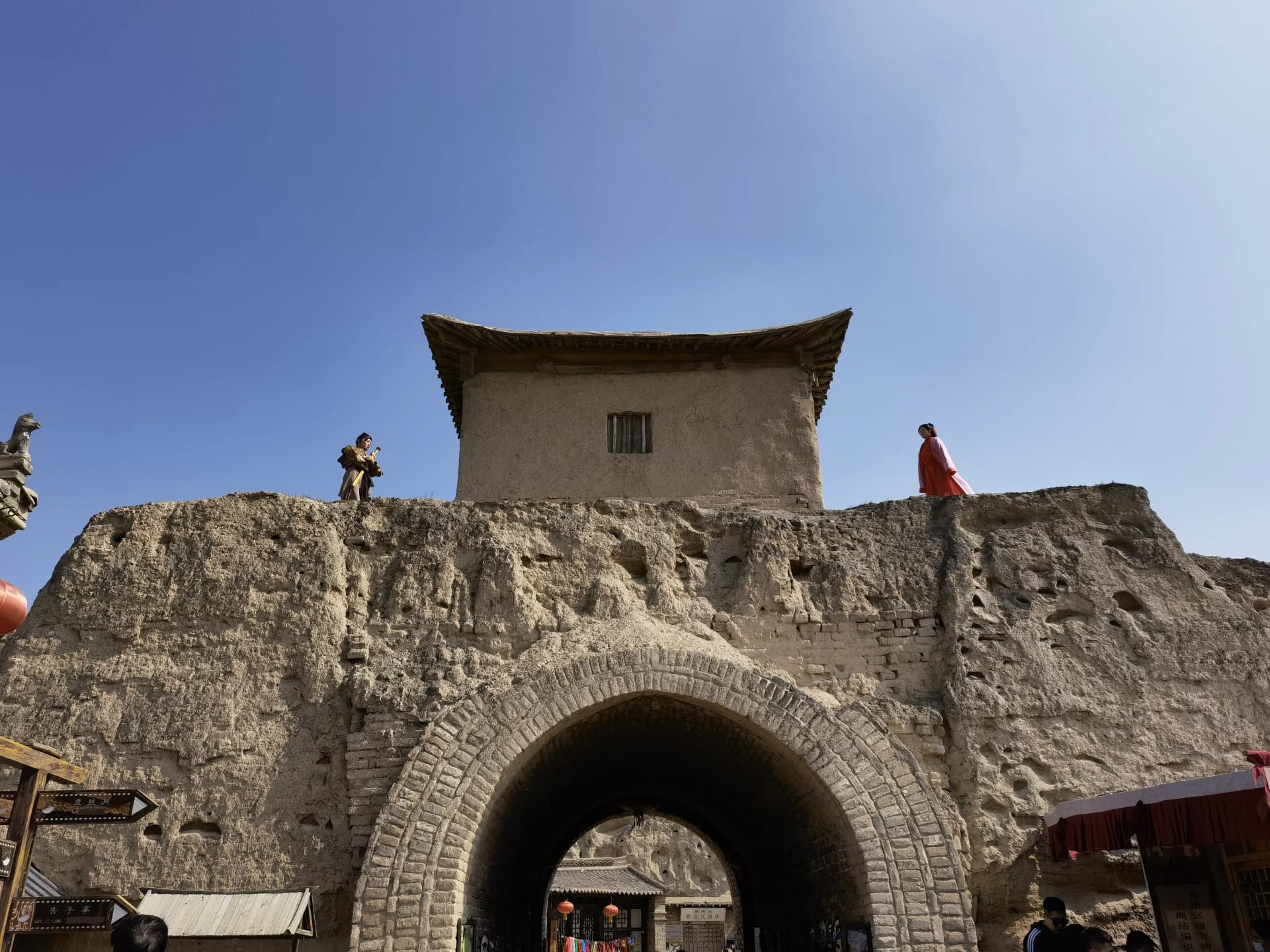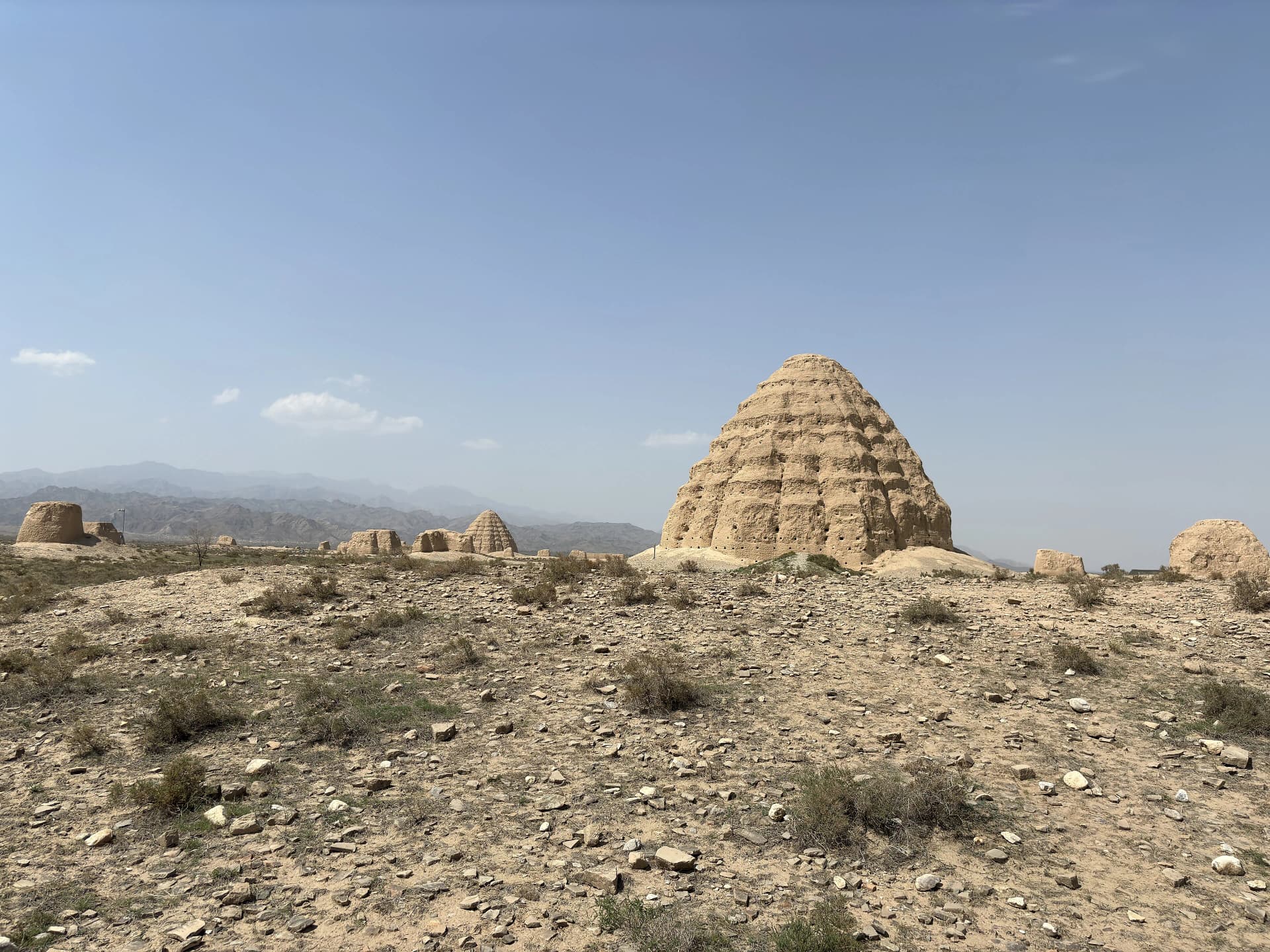
Western Xia Imperial Tombs
The Western Xia royal landscape is Yinchuan's essential history visit. In July 2025 it became a UNESCO World Heritage Site, recognised as evidence of the Tangut-led Western Xia state and cultural exchange along the Silk Roads. The weathered earthen tombs make much more sense after the museum explains the writing system, burial architecture and relationship with the Helan Mountains. Allow four to six hours including city transfer.
Use the museum-first sequence
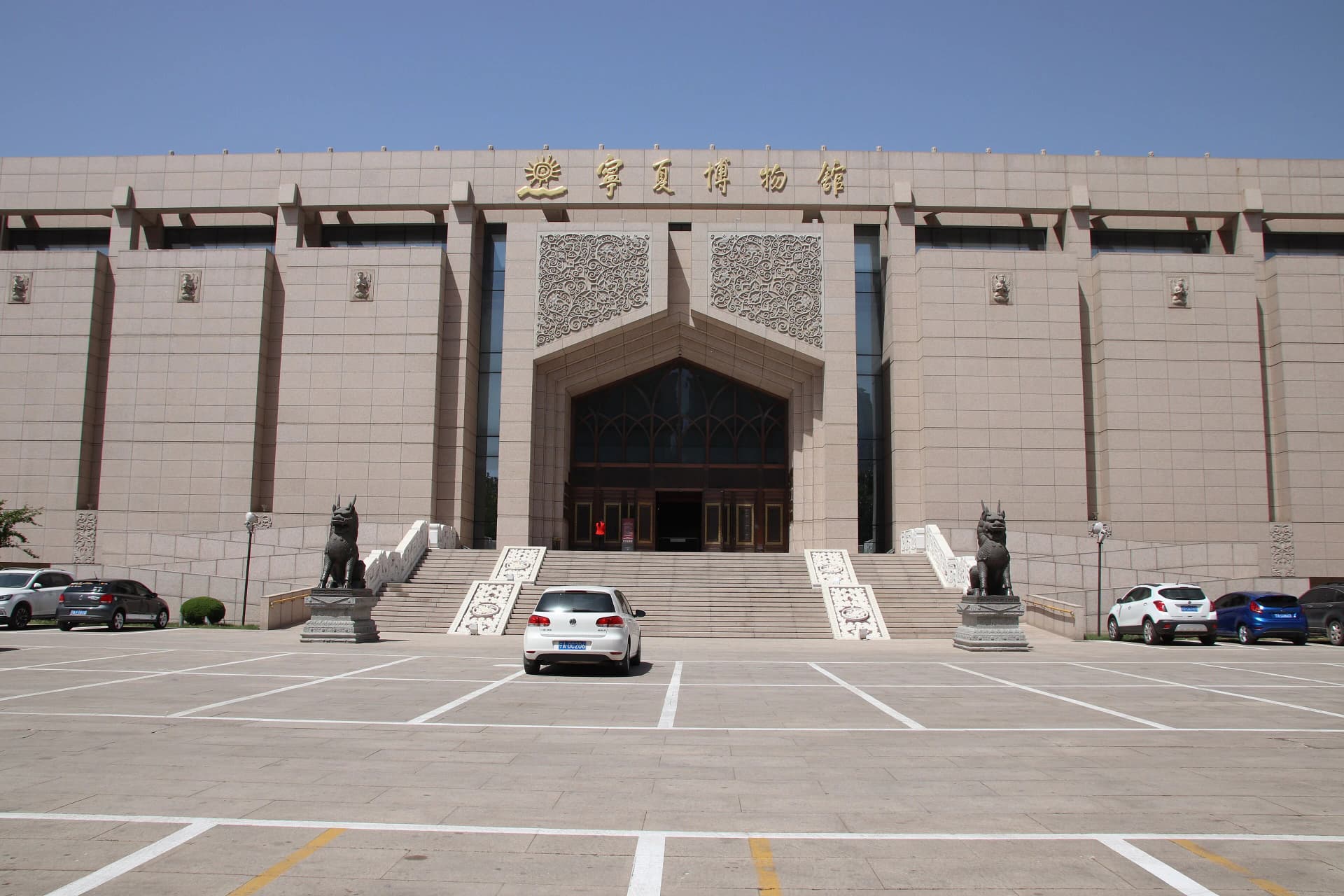
Begin with the museum and orientation film, then take the current official internal transport to the open tomb sector. Recent visitors commonly follow the museum toward the most accessible royal tombs, but numbered stops and vehicle products can change. Do not copy an old bus–carriage combination without checking the live map.
The municipal heritage overview distinguishes the service area east of National Highway 110 from the tomb landscape to the west. Start with the museum in the service area, then move through the controlled visitor route. Do not aim a private car directly at a tomb mound.
What to look for as the visit changes setting
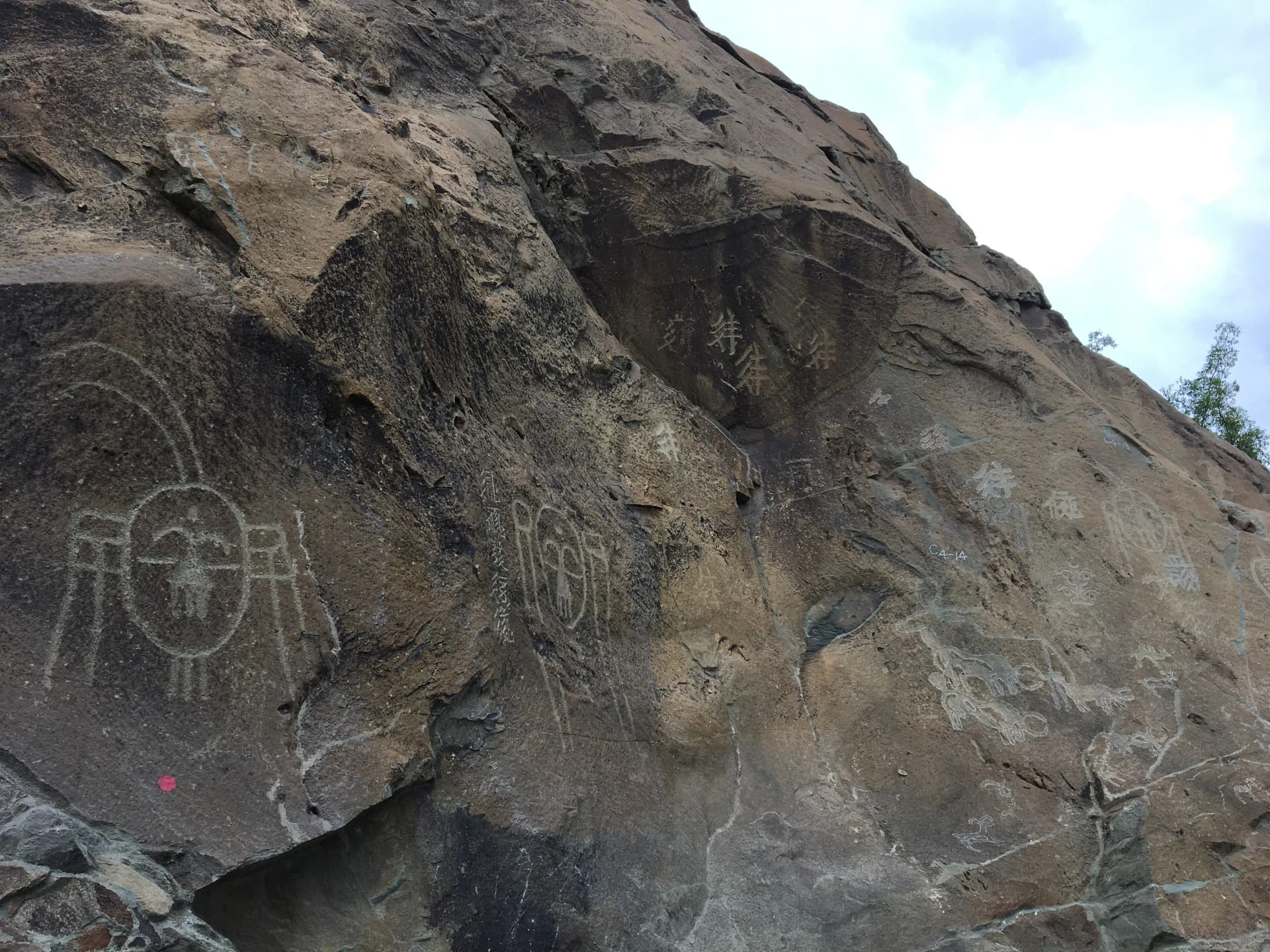
In the museum, concentrate on the Tangut script and the explanation of royal burial architecture. Carry that context outdoors: the surviving earth forms can otherwise look like isolated mounds. Pause to take in the relationship between the tomb landscape, open plain and mountain backdrop before moving to the next viewpoint.
Treat any film, performance or additional tomb sector as a ticket choice. Compare what your product actually includes with the day’s route at the visitor center; a longer list of extras is not necessarily a better history visit. Allow enough time for the museum and the main open tomb area before deciding on anything else.
Outdoors, look for more than the largest mound. The World Heritage property includes nine imperial mausoleums, hundreds of subordinate tombs, architectural remains and historic flood-control features across a broad landscape. Ordinary visitor access covers only selected areas. Scale and relationship—not entering every element—are the point.
Read the earthen structures as protected archaeological ruins, not unfinished buildings. Do not climb, touch or leave the marked path. Wind erosion and visitor pressure are active conservation issues, which is why barriers and controlled transport matter.
Protect the outdoor time
The exposed plain can be windy, hot, cold or dusty. Carry water, sun protection and a windproof layer. The ruins are valuable for scale and atmosphere, not decorative interiors; travellers uninterested in history should keep expectations realistic and use interpretation rather than rushing every mound.
Photography works best when it shows the relationship between the tombs, Helan Mountains and open plain. Drones, tripods and access beyond visitor boundaries depend on explicit current permission. A clear mountain backdrop is weather-dependent, not part of the admission contract.
Check current real-name reservation, passport entry, open sectors, internal transport and final return before leaving Yinchuan. Keep the evening flexible rather than attaching a fixed train.
Ask whether the ticket includes the museum, selected ruins, shuttle or carriage-style transport, film and any performance. World Heritage status does not mean every element is free or open. Carry the original passport used for the booking and use the official service desk if the online form does not accept it.
Choose this site for Western Xia history, archaeology and cultural landscape. Pair it with one winery only when a confirmed afternoon appointment and sober driver leave a real museum-first visit; otherwise give the tombs the day they deserve.