Korean War Memorial Hall
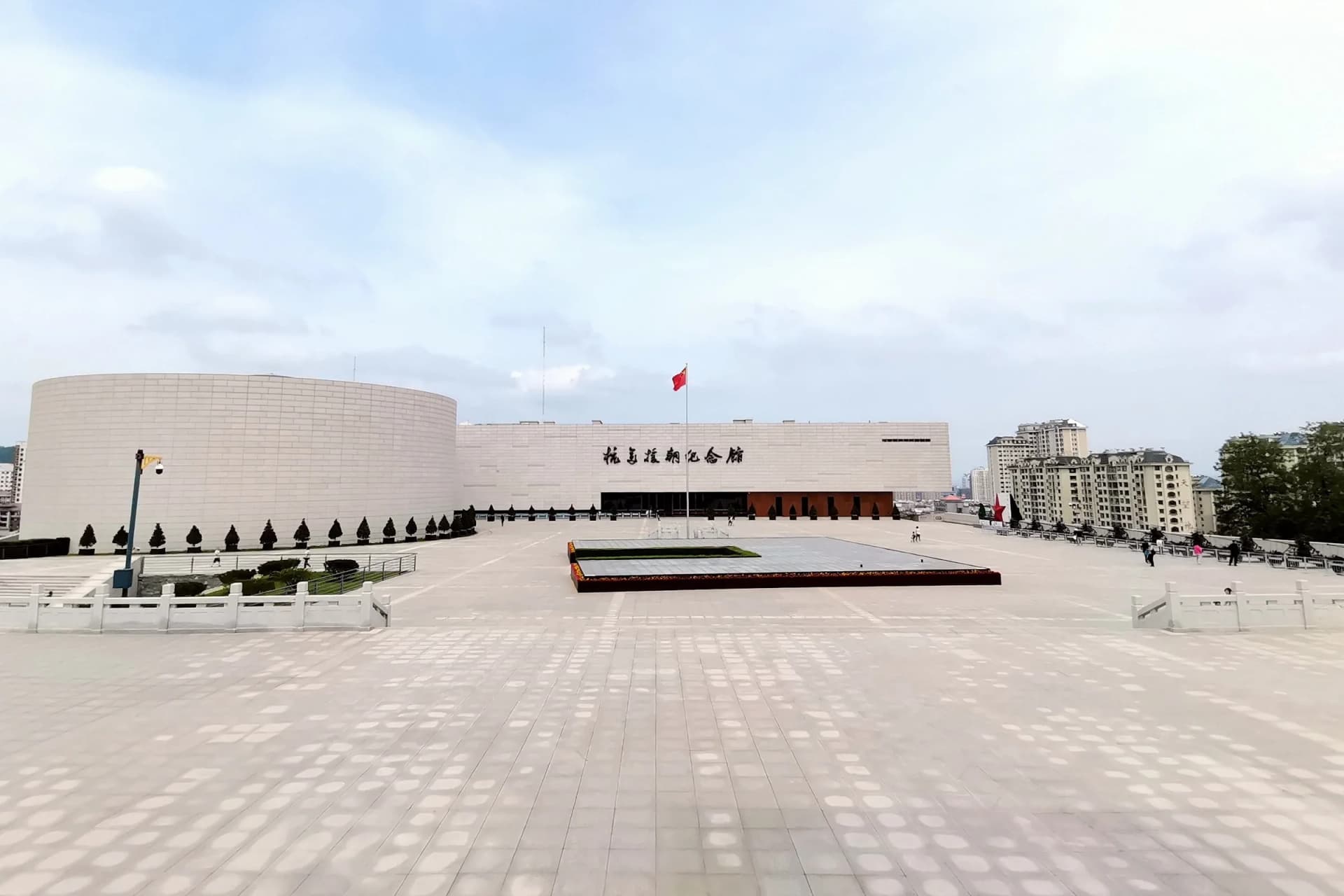
The Memorial Hall of the War to Resist US Aggression and Aid Korea (抗美援朝纪念馆) is Dandong's principal museum for the Chinese official account of the Korean War and the nationwide movement that supported it. The rebuilt complex occupies Yinghua Hill and includes the main exhibition hall, memorial tower, panorama hall and outdoor national-defense displays. Liaoning reported its promotion to a national first-class museum in 2025.
This is not a quick photo stop. Allow two to three hours, longer if you read translated text carefully or visit every outdoor section. Reserve before you go and choose your entrance deliberately: the East Gate is the lower-effort approach, while the South Gate adds a long ceremonial staircase that can exhaust visitors before the exhibition begins.
The museum's framing is a Chinese state narrative. Engage with the artifacts, letters, photographs and spatial design on their own terms, while remembering that a complete study of the war also requires Korean, American, United Nations and independent scholarship. Respectful attention and critical reading can coexist.
Choose East Gate or South Gate before calling a car
East Gate: the practical choice for most visitors
Use 抗美援朝纪念馆东门 in your map. This approach reaches the upper visitor area with a gentler final walk and is usually the sensible choice for older travelers, children, limited mobility or anyone saving energy for the galleries. If arriving by car, confirm the current vehicle-access and parking arrangement rather than relying on an old social-media time claim.
South Gate: the ceremonial stair approach
The South Gate leads to the memorial by a long flight commonly described as 1,014 steps. Recent visitors consistently warn that heat and climbing can consume much of their energy. Choose it only if the staircase itself matters to you and everyone in the group is comfortable with the effort. It is not a required part of the museum experience.
Tell the driver which gate you want. “The memorial hall” alone can result in the wrong drop-off. Ride-hailing can also be slow at the top after busy sessions, so leave time to walk toward a better pickup area or ask staff for the current taxi point.
A four-part route that does not rush the collection
- Main exhibition hall: begin with the chronological galleries and identify the difference between original objects, photographs, reconstructed scenes and interpretive text. Translation can be uneven, so photograph only permitted labels for later review.
- Panorama hall: add the large battle panorama if open. It is a designed immersive interpretation, not primary evidence; read its caption and subject before absorbing the spectacle.
- Memorial tower and square: visit while you still have daylight and before moving far from the central route. The hilltop setting connects the memorial landscape to Dandong and the Yalu corridor.
- Outdoor national-defense area: finish with vehicles, aircraft or artillery displays if the section is open. Check barriers and photography signs; outdoor access can change independently of the galleries.
If you have only 90 minutes, prioritize the main exhibition and one secondary component. Do not sprint through every hall to claim completion.
Free reservation, documents and live hours
Admission is free, but the museum has used real-name, timed reservations through its official WeChat account, mini-program and website. Historical official guidance says booking opens one to seven days in advance. Foreign-passport handling can differ from Chinese ID scanning, so use the service desk or the contact method shown on the current reservation page if the form does not accept your document.
Check the official museum website for your date and reserve each visitor with the exact document they will carry. Save the successful confirmation offline.
Do not treat “closed Monday” as universal. The usual pattern has been Tuesday–Sunday operation, but holiday and summer programs change it: in 2026, published notices included Monday opening and extended hours during a summer period. Confirm:
- the opening, last-entry and closing time for your exact date;
- whether Monday or a public holiday follows a special schedule;
- the reservation window and required original document;
- which halls and outdoor areas are open;
- bag, photography and accessibility rules.
Bring the original passport used for booking, not only a photo of it. Arrive before the timed cutoff because security and document checks take time.
Reading a politically charged museum well
The museum commemorates Chinese People's Volunteers and presents the war through the People's Republic of China's institutional language. Translate the official English name rather than substituting a neutral title inside quotations, but distinguish the institution's terminology from your own historical analysis.
Useful questions include: Who created this object? When was it collected? Is a scene reconstructed? Which voices appear in letters or testimony, and which are absent? How does the panorama use sound, scale and viewpoint? What is commemorated in the tower and landscape that a gallery label cannot convey?
Keep phones silent, never use flash where prohibited and do not pose playfully with memorial objects. Families should prepare children for photographs of war and loss. If you want comparative history, note questions during the visit and consult broader scholarship afterward rather than arguing with staff or other visitors inside a memorial space.
Accessibility and comfort
The East Gate avoids the most punishing approach, but the complex is large and still involves distances, slopes and prolonged standing. Ask staff about lifts, wheelchairs, rest areas and the most accessible sequence on arrival. Do not assume the tower or every outdoor exhibit is step-free merely because the main building is accessible.
Wear comfortable shoes and carry a light layer; galleries can feel cool even in summer. Water and food rules may limit what enters exhibition spaces, so eat beforehand and use only designated areas.
Pair the museum with the riverfront
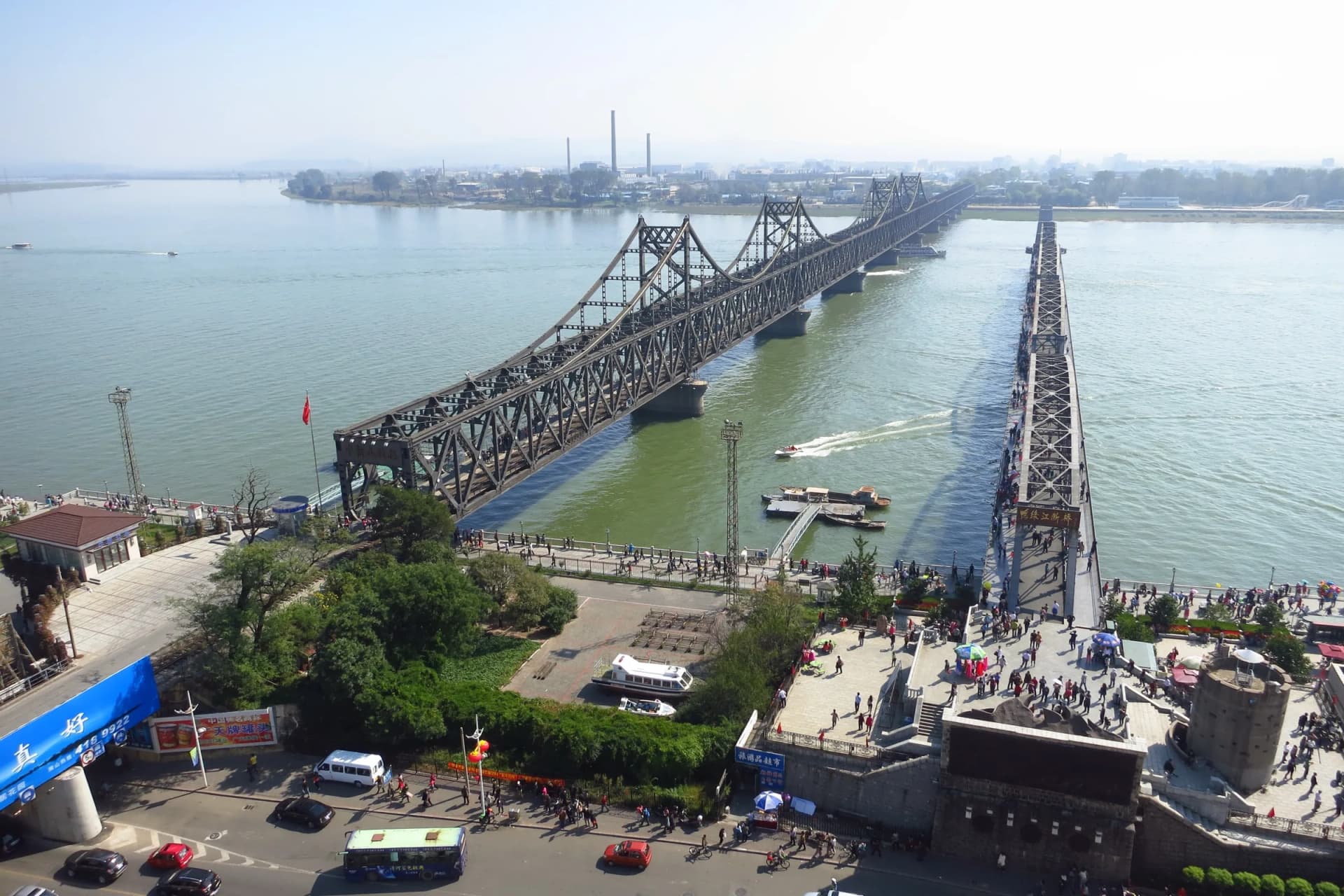
After the museum, go to the Yalu River Broken Bridge in daylight or late afternoon. Seeing the physical crossing after the galleries creates a coherent history day, and the flexible riverfront protects you if the museum runs long.
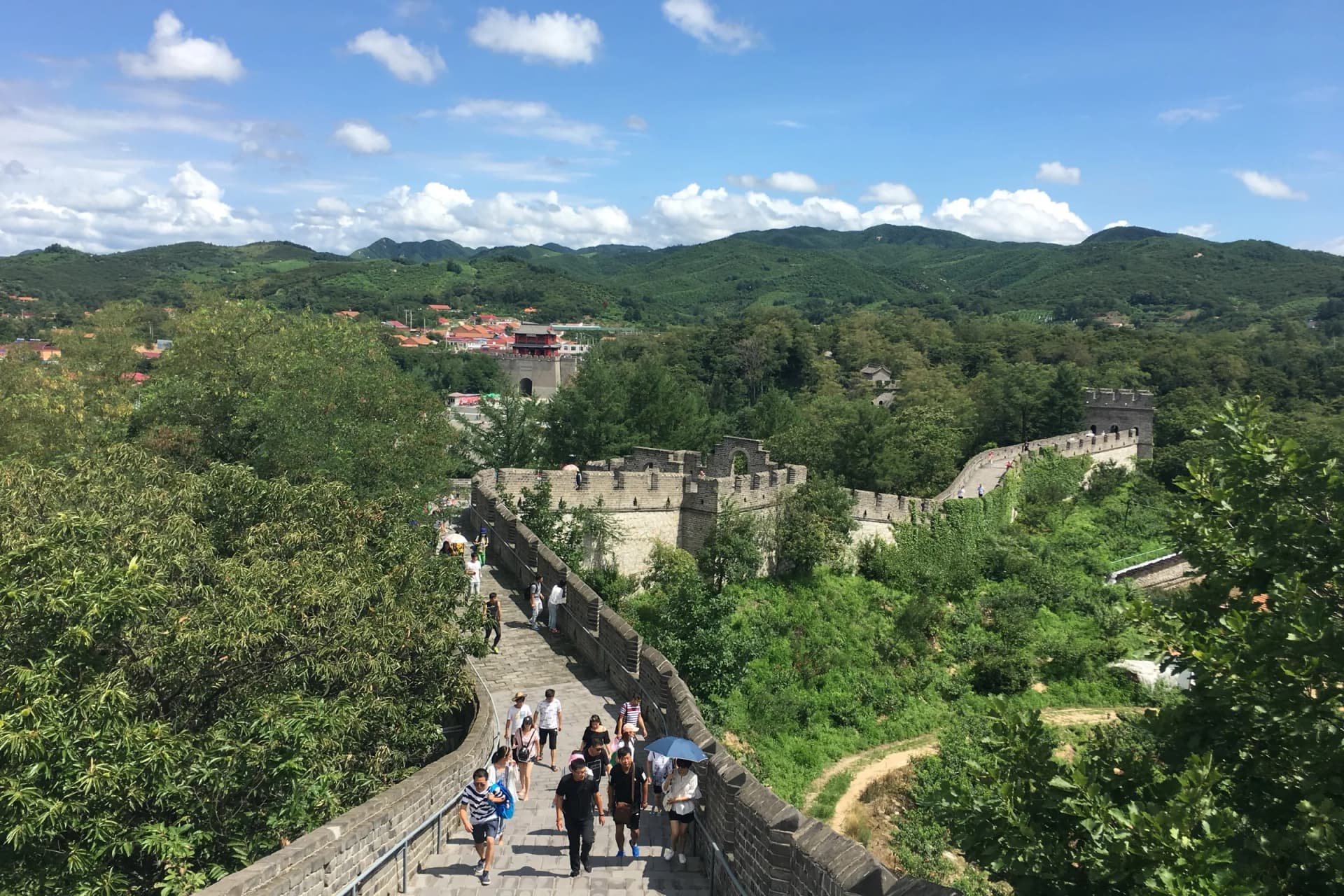
Keep Hushan Great Wall for another half day. It requires road transport, live weather checks and significantly more physical effort; combining all three major sites in one day turns meaningful visits into transfers.