Yanbian Museum
Yanbian Museum (延边博物馆) is the best orientation stop in Yanji. It connects regional archaeology, the history and material culture of China's Korean ethnic community, and modern borderland experience. Those themes make the city's bilingual signs, food traditions and nearby folk attractions easier to understand rather than merely photograph.
Allow 1.5–2 hours for a focused visit or up to three hours if you read slowly and a temporary exhibition is open. Recent visitors describe several substantial halls and often recommend the museum as the first stop; the exact gallery count and open exhibits can change, so follow the floor plan you receive that day.
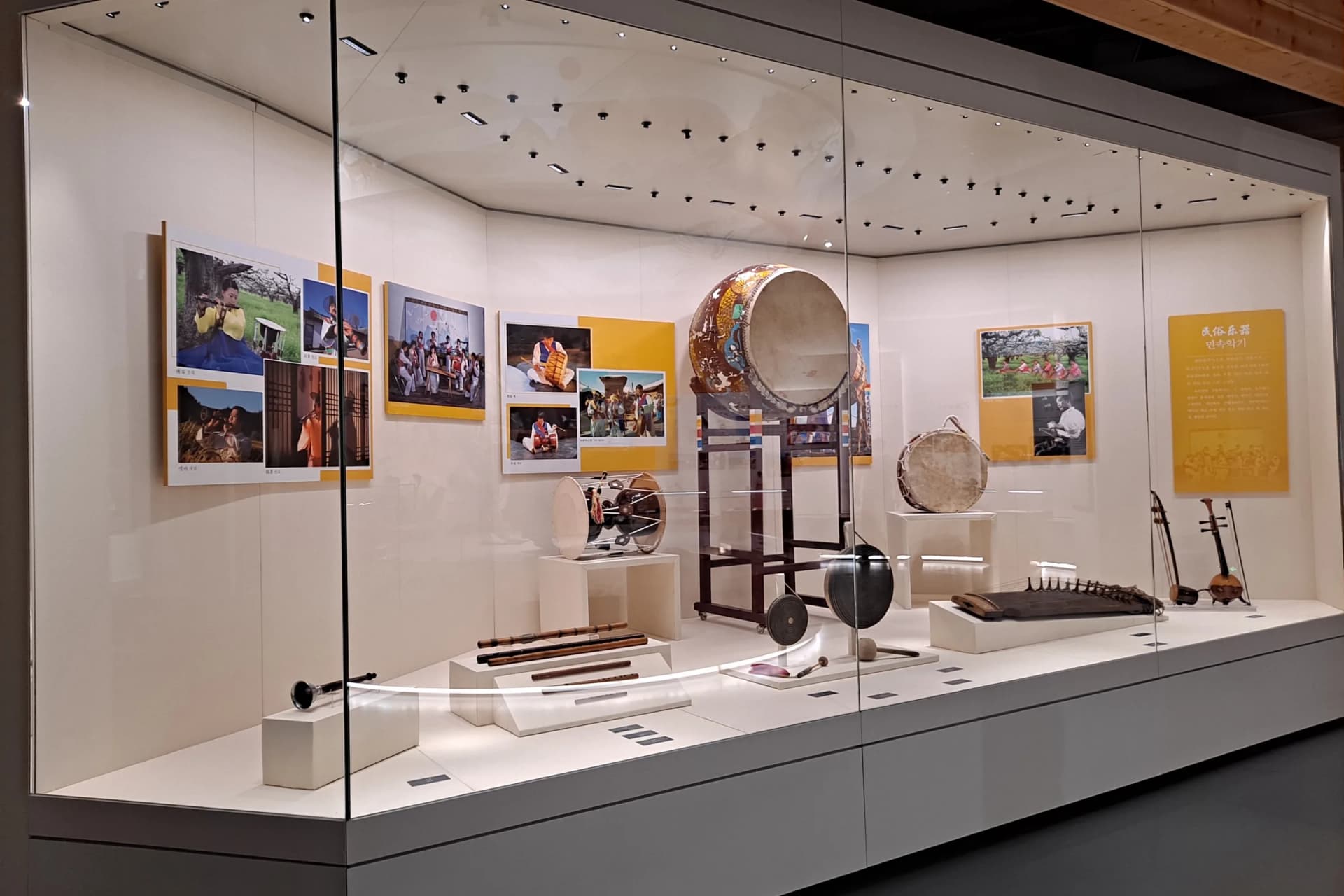
Photo: EditQ · Source · CC BY-SA 4.0
Follow one story instead of trying to read every label
The museum's established core themes include excavated regional objects, Korean Chinese folk culture and revolutionary history. A useful sequence is:
- Regional archaeology and chronology — establish where Yanbian sits within Northeast Asian history and notice how objects change across periods.
- Domestic and community life — compare clothing, heating, food storage, work tools and life-cycle customs rather than collecting isolated “traditional” objects.
- Music and performance culture — look at drums, wind and string instruments, then connect them to the photographs and audiovisual material around them.
- Modern and temporary galleries — choose these only after the chronological and folk-culture spine.
If one permanent hall is closed, do not wait for it to reopen that afternoon. Spend more time on two available themes and use the temporary exhibition as the final section. Translation by camera can help with Chinese and Korean labels, but lower screen brightness and step away from cases before stopping to translate.
Reservation, passport and opening checks
The museum has historically offered free admission through advance reservation in its official WeChat account, with entry by reservation code or identity document. Carry the original passport used for the booking; a screenshot alone may not resolve a name or document mismatch.
A notice effective 27 May 2026 announced Tuesday–Sunday opening from 09:00 to 18:00, last entry 17:30, with Monday closure. Yanbian venues have also used shorter winter hours and publish holiday exceptions, so treat that schedule as dated rather than permanent. Recheck the museum's official account for your date, temporary closures and the current reservation window.
If the Chinese-only form does not accept your passport, do not invent a domestic ID number. Contact the museum or ask your hotel to confirm the staffed foreign-passport process. Arrive with time for security and bag storage, especially near closing.
Getting there and planning the city day
The museum is at 长白山西路8627号, beside the sports complex on the western side of Yanji. A taxi or ride-hailing car is straightforward from Yanji West Railway Station or central hotels. Public buses serve the area, but route numbers and stops change; use a live map and confirm that the destination pin is 延边博物馆, not a similarly named exhibition hall.
The location makes the museum a good arrival-day or departure-day stop only when luggage storage is confirmed. Do not assume large suitcases will be accepted. Keep a 30-minute buffer before a train because security, cloakroom retrieval and traffic take longer than the map estimate.
Accessibility, photography and visitor etiquette
The modern building has broad indoor circulation and lifts, but an operating lift does not guarantee step-free access to every temporary display. Ask at reception for the accessible route and toilet. Seating may be unevenly distributed, so take breaks before fatigue makes the final galleries meaningless.
Follow gallery signs for photography. Flash, tripods, filming and photography of certain objects or temporary loans may be restricted even when phone photographs are generally allowed. Do not press against cases or block narrow label areas while translating.
This is a museum about living communities as well as historical objects. Avoid treating clothing, rituals or family customs as exotic props. Compare how exhibits explain continuity and change, and distinguish interpretation written by the museum from assumptions brought from television or social media.
What to pair with it
Visit the museum before the Korean Folk Village. The museum provides history and vocabulary; the folk village then becomes easier to read as a managed cultural-tourism space with a large photography economy. Together they make a strong culture-focused day, with a long lunch between them.
On a clear day, Mao'er Mountain is the contrasting outdoor stop. On rain, ice or low cloud, keep the museum and add a slow market or café visit instead. The early Water Market works on a separate morning; combining it with every south-side attraction produces more transfers than insight.