Huangling
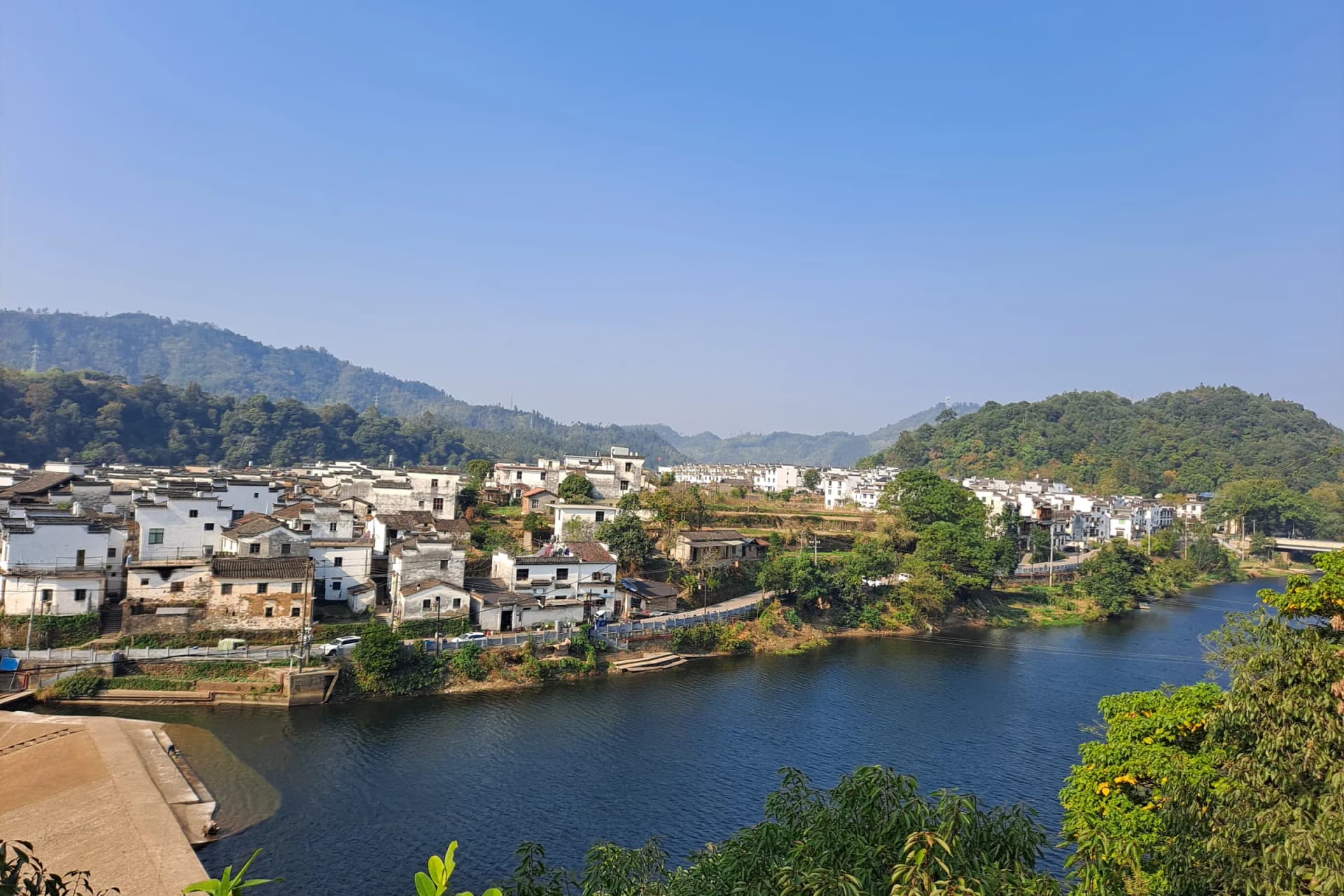
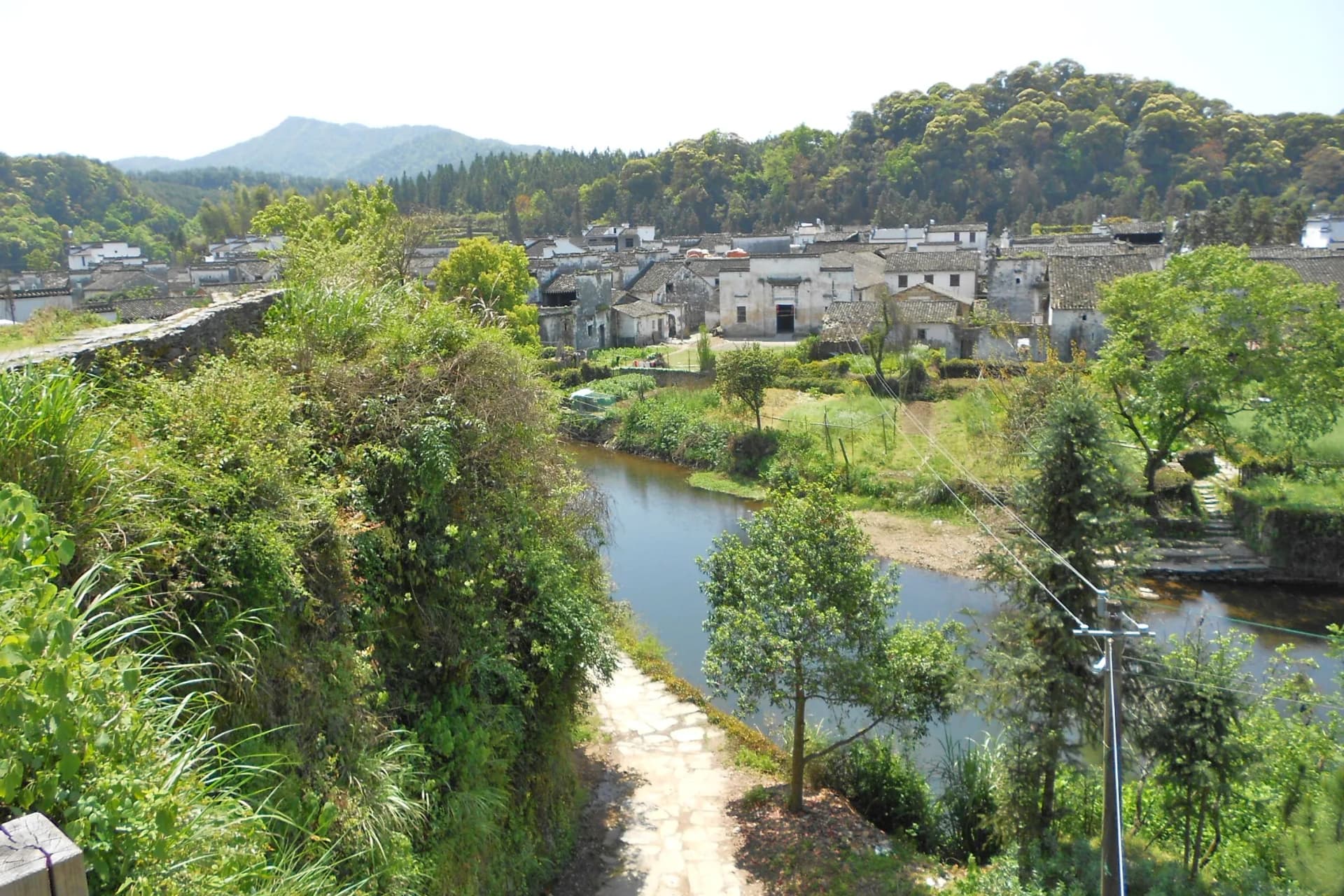
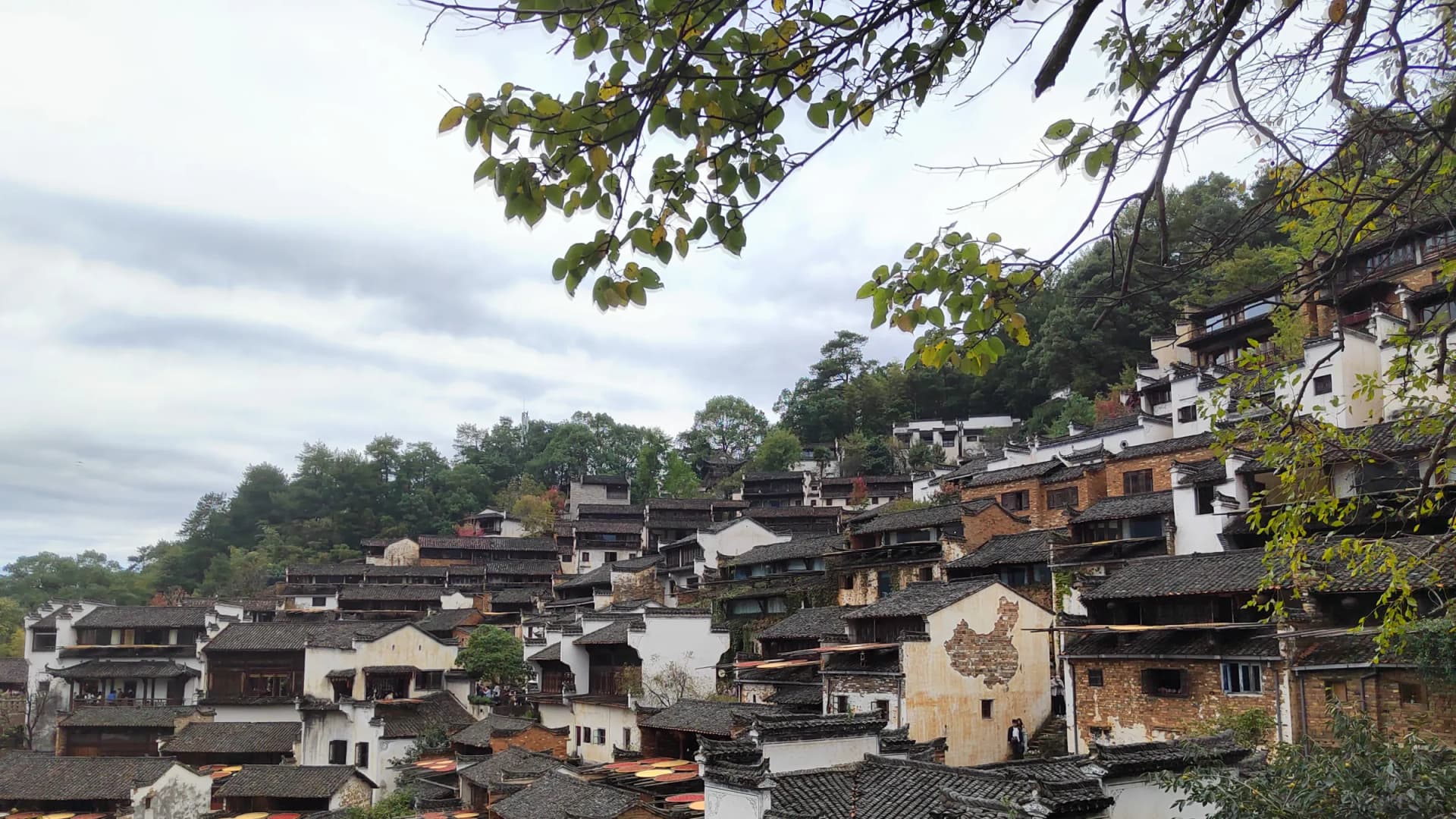
Huangling (篁岭) is the clearest single-stop choice in Wuyuan for a dramatic hillside village, terraced surroundings and the famous shaiqiu crop-drying displays. It is also a managed scenic area with cableways, retail streets, staged viewpoints and heavy peak-day traffic. Come for the spatial view and architecture, not for an untouched farming village.
Allow four to six hours door to door from the visitor centre on a normal day. A two-hour visit may cover the cableway and one viewpoint, but queues, steps and the spread between the old village and terraces make that fragile.
A route that avoids needless backtracking
Start at the visitor centre and follow the cableway and entrance assigned to your ticket. Once above, orient yourself before chasing photo spots: there can be more than one cableway and seasonal circulation may alter the best direction.
A useful sequence is:
- Tianjie and the old-village lanes for the stacked houses, courtyards and changes in level.
- Shaiqiu Workshop and a village overlook for the recognizable roof-and-tray composition.
- One terrace or high-view branch if visibility and walking energy are good.
- Return by the cableway named on your ticket, preserving a buffer before its last descent.
Do not treat every bridge, flower garden, shop and photo installation as compulsory. The old lanes and the overlook explain Huangling; optional high paths add time and exposure without always adding a different story.
Buy the right product, not just the cheapest label
Huangling's official site publishes attraction notices, current ticket information and contact details. Compare the exact Huangling shelf on Trip.com, but open the product details for your date and verify:
- admission plus the named round-trip cableway, rather than admission alone;
- the entry window, last admission and last descent;
- which cableway, night program or seasonal zone is operating;
- passport or e-ticket handling for foreign visitors;
- child, senior and accessibility rules;
- cancellation terms if wind, lightning or maintenance affects the cableway.
Do not copy a price or opening time from a traveller's screenshot. The official site currently separates ticket booking, hotel booking, packages and public price notices; those are distinct products. If Trip.com and the official notice disagree, the scenic-area notice and your dated voucher control.
Getting there and getting back
The practical gateway is Wuyuan Railway Station or the county town. Direct tourist buses have operated between the station area and Huangling, but times and the exact boarding point change. Confirm the same-day schedule at the station, and check the final return before going up.
A taxi or hired driver reduces transfer risk. For a driver who waits, agree on parking, waiting time and the final drop-off rather than assuming the outbound fare includes the return. Self-drivers navigate to the Huangling Scenic Area Visitor Centre (篁岭景区游客中心), not a village lodging pin above the gate.
Avoid a tight onward train after Huangling. Road congestion, cableway queues and weather controls can all stretch the descent. Keep the Chinese hotel or station name offline for the return.
Day visit or overnight?
A day visit is enough for the core route and is usually better value. Staying inside the scenic area can give quieter early and late lanes, but it does not remove the mountain's steps or automatically include every ticket component.
Before booking an overnight stay, ask the property which cableway and luggage transfer apply, whether admission is bundled, how to enter after the daytime gate closes, and how far the room is from level access. Historic-house accommodation can involve steep stone stairs; a map pin “inside Huangling” does not promise a step-free route.
Seasonality without the brochure promise
Shaiqiu is the practice and visual language of drying crops on racks and trays. Huangling presents it throughout much of the year, but the crops, colours, density and degree of staging vary. Autumn is not the only possible season, and no date guarantees a particular red-chilli composition.
Spring terraces depend on bloom and weather; summer adds heat and sometimes night programming; autumn intensifies the drying theme; winter can feel quieter but brings cold and possible weather disruption. Check the official announcement for your date rather than planning around a social-media caption from another year.
Crowds, weather and walking effort
The most effective crowd tactic is an early arrival on a non-holiday weekday. Narrow viewpoints and Tianjie can bottleneck after tour groups arrive. Overnight guests may gain calmer edges of the day, but they should still check cableway access and event closures.
Huangling is vertical. Expect stone paving, ramps and many steps; wet surfaces become slick. Cableways solve the main ascent but not the circulation inside the village. Travellers with limited mobility should ask which current route reaches the principal overlook with the fewest stairs and whether any assistance vehicle is operating.
Carry water, sun protection and a light rain layer. Toilets, food and rest points are concentrated in managed areas, but queues can form at lunch. In thunder, strong wind or dense fog, follow cableway instructions and shorten the high-view branch.
Combine it carefully
Huangling already fills the major-attraction role on a Wuyuan East Line day. Add only one short contrasting stop if transport is secure. Sixi-Yancun belongs to the North Line and deserves a separate architecture-focused visit.