Wuyuan East Line
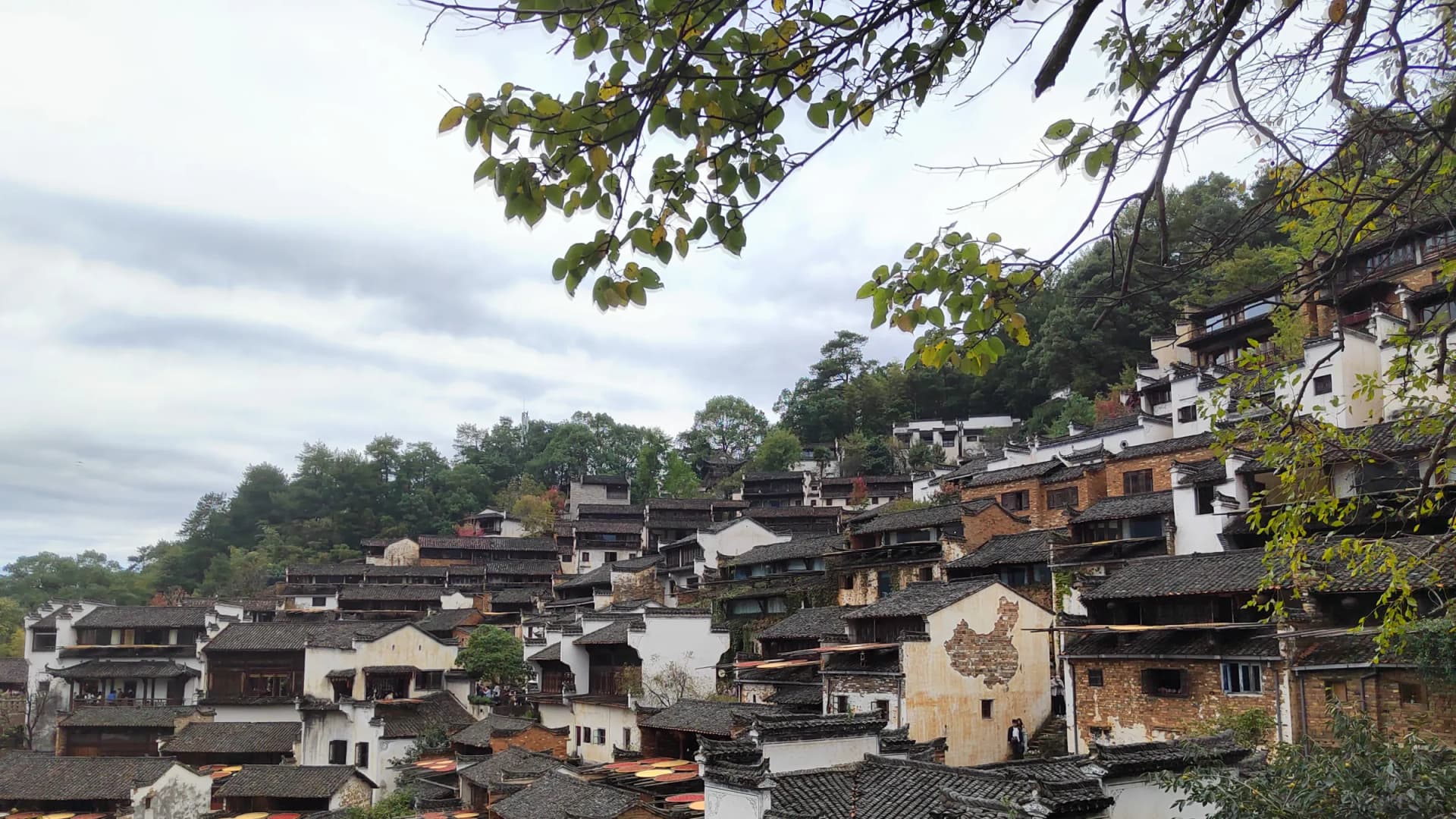
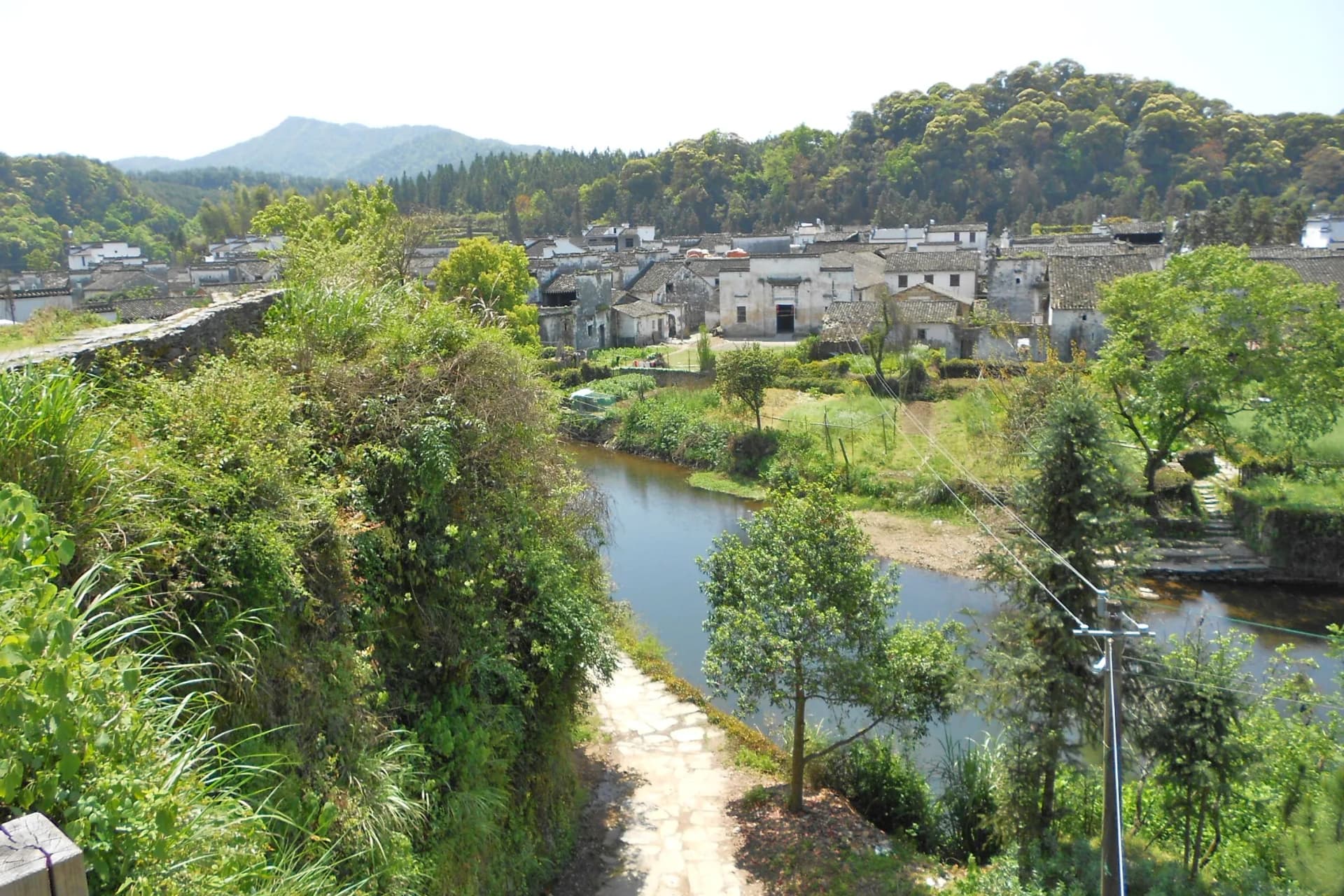
Wuyuan's East Line (婺源东线) is a road corridor through several separately managed villages, not one walkable attraction. The Ministry of Culture and Tourism's published rural route places Likeng, Wangkou, Jiangwan, Xiaoqi and Huangling on this side of the county. Seeing all of them properly in one day is unrealistic.
For a first visit, make one experience the anchor and add no more than one contrasting stop. Choose Huangling for a polished hillside panorama, Wangkou or Likeng for water-and-lane atmosphere, or Jiangwan or Xiaoqi for an architecture-led village visit. This is a route-planning guide; each stop can have its own admission and operating rules.
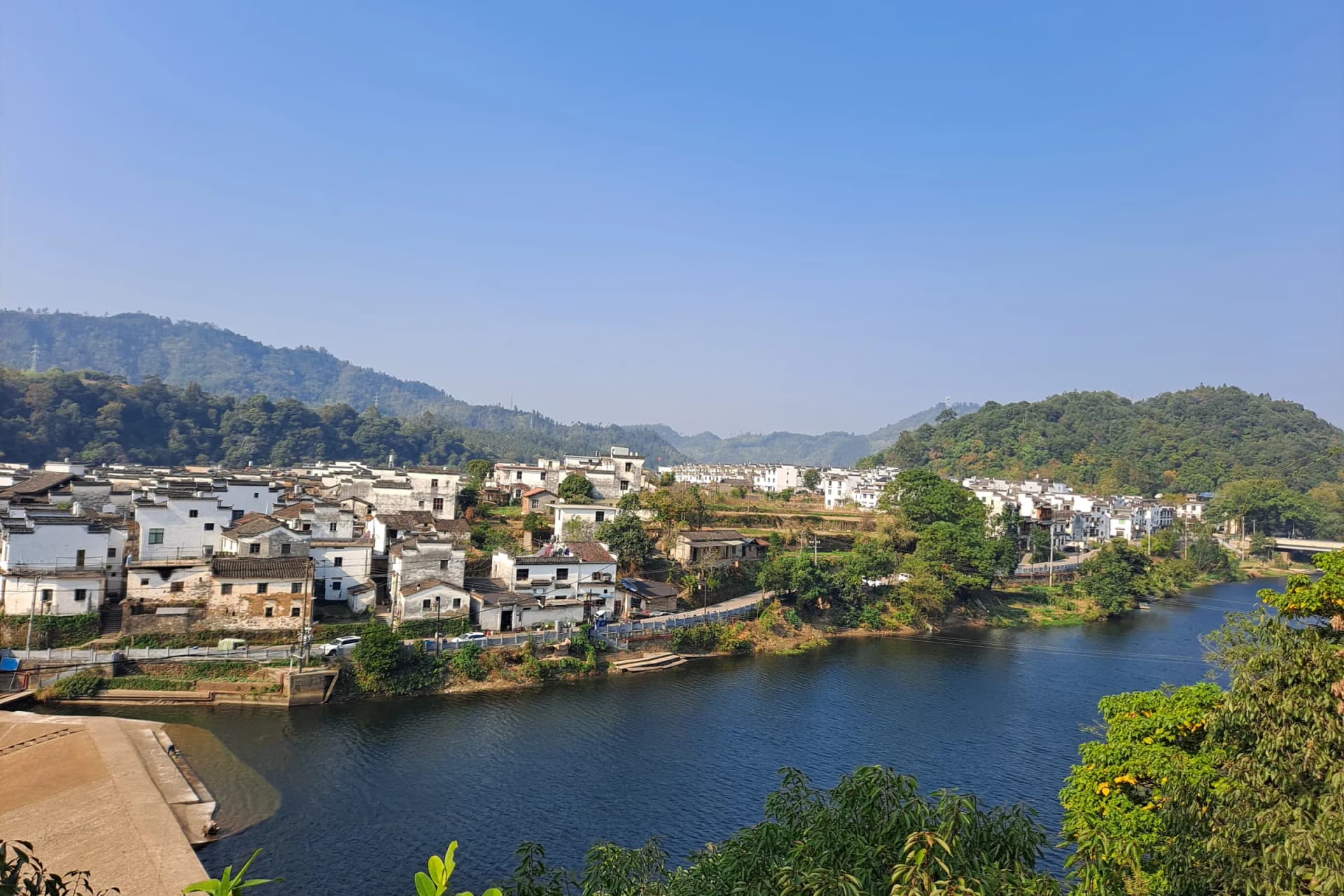
Photo: EditQ · Source · CC BY-SA 4.0
Pick the village by the job it does
- Huangling (篁岭): the largest commitment and the easiest choice for a single headline sight. Expect cableway logistics, slopes, staged visitor facilities and the county's densest crowds.
- Likeng (李坑): a compact waterside lane experience. It can work as a shorter first or last stop, but retail lanes and tour groups may dilute the quiet-village expectation.
- Wangkou (汪口): a river bend, old commercial-village fabric and architectural detail. Choose it when the settlement's relationship with the water matters more than a dramatic viewpoint.
- Jiangwan (江湾): a more formal heritage stop with prominent ancestral and public buildings. It suits visitors who want interpretation rather than only rural scenery.
- Xiaoqi (晓起): lanes, old residences and mature trees in village surroundings. Confirm which section and entrance the current ticket covers.
Moon Bay (月亮湾) is a roadside viewpoint, not a substitute for a village. Treat it as a brief photography stop only if parking and traffic are calm. Sixi-Yancun is on the North Line, so do not add it simply because an app shows a short straight-line distance.
Three routes that actually fit
1. Huangling-first day
Go directly to Huangling, allow roughly half a day including cableway queues and walking, then add one brief lower-effort stop only if the return is secure. Likeng or a Moon Bay pause is more realistic than two additional ticketed villages.
This version works best for a first-time visitor or a group with mixed interests. It also leaves room for weather delays. Compare the exact Huangling ticket shelf on Trip.com, then verify the selected date, cableway inclusion, passport entry and last descent with the official scenic-area notice.
2. Two-village architecture day
Skip Huangling and choose two among Wangkou, Jiangwan and Xiaoqi. A focused pair gives time to read courtyards, ancestral spaces, river edges and lanes instead of repeating gates and souvenir streets. Put the stop you care about most first; close the second visit early enough to reach Wuyuan town or station without depending on the final rural connection.
3. One corridor with an overnight
An overnight near an eastern village can preserve early or late light, but it only helps if the property is genuinely near your chosen entrance and can handle luggage and onward transport. “Wuyuan” in a hotel name may mean the county town, a village several kilometres away or a managed resort. Check the Chinese address and map pin before booking.
Transport is the limiting factor
Wuyuan Railway Station and the county town are the usual bases. Public tourist buses and rural services change by season and demand; they are useful only after you confirm the current departure point, stops, payment method and final return. Do not build a multi-village day from an old screenshot of a timetable.
A hired car or driver is usually the cleanest solution for two paid stops. Agree in advance on the exact Chinese place names, waiting time, parking charges, overtime and final drop-off. A point-to-point taxi is not the same as a car that waits: ride-hailing supply can thin out at rural gates late in the day.
Self-drivers should expect slow traffic during blossom weekends and public holidays. Parking may sit outside the walking area, so “arrival” is not the start of the visit. Keep buffer time for the visitor centre, ticket check and internal transport.
Tickets: never assume one pass covers the route
Wuyuan has offered multi-attraction products, but composition, validity and eligible entrances change. Before paying, compare the names in Chinese and confirm:
- whether the product covers each intended village or only a subset;
- whether Huangling and its round-trip cableway are separate;
- how many days the pass remains valid and whether first use fixes the dates;
- whether a foreign passport can be entered online or must be checked at a staffed window;
- whether boats, internal shuttles, performances or private old houses cost extra.
If you want only Huangling plus one village, separate tickets can be clearer than buying a broad pass and racing to justify it. The official Huangling website controls its own notices; county and individual-attraction channels control the other stops.
Seasons change the view, not the route logic
Rapeseed flowers, autumn colour, drying trays and mist are weather- and agriculture-dependent. Promotional photographs do not guarantee the same field, crop or display on your date. Spring blossom periods bring the heaviest road pressure; rain makes stone lanes slippery; summer heat makes exposed village walks tiring.
Start with the stop that matters most, carry water and a rain layer, and keep one indoor architectural stop as the poor-weather branch. If fog removes a panorama, slow down in one village rather than paying for another viewpoint with the same visibility.
A practical decision rule
Choose one major stop + one minor stop for a day from Wuyuan town. Choose two villages without Huangling if architecture is the point. Add a third ticketed attraction only with a private vehicle, an early start and a deliberate decision to shorten each visit.
Return to the Wuyuan guide for the wider stay. Use Sixi-Yancun on a separate North Line day rather than bending the East Line around it.