Qingguo Lane
Qingguo Lane (青果巷) is less than a kilometer long, but it is not just an old-looking shopping street. Its lanes run beside the Nanshi River section of the Grand Canal, and its preserved houses connect imperial examinations, modern language and twentieth-century public life. The public street is free; the historic interiors form a separate museum network with their own opening days and temporary closures.
Use two to three hours and follow three people rather than collecting every doorway: Ming scholar and military thinker Tang Jingchuan, linguist Zhou Youguang, and lawyer and public figure Shi Liang. That choice turns a photogenic district into a readable piece of Changzhou.
Start at the east-side visitor center
Navigate to 青果巷历史文化街区游客中心, beside Heping North Road, at 119.962375, 31.772125. Amap places the main district about 290 m from Cultural Palace metro station Exit 5B (文化宫地铁站5B口). Do not use a random restaurant or west-side car-park pin as the walking start.
Begin in daylight, ideally morning or early afternoon. The lane remains an outdoor public space later, but museum rooms, libraries and memorial halls may close well before the restaurants and lanterns. Check the district's current venue list on the day and ask the visitor center which interiors are open and when last entry occurs.
A no-backtracking heritage route
- East arch and Zhuochu Bridge (琢初桥): establish the relationship between lane, white-walled houses and Nanshi River. Cross only where the public route directs you; do not enter residential thresholds for a photograph.
- Qingguo Lane Cultural Memory Hall (青果巷文化记忆馆): if open, use it first. Old photographs and objects give the street plan and family history that the façades cannot explain alone.
- Shi Liang's Former Residence (史良故居): choose this for modern legal, women's and public history. The surviving late-Qing house is modest; the biography is the reason to enter.
- Leave the commercial spine for the waterside lanes: recent visitors consistently find the river edge and small side alleys more rewarding than walking only past shops. Follow open signs and barriers; restoration or construction can end a branch without warning.
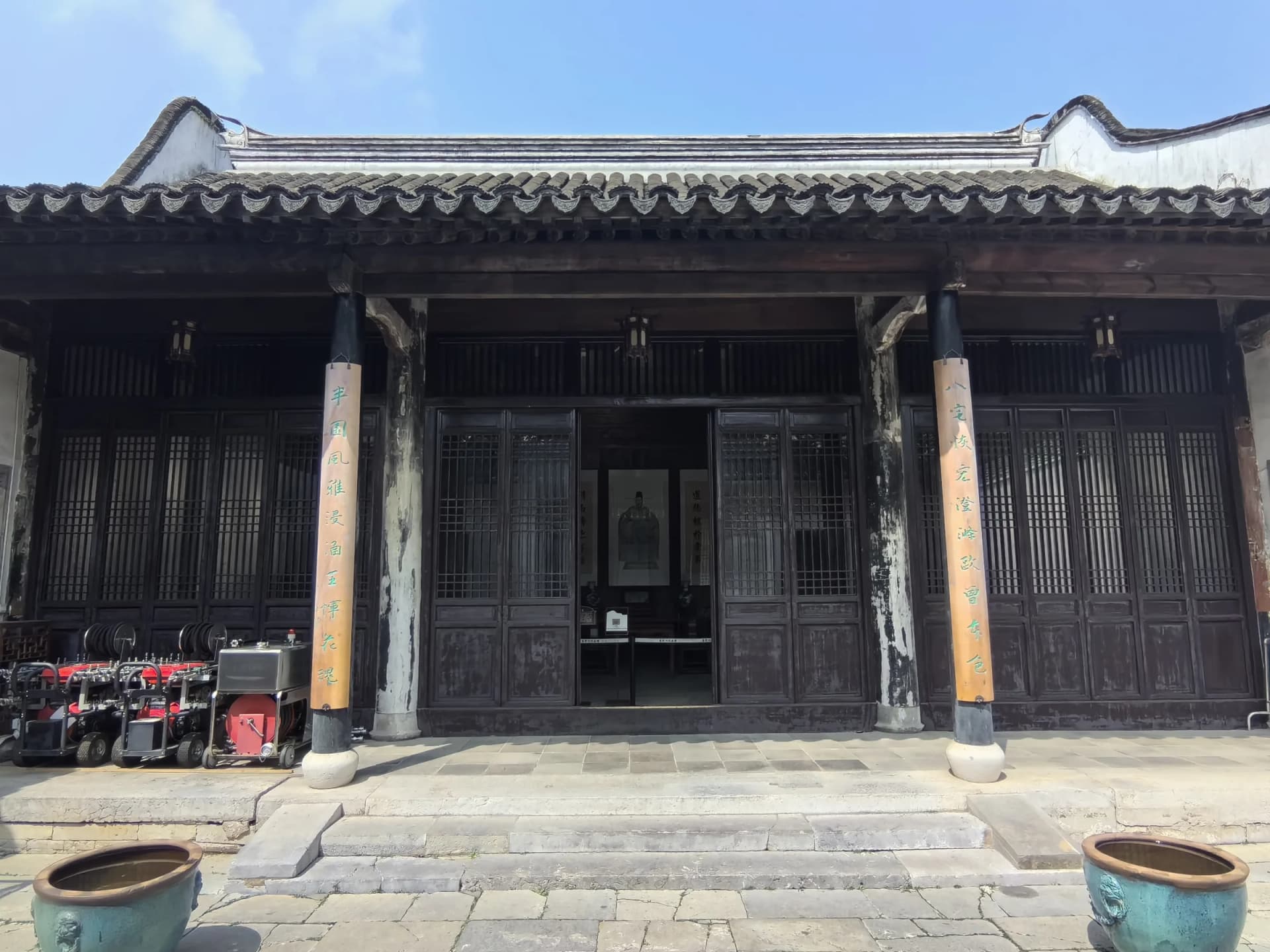
- Choose one western interior: the Zhou Youguang Library (周有光图书馆) explains a long life across economics and language, while the Tang Jingchuan Memorial Hall (唐荆川纪念馆) occupies Zhenhe Hall, the most substantial surviving compound associated with the Tang family. Pick one if time or attention is limited.
- Finish at the west wall (西山墙): end rather than retracing the main lane. From here, continue by metro, bus or a short ride to Tianning Temple and Hongmei Park.
The full walk is roughly 900 m before detours into courtyards. Allow 20–30 minutes for the orientation hall and 30–45 minutes for one major residence; the rest is lane, river and bridge time.
Free does not mean always open
The city describes a “1 + 7 + N” network of public cultural venues and says the main named halls are free. Treat that as an admission framework, not a promise that every door will be open. Monday closures, exhibition changes, private events, repairs and capacity controls can differ by building. Do not pay an unofficial person for “access” to a closed courtyard.
Stone paving, bridge lips and old thresholds can be awkward for wheelchairs and strollers. The main public lane is the easiest option; ask staff for the currently step-free entrance to any interior rather than assuming the historic front door is accessible. Keep voices low, avoid flash where prohibited and respect the residents and working businesses that remain in the district.
Daylight or evening?
Choose daylight if historic interiors are the priority. Start after 15:00 only when you have confirmed the two rooms you most want; the softer light and lanterns are attractive, but they do not reopen a closed museum. Food stalls are optional rather than the reason to visit—select one snack after the heritage walk and avoid spending your limited daylight in a queue.
There is no relevant ticket to book for the public lane. Qingguo works best as the free culture half of a Changzhou stay, not as a paid attraction or an all-day old-town destination.