Baolin Temple in Wujin
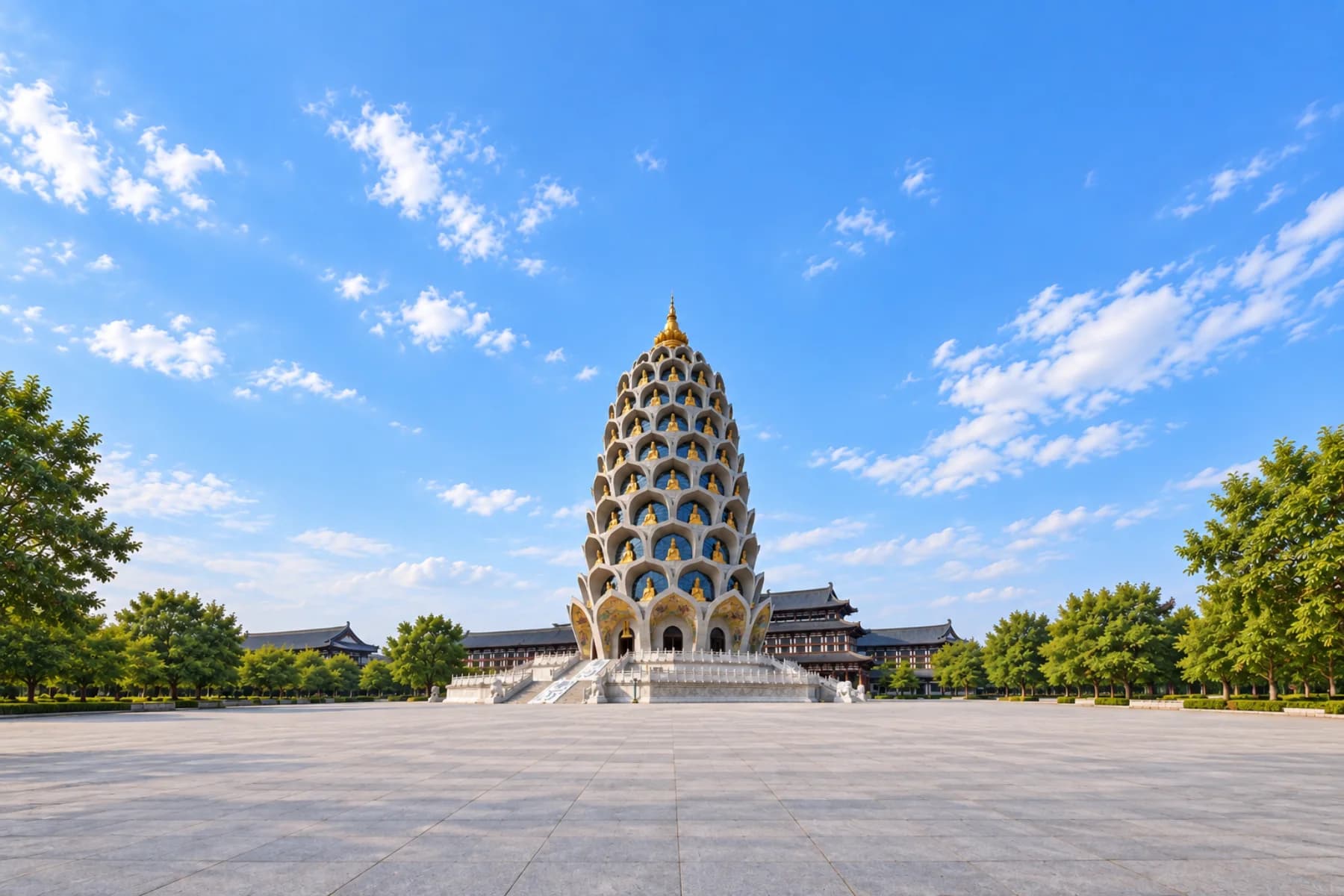
Baolin Temple (宝林禅寺, Bǎolín Chánsì) is the Wujin temple whose Guanyin Pavilion resembles a giant lotus bud—or, in its affectionate local nickname, a “golden pineapple.” This is the correct landmark to recognize: a tall pale pavilion wrapped in tiered petal-shaped niches and gilded figures, not Tianning Pagoda in central Changzhou.
The site tells an old religious story, but most visible architecture is modern. Local religious-affairs records describe repeated loss and rebuilding, with the temple reopening in 1995 and the present complex developed later. Visit for an active Guanyin-focused temple and an unusual contemporary interpretation of Buddhist architecture, not for untouched sixth-century fabric.
Is it worth the trip? Yes if you are already spending a half day in Wujin, want a quieter temple than Tianning, or care about the pavilion's design. Skip it on a first central-Changzhou day if the extra southbound transfer would displace Qingguo Lane, Tianning Temple or the museum.
A useful 90-minute route
Enter through the working temple rather than treating the pavilion as a single photo stop. A low-backtracking visit is:
- Mountain gate and Tianwang Hall: slow down, read posted visitor rules and notice where worshippers move before taking out a camera.
- Main hall: the rebuilt axial halls establish the deliberately Tang-inspired setting. Keep the central approach clear and stand to one side if a service is underway.
- Guanyin Pavilion exterior: step back into the forecourt first. The 91.9-metre pavilion uses 108 lotus-petal forms around its exterior; a city-government account describes a 39.9-metre three-sided Guanyin image inside. The full silhouette is easier to understand from a distance than at its doorway.
- Pavilion interior, only if open: access can differ from general temple opening. Ask staff whether visitors may enter, which level is open, whether stairs or lifts operate and where photography stops. Do not infer that every gallery seen in an old post is available.
- Side halls and garden: use the quieter courtyards, covered walk and lotus pond as a decompression loop. In lotus season, pause without stepping into planted or worship areas.
Allow 60–90 minutes for architecture and a quiet circuit, or up to two hours if an interior is open and a vegetarian meal or café is operating. Recent visitors value the stillness but also disagree on whether the modern reconstruction alone merits a long journey; that is why the Wujin pairing matters.
Opening and admission require a same-day check
There is no dependable official live timetable published in a visitor-friendly form. Recent reports conflict: one visitor was guided out around 16:30, while others describe closing closer to 17:00. They also report free general admission, but older listings mention a fee. Treat all of that as changeable rather than choosing the most convenient version.
Aim to arrive before 15:30, and call the listed ticket enquiry number, +86 519 8655 3984, on the day if the pavilion interior matters. At the entrance confirm:
- the temple's closing and last-entry time;
- whether general grounds and the Guanyin Pavilion use separate access;
- whether a passport, ticket, donation or reservation applies;
- whether the vegetarian kitchen, café or scripture-copying activity is actually running.
Trip.com has an informational attraction page, but no dependable paid product is needed for this visit. This guide therefore does not attach a booking button to a reportedly free religious site.
Use the exact Wujin pin
Save the Amap pin for Baolin Temple, at 虹西路98号. It is south of central Changzhou and outside the current Yancheng scenic-area boundary, even though old descriptions sometimes fold it into “Yancheng.” A 2022 Wujin government notice states that temple management had been returned to the religious institution and that it was removed from the tourist area's managed scope. Do not expect a Yancheng ticket to include it.
From Wujin railway station, the checked Amap route was about 9.3 km / 22 minutes by car; the public-transport option took about 57 minutes and still included roughly 1.7 km of walking. From Yanzheng Avenue metro station, a car was about 5 km / 11 minutes, while transit took about 43 minutes with around 1.2 km on foot. Amap currently identifies the nearby 宝林寺 stop with routes 3511 and 501, but a recent visitor found the interval long. Check live departures rather than relying on an old bus list.
Pair it with the ruins, not every Yancheng attraction
Baolin to the west ticket office of Yancheng Ruins Park was about 1.1 km / 15 minutes on foot in the checked route. That makes a calm temple-plus-archaeology half day plausible in mild weather. Read the Yancheng chooser before buying anything: the ruins, amusement land, wildlife park, museum and temple are separate products and entrances.
Do not combine the temple with a full amusement-park day merely because the pins look close. The useful sequence is Baolin first while halls are open, then the ruins or museum—not an exhausting collection of all nearby venues.
Keep a worship site central
Cover shoulders and knees, speak softly, step around rather than onto thresholds, and keep food out of halls. Ask before photographing interiors or religious images; one visitor received permission, but that is not a universal rule. Never stage worshippers, monks or temple cats as props. If a ceremony begins, give it space and follow staff directions.
The pavilion is photogenic, but the best visit does not reduce it to its nickname. Notice how the new monumental form, reconstructed halls and everyday religious use coexist, then leave before the closing sweep begins.