Shennongjia
Updated October 29, 2026
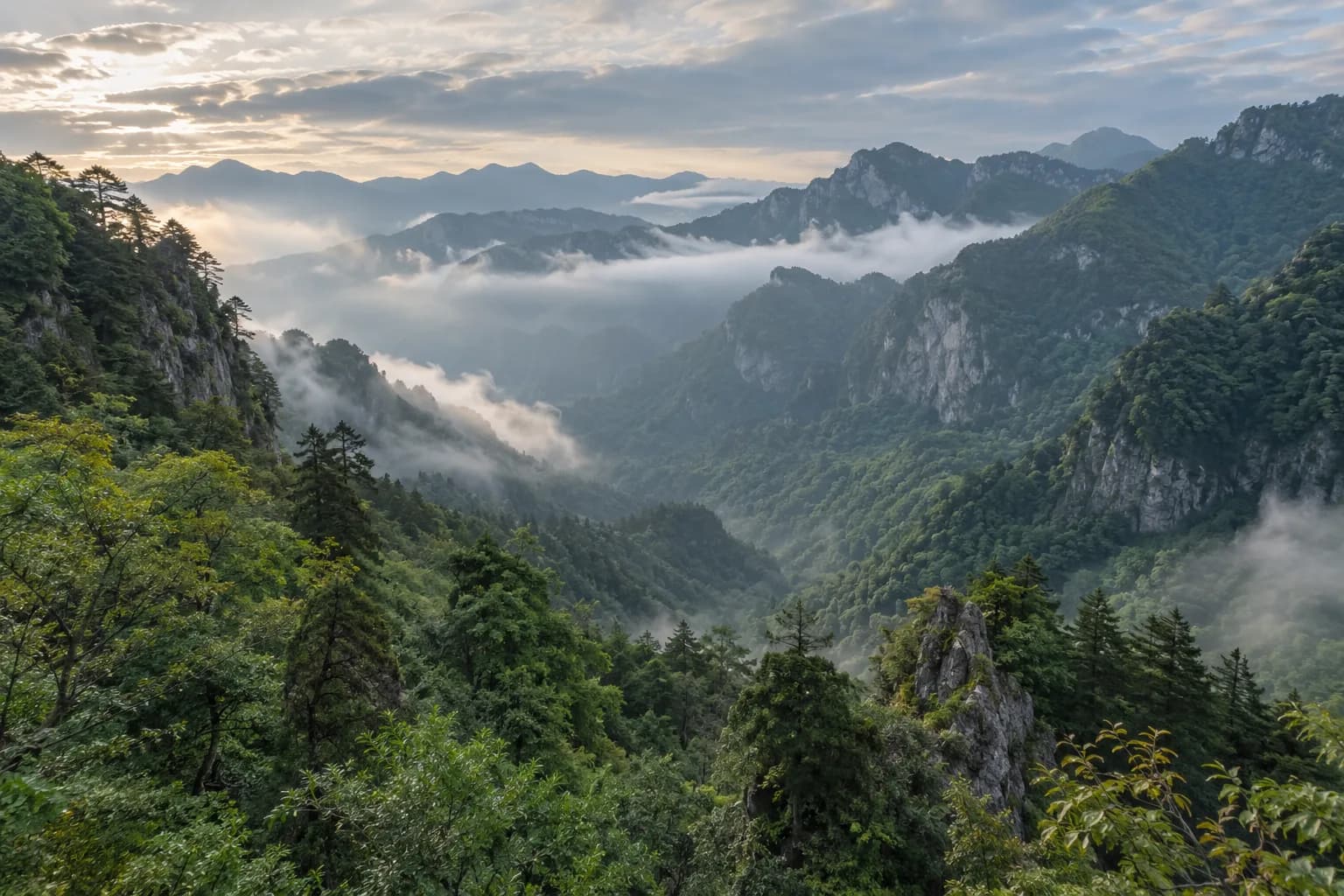
Shennongjia (神农架, Shénnóngjià) is the wild, high forest country of western Hubei and a UNESCO natural World Heritage site. Shennongding (神农顶) rises to 3,106 m, the highest peak in central China. Its upper slopes hold mossy fir forest and golden snub-nosed monkeys, the setting for China's best-known "wild man" legend. On the western edge, Dajiuhu (大九湖) is a high wetland basin where mist lifts off the lakes at dawn. In July Wuhan sits at 35 °C; up here you need a jacket.
Shennongjia is less polished and less dramatic than neighboring Enshi, and that suits some travelers well. Trails are quiet and the forest feels remote, and commercial fuss is mostly absent. The catch is distance. The six ticketed areas sit 30–100 km apart on mountain roads, and most domestic visitors drive. This guide explains which areas are worth your time and how to do Shennongjia without a car, which is the situation most international travelers face.
The six scenic areas, honestly ranked
| Area | What you see | Time | Verdict |
|---|---|---|---|
| Shennongding (神农顶) | High ridges, primeval forest, golden monkeys, sea of clouds | Full day | The reason to come, but it is a weather gamble |
| Tianshengqiao (天生桥) | A natural rock arch with a waterfall and stream gorge | 1–2 hours | The best value of the lower areas |
| Dajiuhu (大九湖) | Highland lakes, meadows and peat bog; dawn mist | Half day plus an overnight nearby | Superb in mist or autumn color, ordinary at noon |
| Tianyan (天燕) | Swallow Cave and the Rainbow Bridge viewpoint | 3–4 hours | Pleasant, cool and easy; optional |
| Guanmenshan (官门山) | Cliff beehives, a panda house, a giant salamander hall and a lit cave | 2–3 hours | Museum-style; better for children than for hikers |
| Shennongtan (神农坛) | A giant carved head of the Yan Emperor and an ancient fir | About 1 hour | A cultural photo stop |
Shennongding: plan a whole day, from west to east
The scenic road runs along a high ridge, and every stop is a short walk or a stair section from a parking area. Domestic visitors repeatedly recommend going west to east, which keeps you mostly heading downhill and avoids backtracking:
- Taiziya (太子垭): The western entry, with the Three Provinces viewpoint and a short walk into old-growth forest.
- Banbiyan (板壁岩): Stone pinnacles among dwarf bamboo, said to be where people have reported seeing the "wild man".
- Watchtower (瞭望塔): The highest viewpoint, where the cloud sea is best early in the day.
- Shennong Valley (神农谷): A deep cliff valley reached on long stairways; going down first means climbing back out. Walk the rim if your knees complain.
- Xiaolongtan (小龙潭): A golden monkey observation station. Opening varies, so ask at the entrance, and stay quiet when the monkeys are near.
- Jinhouling (金猴岭): Moss-hung forest and a waterfall, the most beautiful walk on the mountain. Follow the upper boardwalk and return the same way rather than taking the long service road below.
The weather on Shennongding is not the weather in Muyu. Visitors often leave town in sunshine, then find the ridge wrapped in fog, rain and wind; some end up buying padded trousers at the gate. On a cloudy forecast, the forest walks at Jinhouling are still worthwhile, but the viewpoints may show nothing. Bring a real waterproof and a warm layer even in August.
Dajiuhu: go for dawn, or not at all
Dajiuhu's mist forms around sunrise on calm, cool mornings, mostly on Lakes 1 and 2. The mist is gone by about 08:00 and nothing about it is guaranteed. The central lakes (4–6) have been closed as a protected core area and can only be seen from a distance, so the visit is shorter than old guides suggest. Private cars are not allowed beside the lakes, and you ride the park's own shuttle and small train, which run about every 15 minutes.
A visitor who arrives at midday after a two-hour mountain drive often describes "ordinary ponds". A visitor who sleeps in Pingqian town (坪阡古镇) and catches the first shuttle sees why the place is famous. Visit Dajiuhu only if you can stay overnight; with two days in Shennongjia, leave it out.
Tianshengqiao: walk only the first half
The circular path passes a natural stone arch, a waterfall and a clear stream within the first half. The second half is mostly stalls selling honey, dried mushrooms and smoked pork, so turn back once you have seen the arch and the waterfall. Combined with Guanmenshan and Shennongtan, which are 5–10 minutes apart by road, it makes an easy afternoon near Muyu.
Tickets in 2026
| Ticket | Price |
|---|---|
| Six-area combo, peak season (21 April–31 December 2026) | ¥299, valid 5 days from first entry |
| Six-area combo, low season (1 January–20 April 2026) | ¥159 |
| Students | About half price |
| Single tickets | Shennongding ¥130 · Dajiuhu ¥100 · Guanmenshan ¥95 · Tianshengqiao ¥55 · Shennongtan ¥55 · Tianyan ¥45 |
| Not included | Shennongding scenic shuttle (about ¥60) and the Dajiuhu park shuttle and small train (about ¥70) |
These are the 2026 rates reported across visitor guides and Trip.com listings; online travel sites sometimes sell the combo a little cheaper. The combo starts on the day you first enter and cannot carry over into the next year.
Buy it at least a day ahead through the official Shennongjia Scenic Area (神农架景区) WeChat account, which registers your ID for gate entry. If it won't accept a passport, buy the area tickets on Trip.com instead. The combo pays off once you visit Shennongding, Dajiuhu and any one more area.
Shennongding tickets on Trip.com · Dajiuhu tickets on Trip.com
Getting there
- Wuhan to Xingshan (兴山站): Take the high-speed train to Xingshan. This is the station for Muyu. The journey is about 2–2.5 hours, with 20 or more trains a day; second class is roughly ¥120.
- Not Shennongjia station: Despite the name, Shennongjia station is in the far north of the forest district. From there it is about 2.5 hours by road to the main scenic areas, with no direct bus to Muyu.
- Xingshan to Muyu: Turn right out of the station and walk about 200 m to Xingshan bus station. Bus 808-1 runs to Muyu in 1–1.5 hours for about ¥25, stopping at Shennongtan and Guanmenshan on the way. It runs several times a day from early morning to late afternoon, and the last bus has typically been around 17:00–18:00. Tickets can be bought on the Chutianxing (楚天行) mini-program about 30 minutes ahead. Shared cars at the station charge about ¥30–50 per person.
- Badong station (巴东站): The closest station to Dajiuhu. A single afternoon bus has run to Pingqian (about ¥50, winding roads), useful if you want to start in the west and finish at Xingshan.
- Yichang: Yichang is the bigger hub, with an airport, rail and Three Gorges connections, and has buses to Muyu.
Getting around without a car
Stay in Muyu (木鱼镇), the southern service town, within 1 km of Muyu bus station (木鱼客运站). The town has almost no taxis, and ride-hailing is unreliable. Then use these options, in order of convenience:
- Scenic direct buses (景区直通车), in peak periods: These are return buses from Muyu that wait a fixed time at each stop. During Golden Week 2026 the A line covered Shennongding plus Dajiuhu for ¥70 (departing 07:30), and the B line covered Guanmenshan, Shennongtan and Tianshengqiao for ¥40 (departing 08:20 or 13:20). Similar lines run in summer, with fewer departures in quieter months.
- Public bus plus scenic shuttle: For Shennongding, take the Muyu–Songbai bus and get off at the Jiuhuping (酒壶坪) transfer center. There, a shuttle loops the Shennongding stops for about ¥60, or continues to Dajiuhu for about ¥130. To return, flag the Muyu-bound bus at the roadside. For Tianyan, ride the same Muyu–Songbai bus and ask to be let off at Tianyan.
- Dajiuhu by bus: A Muyu–Pingqian bus (around 13:30, about ¥40, 1.5 hours) takes you to Pingqian for the night. The next morning, the first park shuttle from the Dajiuhu transfer center leaves around 05:30 for the mist.
- Charter car: About ¥200 for a half day or ¥400 for a full day, more if it includes Dajiuhu. Agree the stops and return time in writing first.
Timetables here change by season and are posted at the stations rather than online. Buy the next day's ticket at Muyu bus station when you arrive, and ask your hotel the evening before.
Suggested plans
Three days, car-free (Muyu base)
- Day 1: Take a morning train to Xingshan and bus 808-1 to Muyu by early afternoon. Ride the B line or the afternoon bus for the first half of Tianshengqiao, the Guanmenshan cliff hives and pandas, and Shennongtan.
- Day 2: Spend the whole day on Shennongding, going west to east, with the longest walk at Jinhouling. Return to Muyu.
- Day 3: Spend a slow morning at Tianyan, or leave on a late-morning bus, then take the afternoon train from Xingshan.
Four days, adding the Dajiuhu dawn
Follow Days 1 and 2 above. On Day 3, take the afternoon bus to Pingqian, and on Day 4 ride the first shuttle into Dajiuhu. Leave from Badong station, or by bus back toward Muyu and Xingshan. Check the Pingqian–Muyu connection before you book: buses between the two towns have run only once or twice a day, and some travelers ended up staying a second night.
When to go
- July–August: This is peak season. Days in Muyu are mild, the ridge is cool, and storms build in the afternoon. Book rooms ahead for weekends.
- Mid-October to early November: This is the best time for color. Larches and maples turn on the high road and around Dajiuhu; in late October 2026 visitors reported the leaves about 60% turned. By early October the ridge already calls for a down or padded jacket.
- December–March: Snow covers the high areas, and the low-season combo price applies. Bus lines thin out, and the high road can close for ice. Treat any winter trip as one built around Muyu and Shennongding, not the full circuit.
- April–June: It is green, quiet and changeable, and the peak-season price starts on 21 April.
What to eat and buy
Muyu's restaurants serve mountain home cooking: smoked cured pork (腊肉), potatoes stewed in a hot pot, wild greens and local cold-water fish. Visitors rate the fish more for novelty than for flavor. Shennongjia honey from the traditional log and cliff hives is the classic souvenir. Buy it from a shop with a printed producer label rather than from roadside jars.
Combine with
- Yichang: The Three Gorges Dam and Yangtze cruises lie south of Xingshan, making Yichang the natural partner.
- Shiyan and Wudang Mountain: A direct bus has run from Muyu to Wudangshan at 09:10 on alternate days, plus a daily 08:30 bus to Shiyan. This links two of Hubei's best mountain trips without going back to Wuhan.
- Enshi: Canyon scenery for a separate leg by rail.
- Wuhan: The rail gateway at either end.