Enshi Tusi City
Enshi Tusi City (恩施土司城) is a modern cultural complex near central Enshi, not a surviving chieftain's capital. Its best use is a compact 1.5–2.5-hour block on an arrival day, departure day or uncertain-weather afternoon. Come for the layered timber architecture and a readable introduction to Tujia culture; skip it if reconstructed heritage and staged photo settings are not your thing.
First, avoid the UNESCO mix-up
The gate, courtyards and Jiujintang here are deliberate modern interpretations. The actual UNESCO-listed archaeological property in the prefecture is Tangya Tusi City Site (唐崖土司城址) in Xianfeng County. Hubei's heritage authority describes Tangya as an approximately 80-hectare site with surviving streets, walls, tombs and building foundations from the late Ming to early Qing period. That is a different destination and cannot be folded into this short city visit.
This distinction improves the experience rather than diminishing it. Treat Enshi Tusi City as a designed cultural primer: observe how the ceremonial axis, carved timber, overhanging floors and steep hillside setting communicate an idea of authority and regional identity, without mistaking every structure for an ancient original.
A route that does not overstay
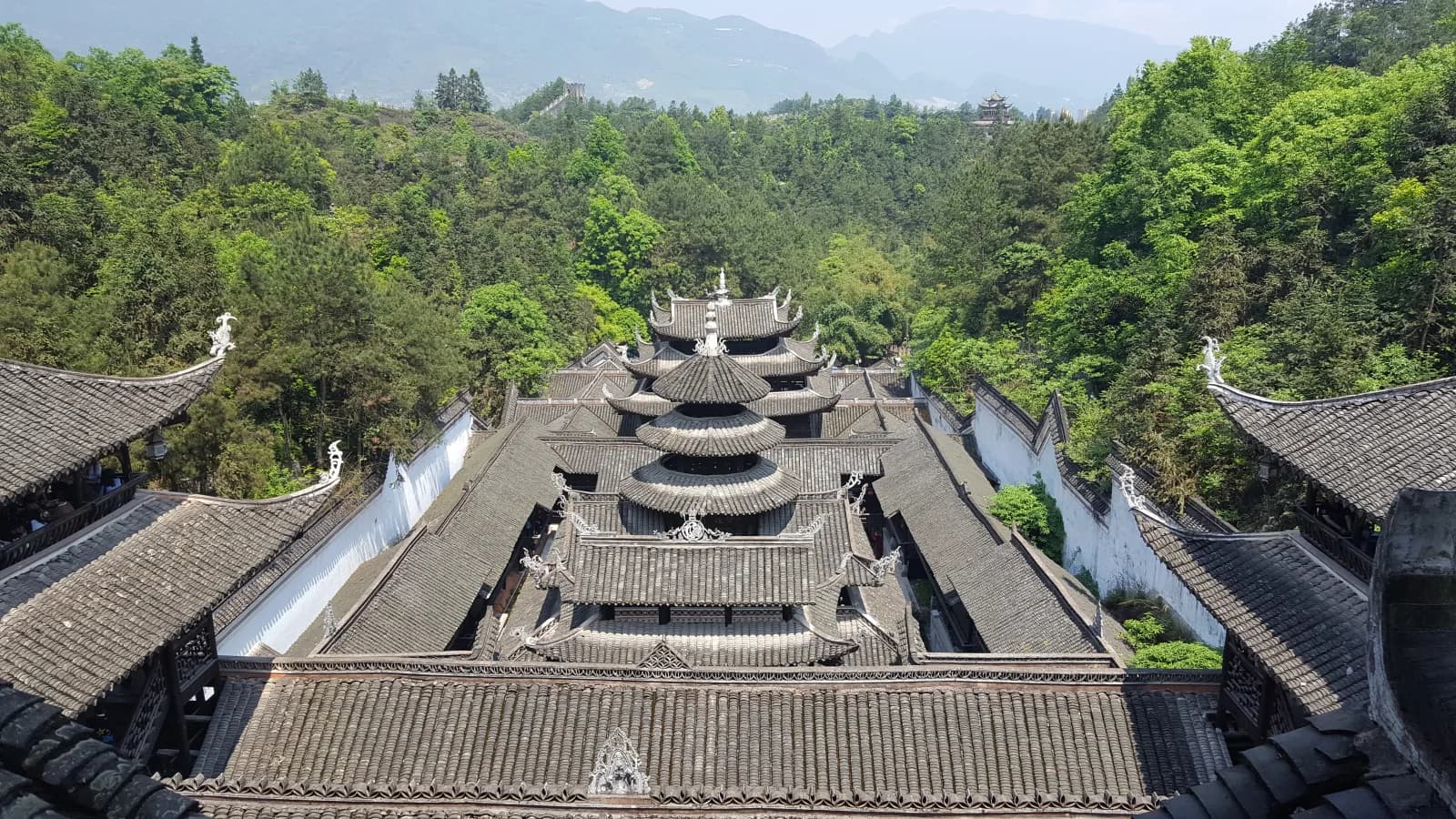
Enter through the main gate, follow the lower cultural displays toward Jiujintang, then decide whether to add the wall and high viewpoints. Jiujintang is the visual centre: slow down for the sequence of roofs, courtyards, columns and carvings rather than racing through every commercial room.
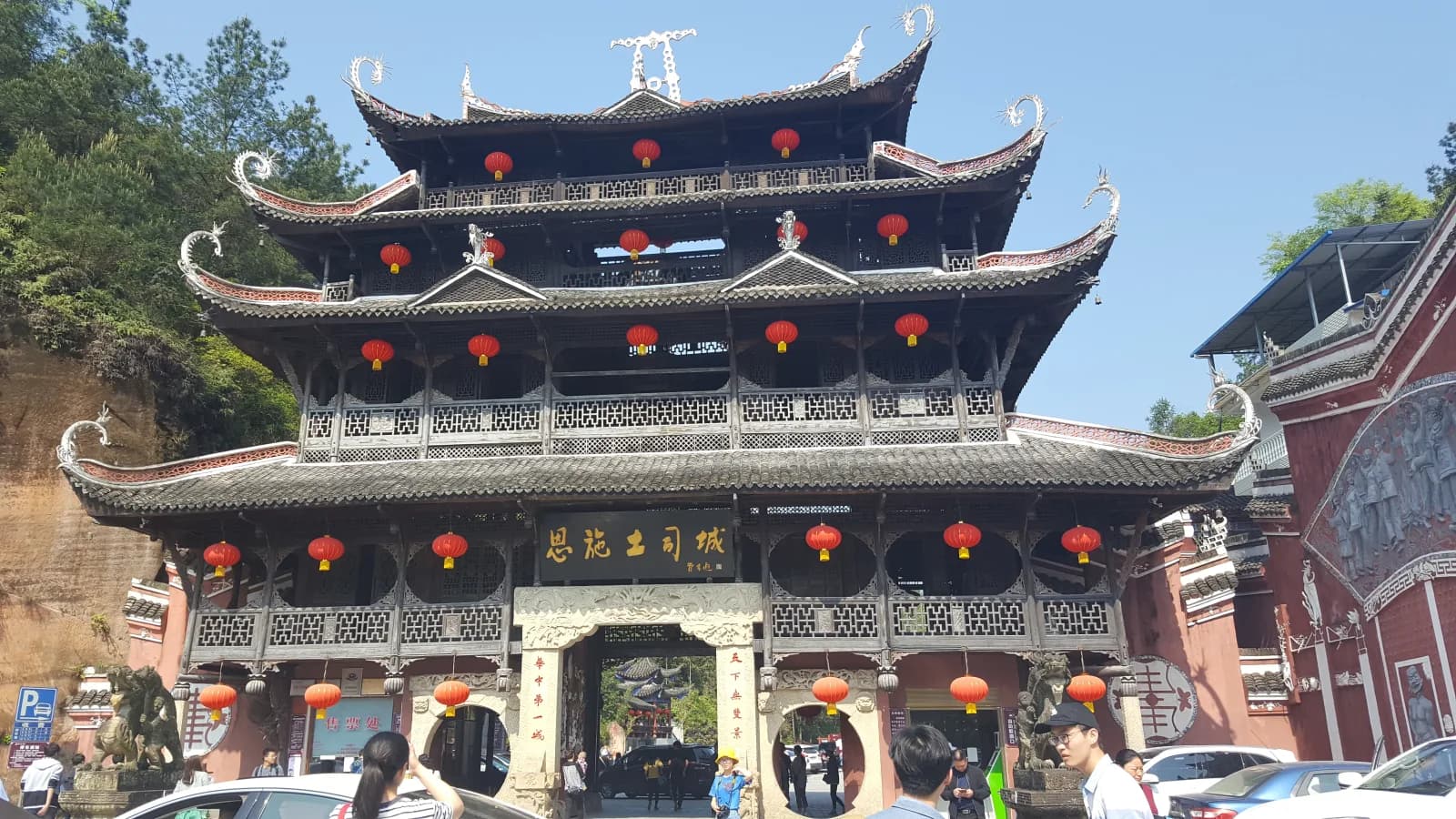
Photo: Fxqf · Source · CC BY-SA 4.0
The wall loop adds repeated stone steps, exposed sections and wider views. It is optional, not the price of admission. Recent visitors who combined the ground-level route with the wall commonly allowed around 1.5 hours; photography, performances and slower interpretation can extend that toward 2.5 hours. Wear shoes with grip and drop the upper loop in heavy rain or heat.
Performances are a bonus, not the plan
The Hubei culture department recorded Tujia dance, wedding-custom and welcome performances at Jiujintang during the 2026 Qingming holiday. That verifies the setting, not a daily timetable. The current ticket shelf carried a performance-cancellation notice when checked on 11 September 2026, so do not build the visit around one advertised show. Ask at the gate which performances are actually running that day and whether they require a separate seat or ticket.
Visitor reactions are genuinely divided. Some enjoy the architecture, compact scale and easy-to-follow interpretation without a guide. Others find the reconstruction commercial or photo-led. The right expectation is a living tourism presentation—not an archaeological museum and not an untouched old town.
Tickets, hours and practical access
Trip.com listed the attraction as open, with an exact ticket product and hours of 07:30–18:00, when checked on 11 September 2026. Treat both as live data: compare the selected-date Enshi Tusi City ticket, then confirm last entry, passport or QR admission, show status and cancellation terms. The official enquiry number shown by current listings is 0718-8458166.
The address is 138 Tusi Road (土司路138号). A taxi or app-based car from the airport, station or central hotel is usually simpler than matching a changing bus route. Keep the Chinese name saved for the driver. The ground route is easier than Enshi's canyon days, but the complete circuit is not step-free; visitors with limited mobility should ask staff for the lowest-step path and skip the wall.
Where it fits in an Enshi itinerary
Use Tusi City after hotel check-in, before an evening in central Enshi, or as a reserve plan when a mountain attraction closes. Do not combine it with Pingshan Canyon: Pingshan is a long road day in Hefeng County. Pair it instead with the prefecture museum or another urban stop, and give Enshi Grand Canyon its own day.
Return to the Enshi guide once your arrival and departure times are fixed.