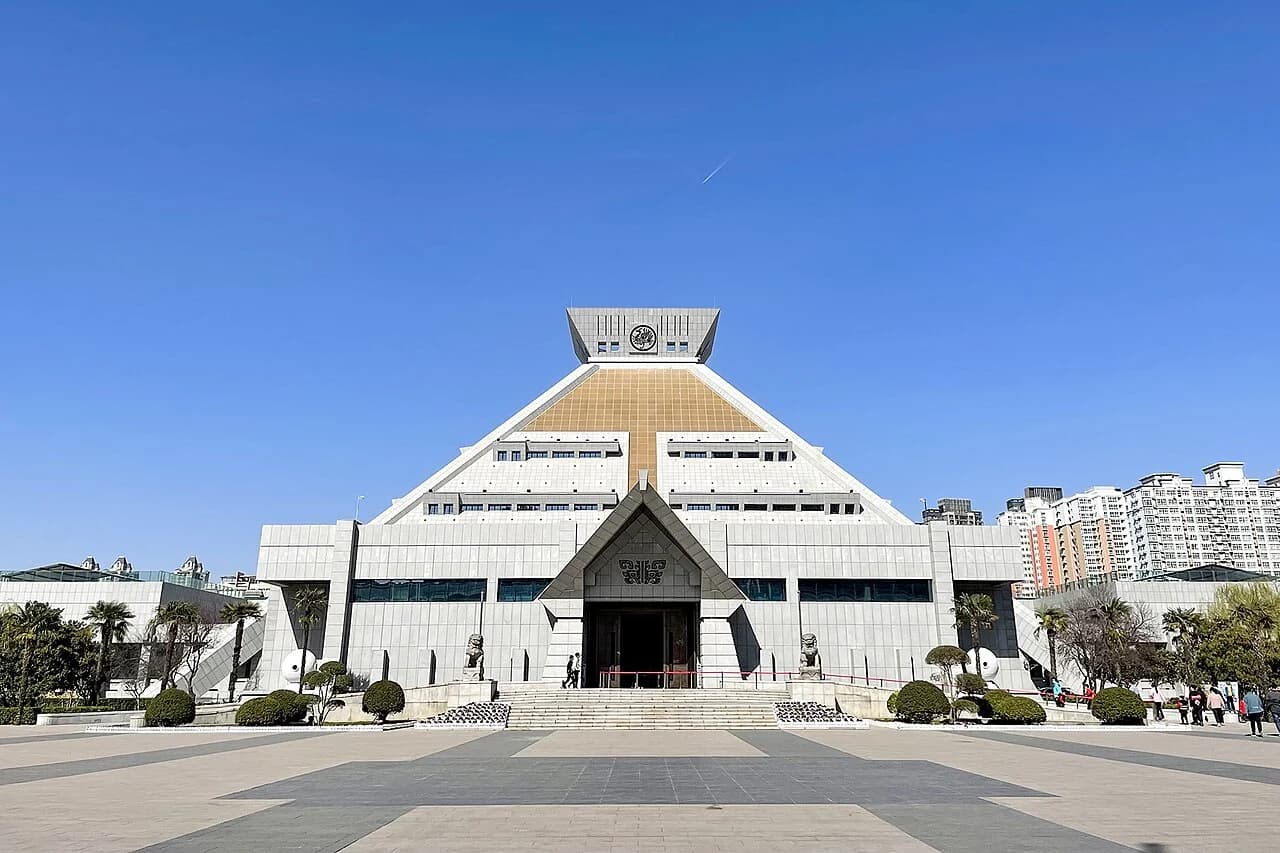
Henan Museum
Henan Museum (河南博物院) is the best place in Zhengzhou to understand why the Central Plains recur in China's early states, capitals and ritual culture. The collection is too large for an indiscriminate visit. Reserve first, follow one chronological story, and choose three or four objects that answer a question you actually care about.
Choose a realistic visit
- Two focused hours: prehistoric Henan, Shang–Zhou bronzes, then one later object or temporary exhibition.
- Three to four hours: follow the main chronological exhibition, add one specialist gallery and leave time for labels or an audio guide.
- Family visit: turn the route into an object hunt—sound, animal form, ritual vessel and painted tomb image—rather than making children read every case.
The museum's current official visitor page posts free timed entry, Tuesday–Sunday opening from 09:00 to 20:30, and last admission at 19:30. It says standard reservations open five days ahead at 17:00 and same-day extended-hours places at 14:00. Those extended hours can change after peak season, so check the live official notice before relying on an evening slot.
Follow one historical spine
Begin with the permanent exhibition Splendid China: Choosing the Central Plains as the Center (泱泱华夏 择中建都). Its value is the sequence: settled communities, bronze-age political power, competing states and the later dynasties that repeatedly used Henan as a core region. Do not let a crowded “must-see” case break that story.
Pick from these anchors, knowing that loans and gallery rotations can move an object:
- the Jiahu bone flute for music and organized life more than eight millennia ago;
- the Duling square ding and Fu Hao owl-shaped zun for two different views of Shang ritual power;
- the lotus-and-crane square hu or cloud-patterned bronze jin for Eastern Zhou casting and changing visual language;
- the Four Deities mural or Wu Zetian gold tablet for the leap from portable ritual object to tomb image and imperial belief;
- the Ru-ware sky-blue vase for a final material contrast with bronze.
The official collection page identifies these among the museum's signature holdings, but no guide can guarantee that every original is on display on your date.
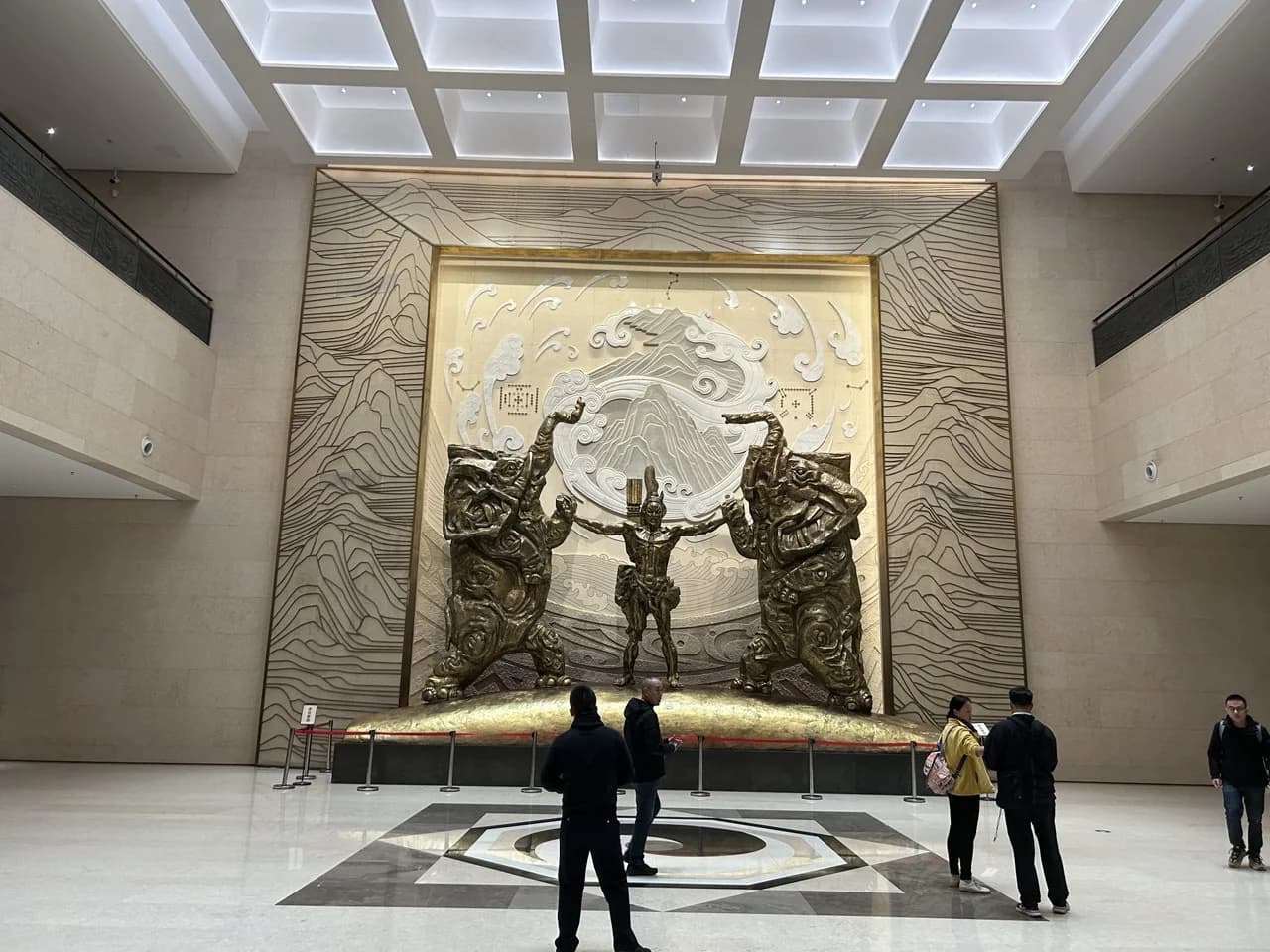
Photo: Nishino Asuka · Source · CC BY-SA 4.0
Use this central hall to check the day's open galleries before committing to a floor-by-floor plan.
Reservation and passport workflow
Book only through the museum's official WeChat reservation service and use the exact document you will carry. The current rules accept passports, mainland IDs, mainland travel permits and Chinese permanent-resident cards. Mainland-ID holders use the gates; passport and other supported-document holders use the manual channel. Arrive inside the booked window with the original document.
One WeChat account can currently reserve up to three visitors, with weekly and cancellation limits. Do not pay an unofficial seller for a free museum reservation. If the main building is full, the official page may list a separate no-reservation exhibition, but that is a fallback—not equivalent access to the permanent collection.
Make the room work for you
Recent visitors report crowd pressure around famous objects, cool galleries and useful official audio material. Start away from the loudest group, use the free official audio where available, and reverse direction only after confirming the gallery layout. Ancient-music performances are a separate scheduled product; check the day's session and price rather than planning around an old timetable.
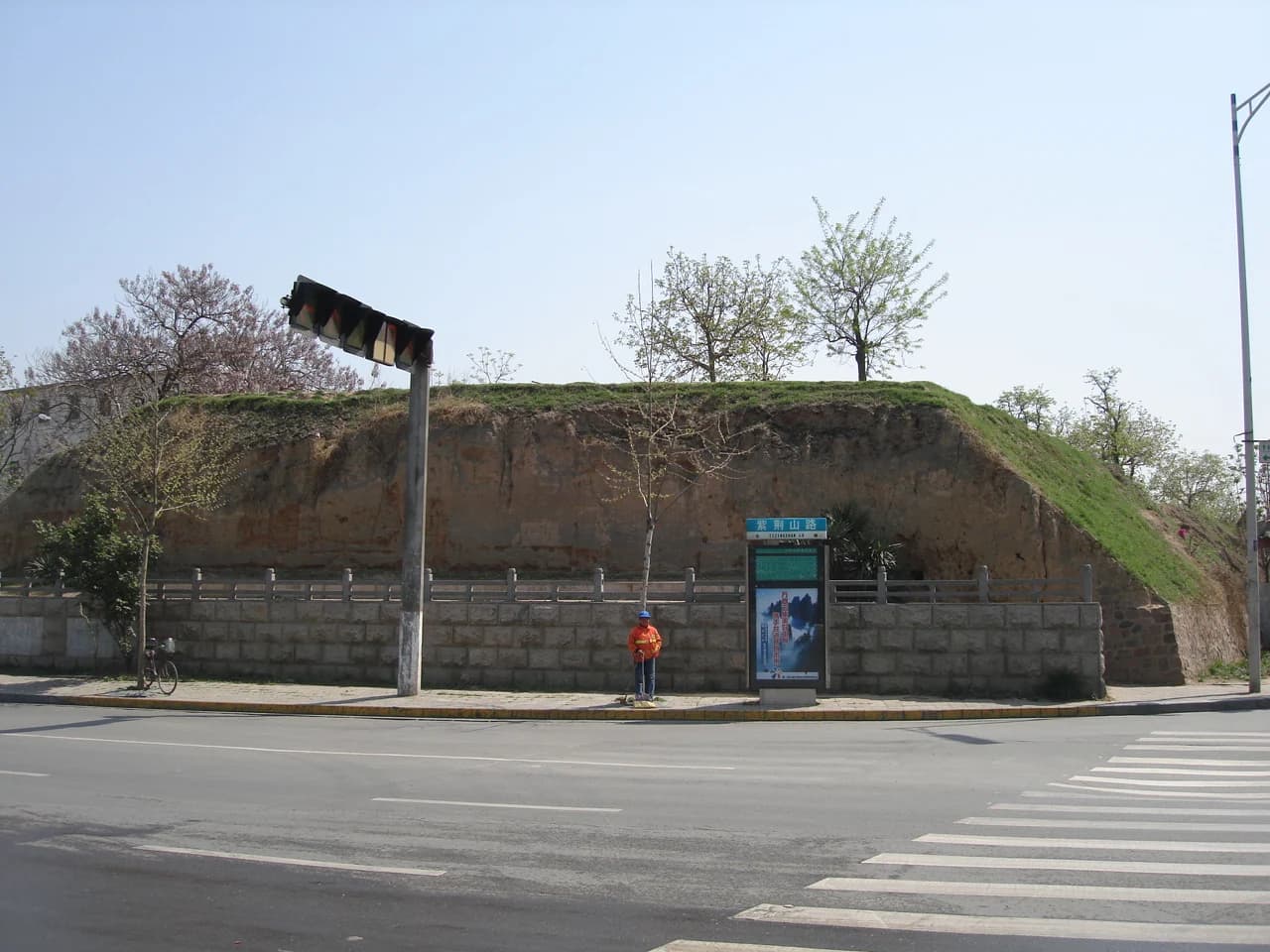
Continue the early-capital story at the Zhengzhou Shang City route, preferably in a separate half day. Keep Shaolin and Songshan for a full road day, and use the Zhengzhou guide to place both around your museum booking.