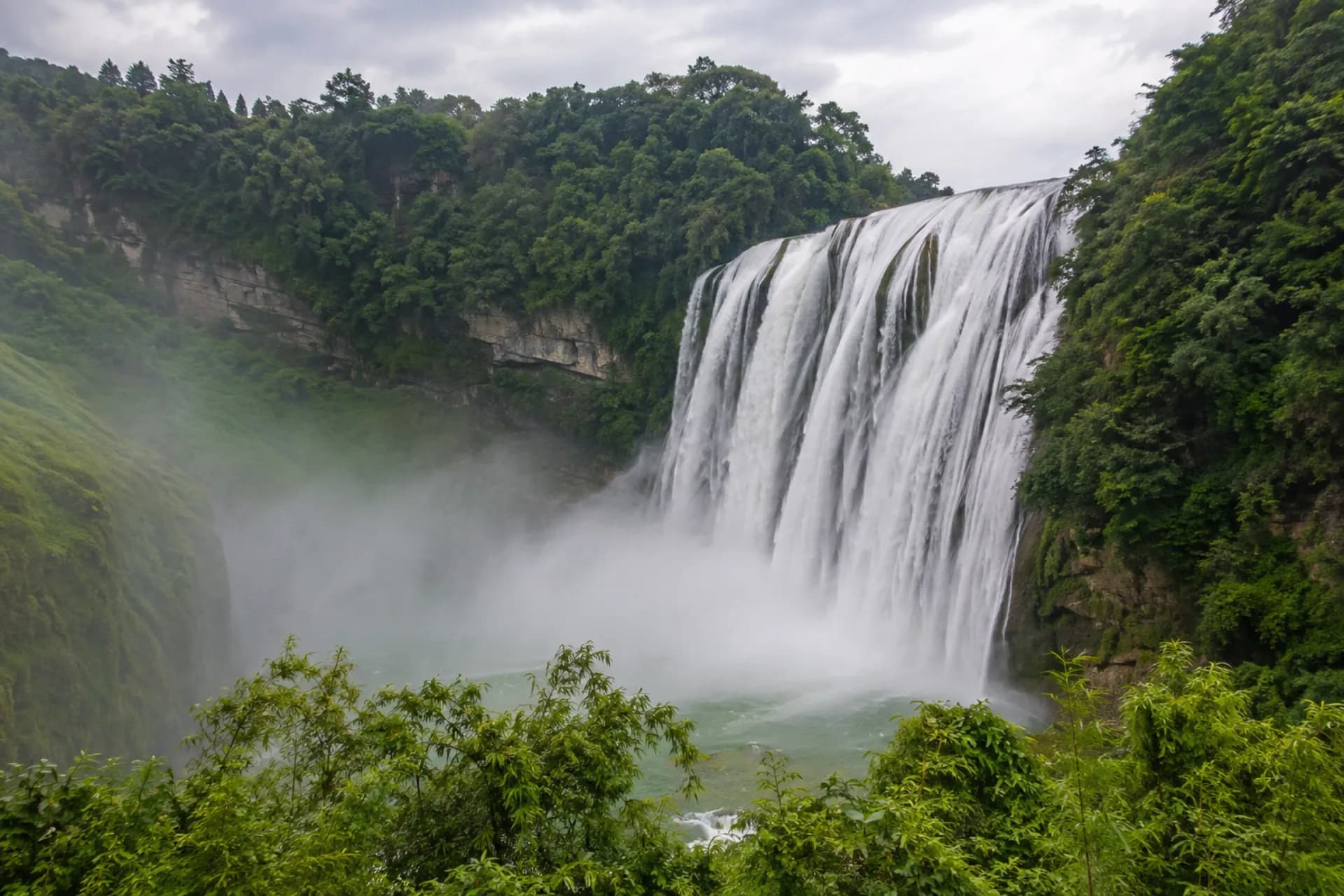
Tianlong Tunpu
Tianlong Tunpu preserves stone houses, lanes and cultural traditions associated with military settlers and later generations in the Anshun region. It is a community with residents, shops and changing daily life, not a frozen historical set.
Tunpu culture developed through communities linked to Ming-period military settlement and later local life. The useful question is not whether every custom is “unchanged for 600 years,” but how architecture, language, ritual, food and performance have been remembered and adapted by living families.
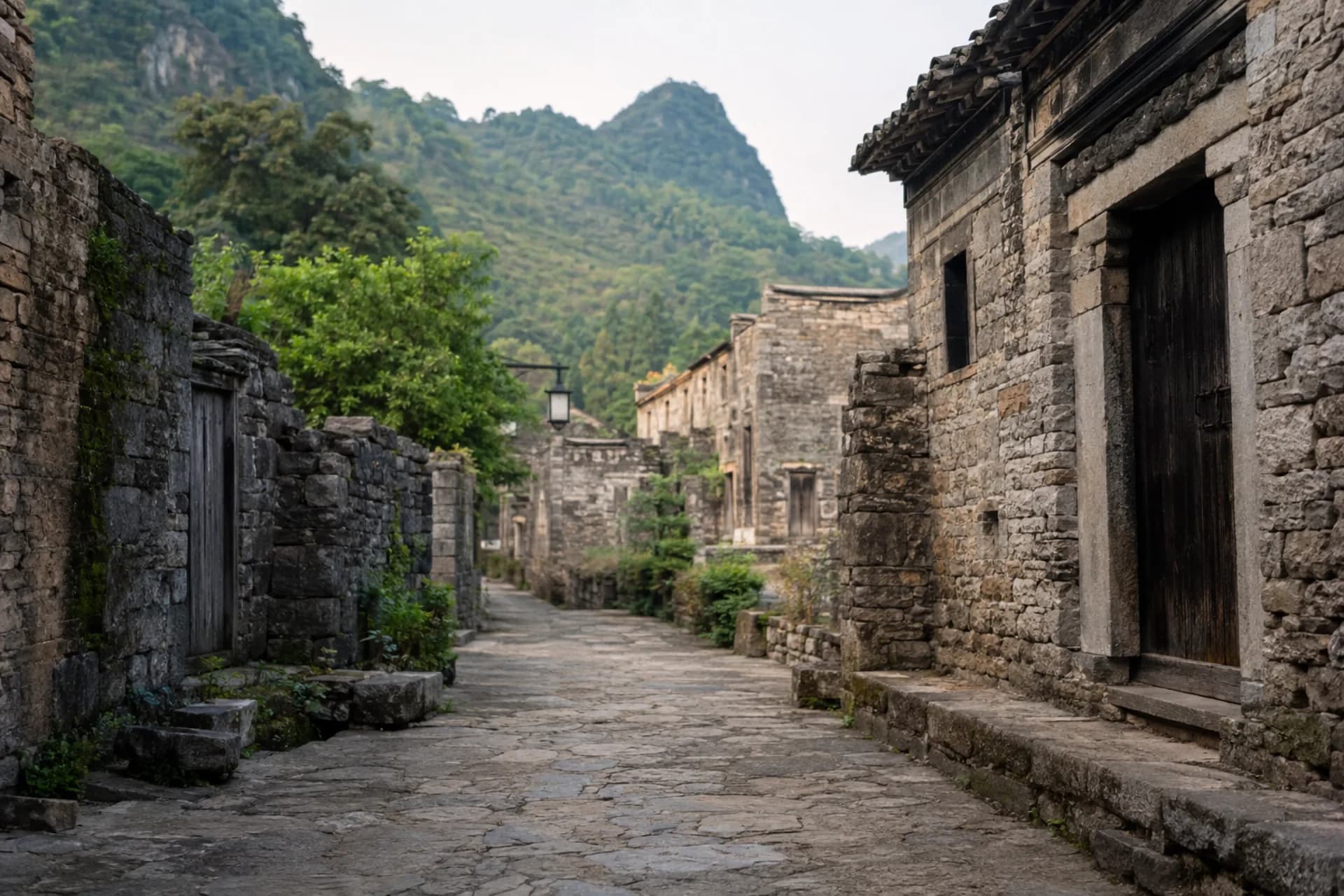
This illustrative view represents characteristic stone architecture; it does not reproduce a specific house or current performance.
A focused half-day visit
Begin with the settlement's historical interpretation, then walk a compact lane-and-courtyard route. Look at stone walls, roofs, drainage and how public and domestic spaces connect. Add a local-opera or craft demonstration only when the current program, location and inclusion are confirmed.
A practical sequence is:
- Visitor interpretation: establish the military-settlement context before photographing costume or architecture.
- Main stone lanes: notice defensive-looking walls, narrow passages, courtyards and how rainwater moves through the village.
- One open domestic or craft space: enter only where visitors are clearly welcomed and a price, if any, is stated.
- Dixi performance: watch only if the same-day programme is confirmed; use the explanation to understand masks, stories and ritual context.
- A quiet lane and meal: finish away from the busiest commercial strip, then return to the agreed pickup point.
Allow two to four hours depending on performance timing and interpretation. Tianlong is not large enough to justify rushing, but adding every commercial experience can obscure the community itself.
Do not turn the visit into costume photography alone. A guide or good interpretation helps distinguish documented history, local tradition and later tourism presentation.
Admission and performances
Check the official or staffed channel on the date of travel for admission, opening, passport handling and whether any performance is included. Schedules can change by season, group demand and community events. Avoid building the entire transfer around an unconfirmed show.
Older public tariffs list separate products for the ancient town, Tiantai Mountain and internal transport. Do not treat an old combined price as current or assume a town ticket covers the mountain. Ask for the exact named area, performance inclusion, last entry and return vehicle before paying.
Dixi (地戏) is often translated as “ground opera.” A tourism performance can introduce its masks and heroic repertory, but it is not proof that every ritual context is being reproduced. Listen to local interpretation and distinguish a scheduled visitor show from community observance.
Respect and photography
Ask before photographing residents, performers at close range, religious activity or domestic interiors. Keep doorways clear and do not enter homes because another visitor has done so. Buy crafts or food after confirming the price and what was locally made.
Costume rental does not grant access to private courtyards. Keep tripods out of narrow lanes, do not pose on thresholds and let daily traffic pass. When buying batik or embroidery, ask who made the item and which process was used rather than treating every printed souvenir as local handwork.
Getting there
Tianlong is a separate road trip from Anshun and should not be treated as a walk from the railway station. Confirm the exact bus stop or licensed-driver pickup, travel time, waiting arrangement and final return. A one-way ride without a reliable return is not a complete plan.
From Guiyang, the road transfer is longer and can consume much of a half-day. Tianlong works best between Guiyang and Anshun only when luggage, vehicle waiting and the next hotel check-in are written into the plan. It should not be attached casually after a full Huangguoshu circuit.
Stone lanes become slippery in rain and are not uniformly step-free. Wear shoes with grip, carry water in warm weather and ask for the shortest accessible public route when stairs or uneven paving are a concern. Services outside peak periods may be limited.
Who Should Choose It
Choose Tianlong when vernacular architecture, migration history and living cultural practice interest you. Skip it if the day only has time for a staged photograph between long transfers. A focused village visit with context is stronger than claiming to have “seen Tunpu culture” from one performance.