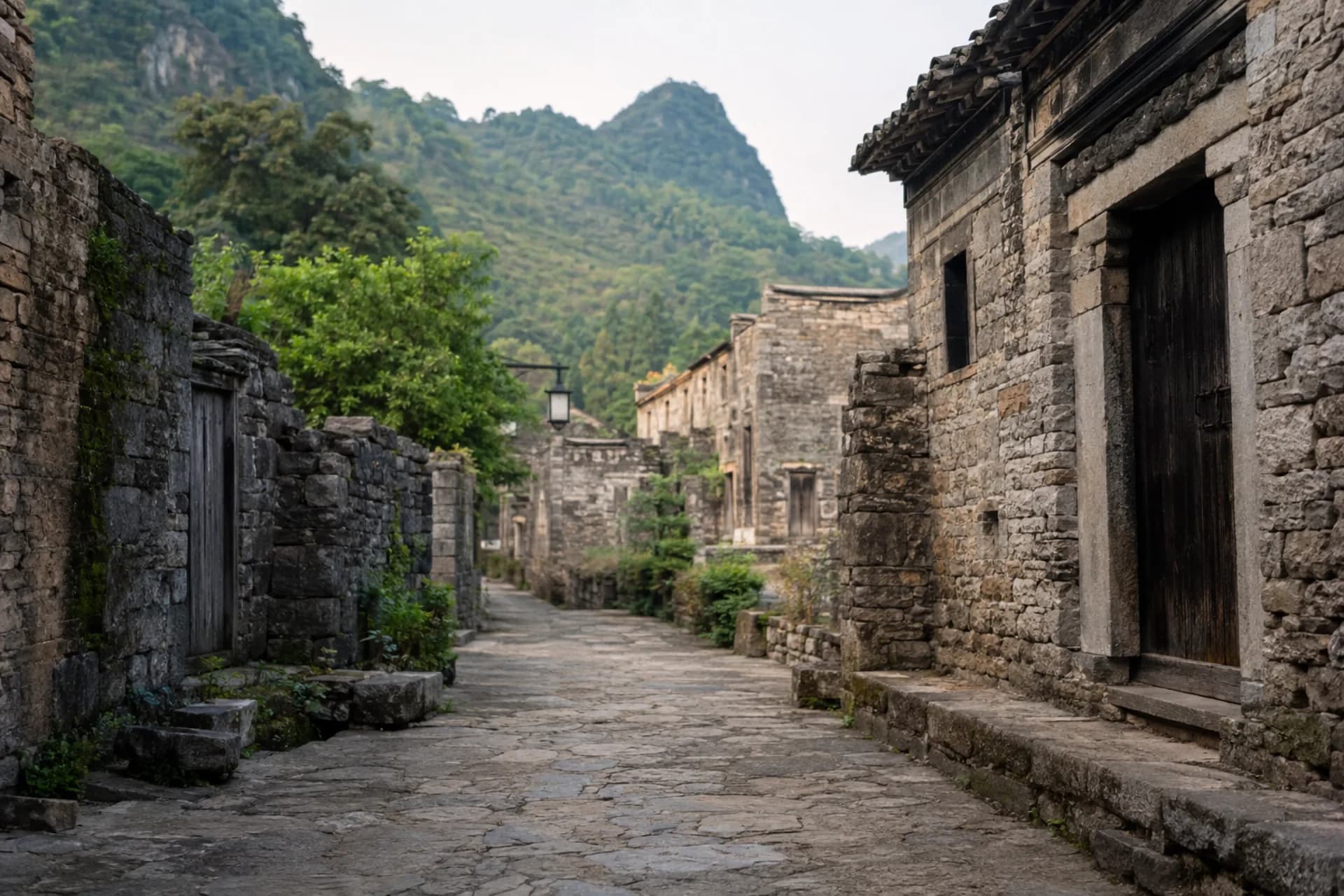
Huangguoshu Waterfall
Huangguoshu is a large managed landscape, not one waterfall viewpoint. Its three core sectors—Doupotang, the main waterfall and Tianxingqiao—sit on a scenic-transport circuit of roughly 23 kilometers. The official-origin visitor guidance estimates about two hours for Doupotang, three hours for the main waterfall and five hours for the full Tianxingqiao route, which explains why a complete visit can consume the day.
The individual estimates are generous and should not simply be added into a rigid ten-hour checklist. They explain the scale: transfers, queues, wet stairs and repeated viewpoint decisions matter as much as the time spent facing a waterfall.
Choose one of two honest plans
Short core visit: Doupotang, an upper main-fall viewpoint and the main waterfall area. Remove Tianxingqiao and protect the return. This is the better choice for a half day, limited mobility or a late arrival.
Full scenic day: Doupotang, the main waterfall and Tianxingqiao, with an early start and the final shuttle checked before entering the last sector. The order can change under live crowd controls; follow current official routing rather than an old screenshot.
For the full day, define the minimum successful visit before entry: the main waterfall plus either Doupotang or the lower Tianxingqiao highlights. If congestion or weather consumes the margin, drop the third sector deliberately rather than running past the reason you came.
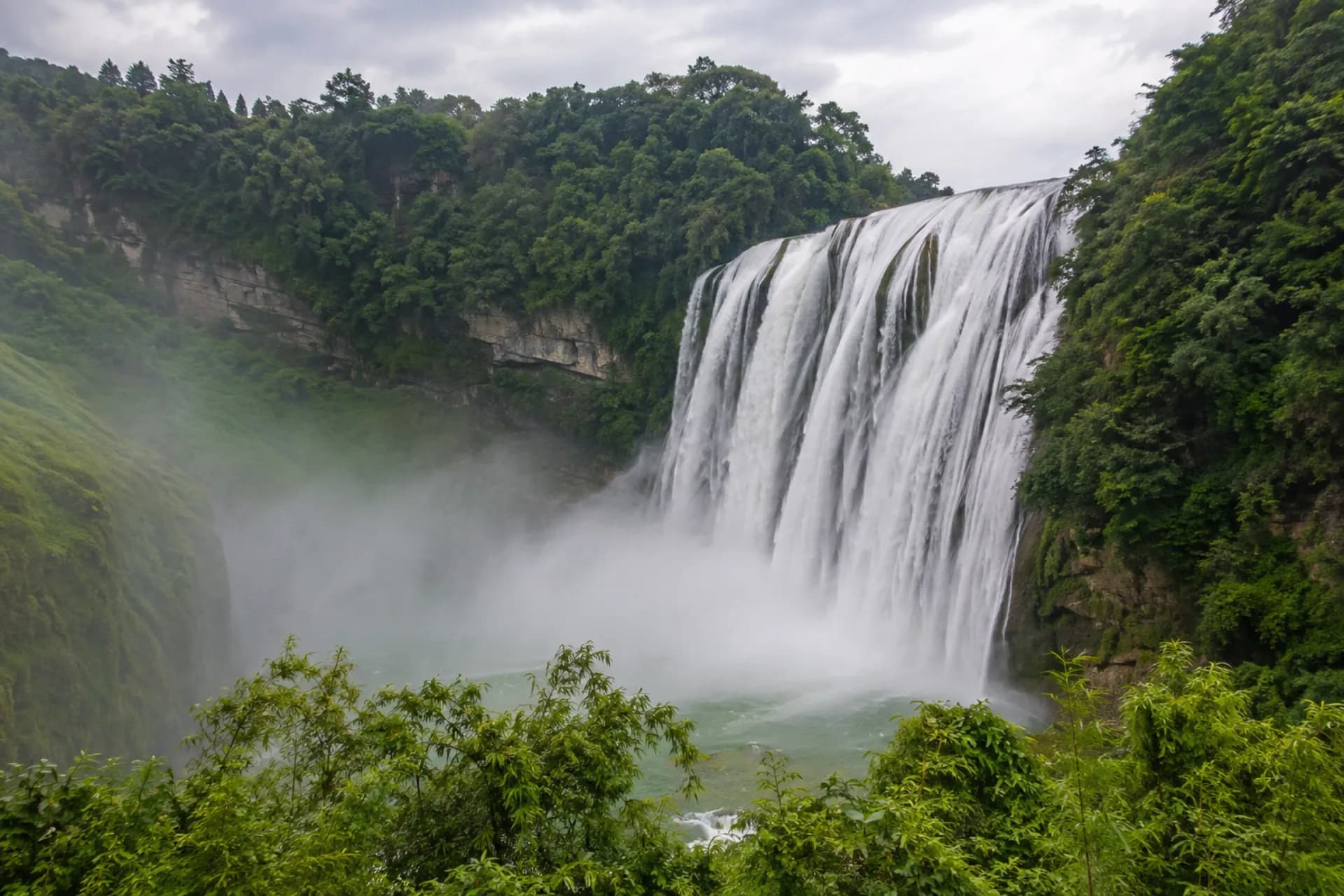
This illustrative view does not establish current water volume, visibility or path operation.
Water Curtain Cave is conditional
Current official-origin guidance directs visitors to the official Anlvtong channel for a separate timed Water Curtain Cave reservation. The passage is narrow, wet and capacity-controlled, and a reservation does not remove the queue or slippery surfaces. Carry the original booking document, use a rain layer that leaves your hands free and skip the cave when closures, mobility or discomfort make it unsuitable.
The cave route passes behind the main waterfall and can close when water volume, falling water, repairs or crowd management make it unsafe. It is not included merely because a tour title says “Huangguoshu.” Ask whether your timed slot and main admission are both valid before joining the approach queue.
Travellers who skip the cave still have strong front, side and lower viewpoints. Do not let one controlled passage decide whether the entire waterfall visit was worthwhile.
Use Each Sector for a Different Reason
Doupotang is the broad opening waterfall and a relatively straightforward introduction. It works well early, but its paths and shuttle queue still consume time.
The main waterfall sector is the essential stop. Choose an upper overview, a closer lower perspective if the path is open, and Water Curtain Cave only when reserved and suitable. The escalator, stairs and viewing paths are separate mobility choices; confirm where each exits before paying for an add-on.
Tianxingqiao is a karst landscape of water, stone, vegetation and falls rather than one photo point. The full route is much longer than the abbreviated front section. Ask where the short and full branches separate, what the final shuttle connection is and how much walking remains after the last major waterfall.
Book and recheck
Use the current official scenic-area channel for dated admission, sightseeing transport and any separately controlled component. Verify what the selected product includes, the foreign-passport process, the current route, entry cutoff and final bus. Do not freeze a price or summer timetable from an older post.
Ticket language such as “admission plus sightseeing bus” still may exclude the Water Curtain Cave slot, escalator, cableway or city transfer. Keep the city-to-scenic-area vehicle separate from the internal shuttle when comparing products.
Check the live weather and park notice again on the morning of travel. Recent rain changes water volume and can close paths. Dry-season conditions can be safe yet visually different from promotional images.
Walking and return
Steps, damp stone and crowd bottlenecks matter more than the map distance. Wear shoes with wet grip and keep electronics protected. Set a decision time for Tianxingqiao and leave it out if the final return becomes tight. Confirm whether the bus ends at Anshun, Guiyang or a different pickup point before departure.
Bring water and a compact rain layer, not a long loose poncho that obstructs steps. Protect the passport and phone in a waterproof pouch. The spray zone can be wet on a clear day, while recent rain can close paths rather than simply create a “better” waterfall.
Huangguoshu is not reliably step-free. Travellers with limited mobility should request the current accessible viewpoints, vehicle boarding assistance and lift/escalator status before buying. A short core visit with one strong viewpoint is safer than discovering an inaccessible return route inside Tianxingqiao.
Avoid a same-evening flight or tight long-distance train. A late scenic shuttle, road congestion or weather closure can move the city return substantially.
Read the current official-origin Huangguoshu visitor guidance.