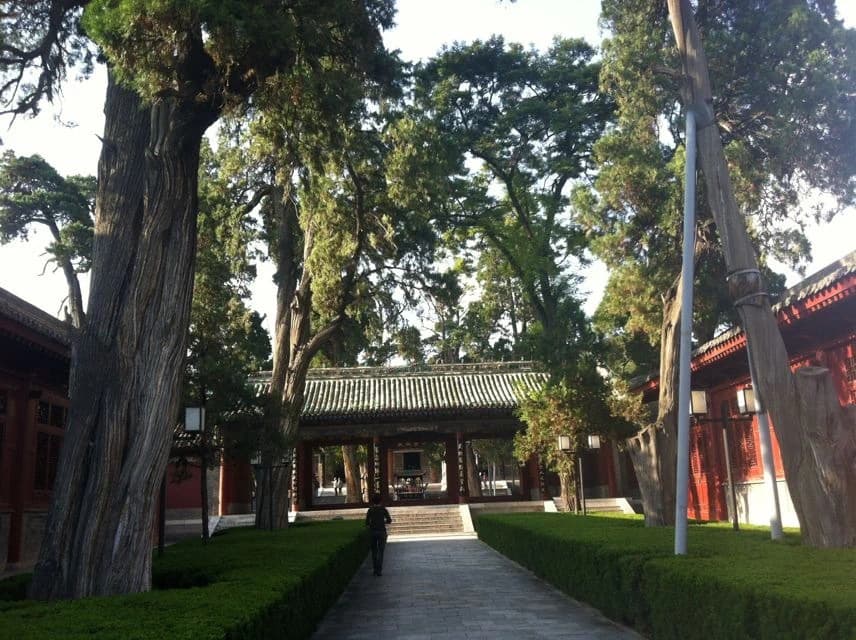
Photo: Smwy09 · Source · CC BY-SA 3.0
Fuxi Temple
Fuxi Temple (伏羲庙) gives Tianshui's Qinzhou district a cultural anchor. The courtyards and timber halls honor Fuxi, a culture hero associated with early Chinese civilization. It works best as the beginning of an old-city day rather than as an extra stop squeezed between a train and the Maijishan cliffs.
A slow circuit, then the city
Allow about one to two hours for the sequence of gates, courtyards and main halls. Read the architecture as well as the explanatory panels, and leave room for active ritual life. Festivals can change circulation and crowd levels. Photography and access inside halls depend on the current signs; do not step across barriers for an empty-room shot.
After the temple, continue to Tianshui Museum, on Fuxi Road, for regional context. From there, walk Qinzhou's older streets and the Hu House area, then decide whether you still have energy for Yuquan Temple's uphill approach. The municipal tourism bureau's 2026 city route groups these stops; it is a useful geographic sequence, not a requirement to enter every site.
See the temple as a sequence, not a single hall
Begin at the entrance and let the successive courtyards slow your pace. The approach, trees and changing rooflines prepare you for the main Fuxi halls; stand back far enough to see how each gate frames the next space. Read the on-site explanation of Fuxi as a mythic culture figure alongside the actual history of the buildings, rather than treating every structure as literally prehistoric. The site is a place of later commemoration of a much older story.
In the main court, look at the timber construction, painted details and the way visitors circulate during ordinary days versus a festival. Use any open side displays to connect the legend with Tianshui's regional identity. If a ritual is underway, remain at the public edge and allow worshippers or participants to move through first. An easy 60–90-minute core visit can become two hours when you read signs and pause; a five-minute gate photo misses the experience.
Next, go to Tianshui Museum, which shares the Fuxi Road address area, for historical material rather than another myth retelling. Check its independent opening or reservation rule. After lunch, use the public old-city streets and Hu residence area as a low-effort continuation. Yuquan Temple is a separate uphill choice, about 1.4 km on foot from Fuxi by the mapped route. If a train is close or your group is tired, stop after the museum and lanes instead of treating all Qinzhou sites as one compulsory ticket.
For food, ask for a local guagua portion and its chili level; it is a savory buckwheat-based dish, often served cool. A hot noodle or soup is an easy alternative in cold weather. Choose a shop near your actual walking route instead of crossing the city for an unverified “famous” stall.
Booking and visitor details
Confirm the temple's current admission and holiday hours before setting out. A 2026 city notice described foreign-card payment and foreign-residence-document service improvements at the temple; visitors using passports should still confirm the actual window and document process for their date. Keep a payment backup and enough time for any on-site purchase or verification.
Qinzhou is also a sensible food stop. Local guagua is a savory buckwheat preparation that can be dressed with chili; ask for milder seasoning if needed. The old city makes a good afternoon even when weather shuts Maijishan's exposed route.
For the contrasting cliff-art day, see Maijishan Grottoes. The Tianshui guide explains how to split two days and choose a hotel base.
Fit This Into Your Trip
Use the city guide to check where this stop fits, then allow time for its entrance, visit and onward transfer.
Explore More in Tianshui
View all of Tianshui
See the city's attractions, itineraries and area guides.