Lanzhou Yellow River Walk
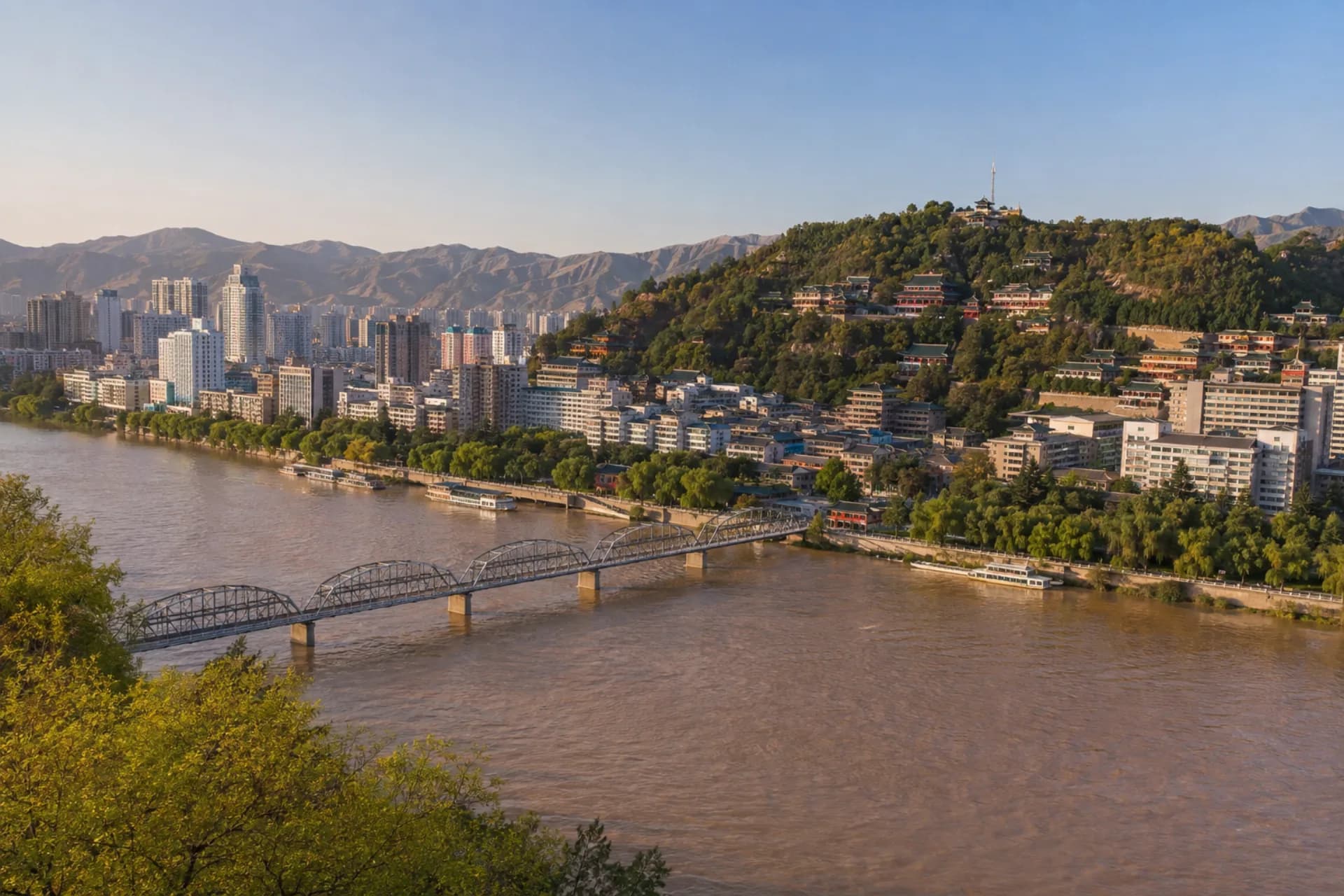
Lanzhou's central riverfront is best understood as one west-to-east line: meet the Yellow River at the Mother Sculpture, see how waterwheels used its current, continue to historic Zhongshan Bridge, then climb Baita Hill for the city-and-valley view. The full route needs three to four hours; a bridge-and-hill version takes about two.
Route 1: Full Riverfront Sequence
1. Yellow River Mother Sculpture
Begin at the Yellow River Mother Sculpture on the south bank. It is a brief city-landmark stop, not a separate half-day attraction. Look at the river level and weather before committing to a long exposed walk.
2. Lanzhou Waterwheel Park
Walk about 400 m (6 minutes) east to Lanzhou Waterwheel Park. This is the compact riverside waterwheel stop at No. 4 South Binhe Middle Road—not the larger Waterwheel Expo Garden much farther east.
Use it to understand how large wooden wheels lifted river water for irrigation. Current wheel operation, interior access and interpretation are not guaranteed, so treat the stop as optional rather than rearranging the day around one moving mechanism.
3. Zhongshan Bridge
Continue about 1.2 km (17 minutes) east along the public riverfront to Zhongshan Bridge. The present iron bridge was completed in the early twentieth century and later renamed for Sun Yat-sen. It stands near the site of older floating-bridge crossings, but the steel structure itself is not a Ming-dynasty bridge.
Cross once to the north bank. During crowd surges, keep moving and step away from the narrow pedestrian flow before taking a photo.
4. Baita Hill
The south gate of Baita Hill Park is only about 100 m (2 minutes) beyond the north end of the bridge. The climb, however, is the substantial part: stairs and sloping paths rise to terraces overlooking the bridge, river and the long strip of city between northern and southern hills.
Allow 60–90 minutes for a steady climb, viewpoints and descent. You do not need to reach the highest possible terrace for the classic bridge view. If your knees, the heat or fading light argue against the climb, finish on the north-bank riverfront instead.
Route 2: Short Bridge-and-Hill Visit
When time or energy is limited, start at Zhongshan Bridge, cross north and climb only to a comfortable viewpoint. This version preserves the strongest spatial story—river, bridge, hill and city—without adding the western riverfront walk.
Reverse the route if your hotel or dinner lies west of the bridge, but avoid repeated crossings. Recent itineraries often overfill the day with the museum, riverfront, Baita Hill and another mountain viewpoint; one hill is enough.
Admission and Live Conditions
The public riverfront, Zhongshan Bridge and normal park approach are generally free. Tea seats, cableway rides, boats, sheepskin-raft products and any staffed interiors are separate purchases. Ask the price, route, endpoint and return arrangement before sitting down or boarding.
Do not publish or rely on one permanent lighting or closing time. Park gates, temple areas, maintenance and seasonal crowd control can change. Check the current entrance notice and begin the descent with daylight when paths are wet, icy or unfamiliar.
River and Weather Safety
The Yellow River has strong current and changing banks. Stay on paved public areas, respect barriers and never enter the water. A traditional-looking raft in a photo is not proof that a product is licensed today. For any cruise or raft, verify the operator, life jacket, boarding and landing points, weather cancellation and return transport.
Summer sun can be intense even when the river breeze feels cool; carry water and protection. Wind increases on the hill. In winter, shaded steps may remain icy after the riverfront has dried.
Combine It with the Museum Carefully
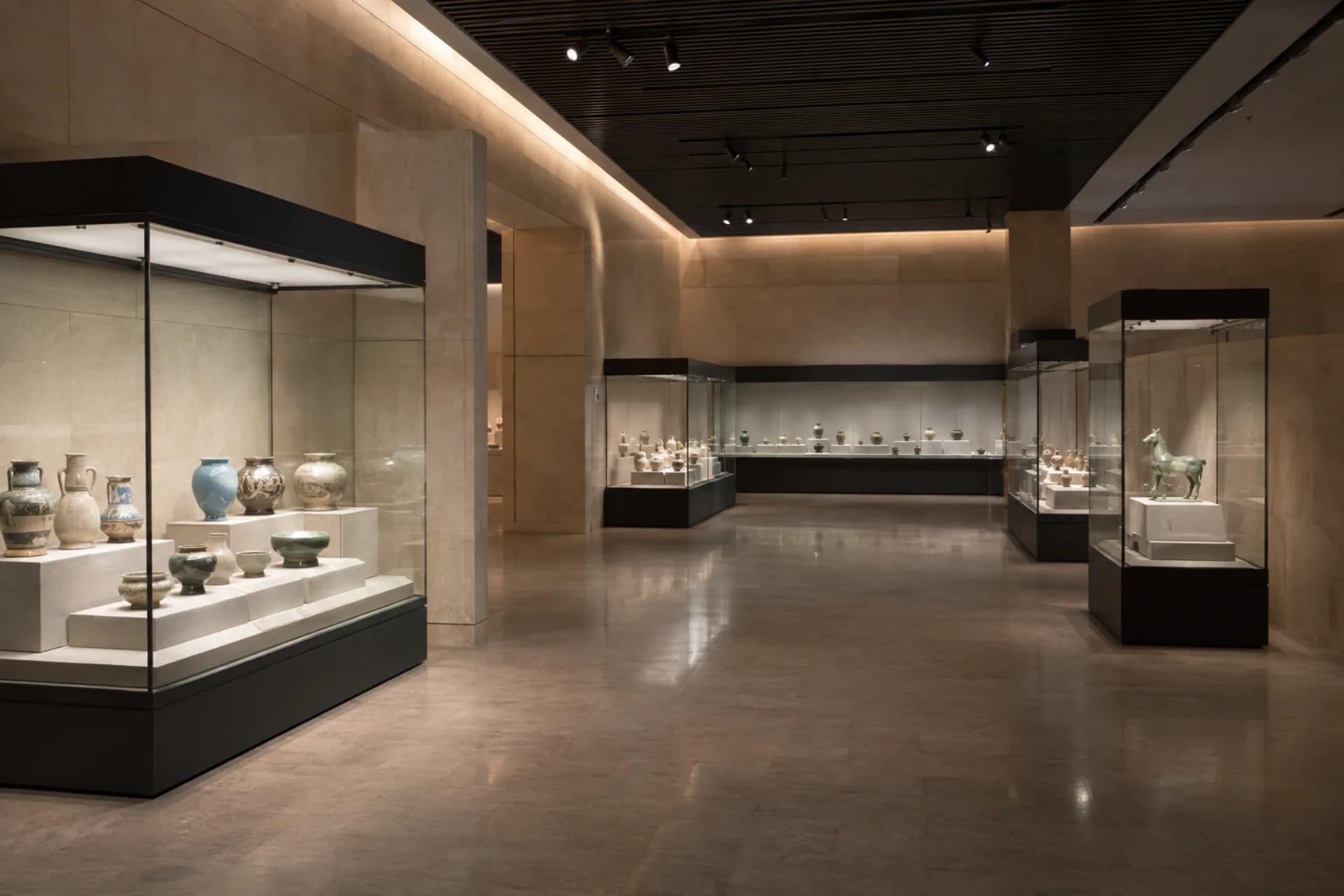
Gansu Provincial Museum to the Mother Sculpture is about 3.1 km / 9 minutes by car in AMap's current model. A focused morning museum visit, lunch and this linear river walk can form one full day. After a three- or four-hour museum visit, use the shorter bridge-and-hill version or move the river to another day.
The aim is not to collect every riverside attraction. Follow the Yellow River in one direction, cross the historic bridge once and let the hill explain why Lanzhou grew as a narrow east–west city.