Zhangzhou Ancient City
Zhangzhou Ancient City (漳州古城, Zhāngzhōu Gǔchéng) is strongest as a slow reading of a living Minnan district: timber and brick architecture, religious and civic layers, old street alignments and food breaks that change the pace. The public historic streets are free. A balanced first visit takes two to three hours; a 90-minute sampler still captures the architectural spine.
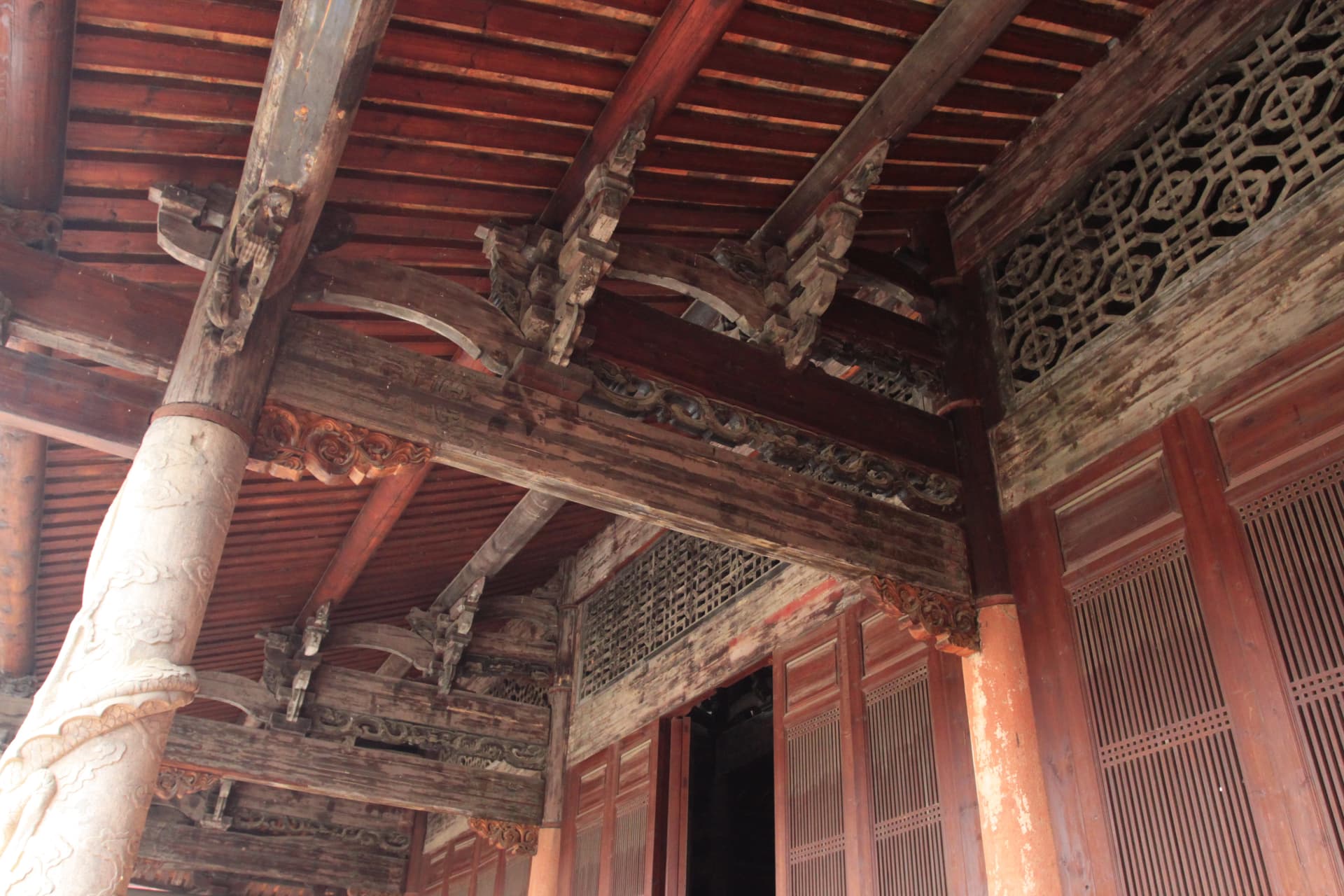
Photo: Zhangzhugang · Source · CC BY-SA 4.0
This is a close detail of the Confucian Temple's timber structure, not a panorama of the whole Ancient City. Look up throughout the walk: roof brackets, ridgelines, brickwork and the depth behind modern shopfronts explain the district better than a storefront checklist.
Choose the depth
| Visit | Sequence | Best for |
|---|---|---|
| 90-minute sampler | Visitor centre → Confucian Temple layer → Hong Kong Road → Zhongshan Park | A first architectural orientation |
| Two to three hours | Sampler + one currently open museum, heritage space or religious stop + food break | Best balanced first visit |
| Daylight to evening | Architecture in daylight → rest or Minnan meal → later public-street atmosphere or a verified performance | Travelers staying in urban Zhangzhou |
Start at the Zhangzhou Ancient City Visitor Centre on AMap. The external sequence to the Confucian Temple, Hong Kong Road and Zhongshan Park uses walking legs of about 4, 5 and 6 minutes in AMap's model checked on 23 August 2026.
Those points form a clear public spine. Follow current signs around construction or controlled courtyards rather than assuming every mapped line is a through-route.
Read the district in layers
At the Confucian Temple, give the timber frame and courtyard proportions time before adding another stop. Current interior access and conservation controls can differ from the free surrounding streets, so let the open layer on the day determine the depth.
Hong Kong Road shifts attention toward street width, arcades, doorways and the relationship between old fabric and present-day commerce. Zhongshan Park gives the short route a spacious finish and makes it easy to decide whether to continue into another cultural interior or stop for food.
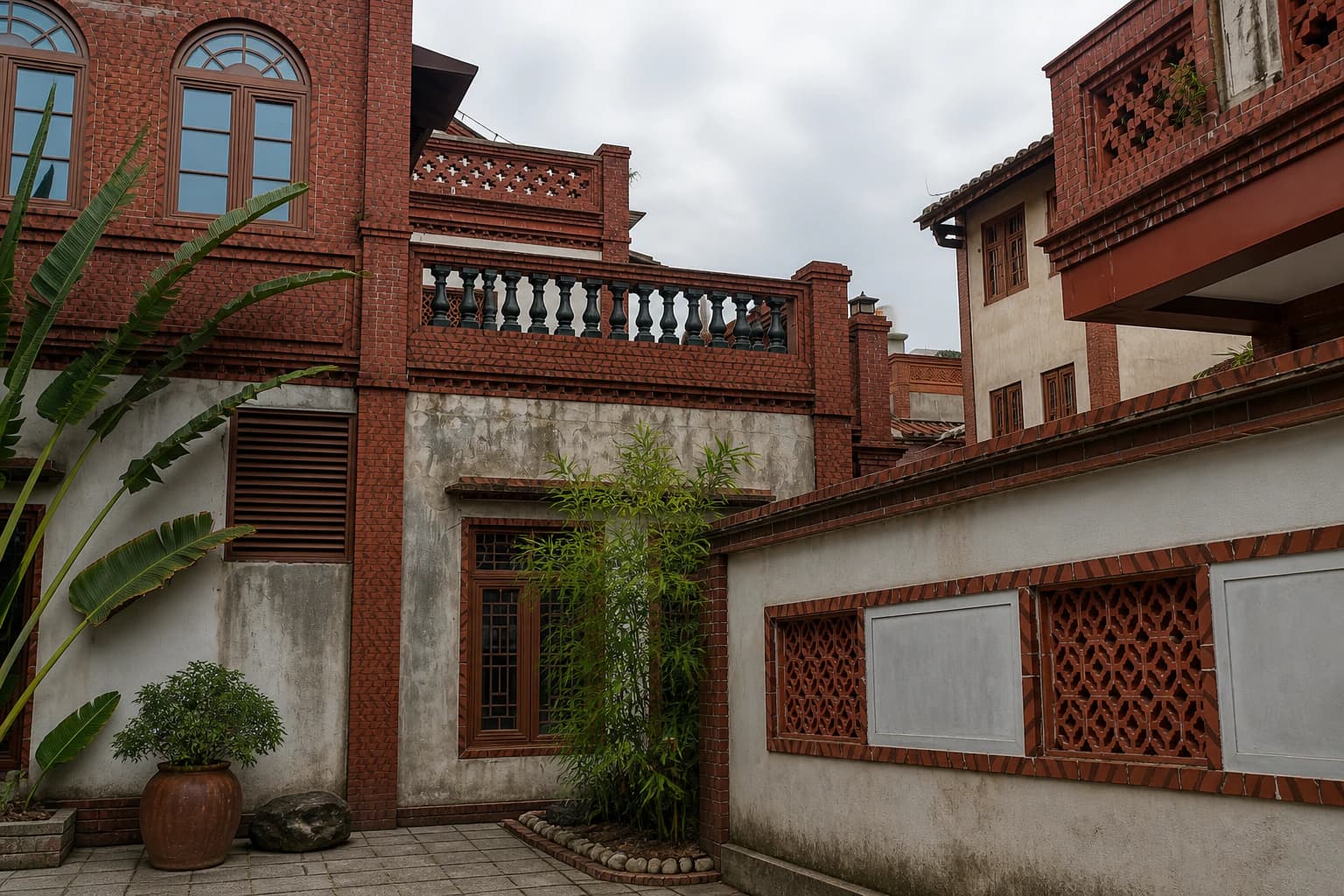
Across the old city, notice how red brick, pale plaster, tiled roofs and deep thresholds create transitions from busy streets to quieter courtyards. Closed doors remain private or controlled unless current signs invite entry.
Use food as pacing, not a merchant checklist
The durable food layer is categorical: noodles, oyster-based snacks, four-fruit soup, sweet bites and a fuller Minnan meal. Choose one snack during the walk and one seated rest rather than queueing for every famous-looking counter. Current merchants change, and a busy line is not proof of quality.
In hot weather, architecture works best early, with a shaded or indoor rest near midday and a later return to the public streets. The evening adds atmosphere, but it does not guarantee a parade, puppet show or immersive performance.
Free streets, selective interiors
The historic district and Confucian Temple public layer are free; there is no Ancient City admission ticket to buy. Museums, exhibitions, religious interiors and performances can each use their own opening, reservation, language and access rules.
For any reserved or paid layer, carry the original passport and confirm current passport handling at the visitor centre or official counter. No current international booking channel establishes one universal passport flow for every interior. Check same-day notices after heavy rain, a typhoon warning or a major event, when crowd routing and outdoor programming may change.
Arrive at the real walking start
Zhangzhou Station is not in the old-city core. AMap's model checked on 23 August 2026 places it about 12.4 km / 33 minutes by car from the visitor centre. Use that as a planning baseline, not a fixed taxi fare or traffic promise.
Use the Zhangzhou guide to decide whether to pair the walk with Yun Dong Yan or reserve the next two days for Dongshan Island. The Ancient City earns a slow urban block; it does not need to be compressed around a coast transfer.