Yongding Tulou Clusters
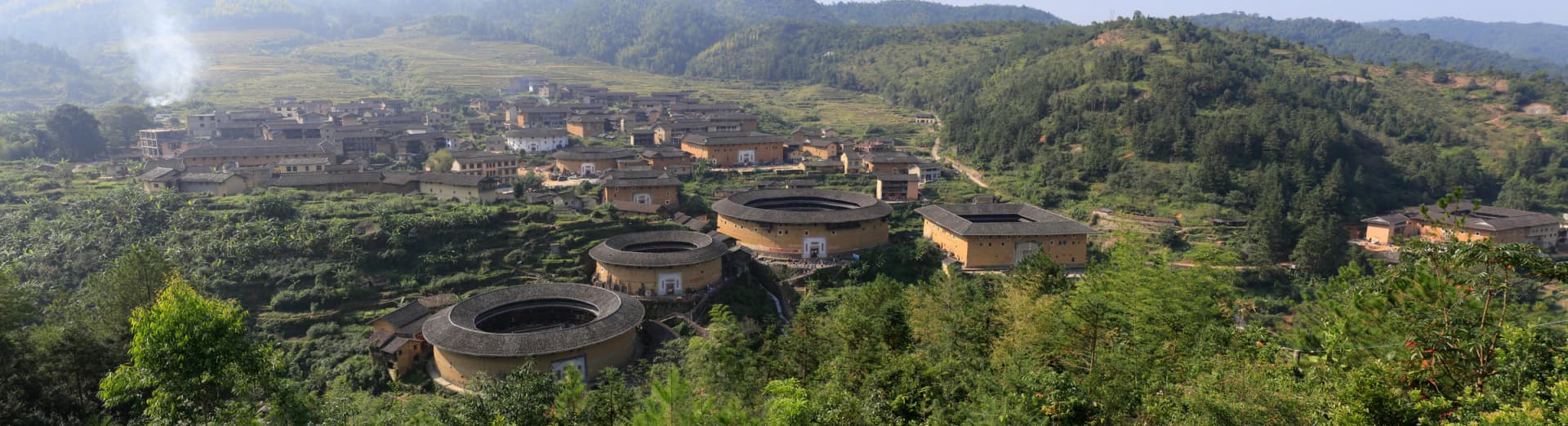
Yongding's three launch clusters are not variations of one entrance. Hongkeng is the broad architectural village, Gaobei is the compact Chengqi Lou product, and Chuxi is the remote hillside ensemble. Choosing among them is the most important planning decision—and it makes the visit much more rewarding than racing through a generic tulou checklist.
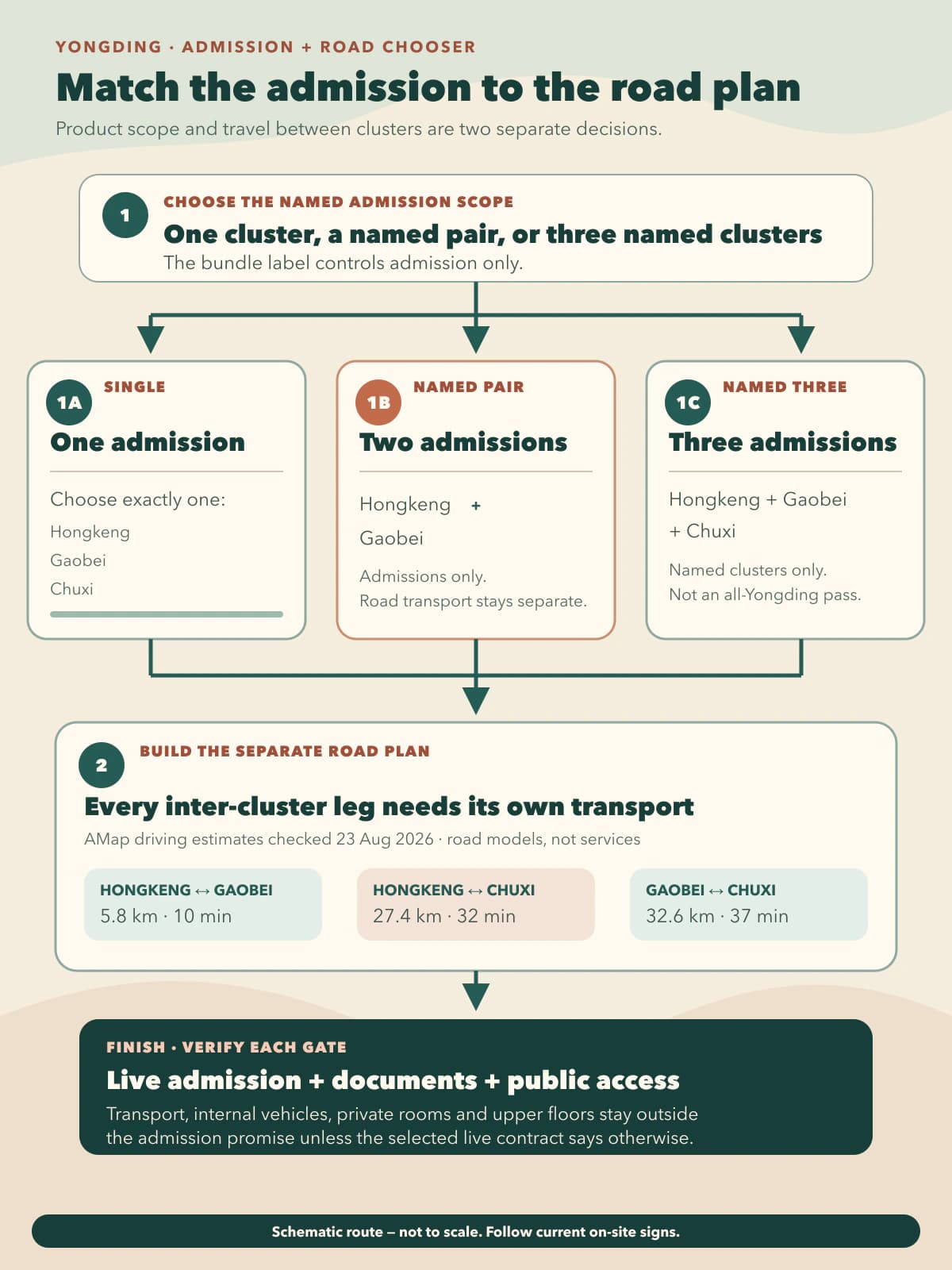
The diagram separates admission products and road branches. It does not show a walkable loop, included transfer or fixed shuttle.
Match the cluster to what excites you
| Choose | Strongest value | Signature layer | Pace |
|---|---|---|---|
| Hongkeng | Variety and first-time context | Zhencheng, Fuyu, Kuiju and a broader living-village sequence | 2–3 hours |
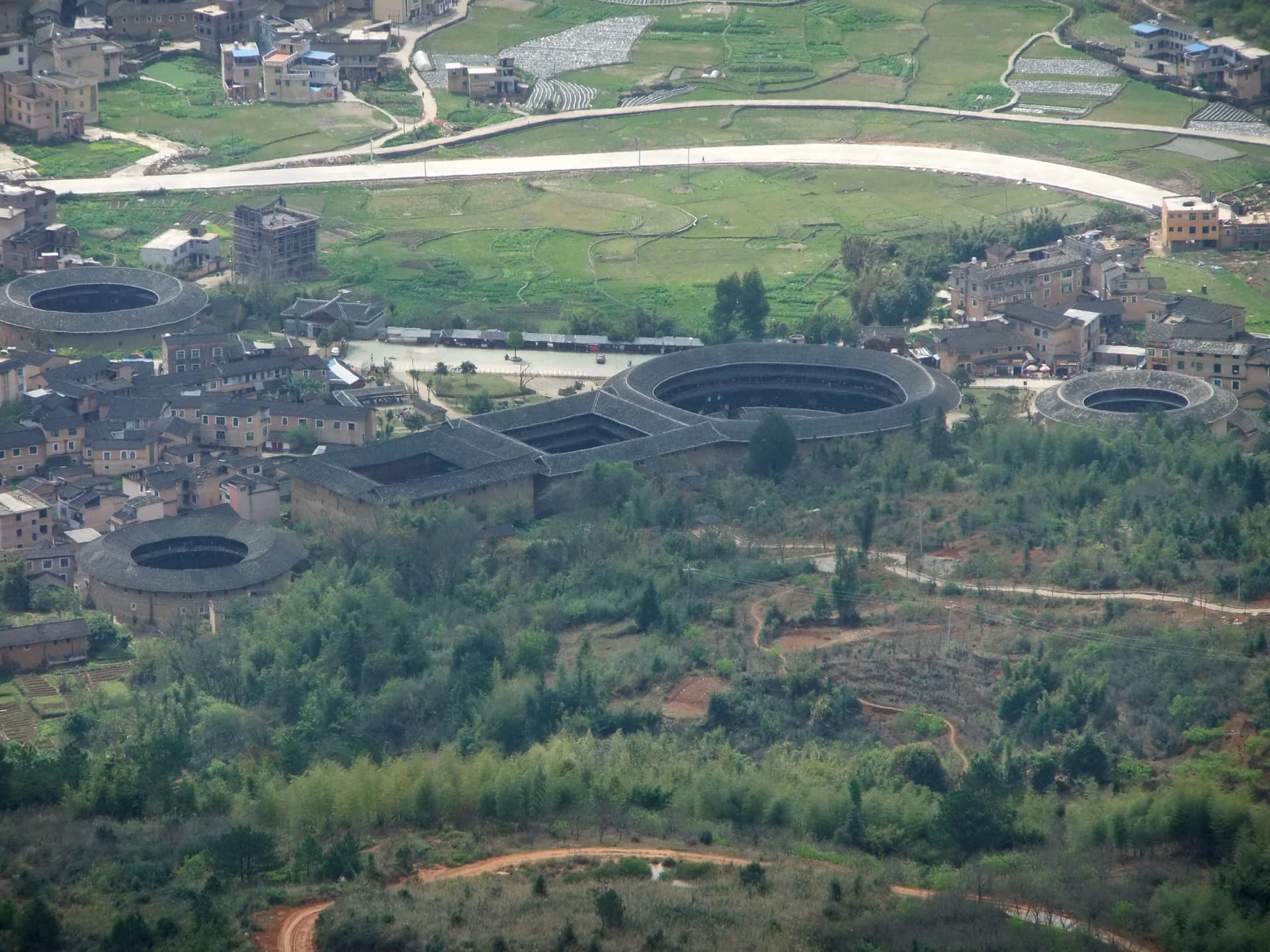
| Gaobei | Monumental scale | Chengqi Lou and its concentric courtyards, with supporting buildings nearby | 1–2 hours |
| Chuxi | Landscape and slower village rhythm | Jiqing-centred hillside ensemble of circular and square tulou | 2–3 hours or a slower stay |
Hongkeng is the safest first choice when you want one cluster. Gaobei is the most concentrated architectural statement. Chuxi is the most deliberate excursion and should not be squeezed into a leftover hour.
Match admission to the road plan
The exact single-cluster tickets remain the clean default. Check Hongkeng admission, Gaobei admission or Chuxi admission only after choosing the corresponding road endpoint.
The Hongkeng + Gaobei admission bundle covers the two named admissions, not the road leg. The three-cluster admission bundle likewise excludes inter-cluster transport and does not prove that all three fit comfortably into one day.
Use one cluster as the baseline
One cluster provides a complete visit when you slow down enough to compare building plans, courtyards, lanes and the relationship between protected heritage and living homes. For a fuller day, Hongkeng and Gaobei are the logical pair: an AMap road model checked on 23 August 2026 measured 5.8 km / 10 minutes by car between their visitor nodes.
Chuxi is materially separate—about 27.4 km / 32 minutes by car from Hongkeng and 32.6 km / 37 minutes from Gaobei in the same dated models. Give it a dedicated road branch. Distances do not establish a shuttle, taxi supply, private-car permission or last return.
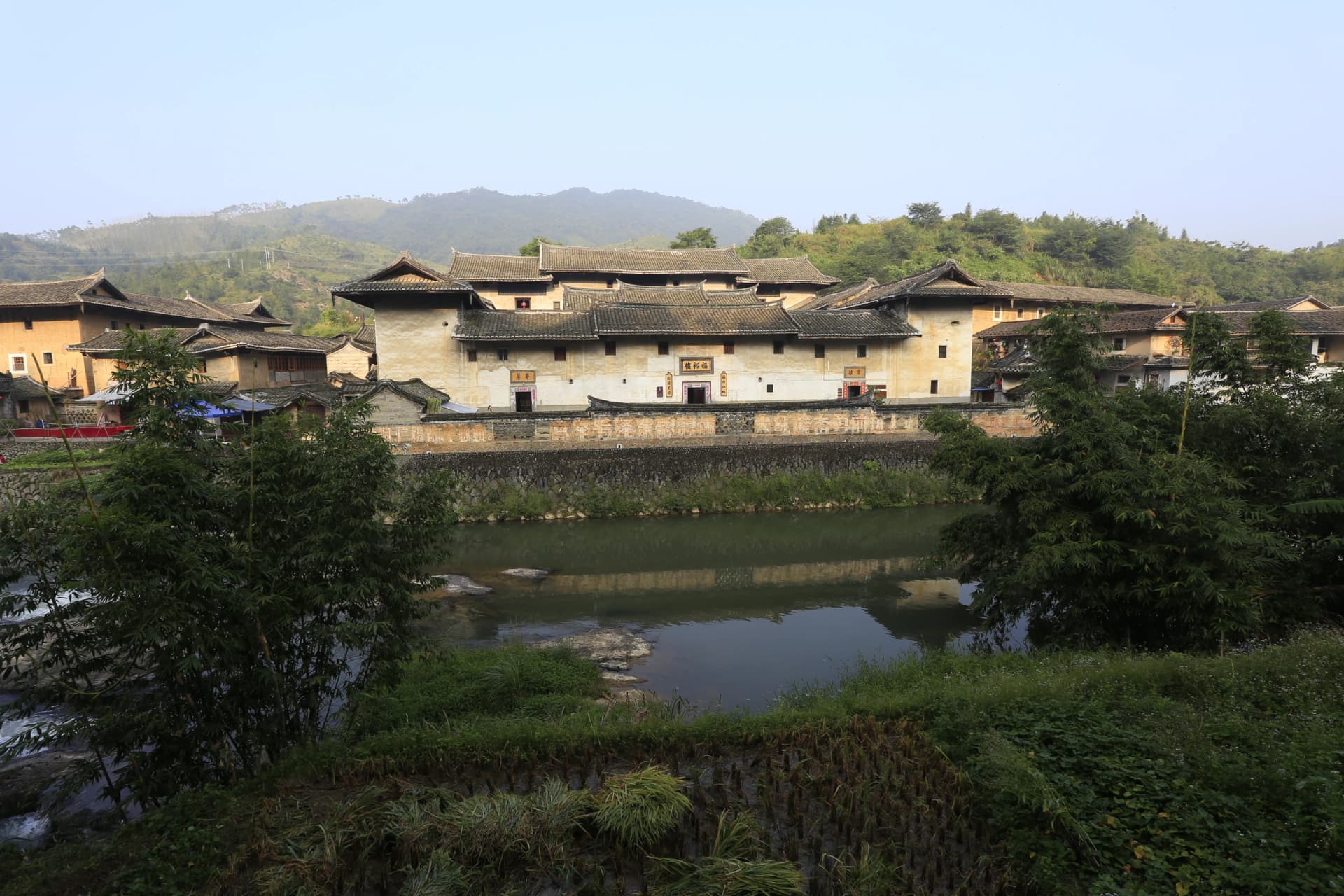
Photo: Zhangzhugang · Source · CC BY-SA 3.0
Hongkeng's broader village context contrasts with Gaobei's concentrated monument and Chuxi's hillside composition.
Choose a base that serves the chosen cluster
Longyan city suits a rail-arrival night and broad hotel inventory, but it is about 80.9 km by the dated road model from Hongkeng. A Yongding or cluster-adjacent stay can shorten the scenic morning only when the exact property pin, international-guest terms, luggage handling and return transport work for your booking.
Use Longyan hotels for the city layer or Yongding District hotels as a broad search. On the cluster pages, prefer the exact Hongkeng, Gaobei or Chuxi landmark shelf rather than assuming every “Yongding” property sits near every gate.
Read architecture without treating homes as exhibits
Round and square tulou answer different family, defence, ventilation and terrain needs. Look for the relationship between the outer earth wall, timber galleries, ancestral space, wells and the surrounding village rather than chasing a single camera angle.
Current admission never guarantees every upper floor or private room. Follow posted boundaries, ask before photographing residents, and leave drones, unmarked stairs and paid informal access out of the default route. That restraint protects the part that makes Yongding special: these are inhabited communities, not empty stage sets.