Gushan and Yongquan Temple
Gushan (鼓山) offers more than a city viewpoint. Its old-path tradition, rock inscriptions and Lingyuan cultural landscape lead toward Yongquan Temple (涌泉寺), an active Buddhist site with historic publishing and overseas connections. Choose a walking-led, assisted or culture-first product before leaving central Fuzhou; each creates a different day.
Three useful ways to experience Gushan
| Product | Put first | Best for |
|---|---|---|
| Old-path day | A currently open historic ascent, with a conservative turnaround | Fit walkers who want the mountain itself |
| Assisted visit | A live cableway or other verified assisted segment, then selective walking | Saving energy for culture and views |
| Culture first | Yongquan Temple, Lingyuan Cave area and cliff inscriptions that are open | Buddhist heritage, calligraphy and lower-visibility days |
The culture-first choice is not a reduced version of the mountain. The inscriptions turn rock faces into a long public record of visits and literary exchange, while Yongquan adds a living religious and publishing story. It remains meaningful when cloud removes a broad skyline view.
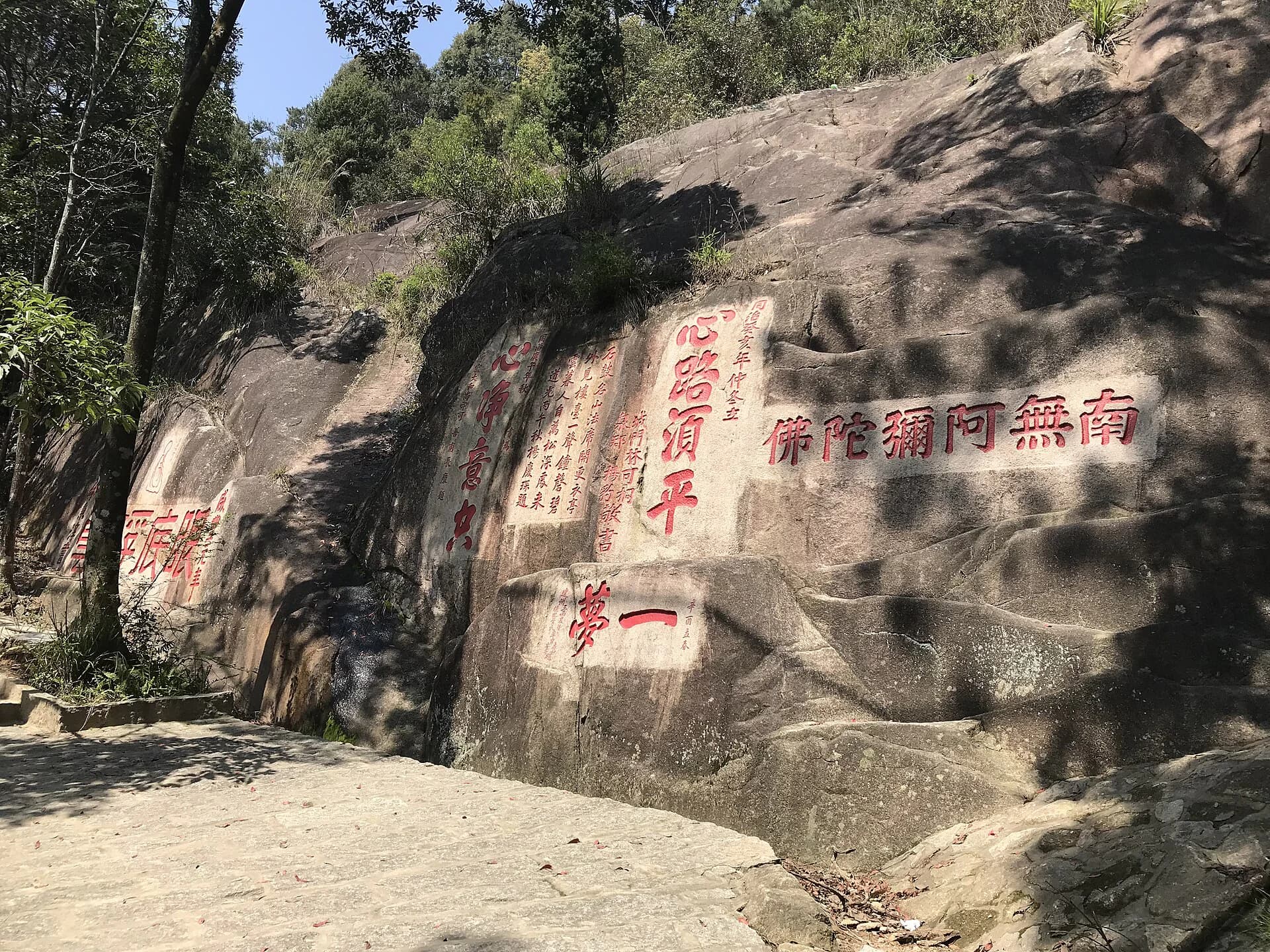
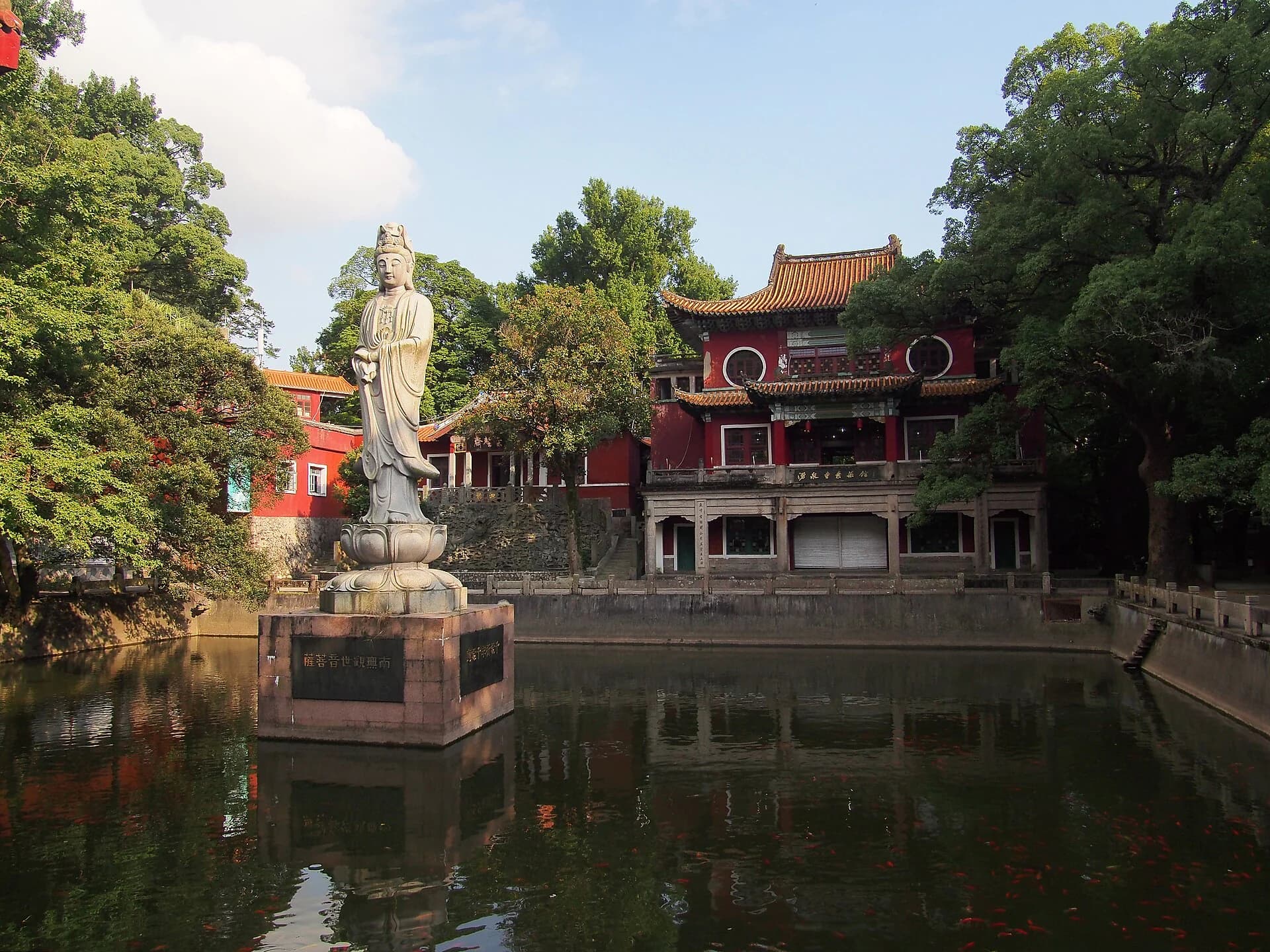
Photo: Zhangzhugang · Source · CC BY-SA 4.0
Make the temple and inscriptions the core of the visit
If culture is the priority, save your walking energy for Yongquan Temple and the Lingyuan inscription area. Choose a currently operating assisted ascent when available, then follow the signed paths between the open cultural areas. If you prefer the old-path climb, use the rest pavilions to reassess your energy before adding more stairs above. Visitor accounts vary widely on ascent time; a short hiking estimate should not determine your temple arrival or final descent.
At Yongquan, slow down around the red walls, old trees and successive courtyards. Notice how the enclosed spaces frame small views rather than a continuous city panorama. Follow the open hall sequence, giving worshippers space, and compare the quieter garden edges with the ceremonial axis. This makes the temple a visit in its own right, even on a cloudy day.
At Lingyuan Cave (灵源洞), choose a few inscriptions to examine closely instead of searching for every famous name. Compare large individual characters with longer rows of writing, and use the labels to identify who left the text and what occasion it records. The question is how successive visitors responded to the same mountain. Read from the path; climbing onto the rocks is unnecessary.
For more context, the cliff-inscription exhibition at Songtao Lou introduces the mountain's inscriptions. Include it if open during your visit, without making access a condition of the outdoor walk.
Finish by choosing one extension: more rock scenery in the open Shibajing area, or a viewpoint when visibility is good. Both add walking. Before lingering for sunset, check that your intended descent will still be available; an attractive evening view does not guarantee a late cableway or shuttle.
Use a live route contract
Begin at the Gushan Scenic Area Visitor Centre on AMap, the verified external endpoint at the foot of the mountain. From Sanfang Qixiang, AMap's road model checked on 21 August 2026 measured about 12 km / 25 minutes by car. It does not establish a trail, scenic vehicle, cableway or private-car route inside the managed area.
Before departure, verify four items together: current scenic opening after recent weather, the exact ascent you intend to use, the last practical descent, and access to Yongquan Temple or the inscription area. If one assisted segment is suspended, decide whether the open walking product still suits your fitness rather than expecting an automatic substitute.
The visitor-centre notice effective 19 June 2026 lists 08:00–19:00 on all weekends and holidays, and on June–September weekdays; 08:30–17:30 on October–May weekdays. These are consultation and visitor-service hours, not the operating clock for every trail, temple hall or cableway. Summer cableway notices are seasonal and direction-specific. Use the operator's same-day notice and on-site signs as the current contract.
Admission and temple etiquette
A city price notice effective 18 April 2025 set a CNY 40 combined Gushan scenic-area and Yongquan Temple baseline. Recheck the current inclusion, exemptions, foreign-passport purchase and whether your chosen route uses the same product. Current third-party listings do not establish admission, temple access and assisted transport as one clear international package.
Yongquan remains a place of worship. Move quietly through active halls, give ceremonies and worshippers space, and follow current signs for photography and closed thresholds. Incense, scripture-related spaces and religious activities are not performances; observe without blocking movement or imitating a ritual for a picture.
Let weather choose the product
Heat and humidity favor an early start, water and a conservative turnaround. Rain can make stone surfaces slippery; lightning, strong wind and typhoon conditions can close trails or assisted transport. A cultural visit can sometimes preserve the day's value when visibility is poor, but only if the approach and temple are officially open.
Give Gushan its own half or full day rather than attaching it to a crowded old-city checklist. For another lower-effort cultural choice, use Fujian Museum and West Lake; for the wider sequence, see the Fuzhou guide.