Yiwu Market first-time buyer guide: turn a huge market into one controlled test
Yiwu International Trade Market (义乌国际商贸城, Yìwū Guójì Shāngmàochéng) is useful when you arrive with a product brief, a quantity range and a way to compare suppliers. It is exhausting when you arrive expecting a giant discount mall. Most booths are business-to-business showrooms. A seller may offer one sample, quote only by carton, require a minimum for each colour, or decline a tiny order. None of those responses makes the market unfriendly; they tell you which transaction the booth is built to handle.
For a first visit, set a smaller goal than “source in China”: compare one product family, collect three to five complete quotes, and leave with either one paid sample or a clear reason not to order. A tourist who wants to see global trade can spend two focused hours in one hall. A small buyer should protect a full day for comparison and note-cleaning. A professional order deserves at least two market days plus independent work on contracts, compliance, inspection and freight.
This guide is the transaction layer that our Yiwu International Trade Market visitor guide cannot cover in depth. It will not identify a “best supplier,” promise factory prices, or replace advice from a customs broker, product-compliance specialist, lawyer or accountant in the countries involved.
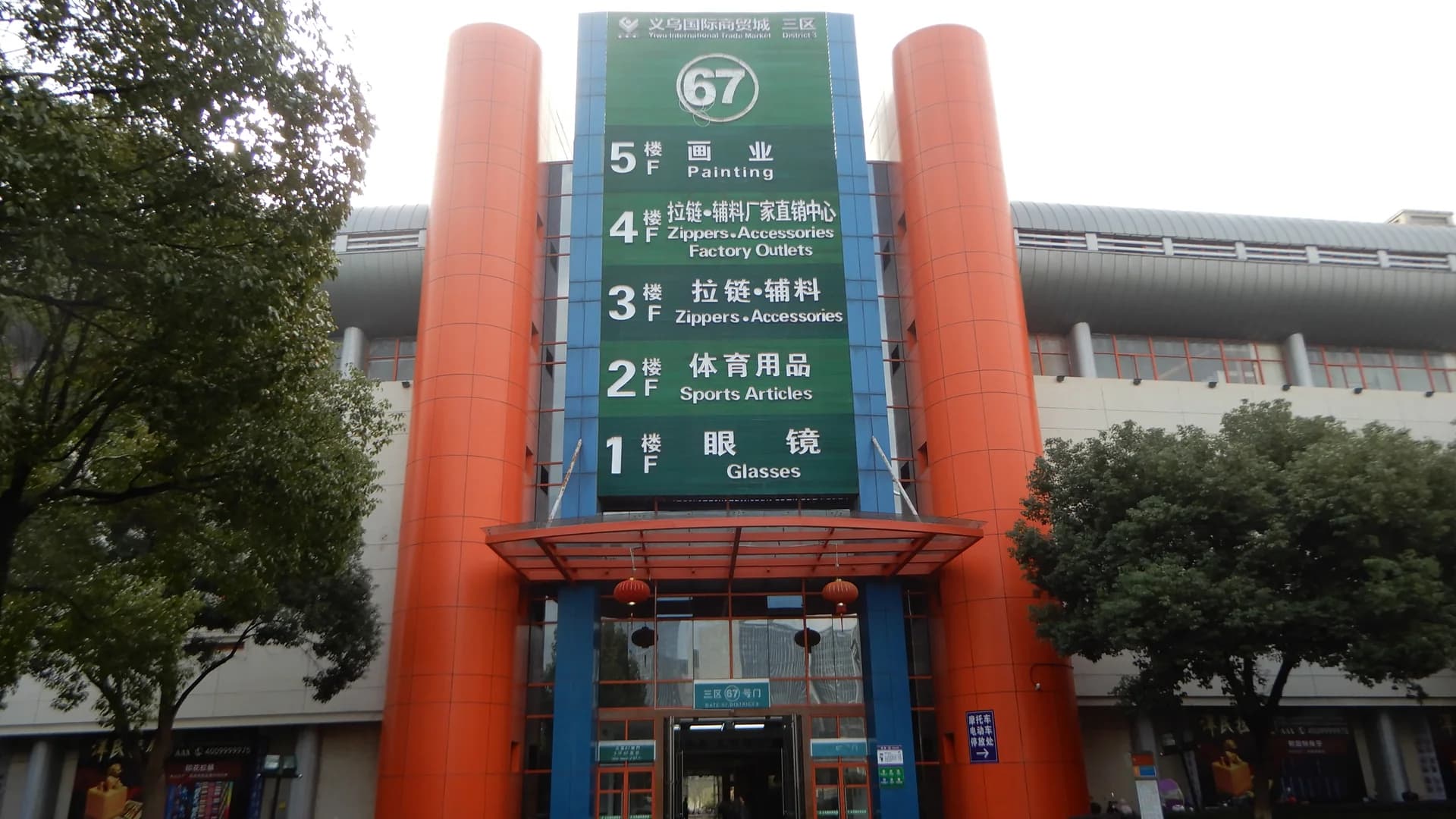
Record the district, gate, floor, aisle and booth number together. This 2018 District 3 sign shows why a gate number is useful for orientation, but its category list is not a current directory. Check the operator map and on-site signs on your visit. Photo by Whisper of the heart, licensed under CC BY-SA 4.0.
Decide whether Yiwu matches your job
| Your real goal | What Yiwu can do well | Sensible first commitment | Stop if |
|---|---|---|---|
| Curious visitor | Make wholesale variety and booth specialization visible | One known category, 90 minutes to three hours | You need a particular retail souvenir or guaranteed single-piece sale |
| Small online seller | Compare variants, packaging and low-volume terms face to face | One category, one full market day, paid samples only | You have not checked landed cost, destination rules or sales demand |
| Product developer | Compare materials, mechanisms, decoration and packaging | A written specification, two days and a sample budget | You expect a display sample to define production quality automatically |
| Experienced importer | Build a broader supplier and consolidation network | Pre-arranged meetings plus independent due diligence | You are treating booth presence as proof of factory ownership or compliance |
The wrong question is “Can tourists buy here?” Some booths will sell a single piece or sample and others will not. The better question is “Does this booth's order model fit my quantity and specification?” Ask that before discussing price.
If you only want Chinese consumer brands, tax-refund shopping or a warranty-backed device, use the China shopping guide. If you are comparing components and electronics versions, the Huaqiangbei guide addresses a different specialist market. Yiwu is strongest for the disciplined comparison of small commodities across dense supplier clusters.
Choose one hall before you arrive
The operator's current market directory lists Districts 1–6, while its market introduction explains the established complex. Use those pages to locate a category shortly before the trip. Do not rely on an old social-media floor card: halls, floor labels and product groupings can change.
The established districts are broadly useful for these families:
- District 1: toys, artificial flowers, jewellery and decorative or festival goods;
- District 2: bags, hardware, tools, electrical products and related categories;
- District 3: stationery, sports goods, eyewear, beauty-related products and garment accessories;
- District 4: socks, shoes, textiles and everyday goods;
- District 5: imported products, bedding and fabrics, plus automotive and pet-related categories.
The Global Digital Trade Center (全球数贸中心) opened on 14 October 2025 as Yiwu's sixth-generation market. Official current material also calls it District 6 and lists fashion fabrics, beauty or infant-product categories, travel goods, smart technology and IP-related trendy goods across its floors. Treat it as a separate current destination to verify, not as an assumed internal continuation of the older halls. The Yiwu government opening notice establishes the opening; the operator directory controls your live category check.
Choose one primary building and one backup category nearby. Save the Chinese category term, a screenshot of the current operator directory and your intended gate. “Kitchen item” is too broad; “350 ml double-wall stainless-steel cup with leak-resistant lid” can lead a seller to the right shelf.
Build a one-page product brief
Put this in a phone note and a shareable PDF:
- product name and use;
- dimensions, weight and material;
- colour and finish, with a physical or measured reference where possible;
- required functions and unacceptable failures;
- packaging type and label languages;
- first test quantity and possible repeat quantity;
- required delivery country and target date;
- destination standards, tests or marks already identified;
- whether branding is neutral, private-label or licensed;
- the unanswered questions that could cancel the project.
Translate the short product noun and critical materials into Chinese. Keep the full specification in both languages only if it has been checked by someone who understands the product. A machine translation is fine for navigation; it is weak evidence for a safety requirement or contract term.
The first booth conversation
Open with your product and quantity, not “best price.” A compact script is:
我想找这种产品。第一次订单预计 [数量] 件,之后可能补单。请问这是现货还是订做?最小起订量是多少?
I am looking for this type of product. The first order is about [quantity] units, with possible repeat orders. Is this in stock or made to order? What is the minimum order?
Then collect the same fields from every candidate:
- exact model or item number;
- unit material, dimensions and net weight;
- stock (现货) or made to order (订做);
- minimum quantity for the item, colour, size, carton and whole order;
- whether colours or models may be mixed;
- sample price, sample lead time and whether any amount is credited later;
- unit price at your actual quantity, not an imaginary container quantity;
- packaging included, units per carton, carton dimensions and gross weight;
- production lead time after deposit and after sample approval;
- decoration, mould, artwork or packaging charges;
- the price basis and delivery point;
- supplier legal name, contact, booth number and payment beneficiary.
Ask permission before photographing a booth, catalogue, product detail or business card: 可以拍产品和摊位号吗? (May I photograph the product and booth number?) A refusal is not proof of a problem. Record the information in writing instead and never include nearby shoppers or another buyer's documents.
Record the route, not just the seller's name
Save each candidate as District–Gate–Floor–Aisle–Booth. Photograph the public gate sign and, with permission, the booth number. Add one product photo, the quoted specification and the salesperson's contact to the same note. Repetitive corridors make a contact name or chat avatar poor navigation evidence.
Do not compare offers while walking. After every three or four booths, sit down and normalize the quotes. If you cannot explain why one quote is lower, you do not yet have comparable offers.
MOQ is a structure, not one number
MOQ can mean minimum per design, stock-keeping unit, colour, size, inner box, carton or whole order. A seller saying “500 pieces” may mean 500 of one colour; another may allow five colours of 100; a third may quote stock goods by carton and custom packaging by thousands. Write the unit beside every number.
Use these questions:
- 每个颜色的起订量是多少? — What is the MOQ for each colour?
- 可以混款、混色吗? — Can I mix models and colours?
- 一箱多少个?整单最少多少箱? — How many units per carton, and what is the minimum number of cartons for the order?
- 这个价格是按哪个数量? — Which quantity is this price based on?
- 包装和印刷分别有什么起订量? — What are the separate minimums for packaging and printing?
A lower MOQ may come from stock, simpler packaging, mixed consolidation or a higher unit price. It does not necessarily mean the same production arrangement. For a first test, paying more per unit for neutral stock can be cheaper than creating branded packaging, holding unsold inventory and discovering a defect after a large run.
Use a sample ladder
A sample is a decision tool, not a miniature guarantee. Name which stage you are approving:
- Display sample: shows a style already in the booth. It may not come from your future production line.
- Paid stock sample: lets you measure construction, packaging and user experience for an existing item.
- Customized or pre-production sample: tests your material, colour, artwork and packaging before production.
- Approved reference or “golden sample”: the dated, signed comparison standard retained by both sides.
- Production sample or inspection lot: checks whether output matches the approved reference.
For each one, record model, date, material, colour reference, dimensions, working features and visible tolerances. Photograph it beside the supplier label. If you approve by video, specify what the video must show and retain the file; do not let a flattering angle replace measurements.
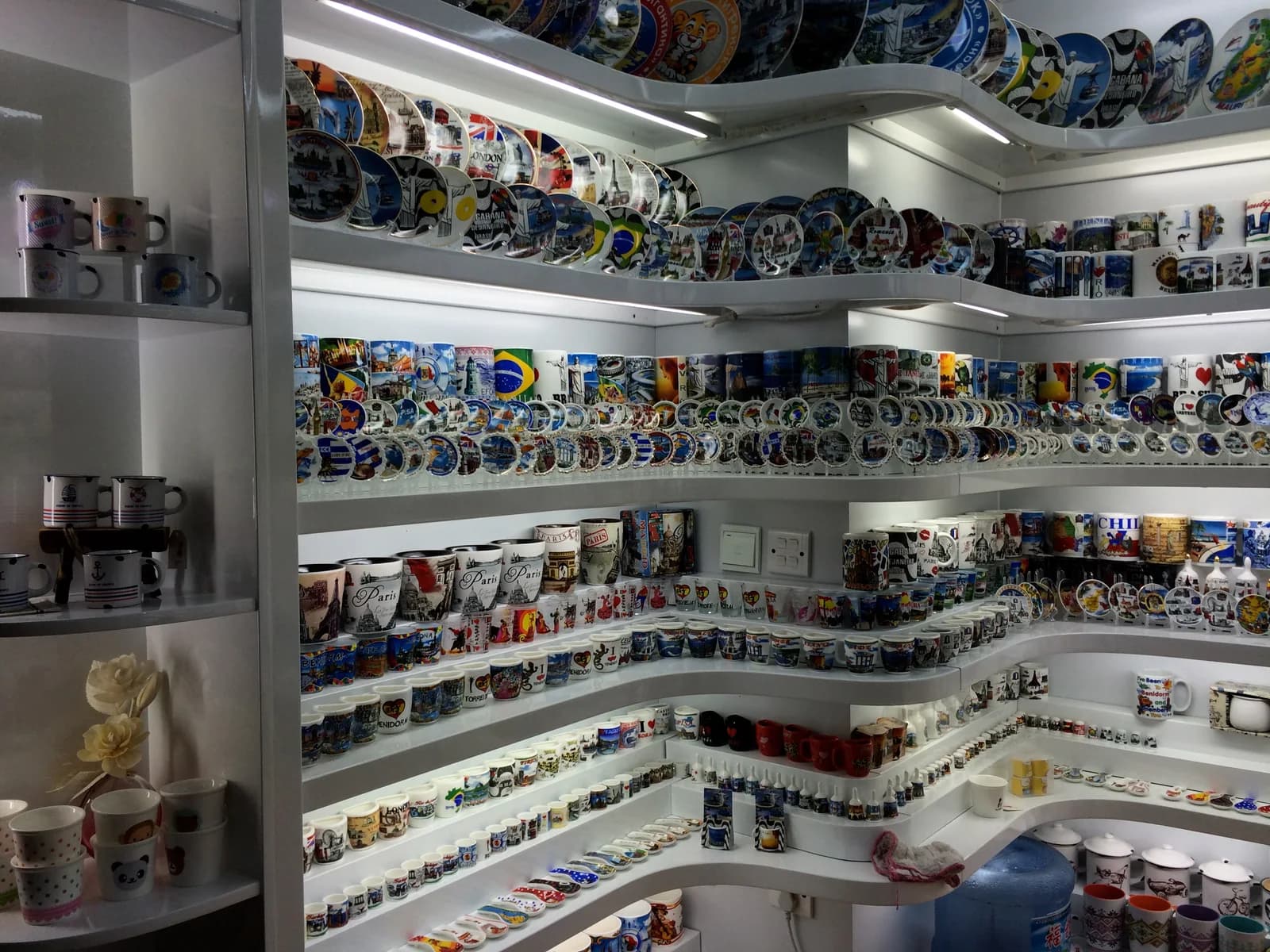
A dense display helps compare shapes and finishes, but it does not show which designs are available for your quantity or legally licensed for your market. Record the exact sample and ask who controls any logo, character or artwork. Photo by iamdanw, licensed under CC BY 2.0.
Define quality before ordering
“Good quality” cannot be inspected. Replace it with acceptance points: material grade, dimensions and tolerance; colour reference; seam or joint strength; surface-finish limits; moving-part function; electrical rating; leak test; barcode readability; label content; packaging protection; and an agreed list of critical, major and minor defects.
China's Product Quality Law establishes responsibilities for producers and sellers and rules for quality and labelling. That is a domestic baseline, not proof that a product complies with children's, electrical, food-contact, cosmetic or other rules in your destination. Ask for named test reports and verify the report number, applicant, model, standard, laboratory and validity against the exact product. A PDF with a familiar logo is not enough.
For a meaningful order, decide who inspects, when, using which sampling plan and what happens after a failed inspection. A sourcing agent, freight forwarder and supplier are different parties; no role becomes independent quality control merely because it offers to “check everything.”
Compare landed cost, not the booth number
Put each quote into the same model:
goods + sample or tooling + printing + packaging + inland movement + consolidation + inspection + export handling + international freight + insurance + destination duty/tax + broker/terminal/delivery fees + expected defect loss
The unit price may be EXW, FOB, delivered to a Yiwu warehouse, or described by an informal phrase. Ask the seller to write the named place and included work. Use current Incoterms correctly in a contract rather than assuming “FOB price” means every charge up to your door.
Carton dimensions matter because light bulky goods can be charged by dimensional volume. Ask for units per carton, gross weight and outside dimensions before an order. Recalculate once packaging is final. Freight quoted before final cartons exist is planning data, not a guaranteed landed cost.
What a freight forwarder may and may not do
A forwarder may provide a warehouse, consolidation, repacking, export booking and transport documents. A sourcing agent may find suppliers, negotiate and coordinate. An inspection company may compare production with written criteria. An importer of record takes defined legal responsibility in the destination. One business may offer several services, but you need a written scope for each.
Ask a proposed logistics provider:
- What is the warehouse's full legal name and address?
- How is each supplier delivery identified and counted?
- Are storage, consolidation, repacking and photos included?
- Who prepares the export declaration and under whose name?
- What freight mode, chargeable weight and route does this estimate use?
- Which charges are prepaid, collect or excluded at destination?
- Is cargo insurance included, and what evidence starts a damage or shortage claim?
- What documents will I receive before departure and after shipment?
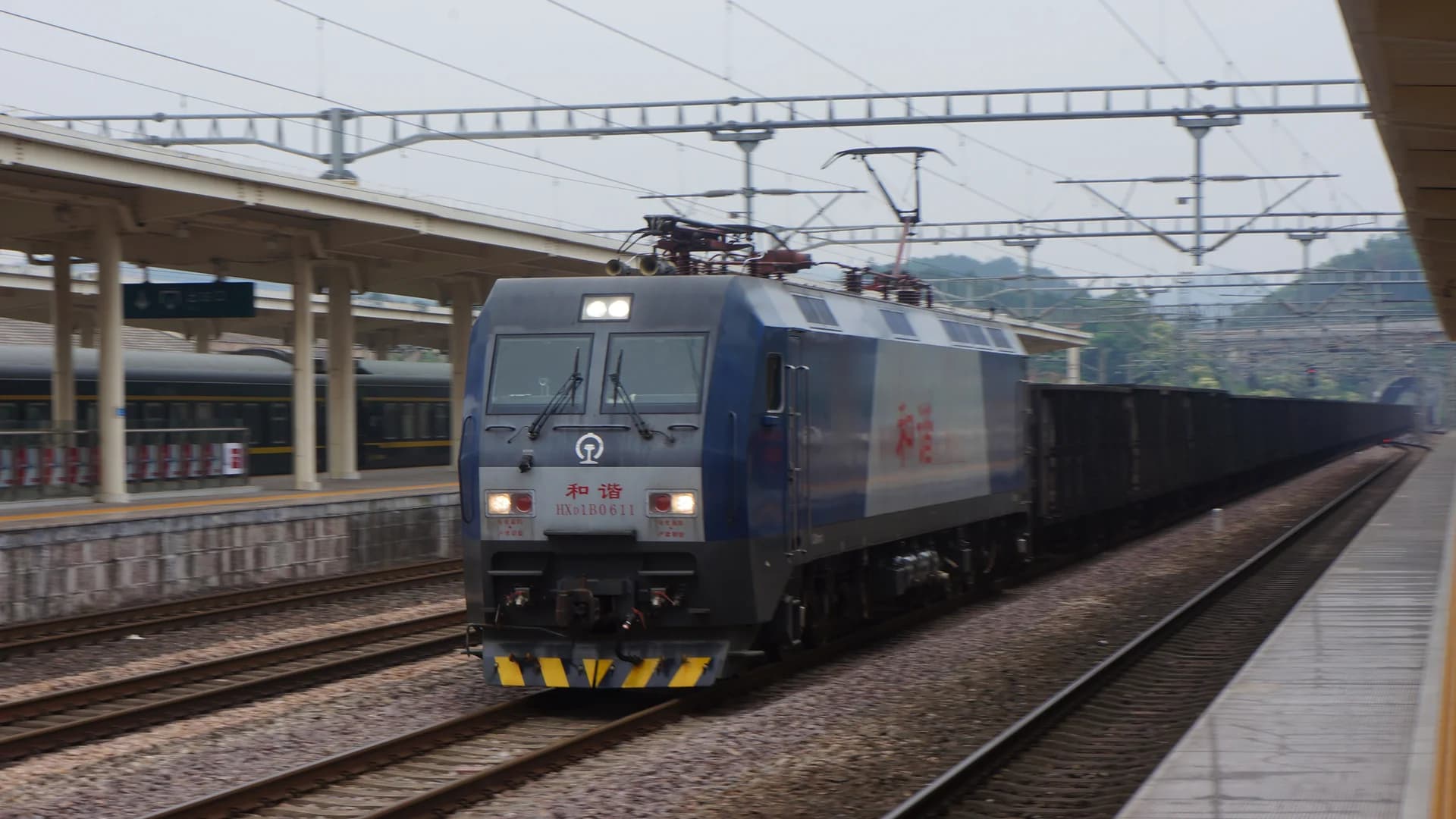
Yiwu is a freight hub, but this station photograph does not establish that a particular train, route or service can carry your goods. Your written booking must identify the warehouse, mode, route, charge basis, documents, liability and destination charges. Photo by MNXANL, licensed under CC BY-SA 4.0.
Payment: identify the counterparty before the QR code
Do not let payment speed outrun documentation. For a commercial order, match the supplier name on the quotation or contract, business registration, invoice and bank beneficiary. If the requested beneficiary is a trading company, individual or different entity, ask for the relationship and written payment instruction before transferring funds. A booth, factory and export company can legitimately be different entities; the risk is failing to understand which one owes you what.
Write the currency, deposit, balance milestone, fees, refund or remake remedy, sample approval, inspection condition and delivery term. A common deposit/balance pattern in one trade does not make it safe for your transaction. Use a payment method appropriate to the order value and dispute needs, and obtain professional advice for material exposure.
For a small sample bought in person, get an itemized record that shows seller identity, model, quantity and amount. Save the electronic payment record with the booth note. For a production order, a chat promise and payment screenshot are weak substitutes for signed commercial terms.
Intellectual property: availability is not authorization
Yiwu's range includes original designs, unbranded commodities, licensed products and items whose rights are unclear. A seller's willingness to print a logo or character does not grant you permission to import or sell it. Ask who owns the design, trademark, artwork, mould and product photography; request written authorization for licensed material; and keep the document with the exact SKU.
Do not submit a brand logo for private-label production until you control the relevant rights. Search and clear the mark in the destination, consider design and patent exposure, and put ownership of custom artwork or tooling in writing. “Inspired by” is not a customs defence.
China Customs publishes intellectual-property border-protection information and can detain suspected infringing goods. Its implementation rules also address carried or mailed articles beyond reasonable personal-use quantity. The practical rule is simple: if rights are uncertain, do not order, carry or ship the item.
Export and customs: separate souvenirs, samples and commercial cargo
China Customs' outbound and inbound passenger-baggage guide uses personal use and reasonable quantity as the boundary for traveler baggage, and calls for declaration of goods, samples and advertising materials. Do not divide a commercial batch among suitcases or describe resale stock as personal shopping. Ask Customs or a qualified broker how your actual goods should be declared.
A compliant export from China does not establish lawful import or sale elsewhere. Before ordering, identify:
- tariff classification and customs value method;
- destination licence, test, marking, language and traceability requirements;
- importer of record and tax registration;
- product-safety, chemical, electrical, radio, child-product or food-contact rules;
- packaging-waste, battery or recycling obligations;
- trade-remedy duties, sanctions or origin restrictions where relevant;
- document retention, recall and consumer warranty responsibilities.
China's revised Foreign Trade Law took effect on 1 March 2026 and requires compliance with customs, foreign-exchange, inspection and other applicable systems. Treat export procedure as professional work, not an add-on that any booth can “handle” without named responsibility.
One-day and two-day plans
One controlled day for a small buyer
Before 09:00: confirm the operator directory, gate, booth appointments and that the market is operating normally. Holiday closure and individual booth attendance vary; do not carry an old Lunar New Year schedule into a new year.
Morning: enter the chosen district, calibrate the first two conversations, then collect three complete quotes. Do not buy at the first booth merely because communication is easy.
Lunch and reset: leave the corridor, back up photos, label contacts and place quotes into the same columns. Drop any candidate that will not identify the product, quantity basis or seller.
Afternoon: revisit the strongest two or three suppliers. Inspect samples against the brief, ask packaging and carton questions, and buy a sample only when it will answer a decision. Finish while staff can still resolve receipts and warehouse questions; do not begin a serious custom order at closing.
Evening: photograph samples under neutral light, write unanswered questions and calculate a first landed-cost range. Do not send a large deposit because a salesperson is leaving tomorrow.
Two days for a first test order
Use day one for comparison. Overnight, normalize quotes and send identical follow-up questions. Use day two for sample decisions, counterparty records, inspection scope and a meeting with a pre-vetted logistics provider. If the answers expose a material gap, leave without ordering. A successful sourcing trip can end with three samples and no production contract.
If both days are market-focused, sleep near the exact district you will use rather than choosing “central Yiwu” by name alone. Compare Yiwu hotels on Trip.com by map pin, recent transport comments and current international-guest policy. Our Jinhua guide explains why Yiwu works better as its own base than as a casual commute from central Jinhua.
Buyer phrases worth saving
| Chinese | Meaning |
|---|---|
| 这个是现货还是订做? | Is this in stock or made to order? |
| 最小起订量按单款、颜色还是整单算? | Is the MOQ per model, per colour or for the whole order? |
| 可以先买样品吗?样品和大货一样吗? | Can I buy a sample first? Is it the same as production goods? |
| 请把材质、尺寸、包装和交期写下来。 | Please write down the material, dimensions, packaging and lead time. |
| 这个价格是什么贸易条款?交货地点在哪里? | What trade term is this price based on, and where is delivery? |
| 一箱多少个?毛重和外箱尺寸是多少? | How many per carton? What are the gross weight and carton dimensions? |
| 付款账户和合同公司是同一家吗? | Is the payment beneficiary the same company as the contracting company? |
| 谁负责出口报关?我会收到哪些单证? | Who handles export declaration, and which documents will I receive? |
| 可以拍产品和摊位号吗?不拍人。 | May I photograph the product and booth number? I will not photograph people. |
| 我今天只比较和拿样,不下大货。 | Today I am only comparing and taking samples, not placing a production order. |
Translation can help a meeting move, but the Chinese column should not become contract language without review. Ask the seller to write the critical numbers, units and inclusions in the quotation.
Cut-first rules
Leave the booth or pause the order when:
- the quote changes without a corresponding change in quantity, specification or delivery term;
- the seller will not identify the model, material, company or payment beneficiary;
- a certificate belongs to another product and the difference cannot be explained;
- a branded design has no written rights trail;
- the sample cannot be connected to production criteria;
- carton data or destination charges remain unknown but the margin only works on an optimistic freight guess;
- the counterparty discourages inspection, written terms or independent customs advice;
- urgency is the main reason to pay.
Also stop for ordinary fatigue. After hours of near-identical products, buyers remember the most recent booth as the best one. A structured note and a night's distance are part of quality control.
Final checklist before money moves
You should be able to answer all twelve questions:
- Which legal entity sells the goods?
- Which exact model and specification are being ordered?
- What does the MOQ count?
- Which sample is the approved reference?
- What is included in the unit price?
- Which named place and trade term define delivery?
- What are the final carton dimensions and weight?
- Who checks production, when and against what acceptance criteria?
- Who receives payment, and why?
- Who declares export and imports the goods at destination?
- Which tests, labels, licences and IP permissions apply to this exact product?
- What written remedy applies to delay, shortage, damage or failed inspection?
If several answers remain verbal, you are still researching. Yiwu's real advantage is the ability to compare quickly. Use that density to reject ambiguity, not to accelerate a transaction you do not yet understand.