Yiwu International Trade Market
Yiwu International Trade Market (义乌国际商贸城, Yìwū Guójì Shāngmàochéng), often called Futian Market, is fascinating because it makes global trade visible at human scale. Endless product families, specialist booths and buyers from many countries turn an ordinary building visit into a lesson in how small goods move from factory to shop. You do not need to be a professional buyer—but you do need a purpose.
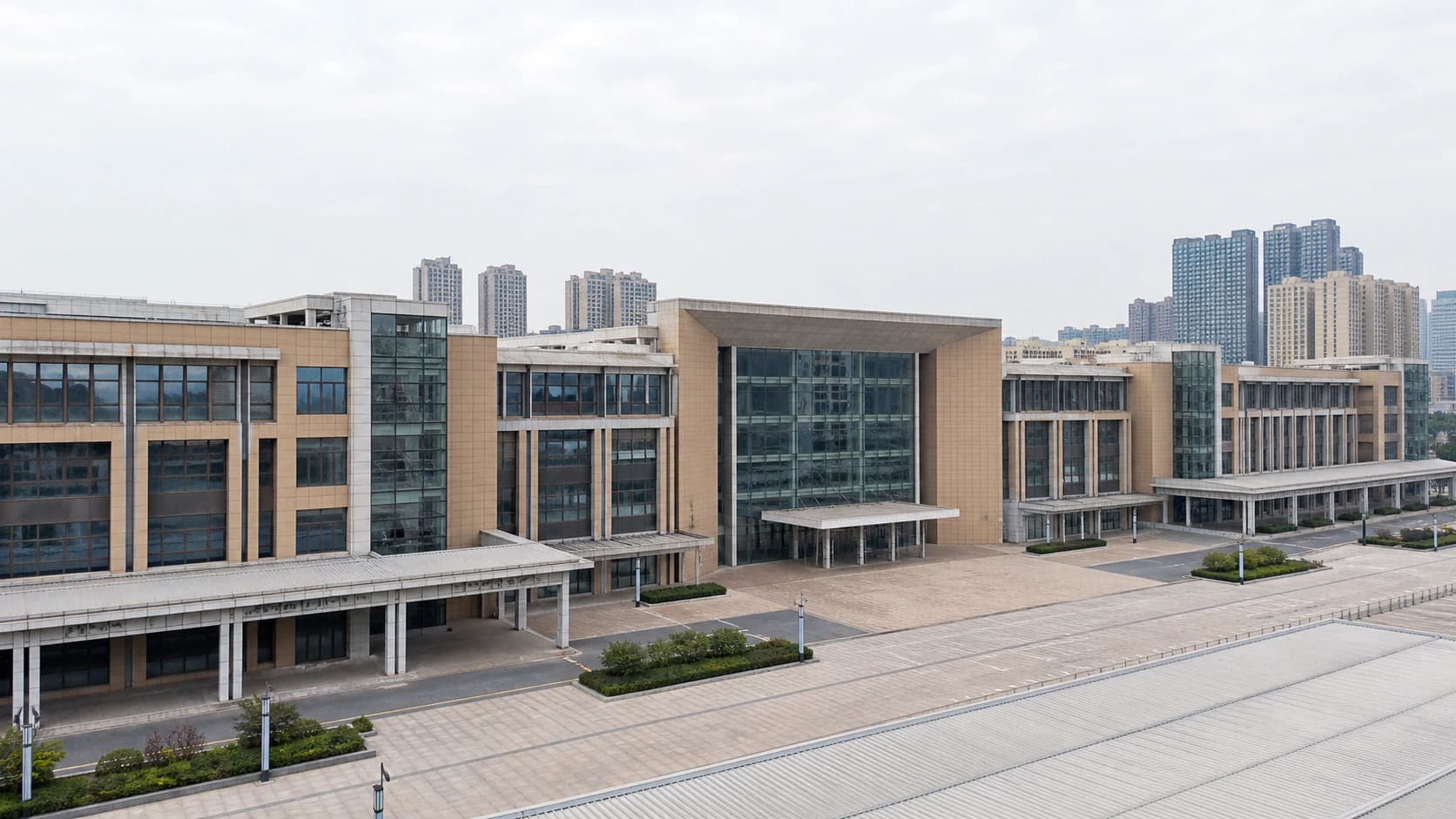
This view represents the market's architectural scale rather than one exact current gate or district. Use live maps and signs once you arrive.
Understand the working wholesale system
This is not a single mall and not primarily a souvenir attraction. Five main districts contain connected buildings and specialist categories; individual booths may focus on wholesale orders, samples, export services or repeat buyers. The experience becomes much more useful when you arrive with one product question rather than “walk the whole market.”
The strongest first visit has three parts: choose a category, set a physical limit, and record anything you may want to find again. A booth number or photo of an allowed identifier is more useful than trusting memory in a repetitive corridor.
Decide whether the market fits a non-trade visitor
| Visitor | Why it can be rewarding | Best limit |
|---|---|---|
| Buyer / sourcing visitor | Compare materials, finishes, variants and supplier conversations in person | One or two related categories with prepared questions |
| Design or manufacturing enthusiast | See the depth behind everyday objects and product families | One district plus a meal or city break |
| Curious leisure visitor | Experience an internationally connected working market | A selective 1.5–3 hour visit, without expecting every booth to sell one item |
Independent visitors disagree about bargains and casual retail. That is useful: come for the system and variety first, and treat any single-item purchase as a bonus rather than the measure of success.
Choose a district by purpose
The operator's district pages were live when checked on 25 August 2026 and described this broad structure:
| District | Useful category families |
|---|---|
| 1 | Toys, artificial flowers, jewellery, decorative crafts and related goods |
| 2 | Bags, hardware, tools, electrical goods and related products |
| 3 | Stationery, sports goods, cosmetics, eyewear and garment accessories |
| 4 | Socks, daily goods, shoes and textiles, with a tourist-shopping layer |
| 5 | Imported consumer goods, bedding, fabrics, automotive and pet products |
Categories, halls and entrances can be reorganised. Confirm the current operator map and on-site directory before routing to a specific floor or gate.
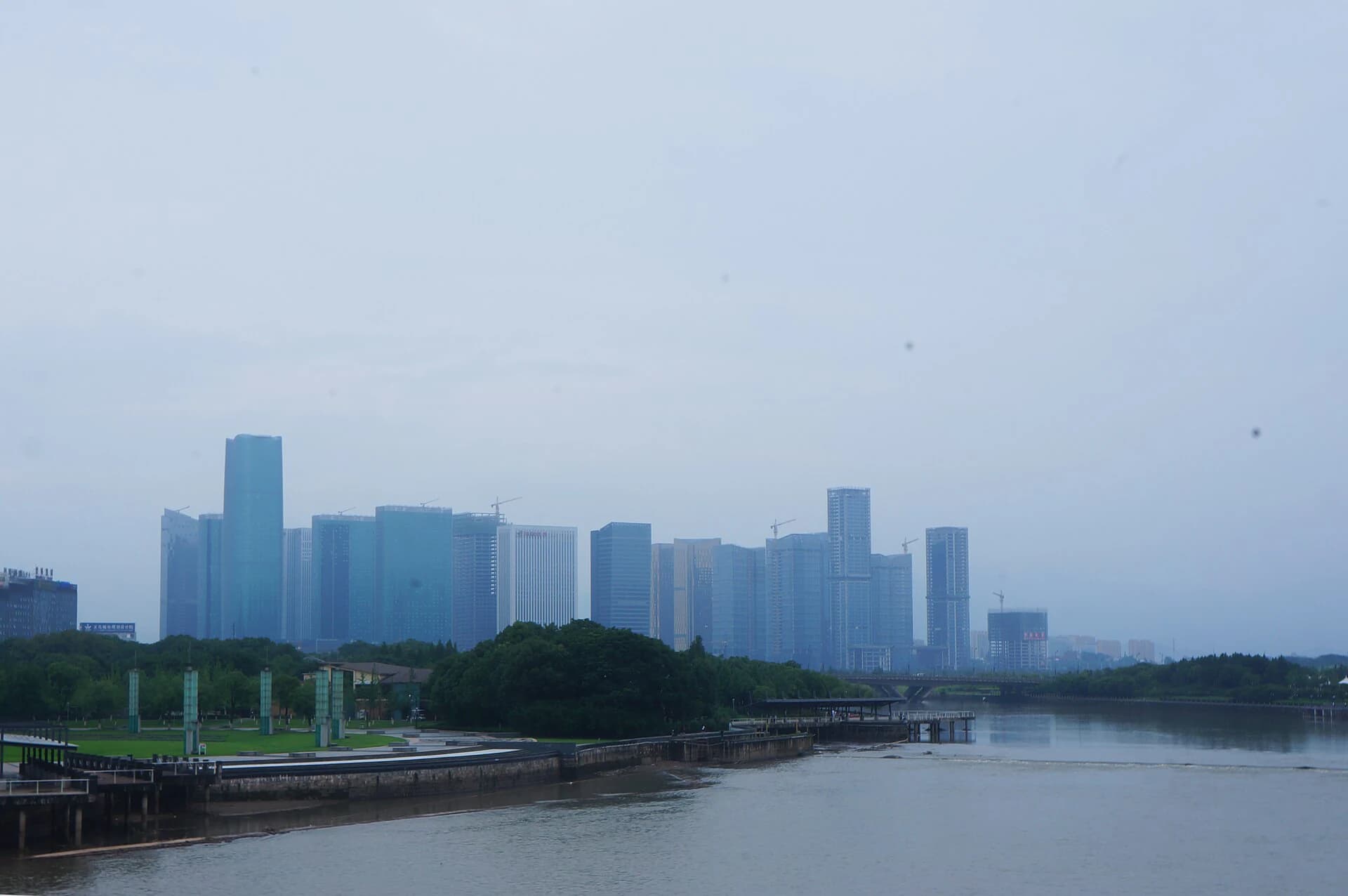
Photo: MNXANL · Source · CC BY-SA 4.0
The 2017 overview is useful for scale, not for current entrances, categories or surrounding businesses.
Build a bounded market visit
A curious first visit
Choose one category family, enter through the currently signed district access and explore for about 90 minutes. Take a proper break, then decide whether a second related hall genuinely adds value. Stop before corridor fatigue turns the visit into random walking.
A sourcing visit
Prepare product specifications, quantities, target quality, delivery destination and questions before arrival. Compare multiple booths without committing immediately, record identifiers carefully and leave time after the market to organise notes.
A fuller Yiwu day
Use the market as the main morning or afternoon product, then add a city meal or rest block rather than forcing all five districts. Staying near Futian can reduce friction for a second visit; compare Yiwu hotels on Trip.com by exact pin and international-guest policy.
Price, samples, shipping and payment
There is no universal retail rule. Ask clearly whether a booth sells single pieces, samples or only larger quantities. Confirm the exact unit, minimum order, material, colour, packaging, lead time and whether the quoted price includes any shipping or service.
Do not assume a foreign card, a preferred mobile wallet, cash, English service or international delivery will work at every booth. For a serious order, obtain written terms you understand and use an appropriate commercial/shipping process rather than treating a casual conversation as a contract.
Photography and working-market etiquette
Ask before photographing products, catalogues, booths or people. Keep aisles and negotiation spaces clear, and do not interrupt an active buyer-seller conversation for a leisure photo. A quiet, specific question usually works better than filming first and explaining later.
Opening days, holiday closures and the visitor role of newer trade facilities can change. Check the official Chinagoods market pages and the day's notices shortly before visiting.
Base and arrival
Yiwu Station (义乌站) and Yiwu Airport (义乌机场) are distinct arrivals. In AMap models checked on 23 August 2026, Yiwu Station to District 1 was about 9.3 km / 24 minutes by car; the airport to District 1 was about 12.1 km / 19 minutes. These are road snapshots, not fixed taxi fares or public-transport schedules.
District 1 to District 5 measured about 2.1 km / 28 minutes on public roads in the same check. That does not prove an internal route through the working complex. Follow current signs and staffed guidance between buildings.
Use the Jinhua guide to compare Yiwu with central Jinhua and Hengdian. If the market is the purpose, sleep in Yiwu rather than commuting from a different prefecture base simply because the map label says Jinhua.