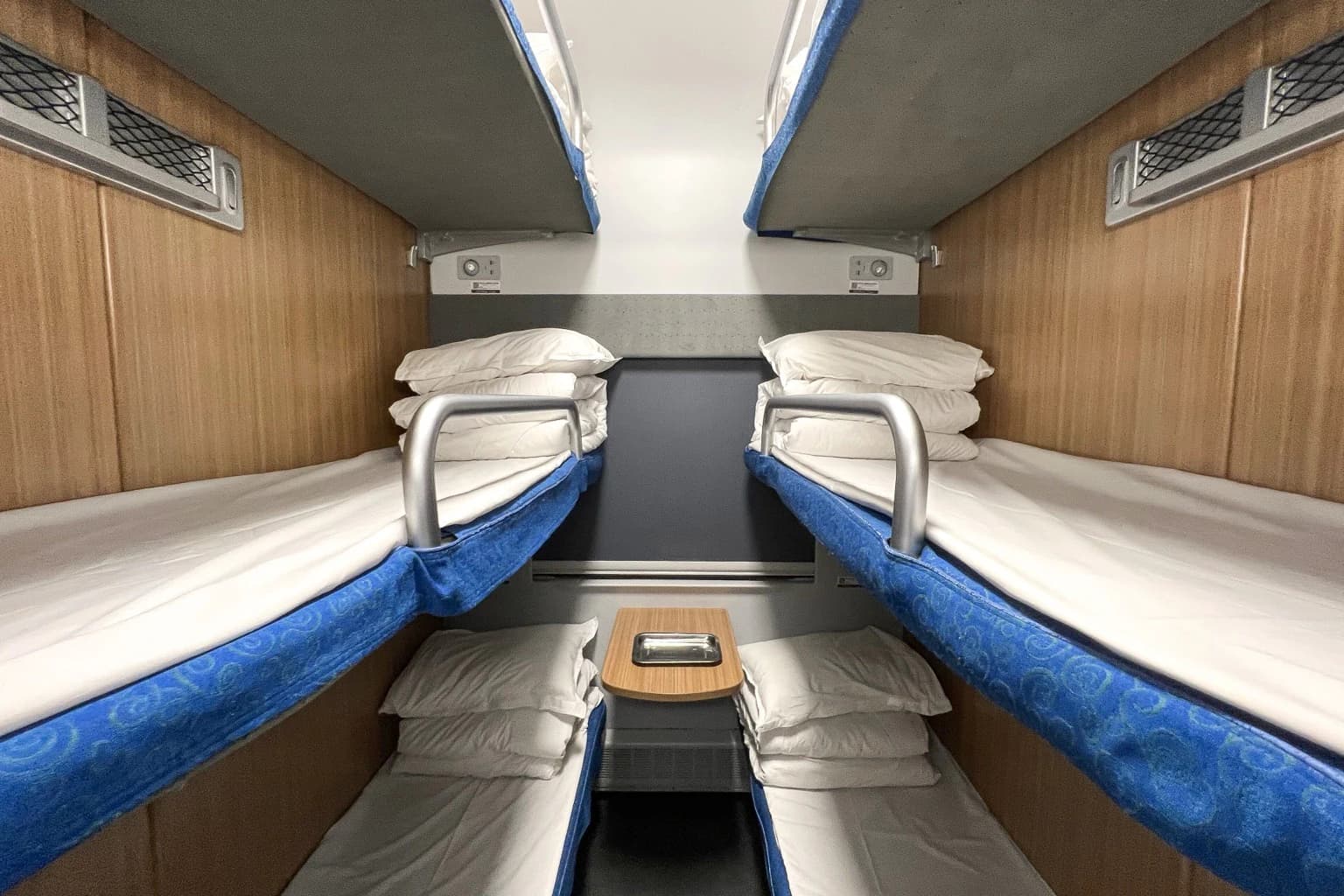
China Train Seat Classes
For most first-time travelers on a daytime high-speed train, second class is the best default. Pay for first class when extra width and a quieter carriage matter; choose business class only when the much higher fare buys something you personally value. On conventional night trains, class names describe privacy and berth layout rather than mattress quality.
Quick Decision Table
| Class | Typical layout | Best for | Main trade-off |
|---|---|---|---|
| Second class | 3+2 reclining seats | most daytime trips, families, value | busiest and narrowest high-speed class |
| First class | usually 2+2 wider seats | taller travelers, work, longer day rides | often substantially dearer |
| Business class | premium lie-flat or deep-recline layout on selected trains | privacy, rest, premium service | can cost roughly three times second class; product varies |
| Hard seat | dense upright seating on conventional trains | short budget ride when no better option exists | noisy, crowded and tiring for long journeys |
| No seat | standing/use of available space in the booked class area | emergency fallback on a short ride | no assigned place to sit |
| Hard sleeper | open six-berth bays | budget overnight travel | little privacy; ladders and corridor traffic |
| Soft sleeper | usually enclosed four-berth compartment | overnight comfort and families able to secure one compartment | higher fare and mixed-gender sharing can still occur |
| EMU sleeper | varies by exact train | faster overnight routes | train prefix or stock photo does not prove the layout |
| Superior soft sleeper | limited premium stock | two-berth privacy when the exact product is verified | rare, expensive and not always private-bathroom equipped |
The exact train and date control. China Railway can deploy different rolling stock under similar labels.
High-Speed Day Trains
Second class: the correct default
Second class usually uses five seats across, commonly labeled A–C and D–F with the aisle between C and D. Seats recline, tray tables and overhead racks are normally provided, and power availability depends on the train.
Choose it for a two-to-six-hour ride when everyone can manage the seat width. A family should inspect assigned seats after issue; the booking preference does not always keep a late-purchasing group together.
First class: pay for space, not status
First class commonly uses four seats across. The wider seat and fewer passengers per row can matter on a long working day, with an older traveler or when second class is nearly full. It does not create a private cabin, remove station crowds or include a flexible ticket.
Compare the live fare. A short route may not justify the premium, while a five-hour ride can.
Business class: verify the product
On many high-speed trains, business class offers a premium reclining or lie-flat seat, lounge access at selected stations and attendant service. Equipment varies. Do not infer the cabin from a generic photo.
It works for a traveler who must rest before a meeting, needs a more protected seat environment or values space more than price. The fare can approach or exceed a flight after door-to-door costs are compared.
Conventional Seats and “No Seat”
Hard seat is a class name, not a promise that every seat is literally hard. Conventional carriages can be crowded, stops frequent and luggage space contested. Use it for a short, deliberate budget ride—not as a romantic overnight substitute.
无座 wúzuò means no assigned seat. The passenger has a valid ticket but may stand until a place is temporarily free, following crew instructions. It is unsuitable for a traveler who cannot stand safely, a family with small children or anyone carrying large luggage.
Sleeper Classes
Hard sleeper normally has upper, middle and lower berths in open bays. Soft sleeper normally has upper and lower berths in a four-person compartment. EMU and premium sleepers can use other arrangements.
Berth level is a physical decision:
- lower: easiest access, most visible and often most expensive;
- middle: less exposure but limited headroom;
- upper: most separated, hardest climb and least headroom.
Small things that help on board.
- Charging: in hard sleeper, one power socket under the corridor table is usually shared by two bays. Bring a charged power bank.
- Water and washing: hot water, toilets and washbasins sit at the ends of each carriage. Fill up before lights-out.
- Valuables: keep them in the berth with you, not under the lower bunk.
"Sleeper used as second-class seat" (卧代二等座)
At peak times 12306 sells berths in sleeper carriages as seats at roughly second-class fares. The ticket shows a seat letter, such as 14车19C.
- What you get: you sit on the lower bunk, upright, with no back cushion, often sharing with strangers. Staff patrol to stop people lying on the upper bunks.
- How to tell it apart: a real EMU sleeper (动卧) ticket shows a berth such as 06车30号上铺.
It is fine for a two-hour hop but tiring for longer. Treat it as a seat, not a cheap sleeper.
Read the complete overnight sleeper guide for luggage, toilets, solo travel and early-arrival planning.
Price Ratios Are Only Planning Heuristics
Second class is the baseline. First class is often roughly 1.5–1.8 times second class, and business class can be around three times the baseline; sleepers depend on distance, berth and train. These are not fare promises.
Check the exact date and station pair on the official 12306 fare search or Trip.com trains. Promotional flights, slower trains and different station pairs can reverse the comparison.
Reading the Seat Number
The issued booking shows carriage and place. On many high-speed trains:
- A and F are window positions;
- C and D are aisle positions;
- B is the middle seat in the three-seat side.
But the issued train diagram controls. A changed trainset can alter assumptions. Save the Chinese terms 车厢 (carriage), 座位 (seat), 上铺/中铺/下铺 (upper/middle/lower berth).
Luggage by Class
Paying for first or business class does not buy a checked-bag system. Most luggage remains with the passenger in overhead, end-of-car or designated spaces. A large case can fit poorly even when it meets the formal allowance.
Board early enough to find the carriage without running, keep valuables and passport on your body, and never block an aisle, door or ladder. Ask crew where an oversize item belongs.
Choose by Traveler Type
- Solo first trip: second class by day; soft sleeper only after understanding compartment sharing.
- Family: second class for value; first class when seat width and calmer boarding justify it; one full soft-sleeper compartment when actually assigned.
- Older or limited-mobility traveler: first class can help, but station access matters more; require a lower berth if sleeping.
- Business traveler: compare business-class rail with flight airport time and disruption risk.
- Budget traveler: second class usually gives the best complete value; no-seat is not a savings strategy for a long ride.
Book the Class, Then Verify the Assignment
Use the 12306 booking tutorial to create and verify passengers. After payment, inspect train, date, station pair, carriage, seat or berth and passenger document. If a particular berth or adjacent seat is essential, treat an unsuitable assignment as a decision—not as a problem strangers must solve on board.