Ningbo Museum
Ningbo Museum is two visits in one. Wang Shu's building turns reused tiles, brick, concrete and steep geometric walls into a physical account of place. Inside, the permanent displays connect Ningbo's city history and folk memory to the larger coastal region. Architecture alone can support a focused visit; the collections make a slower half day worthwhile.
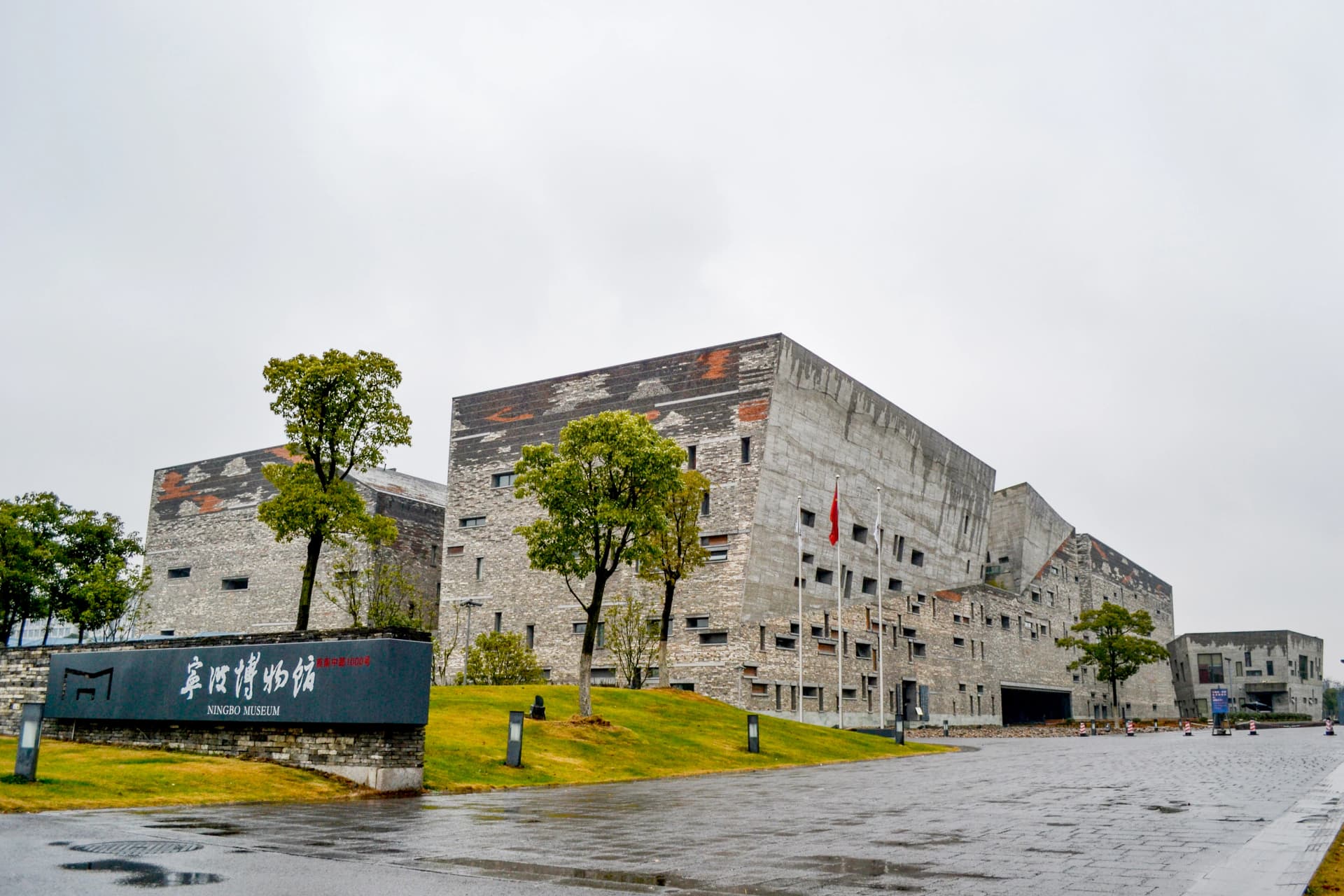
Photo: Siyuwj · Source · CC BY-SA 3.0
The photographed south-side sign establishes the institution, not today's visitor entrance. Use current museum signs for entry.
Regional history inside Wang Shu architecture
Start outside. The building's sloping masses and irregular openings feel defensive at one angle and landscape-like at another. The tile-and-brick surfaces reuse regional demolition material, making craft, memory and urban change part of the façade rather than decoration applied afterwards.
Inside, keep a simple question: how did a coastal settlement become a city shaped by trade, water and local communities? The strongest permanent layers answer that through objects and reconstructed contexts. Temporary exhibitions may be excellent, but they should remain a bonus rather than the evergreen reason to visit.
Choose architecture-first or collection-depth
| Product | Best for | Sensible depth |
|---|---|---|
| Architecture first | Design, photography and a first regional overview | Roughly two hours; exterior, material surfaces and selected permanent galleries |
| Collection depth | City history, folk culture and slower object reading | Half day; add more permanent galleries and only then a current temporary exhibition |
Visitor reports disagree productively: some find two hours enough, while a comprehensive visit can exceed 3.5 hours. Another repeat visitor valued temporary shows more than the permanent collection. Choose depth instead of assuming every floor deserves equal time.
A selective museum route
Begin with one broad exterior circuit before entering. Look at where reused tile and brick meet concrete, then compare the low, textured walls with the sharper upper volumes.
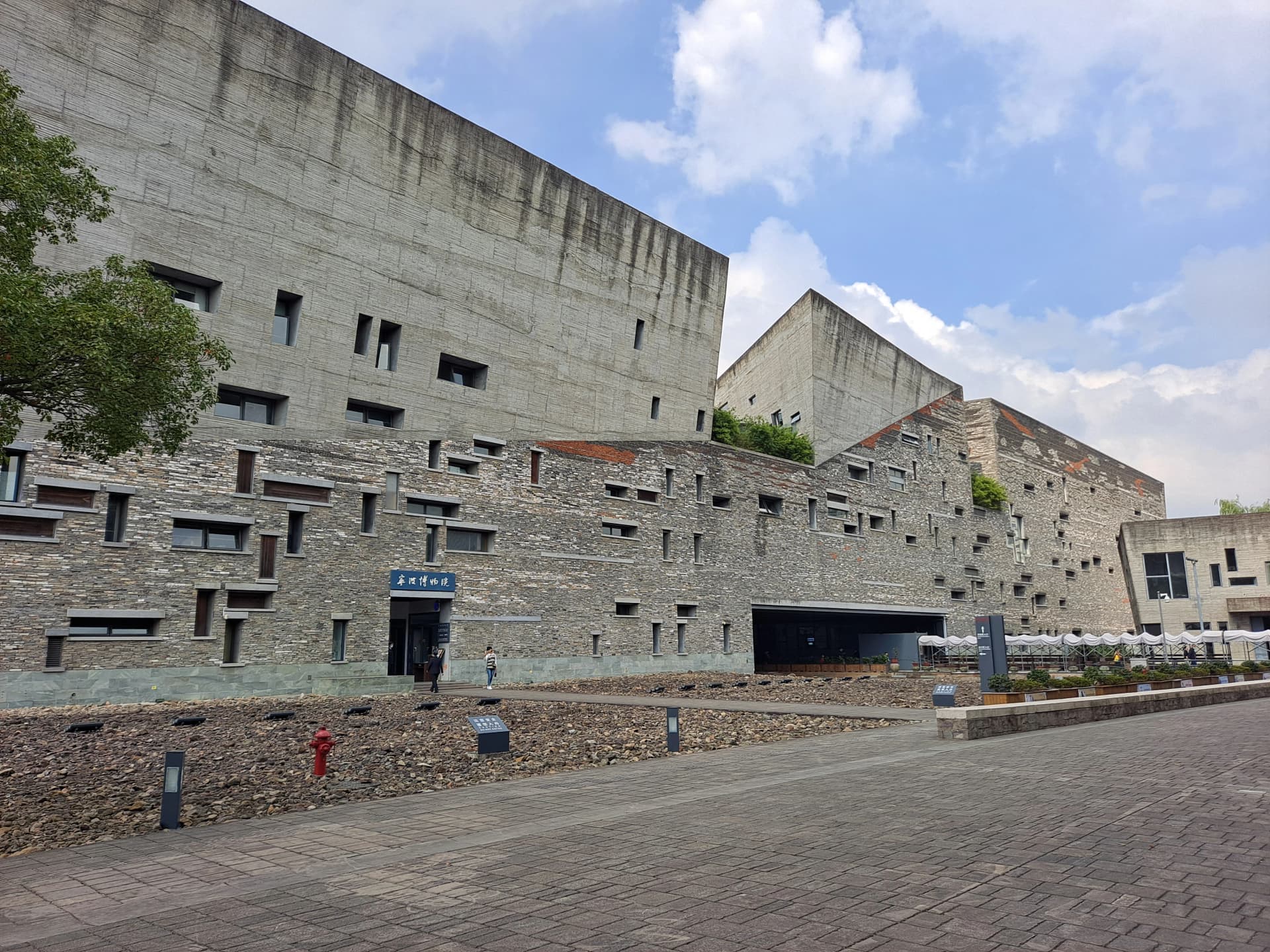
Photo: 钉钉 · Source · CC BY-SA 4.0
Inside, take the permanent city-history layer first, then select the folk-memory section or another permanent gallery according to interest. Check the day's board before adding a temporary exhibition: themes, charges and open rooms change. If time is short, return to the architecture for the final section rather than rushing through an unfamiliar paid show.
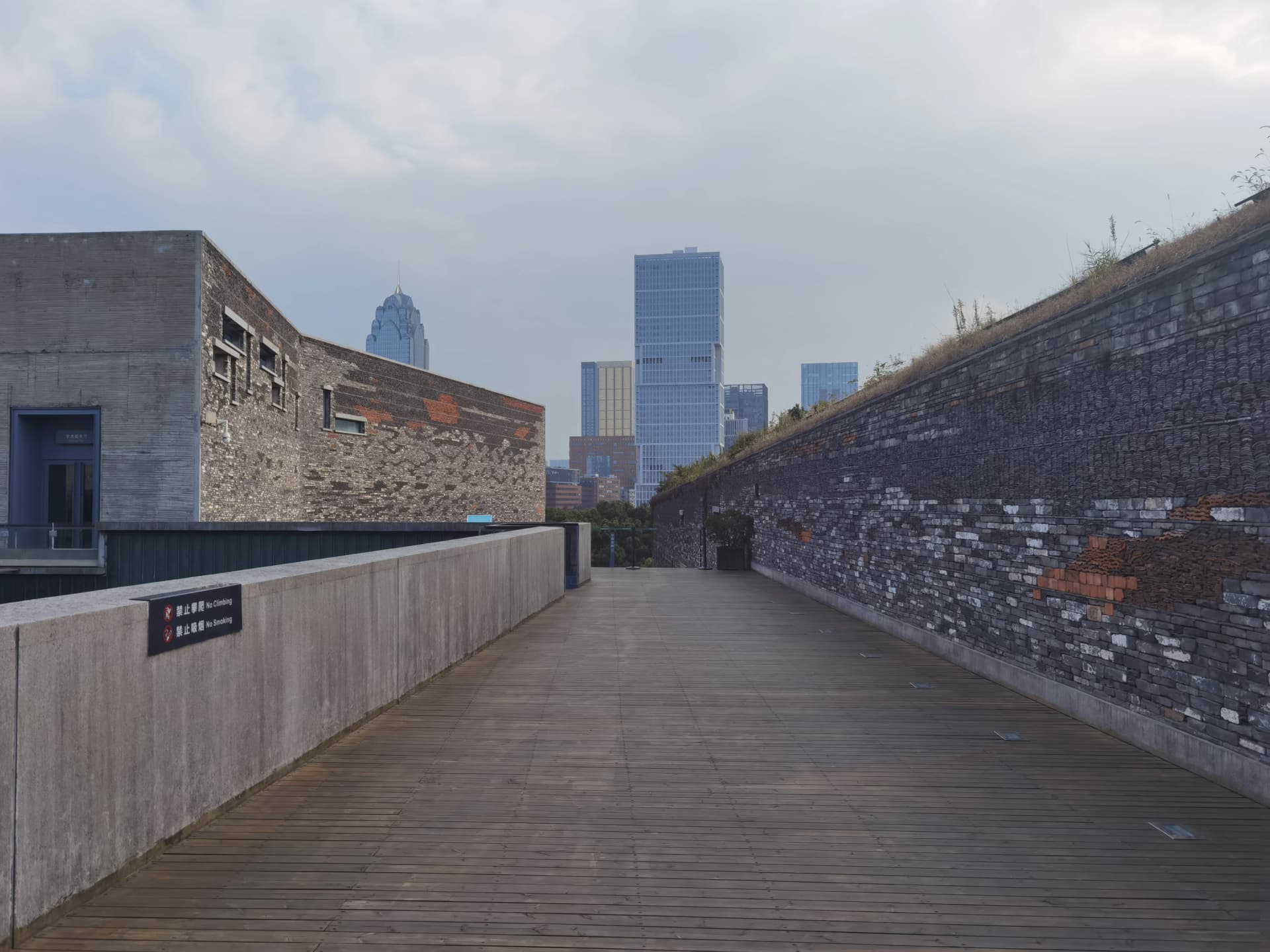
Photo: User:CatOnMars · Source · CC BY-SA 4.0
The rooftop corridor photograph explains the building's spatial sequence but does not promise that this exact area is open. Follow barriers and the current visitor route.
Pick a permanent gallery by the story you want
Match the Chinese exhibition names on the day's directory to your interests:
- Dongfang Shenzhou (东方神舟), the Ningbo history display: follow the change from early regional communities to a trading port. Choose a few objects whose labels explain where they were found or how they travelled; ceramics are especially useful for connecting local production with the wider maritime story. The museum's exhibition introduction gives background before your visit.
- “Ala” Old Ningbo (“阿拉”老宁波): choose this for everyday life and local customs. Compare domestic objects, clothing and ceremonial craft with the larger historical narrative. It provides a more personal scale after the chronology.
- Bamboo-carving art (竹刻艺术): choose this for a slower craft-focused stop. Look at how a small carved object uses depth and surface texture; give a few pieces sustained attention instead of scanning every case.
For a two-hour visit, combine architecture with the history display and one shorter selection. If folk culture is your main interest, check that gallery's closing time on arrival and give it priority: a longer building-wide opening window does not necessarily keep every gallery open. Save any temporary exhibition for the time left after your main choice.
Opening and foreign-passport check
The museum's current official baseline lists ordinary opening Tuesday to Sunday, 09:00–17:00, with last entry at 16:00 and Monday closure except relevant public-holiday arrangements. Its 2026 notice also lists longer weekend, holiday and summer opening, but floors close at different times during evening hours. Check the official notice for your exact date instead of treating 21:00 as universal access.
Ordinary admission is free. The official foreign-passport entry workflow was not stated clearly enough to promise a particular online field or gate. Carry the original passport, check whether reservation is currently required, and allow time for staff assistance. Treat every temporary paid exhibition as a separate contract.
Reach the Yinzhou product
Use the Ningbo Museum AMap pin for the Wang Shu-designed institution at 1000 Shounan Middle Road. AMap's model checked on 21 August 2026 placed it about 11.6 km / 19 minutes by car from Ningbo Station and 8.6 km / 24 minutes by car from Tianyi's entry area.
Those are dated road baselines, not fixed fares or proof of a specific metro exit. The map did not resolve a clean standalone museum entrance, so follow current on-site signs rather than routing to a parking gate or a similarly named institution.
Pair it with the right city layer
The museum works best as its own half day, followed by a meal or a low-pressure Yinzhou walk. It is possible to visit Tianyi Pavilion on the same date, but the transfer turns two good products into a schedule; for a first trip, separate them across two days when possible.
Return to the Ningbo guide for the old-centre base and arrival choices. Do not confuse Ningbo Museum with Tianyi Pavilion Museum, Ningbo Bang Museum or China Port Museum.