Yuanyang Hani Rice Terraces
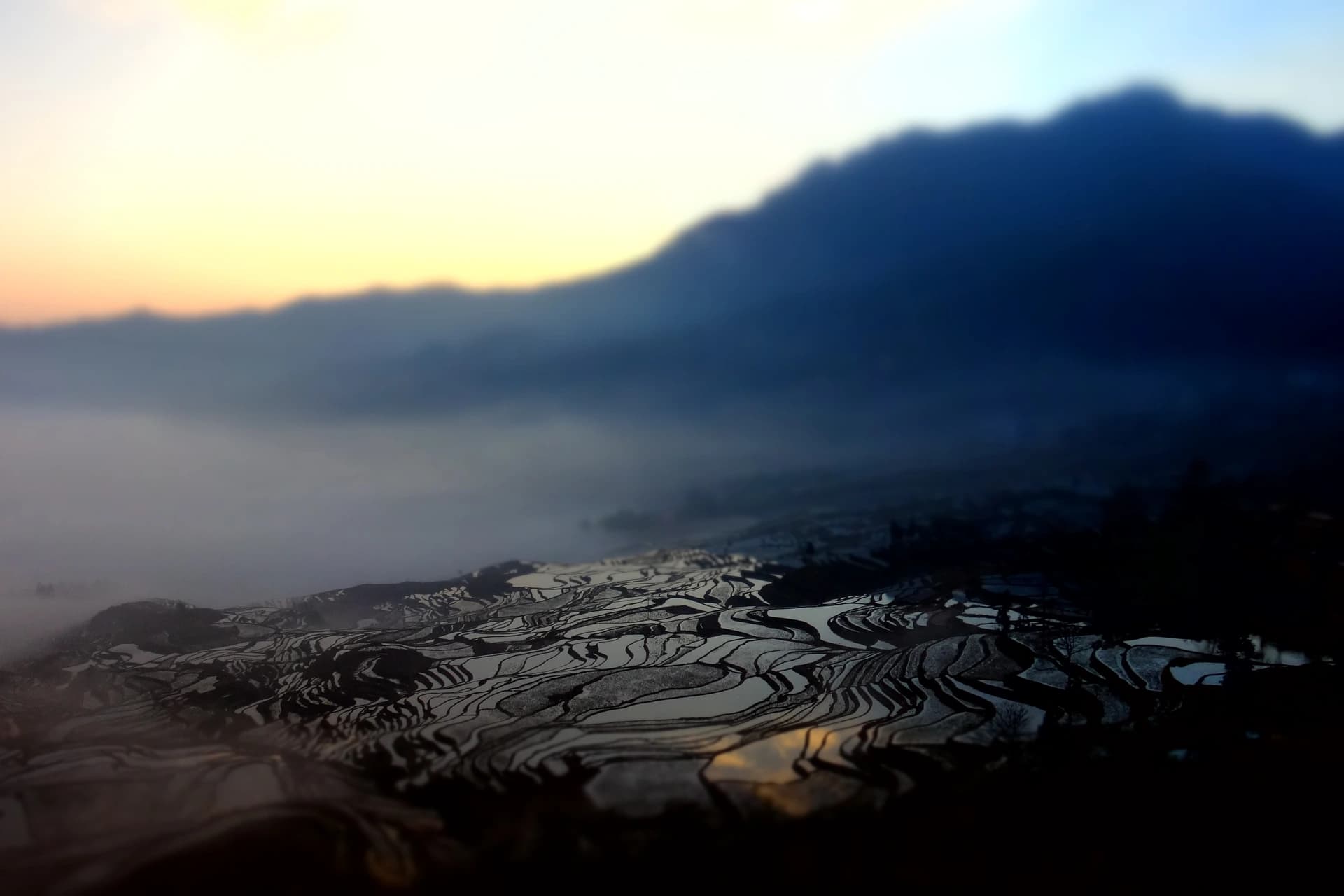
Yuanyang is one of Yunnan's great landscape journeys: forest, water channels, Hani villages and thousands of mountain terraces form the living system UNESCO inscribed in 2013. Stay at least one night to watch the light change, choose one dawn or dusk viewpoint, and spend daylight in a village or terrace area where the full forest–water–settlement relationship becomes visible.
Why an overnight transforms the visit
- Go for a living agricultural and water-management landscape, Hani villages and weather-changing mountain views.
- Stay overnight to avoid turning a long mountain transfer into a rushed photograph.
- Build the overnight around a confirmed mountain transfer and the exact sleeping zone, especially when winding-road comfort matters.
- Choose one dawn or dusk role plus one daylight village or terrace walk so the landscape has time to unfold.
Season changes the product
| Period/condition | Likely landscape | Planning implication |
|---|---|---|
| Water-filled winter–spring fields | reflective terraces and strong light patterns when skies cooperate | popular viewing period; book the exact base early but never guarantee a mirror or sunrise |
| Planting and green growing season | vivid green geometry, farming activity, rain and cloud | still worthwhile for landscape/culture; carry rain protection and expect obscured viewpoints |
| Harvest/transition | warmer field colours and changing water coverage | check recent field reports; different villages follow agricultural work rather than one tourism calendar |
| Fog or low cloud | little distant visibility, sometimes fast-changing layers | keep a village or close-range cultural plan and enough time for conditions to move |
A recent visitor enjoyed green August terraces and Azheke despite being told it was “off season.” Another April visitor reported that local planting was about to change reflective conditions. These are useful observations, not permanent date rules. Check recent official imagery, forecast and field conditions close to travel.
Choose the exact sleeping zone
- Near Duoyishu / Pugao area: useful when sunrise is the main decision. Confirm whether the room or roof genuinely faces the terraces; “sunrise view” may mean sky rather than paddies.
- Xinjie: better for coach connections and town services, but Amap places Xinjie coach station well outside the Duoyishu landscape zone.
- Near a village such as Azheke: better for slow landscape and community context, but dinner, luggage access and onward vehicles can be limited.
Ask a property for its exact map pin, road drop-off, steps, dinner options, pickup charge and what happens after a fogged-out sunrise. Do not reserve from the word “Yuanyang” alone.
A balanced one-night route
Arrival afternoon
Stop at the terraces visitor centre for the current access and transport map. Choose one sunset role—official material associates Bada with sunset—but leave before dark only with a confirmed return to the lodging.
Morning
Use Duoyishu for dawn only if the base and transport support it. Amap models the visitor centre to Duoyishu at about 16.3 km/27 minutes by car without live traffic: this is not one walkable scenic park.
Daylight cultural landscape
Choose one signed village/terrace route such as Azheke when currently open. Look for the forest–village–terrace–water relationship described by UNESCO. Do not enter planted fields, block farm paths or treat private homes as exhibits.
Transport: confirm the whole loop
The county announced a 19-stop scenic transport trial in 2021 linking the visitor centre, Bada, Duoyishu, Azheke and other villages. It proves the corridor's intended structure but not current frequency or foreign-passport ticketing. Before arrival, confirm:
- coach or car from Jianshui/Mengzi to the exact Yuanyang drop-off;
- final transfer from Xinjie or the visitor centre to the lodging;
- sunrise pickup time and weather-cancellation policy;
- transport between the one or two chosen viewpoints;
- a firm return after sunset and the next day's departure.
Do not rely on finding an empty ride-hail car after dark. Avoid unlicensed vehicles whose driver, price, route or insurance cannot be identified. Mountain roads demand a rested driver and conservative schedule.
Tickets and live conditions
Viewpoints, villages and transport can have separate tickets or temporary controls. Ask the official visitor centre for the current product and show a foreign passport before paying. Free roadside viewpoints are not a reason to enter private land, stop unsafely or bypass a managed gate.
Rain, landslide work, farming operations and conservation controls can close a path. A paid ticket never guarantees sun, fog-free views or active irrigation in a particular plot.
Respect the World Heritage landscape
- Stay on public paths and terrace edges explicitly open to visitors.
- Do not step into paddies, move irrigation gates, pick crops or fly a drone without permission.
- Ask before photographing residents; never pose children or older residents as scenery.
- Keep noise low at dawn and around homes.
- Buy food or interpretation without pressuring residents to perform culture.
- Take all litter back to a formal collection point.