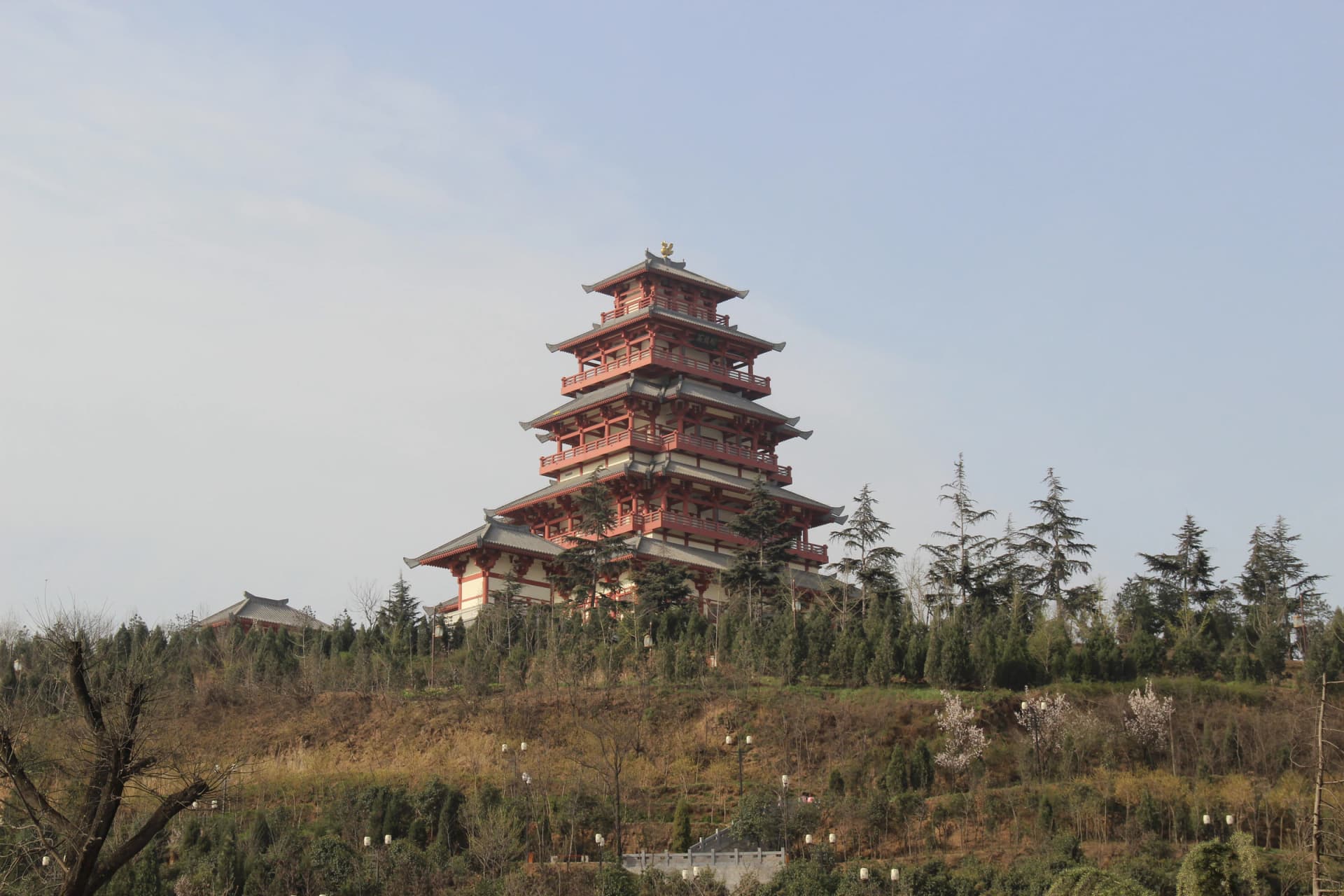
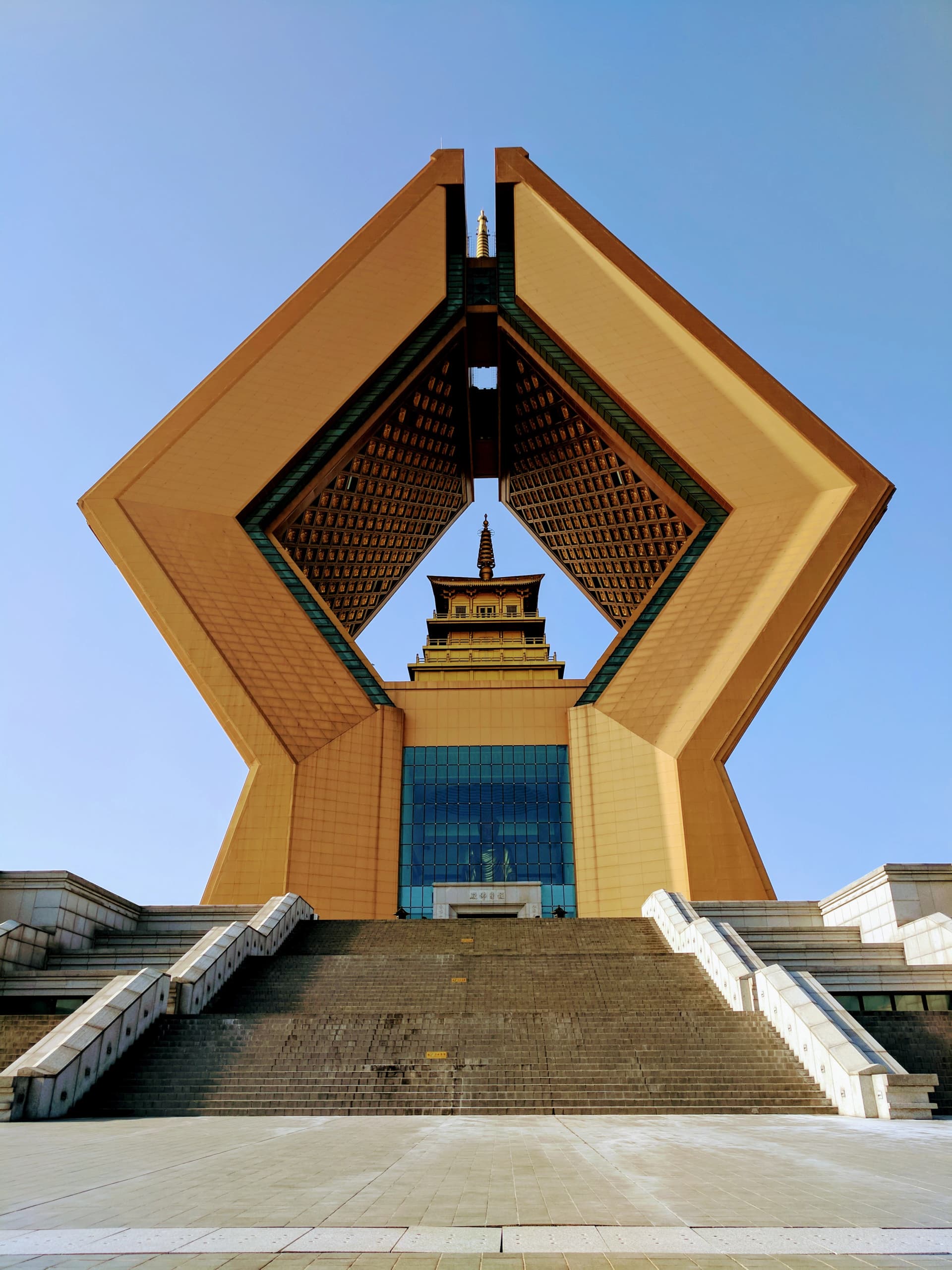
Baoji Bronze Ware Museum
Baoji's Bronze Ware Museum is compelling because ritual vessels here are not isolated masterpieces. Their forms, clan marks and inscriptions open a route into Western Zhou power, lineage and memory. He Zun supplies the famous phrase containing the early characters for zhongguo; other vessels show how a regional archaeological landscape became a written historical record.
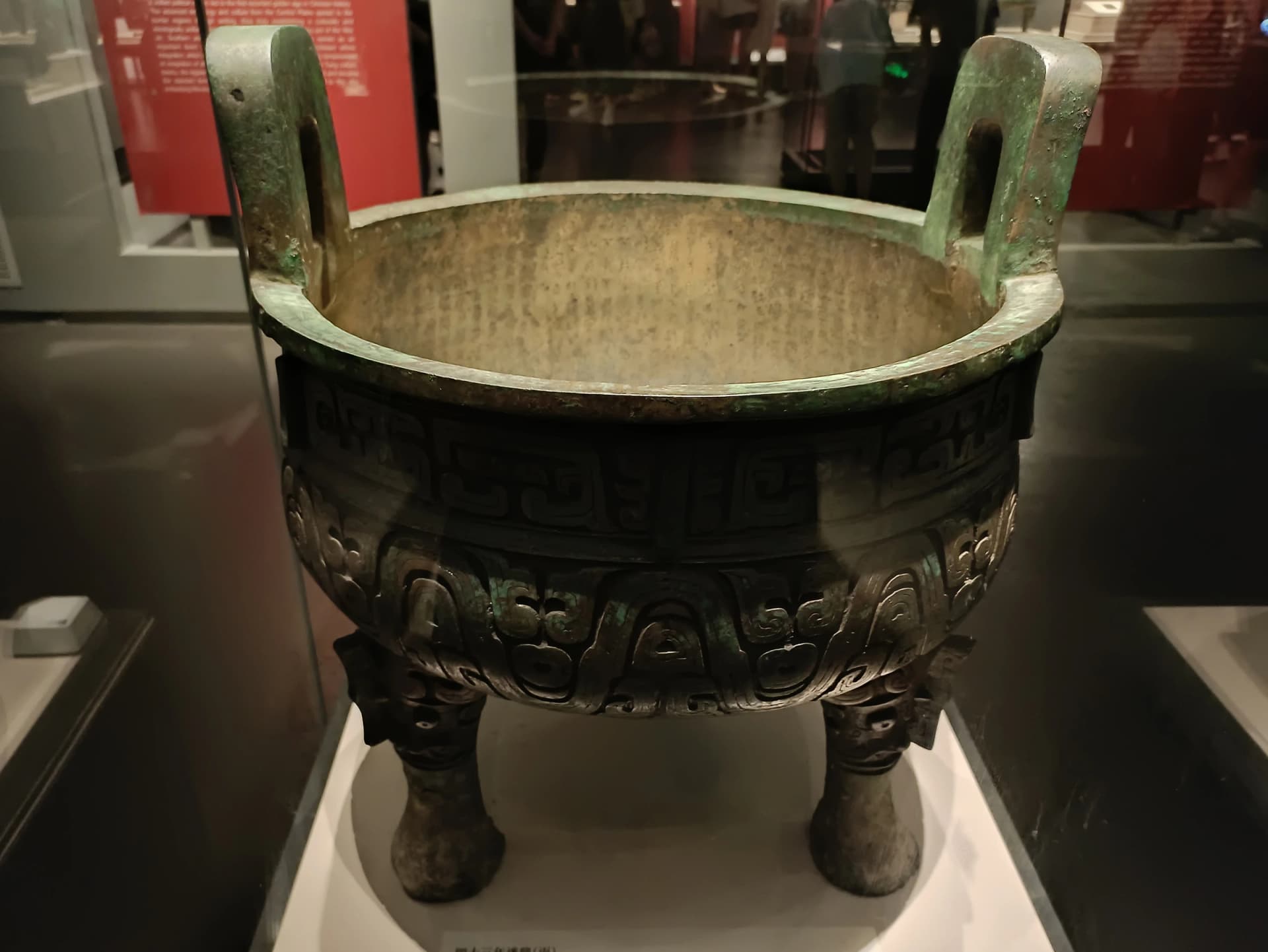
Photo: Kcx36 · Source · CC BY-SA 4.0
Read Western Zhou and early Qin through objects
Begin with the museum's regional frame: why the Zhou homeland and early Qin development belong to the wider Baoji landscape. Then look for repeated ideas—food and wine vessels, ancestral ritual, warfare, reward, lineage and the authority of written records—rather than trying to memorise every object name.
Start with He Zun and its inscription
He Zun is worth time because the inscription links an object, a royal event and a geographical idea. The characters later read as zhongguo appear in an early context, but the vessel did not simply “name modern China.” Read the gallery explanation and the inscription's historical setting before reducing it to a slogan.
Several ordinary visitors found that an official talk, audio guide or prior reading transformed the visit. Confirm the current interpretation service at the museum; a paid guide is optional and ordinary admission remains free.
Build a selective gallery sequence
| Layer | What to notice | Useful question |
|---|---|---|
| Forms and technique | Ding, gui and other vessel types; casting and surface detail | What ritual or social task did this form perform? |
| Inscriptions | Names, grants, events and lineage memory | Who wanted this record to survive? |
| Zhou to Qin | Regional change rather than one sudden imperial beginning | How did local power become a wider political story? |
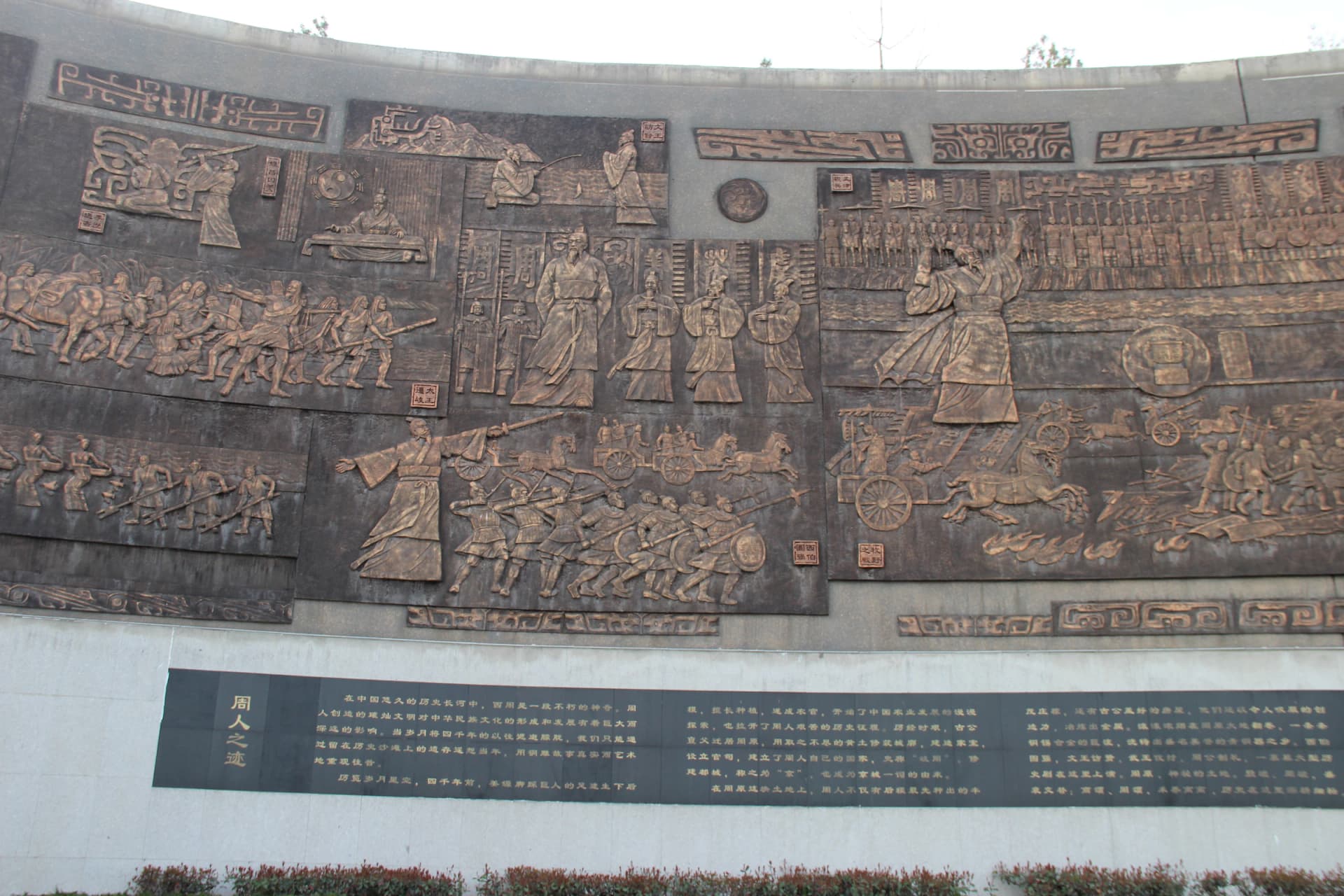
Leave time for one object you did not expect. Temporary exhibitions and conservation loans can change what is visible, so treat a highlight list as a reading plan, not a display guarantee.
Give the bronzes a two-hour focus
Allow about two hours for the main collection, with extra time for a detailed guided visit or additional displays. Start with a few vessel types so that the inscription sections have something physical to attach to: compare the feet, handles, mouth and overall proportions of a ding and a gui, then read what each was used for.
At He Zun, look at the exterior decoration before searching for the writing. The inscription belongs inside the vessel, so use the gallery's enlarged interpretation or mirror arrangement when available rather than expecting to read it through the front of the case. One visitor still found the lettering difficult to see; the explanatory text is part of the experience, not a substitute for looking closely.
After He Zun, choose one more inscribed vessel and ask what its maker wanted remembered. Finish with a casting or craftsmanship display to connect that written record with the work needed to produce the object. Families can make this a simple comparison game—find different handles, supports and animal forms—before moving into the park for a break.
Photo: Kcx36 · Source · CC BY-SA 4.0
Distinguish objects, findspots and replicas
The museum owns the interpretation; archaeological findspots may be active, protected or not open to visitors. A model, reproduction or later monument can clarify the story without becoming the original object or excavation site. Do not navigate to excavation coordinates or assume every famous “Baoji bronze” is currently in this building.
Use the free reservation and passport process
The current official baseline is free regular admission, Tuesday–Sunday 09:00–17:00, with last entry at 16:30. Monday normally closes, while holiday notices can override the pattern. Reserve through the museum's current official channel.
The public form did not expose a reproducible foreign-passport flow during review. Carry the original passport and ask the museum whether the current form accepts it or whether staff complete a manual reservation. Check the official museum notice for the exact date; guides, lockers, parking and temporary activities are separate from free admission.
Add Shigu Park selectively
The museum sits in Chinese Shigu Park. After the galleries, use the park for river-valley orientation, open space and the relationship between the collection and Baoji's wider setting.
The park is not a second museum ticket, and replicas or monuments there do not guarantee the original Stone Drums or a particular object display.
Arrive at the museum reception centre
Use the exact museum reception centre rather than the broad Shigu Park pin. Dated road models placed it 6.5 km / 20 minutes from Baoji South and 8.2 km / 24 minutes from Baoji Station. The park point was about 0.6 km / 9 minutes on foot from reception.
Those are planning models, not fixed taxi or bus promises. A focused museum visit followed by Shigu Park and a Baoji meal is already a complete city day.