Changsha Bamboo Slips Museum
This specialist museum turns excavated bamboo and wooden documents into stories about ordinary administration: households, tax, land, measurement, work and the routines of the Three Kingdoms state of Wu. It suits readers who enjoy text, institutions and close interpretation more than monumental objects.
Know what kind of museum this is
The museum's official overview establishes its collection purpose and institutional identity. The strongest visit follows a few questions rather than trying to decipher every strip:
- How did officials record households and land?
- What did people pay, in what units, and how was work organized?
- What can a short administrative record reveal about daily life?
Modern-language interpretation matters because the originals are small and difficult to read. A visitor valued precisely this translation from records into ordinary lives.
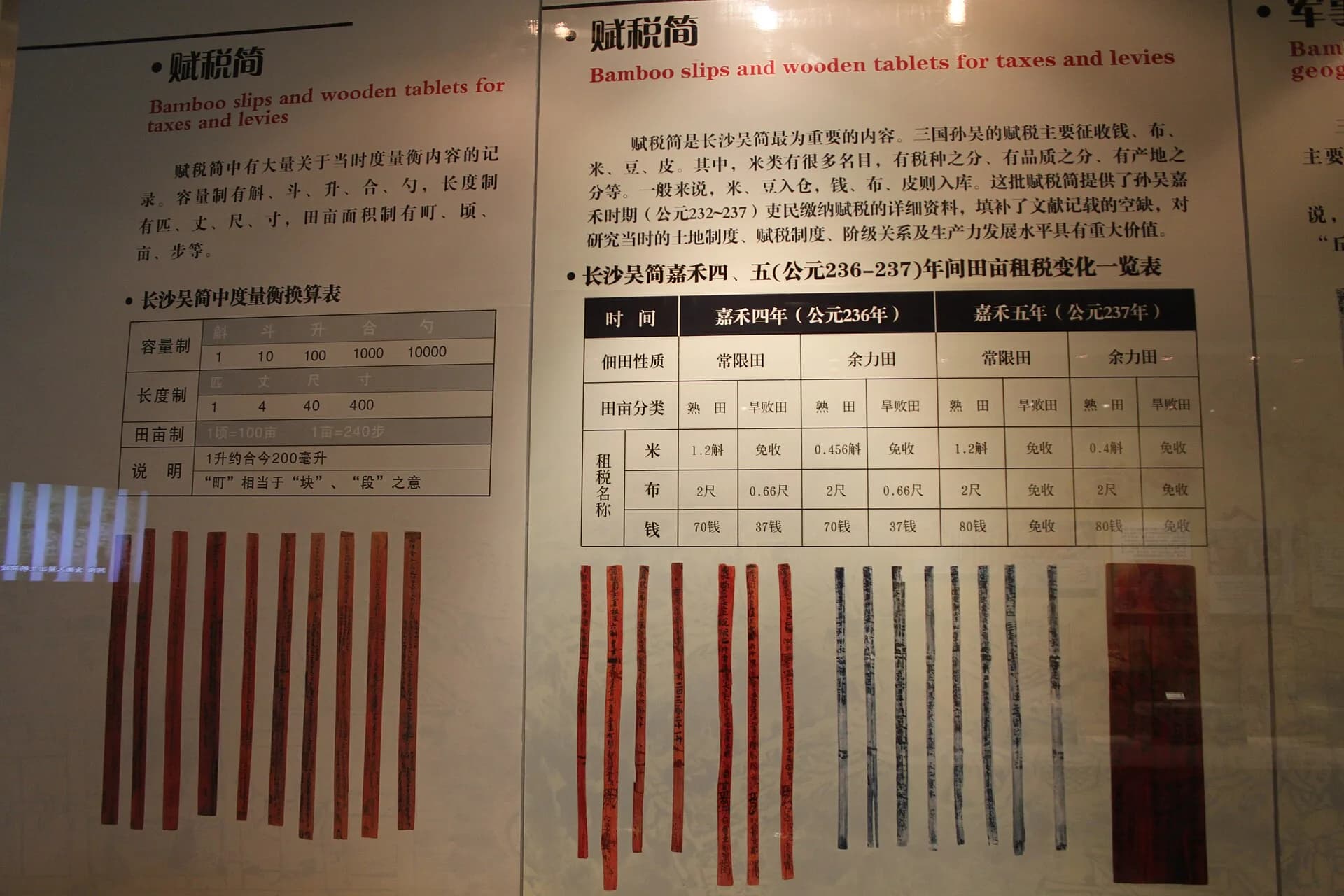
The display was photographed in 2010. It supports the administrative theme but does not prove today's case layout, object selection, translation or photography rules.
Set realistic viewing expectations
Several visitors report that small writing, viewing distance, reflections and marked glass can make individual strips hard to inspect. School-holiday groups can also crowd cases and seating. This does not invalidate the collection; it means the visit depends on interpretation and flexible pacing.
Move to a quieter section when a group occupies one case. Use current labels or official explanation instead of assuming that every strip is an original or that a photograph online shows the object now displayed. Verify English or other-language support before relying on it.
Remember the Tuesday closure
The museum's official visitor-information index uses a Wednesday–Monday opening pattern and Tuesday closure, subject to holiday announcements. This differs from the common Monday closure at Chinese public museums and from Hunan Museum.
The official site lists storage, lifts, wheelchairs, seating, water and toilets, but availability, the step-free route and individual borrowing rules need a live check. Travelers using a foreign passport should also confirm the ordinary reservation and staffed-entry flow before leaving.
Pair with Tianxin only when calendars align
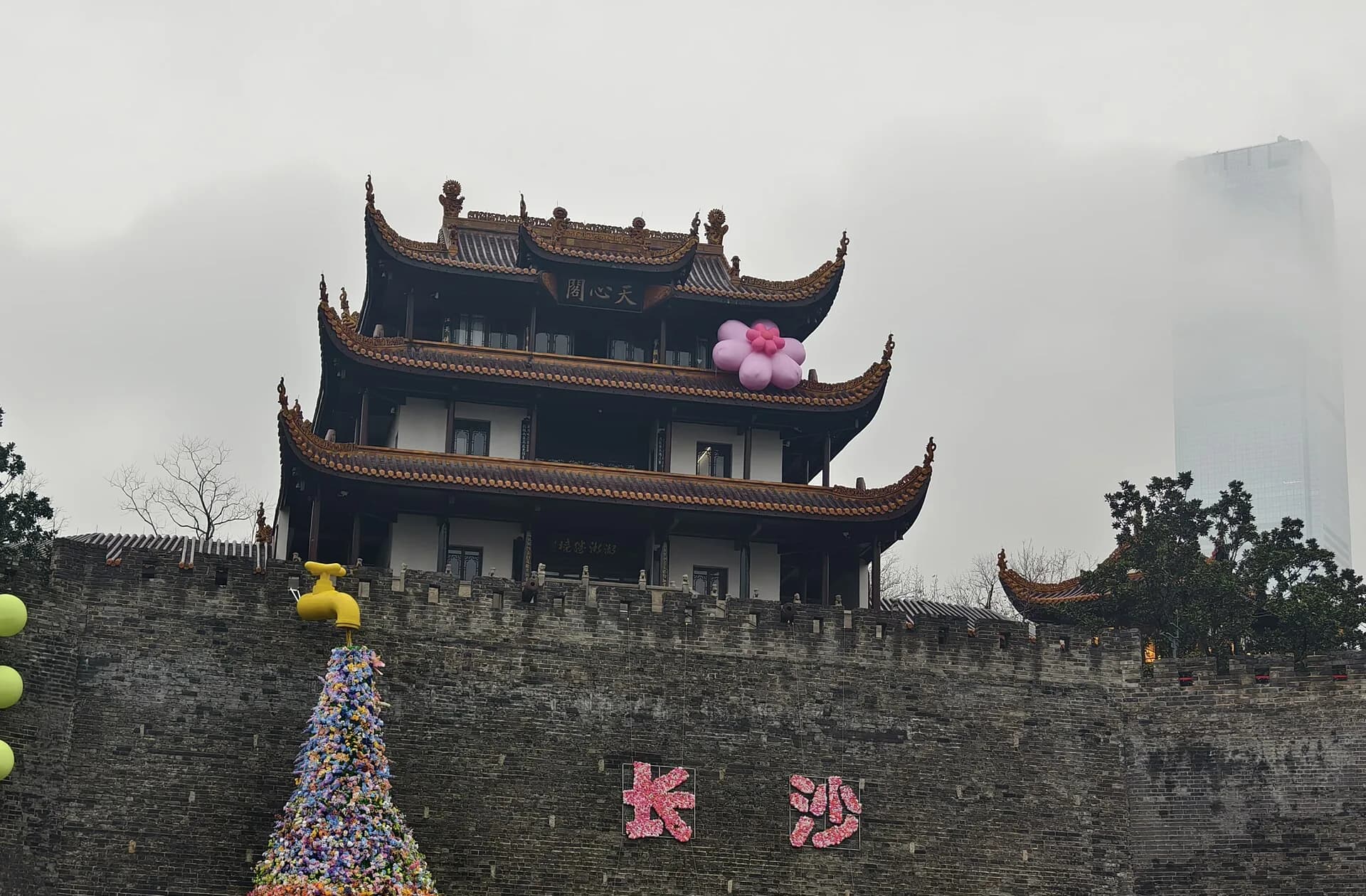
Tianxin Pavilion can add wall and city-history context, while this museum supplies documentary detail. AMap estimates only 0.4 km / 5 minutes on foot between the map locations; use live navigation for exact gates and an accessible connection. Monday maintenance at Tianxin and Tuesday closure here mean the pair cannot be assumed every day.
Final verdict
Visit if you want to see how government records illuminate real households and work. Follow a few administrative themes, accept that the originals are visually demanding, and protect the museum's unusual Tuesday calendar.