Winter Clothing and Cold Safety
There is no universal “minus 20°C outfit.” Wind, dampness, waiting time, individual circulation and activity level change how fast you lose heat. Recent travelers disagree sharply about the number of layers they needed, but they agree on the useful principle: keep wind and snow out, preserve warm air, and be able to remove insulation before you sweat indoors or uphill.
Check the same-day temperature, wind and severe-weather warning before leaving your room. Air temperature alone does not describe exposed-skin risk; wind accelerates heat loss. Shorten the plan when wind, heavy snow or road restrictions change, even if yesterday felt comfortable.
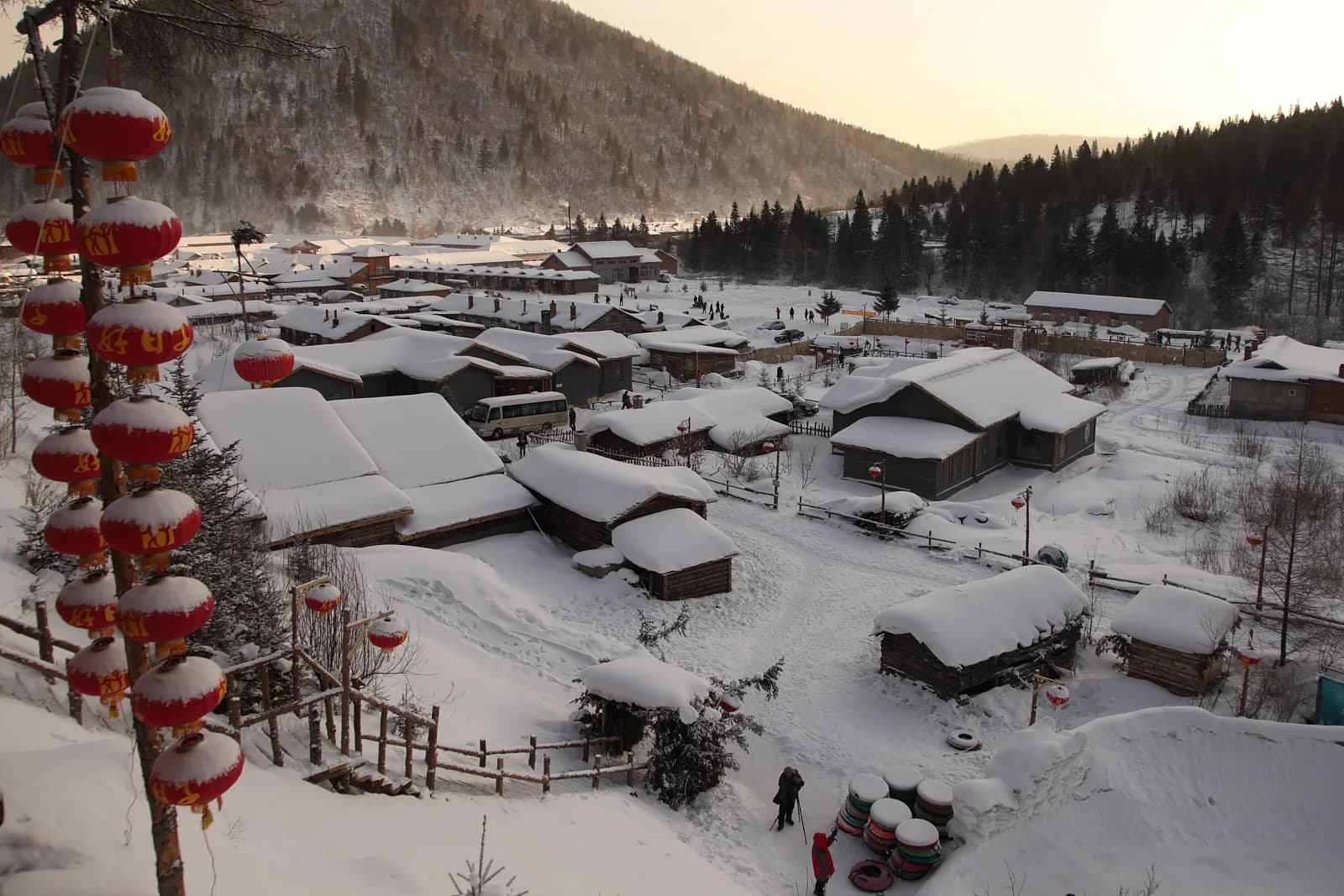
Build three adjustable layers
Use the system rather than copying a stranger's garment count:
- Base: a close but non-restrictive wool or synthetic layer that moves moisture away. Avoid relying on cotton next to skin for a long outdoor block because it stays wet after sweating.
- Insulation: fleece, wool or down sized to trap air without compressing circulation. Carrying a lighter second mid-layer is more flexible than being unable to cool down.
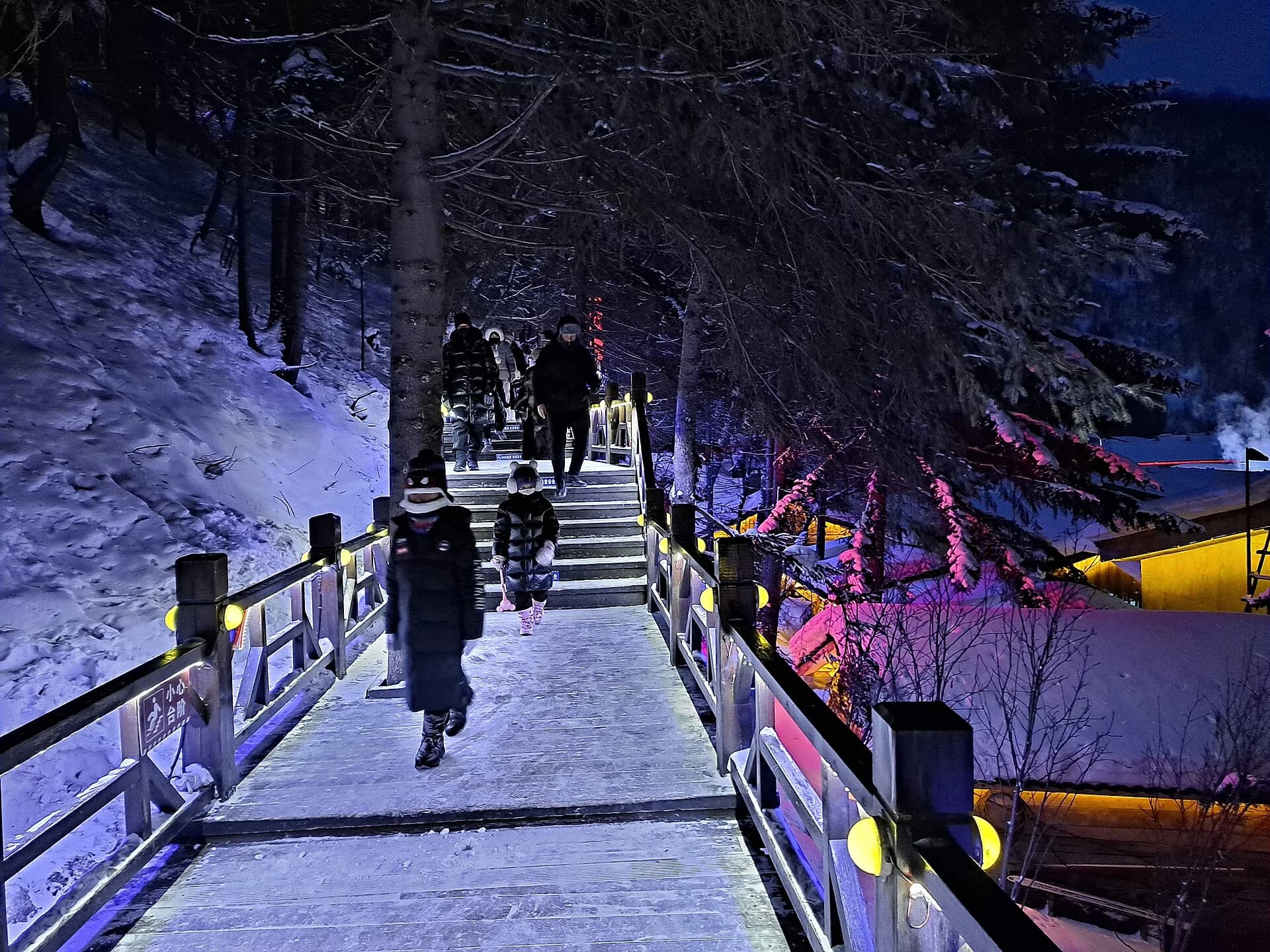
- Shell: a wind-resistant, water-resistant outer layer with a hood. A long insulated coat helps during photo stops and vehicle queues; a shorter system may be easier for a sustained boardwalk climb.
Before leaving a hot restaurant, homestay or vehicle, open the coat and let moisture dissipate. Recent Snow Town visitors repeatedly noted the abrupt change between heavily heated interiors and outdoor cold. If the base layer is damp, change it rather than sealing sweat under another coat.
Protect the five failure points
- Feet: use insulated, water-resistant boots with room to move toes, one dry insulating sock layer and a sole with real grip. Several thick socks can compress the foot and reduce warmth. Carry dry socks.
- Ice: removable traction grips can help on packed snow. Fit them before the slippery section and remove them on smooth indoor tile, where metal points may become a new fall hazard. Use handrails and small deliberate steps.
- Hands and face: mittens are warmer than equivalent gloves; a thin liner lets you operate a phone briefly. Cover ears, cheeks and neck in wind. Keep a spare dry pair of gloves for children.
- Heat packs: use only as the label directs, over clothing rather than on bare skin, and inspect the skin regularly. Do not depend on a heat pack to make wet or tight footwear safe.
- Children and higher-risk travelers: schedule warming breaks before anyone complains. Older adults, babies and people with circulation, heart or metabolic conditions need individualized medical advice and a shorter exposure plan.
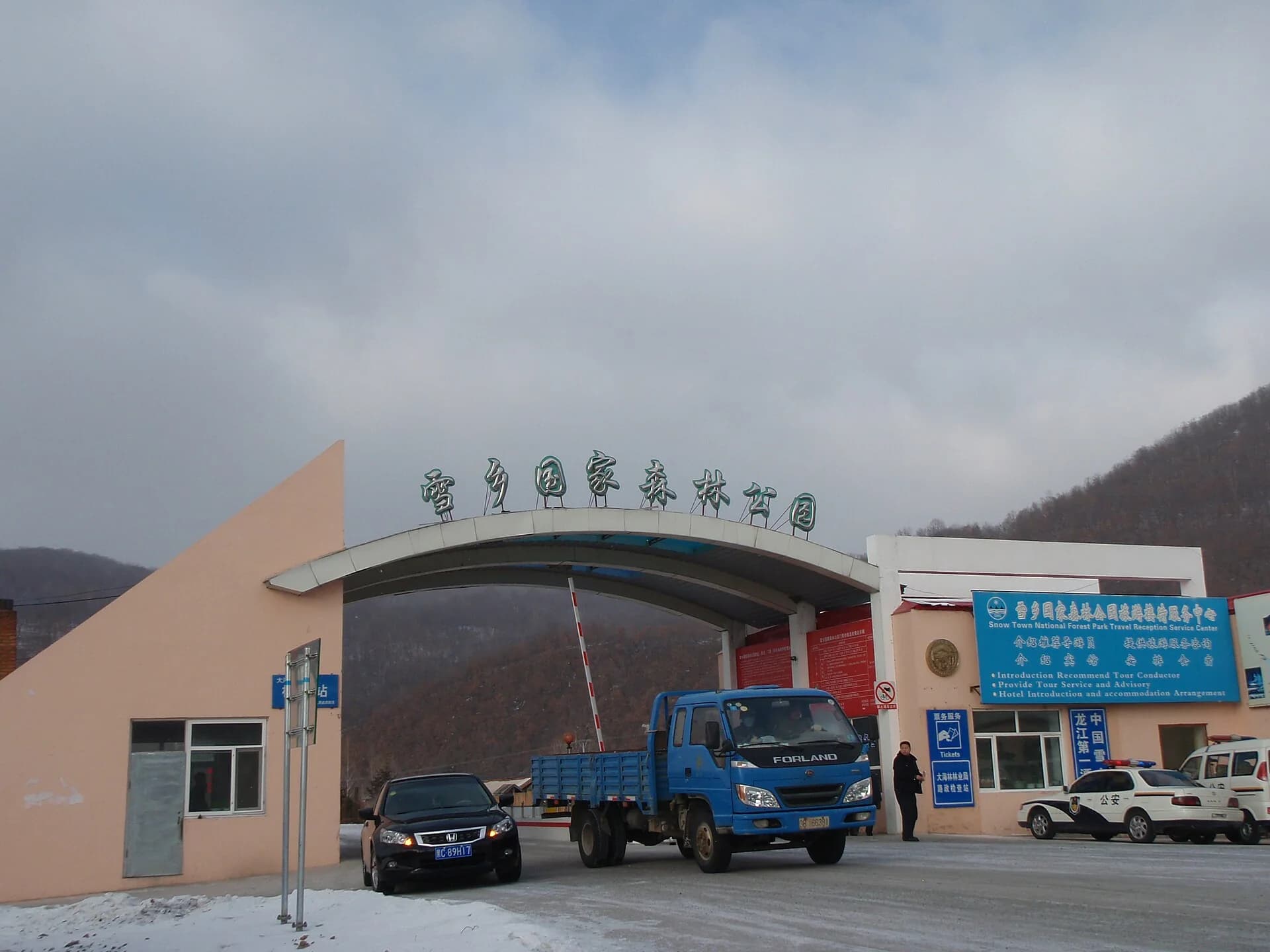
The Snow Town visitor-service system has offered staffed warming points and hot drinks in recent seasons. Identify the nearest open indoor refuge when you arrive; do not assume a past-season hut or shop will be open at night.
Use a cold-to-warm device routine
Cold drains phone, camera and power-bank capacity quickly. Keep spare batteries in an inner pocket, but prevent metal contacts from touching coins or keys. Do not operate a swollen or damaged power bank.
Before entering a warm, humid room, place the cold camera or phone in a closed bag and let it warm gradually. Condensation should form on the bag rather than inside the device. Do not recharge a visibly wet device. Keep enough battery for transport messages and emergency calls instead of spending the last charge on video.
Recognize the point to stop
Possible frostbite includes numbness and skin that becomes white, grey-yellow, unusually firm or waxy, especially on fingers, toes, ears, nose and cheeks. Move indoors, protect the area and seek medical care. Do not rub it, massage it with snow or apply direct heat from a heater or hot-water bottle; numb skin can burn without warning.
Possible hypothermia includes persistent or uncontrollable shivering, exhaustion, fumbling hands, confusion, memory problems, slurred speech or drowsiness. Treat it as an emergency: call 120 or ask staff to call, move the person gently into shelter, remove wet clothing and warm the chest, neck and head with dry layers while help is arranged. Do not give alcohol, and do not give a drink to an unconscious or confused person.
A person who is confused may insist they are fine. Do not send them back to the hotel alone. If symptoms settle after a warm break but recur outside, end the outdoor plan.
Pack one small dry bag
Carry spare gloves and socks, a dry base layer for a child, tissues, lip protection, personal medication, a charged power bank, your hotel name in Chinese and offline transport details. Keep passport, phone and medicine inside the insulated main bag rather than an exposed outer pocket.
Use the Snow Town overnight guide to place warming breaks between arrival, dusk and early morning. For longer outdoor work, use the winter photography planner. Clothing is part of the route plan: no photograph is worth numb hands, wet feet or missing the final transfer.