Photo: 茅野ふたば · Source · CC BY-SA 4.0
Shangrao
Shangrao is a useful rail gateway to two very different experiences. Wangxian Valley is a theatrical cliffside scenic town that comes alive toward evening; Sanqing Mountain is a high granite landscape that deserves a full walking day. They are not neighboring stops. Build the trip around their separate transport and sleep decisions, rather than trying to collect both after arriving on one train.
Decide what your two days should do
| Time | A workable plan | Where the night goes |
|---|---|---|
| One day | Choose either Wangxian's late light or a weather-ready Sanqing circuit | Shangrao city for rail convenience, or at the chosen scenic area |
| Two days | Wangxian afternoon/evening; Sanqing the next day | Sleep near Sanqing after Wangxian only with a confirmed car and late check-in; otherwise use separate bases |
| Three days | Give the transfer its own margin and add a weather reserve | Change base deliberately instead of commuting repeatedly |
Recent visitors often combine the pair in two days, but their reports also show the cost: long road legs and tired legs on Sanqing's boardwalks. A 13 km mountain circuit completed in about six hours is a fit hiker's account, not a standard family itinerary. If the forecast is uncertain, protect Sanqing's clearer day and let Wangxian fill the lower-visibility evening.
Follow the two-day route
Day 1, rail arrival → Wangxian → Sanqing foothill (or Shangrao). Aim to reach Shangrao Station by early afternoon. Leave large luggage at your hotel or take it in the booked car; Wangxian's stairs are no place to pull a suitcase. The mapped road from the station to Wangxian is about 46 km, roughly an hour by car before traffic, so a mid-afternoon entrance is a safer target than a noon show. Walk the lower stream and quarry approach first, then take the elevated cliffside route while you can still see its construction. Pause for food before returning to a broad viewpoint for dusk and the lights. Show programs change, so let the setting, rather than a single performance, determine your path. Agree on a gate-side pickup and a departure time before entering.
If tomorrow is a Sanqing day, a prearranged ride from Wangxian to the Jinsha cableway side is roughly 77 km / 1½ hours on the mapped road, before an evening traffic or weather delay. This works only with a confirmed driver and hotel late check-in. Otherwise return to Shangrao and accept an early road start on Day 2. Do not assume that a scenic-area bus will still run after the lights.
Day 2, Sanqing → onward rail. Eat breakfast before reaching Jinsha and enter near opening. The first objective is the Nanqingyuan core: from the upper cable station, follow the signed path toward Giant Python Emerging from the Mountain and Oriental Goddess, then complete the shorter signed circuit back to your cableway. Allow four to six hours on the mountain including photo pauses and a meal break; the exact loop and any one-way controls should be checked on the current entrance map. The longer West Coast / Sunshine Coast circuit is an extra hiking choice, not part of this default day. Buy enough water and a simple lunch at the foot or at a reliably open mountain kiosk, and keep time for a cableway queue on descent.
From Jinsha lower station to Shangrao Station the road is about 76 km, with a map estimate near 1 hour 20 minutes by car. Add a substantial departure buffer for the cableway, gate shuttle, road and train check-in. If a train leaves in the late afternoon, shorten the mountain loop rather than sprinting across exposed boardwalks. A later train or a second foothill night makes the day noticeably calmer.
One-day and three-day versions
- One day, scenery without a car: choose Wangxian for an afternoon-to-evening visit, then sleep in Shangrao or near its gate. A Sanqing-only day is possible with an early transfer and a weather forecast, but it is not an evening add-on.
- Three days, better for walkers: keep Day 1 Wangxian, sleep at Sanqing's foot, give Day 2 wholly to the mountain, and use Day 3 for a slow departure or a separate Wuyuan extension. Wuyuan's Huangling and village roads need their own transfer and opening-hour plan; they are not a hidden third stop inside Shangrao's Day 2.
- Cloud or storm on the mountain day: swap the two anchors if accommodation and tickets allow. If the cableway closes, spend the day in Shangrao or move the rail journey; neither a foggy summit nor a closed lift can be rescued by walking faster.
The route is built around Jinsha in and Jinsha out. An intentional cross-mountain exit at Waishuangxi can be rewarding, but only after you confirm the open trail, cableway ticket and pickup on that opposite side. The two lower stations are not a short stroll apart.
The two anchors
Wangxian Valley: stay for the change in light
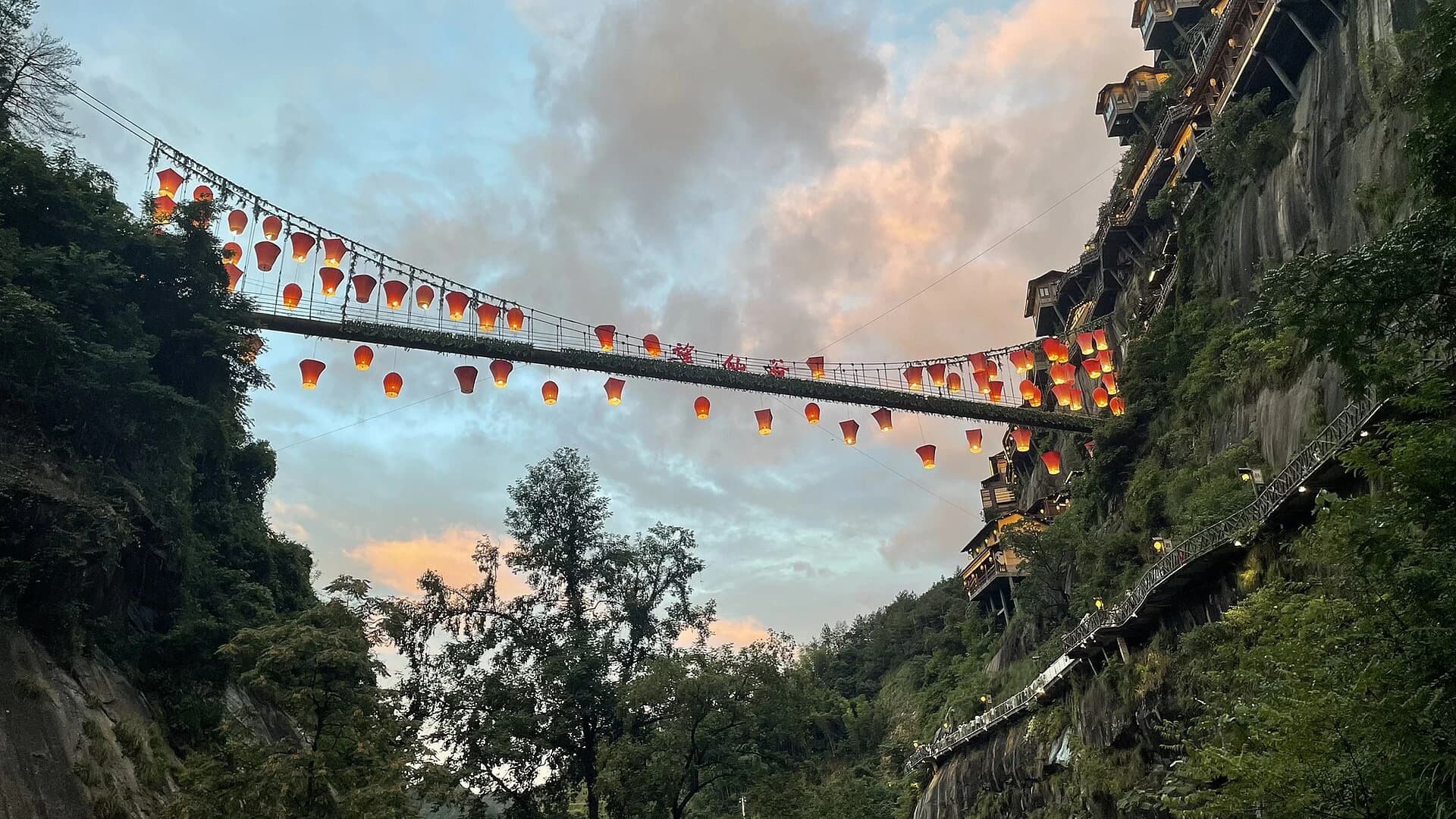
Wangxian Valley uses a restored quarry setting, elevated paths, buildings and lighting to create its distinctive nightscape. Arrive while there is daylight to understand the path and find a viewpoint, then stay through the lighting transition. It is a designed scenic development, not an intact ancient village; enjoy the setting on its own terms. The last shuttle and your car pickup matter more than collecting every performance.
Sanqing Mountain: choose a circuit you can finish
Sanqing Mountain is the more demanding day. Its cableways save elevation but leave exposed, sometimes steep boardwalk sections. The famous peaks look different with cloud, and viewpoints may vanish in fog. Choose the shorter core circuit when weather, knees or start time are limited; reserve the outer loop for a genuinely early start and good conditions. The Jinsha and Waishuangxi cableways serve different approaches, so buy for the entrance you will actually use.
Where to base yourself
- Shangrao station/city: easiest for a rail arrival, luggage and onward departure; each scenic area still costs a substantial transfer.
- Near Wangxian: useful when the illuminated evening is the priority and you do not want a late ride back. Check whether the property is inside the scenic area, near its gate or merely advertised under the same place name.
- At Sanqing's foot: strongest for an early mountain start. Ask for the exact cableway entrance and whether the hotel can arrange an early gate transfer.
For a two-site trip, confirm the point-to-point ride between Wangxian and your Sanqing hotel before booking a nonrefundable room. Map the final hotel entrance, not just the county. Compare hotels on Trip.com, then verify the property pin and late arrival policy.
Tickets and the mountain day
The Sanqing operator's February 2026 notice lists CNY 120 adult admission and CNY 125 round-trip cableway for Jinsha or Waishuangxi; the combined products and concessions need checking at checkout. Those figures do not establish today's opening time or weather operation. At Wangxian, confirm admission, show times and the last return for the selected date. Carry your passport where a ticket is tied to an identity document.
Pack a light rain layer, water and shoes with grip. The cableway can stop in wind or storms; a mountain day therefore needs a rail departure buffer. In Shangrao city, keep meals and luggage simple—use it as a transfer base rather than pretending its scenic sites are within an evening stroll.
How this fits a Jiangxi journey
Wuyuan's villages and terraces are a separate rural circuit, while Jingdezhen is a ceramics stop. Shangrao can connect those by rail, but do not count a transfer through the station as a visit to either Wangxian or Sanqing. Check China rail tickets only after choosing which scenic gate and overnight base you need.
Plan your Shangrao Travel Guide: Wangxian Valley, Sanqing Mountain and Sensible Transfers trip
Useful bookings related to this city guide
Make the five decisions
Plan Shangrao without adding random stops
Choose the trip shape first, then use live booking and transport information for your exact date.
How Many Days?
Use two full days for Wangxian Valley and Sanqing Mountain; a third day gives the mountain a weather reserve.
Choose Your Route
- Protect Wangxian for late light and Sanqing for a separate early mountain start. Keep the long road transfer and hotel change visible in the plan.
Book These First
- Choose the Sanqing entrance and matching cableway before buying tickets or a foot-of-mountain room. Confirm Wangxian exit transport after the lights.
Explore by Area
- Shangrao city is a rail base; Wangxian is an evening scenic zone; Sanqing has multiple cableway feet. They are three different transport jobs.
Where to Go Next
Wuyuan is a separate village circuit; Jingdezhen is a ceramics stop. Check the actual rail station and road transfer before chaining them.