Xiangxi
Itineraries including Xiangxi
Xiangxi Tujia and Miao Autonomous Prefecture is one of western Hunan's most varied journeys. Fenghuang gives you timber riverfronts from daylight through blue hour, Furong stacks stone lanes above a waterfall, and Jishou with Qianzhou creates the practical base for Aizhai Bridge and Dehang Canyon. The distance between these experiences is part of the trip, so the best plan begins with a base rather than a checklist.
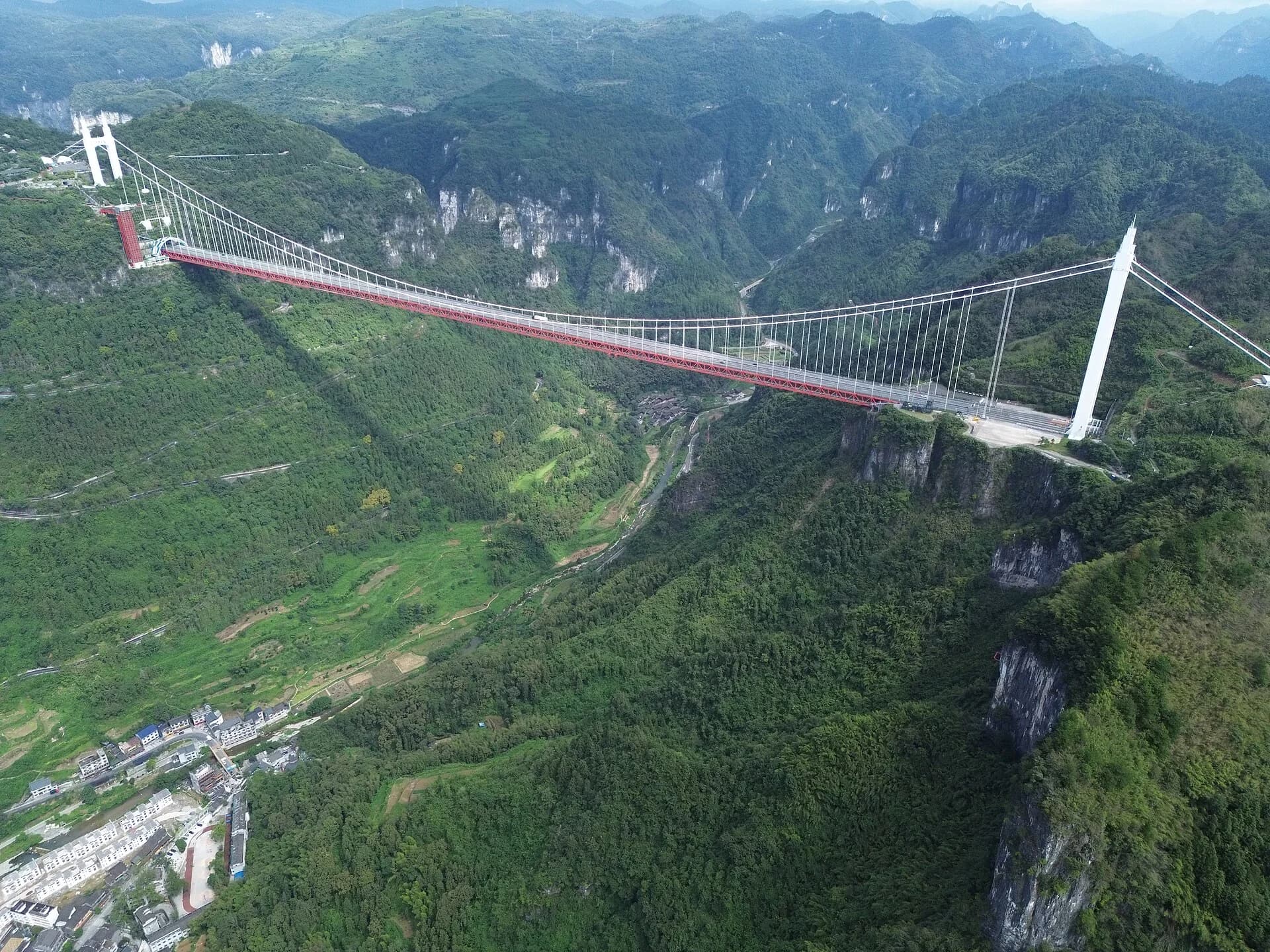
Photo: Glabb · Source · CC BY-SA 3.0
Choose the base that matches the experience
| Base | Best reason to stay | Strong first visit | Useful trip shape |
|---|---|---|---|
| Fenghuang | River-town architecture, evening reflections and an atmospheric morning | Walk the heritage spine in daylight, return along the Tuojiang at blue hour, then add a quiet early loop | One night |
| Furong | A compact stone town whose lanes, cliff and waterfall form one sequence | Arrive in late afternoon, complete the waterfall route in daylight and stay into dusk | 2–4 hours or one night |
| Jishou / Qianzhou | The easiest urban base for a complete Aizhai–Dehang mountain day | Settle near Jishou or Qianzhou, then give the bridge and canyon one protected day | Two nights when the mountain day matters |
With only one night, choose Fenghuang for the richest evening-and-morning contrast or Furong for the more compact waterfall product. Add Jishou when Aizhai and Dehang are priorities, not merely because it sits between names on a map.
Fenghuang: build the visit around changing light
Fenghuang Ancient Town is the strongest overnight choice for most first-time visitors. The public old-town streets are free to walk; former residences, halls, boat trips and performances are separate paid layers. Start with the river and lane structure in daylight, pause for dinner, then make one deliberate blue-hour return instead of repeating the same illuminated stretch.
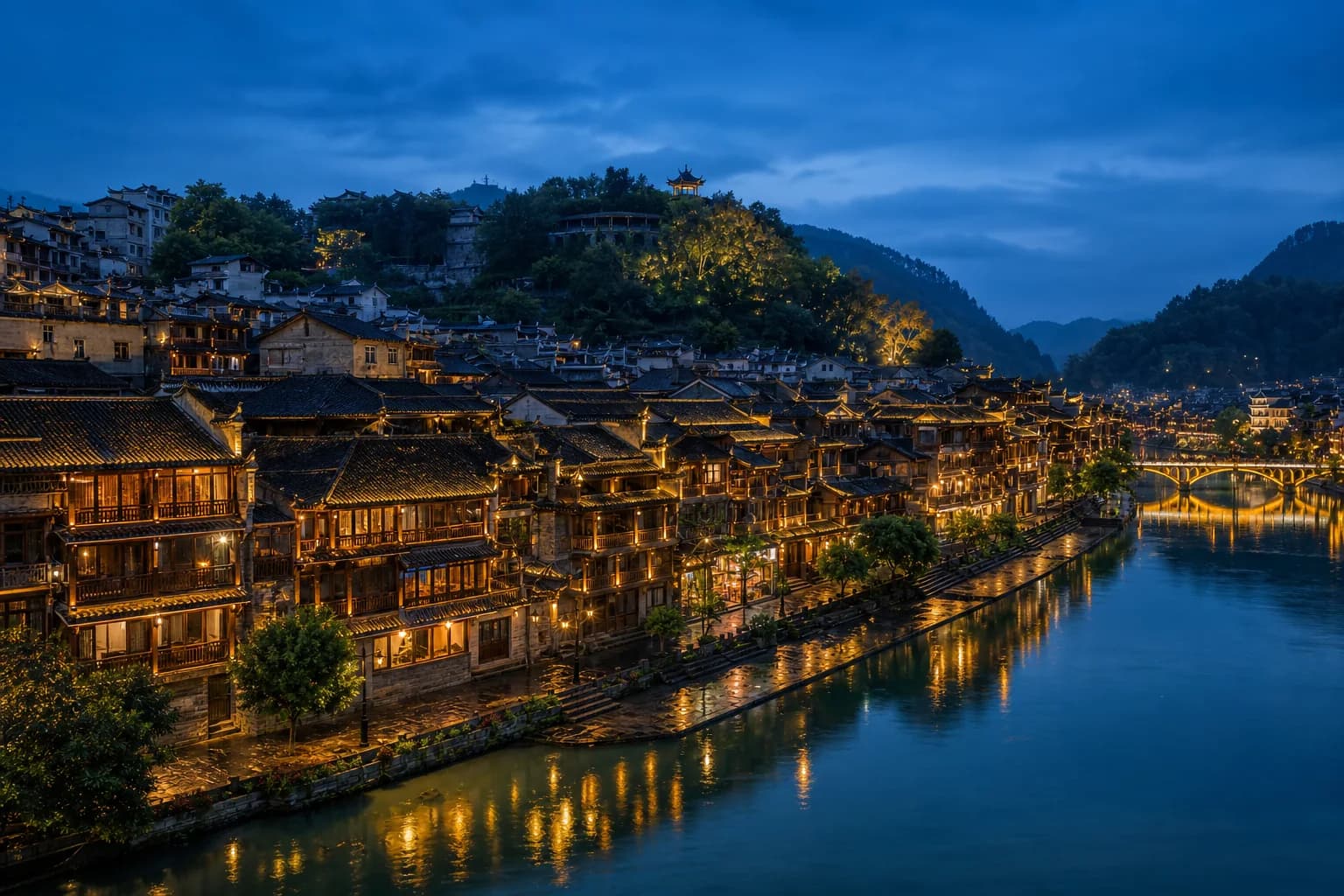
One night earns a quieter morning and removes pressure to catch a late onward connection. Choose the immediate riverfront for view potential, one or two lanes behind it for a better sleep balance, or the old-town edge for easier luggage and road access. Confirm the exact room direction, steps, vehicle drop-off and international-guest policy before payment.
Fenghuang Ancient Town Railway Station is outside the walkable core. AMap's model checked on 21 August 2026 measured about 11.1 km / 17 minutes by car to the old-town-side visitor centre. Treat that as a dated planning estimate and confirm the current last-mile connection for your arrival.
Furong: follow one downhill waterfall sequence
Furong Town works because the town and waterfall belong to the same vertical route. Begin at the upper arrival, follow the stone-lane spine, add the Wangcun historical layer, then use the front and side waterfall viewpoints before dusk. A path beside or behind the water is a bonus only when current barriers and signs keep it open.
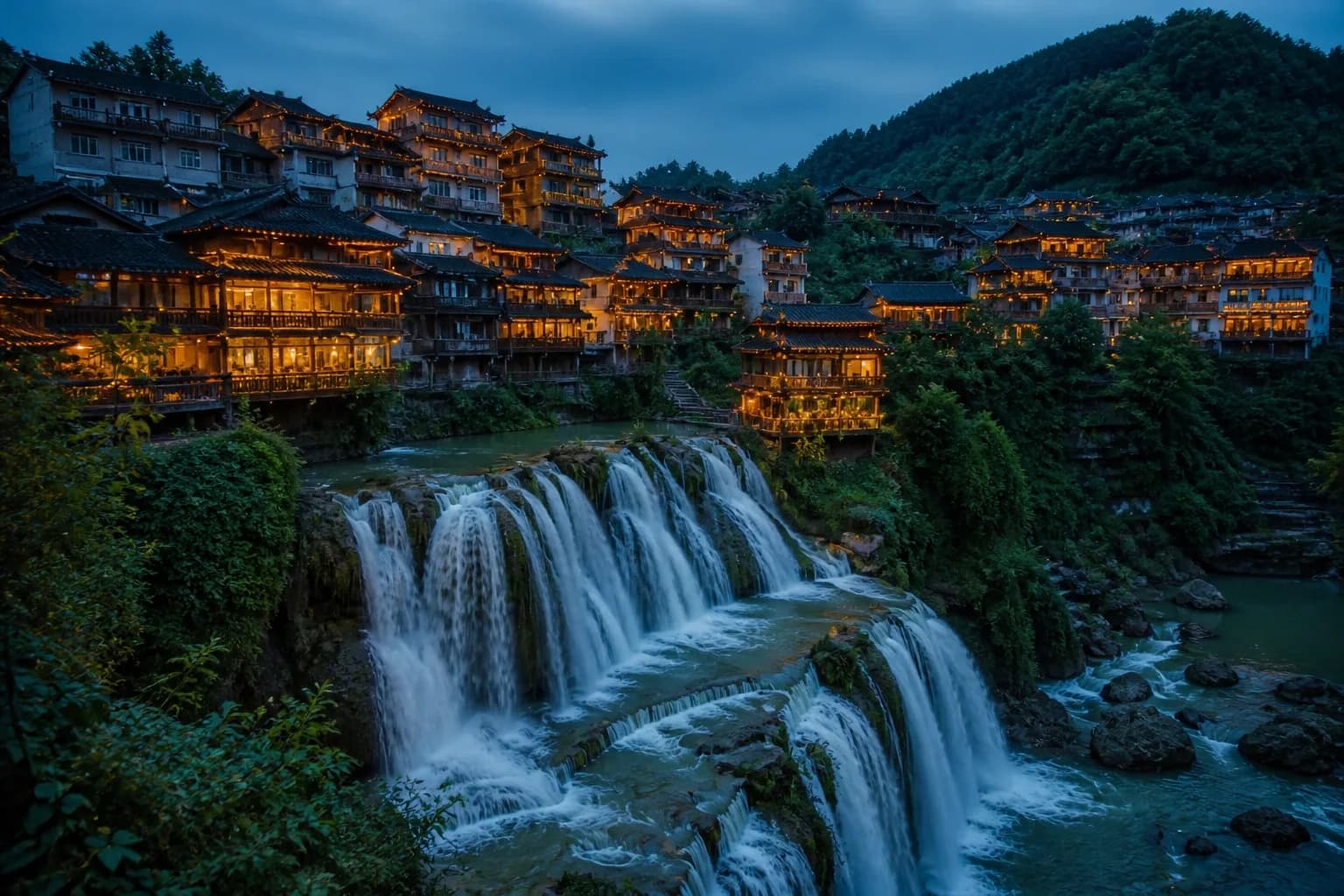
A 2–4 hour late-afternoon stop is a complete first visit when onward transport is secure. Stay overnight when the evening townscape and an early walk are central to the experience. Furongzhen Railway Station is a short road transfer from the scenic entrance: AMap's model checked on 21 August 2026 measured 4.8 km / 9 minutes by car to the visitor-service centre. The official visitor page points rail arrivals to a signed scenic minibus but publishes no dependable interval or last departure, so settle the return before entering.
Jishou and Qianzhou: use the city as a base, not a substitute
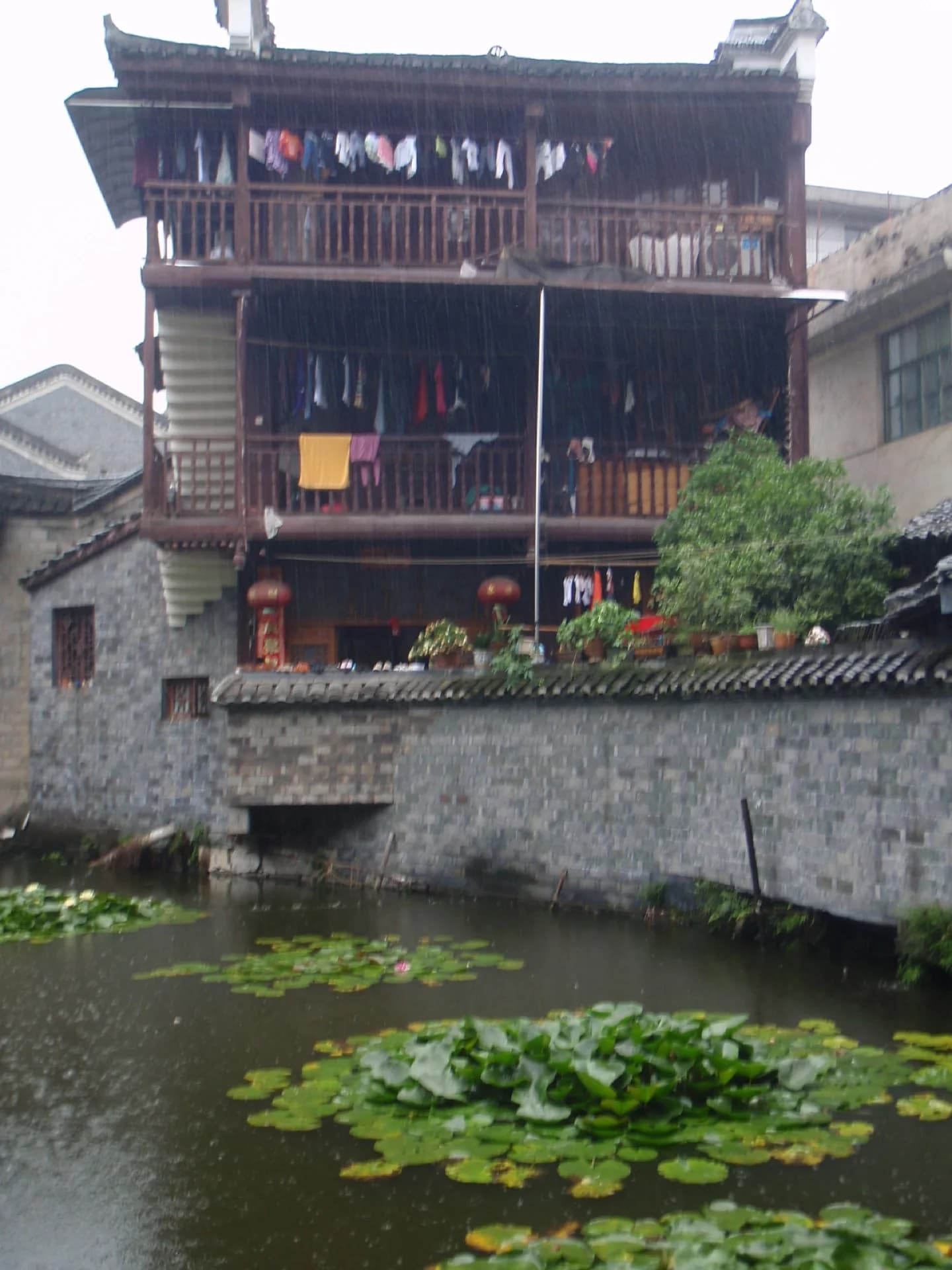
Jishou is the prefectural transport and service base; nearby Qianzhou adds a gentler old-town, waterside and cultural layer for the arrival evening. This pairing is especially useful when your main objective is the gorge west of the city. It gives you ordinary city services and enough time to confirm the next day's exact visitor centre and return arrangement.
Jishou Railway Station and Jishou East Railway Station are separate arrival points. AMap's model checked on 21 August 2026 placed Jishou East about 8.8 km / 19 minutes by car from the Qianzhou visitor-centre area. Use the full station name in every booking and compare your hotel pin with the station you will actually use.
Give Aizhai Bridge and Dehang Canyon a full day
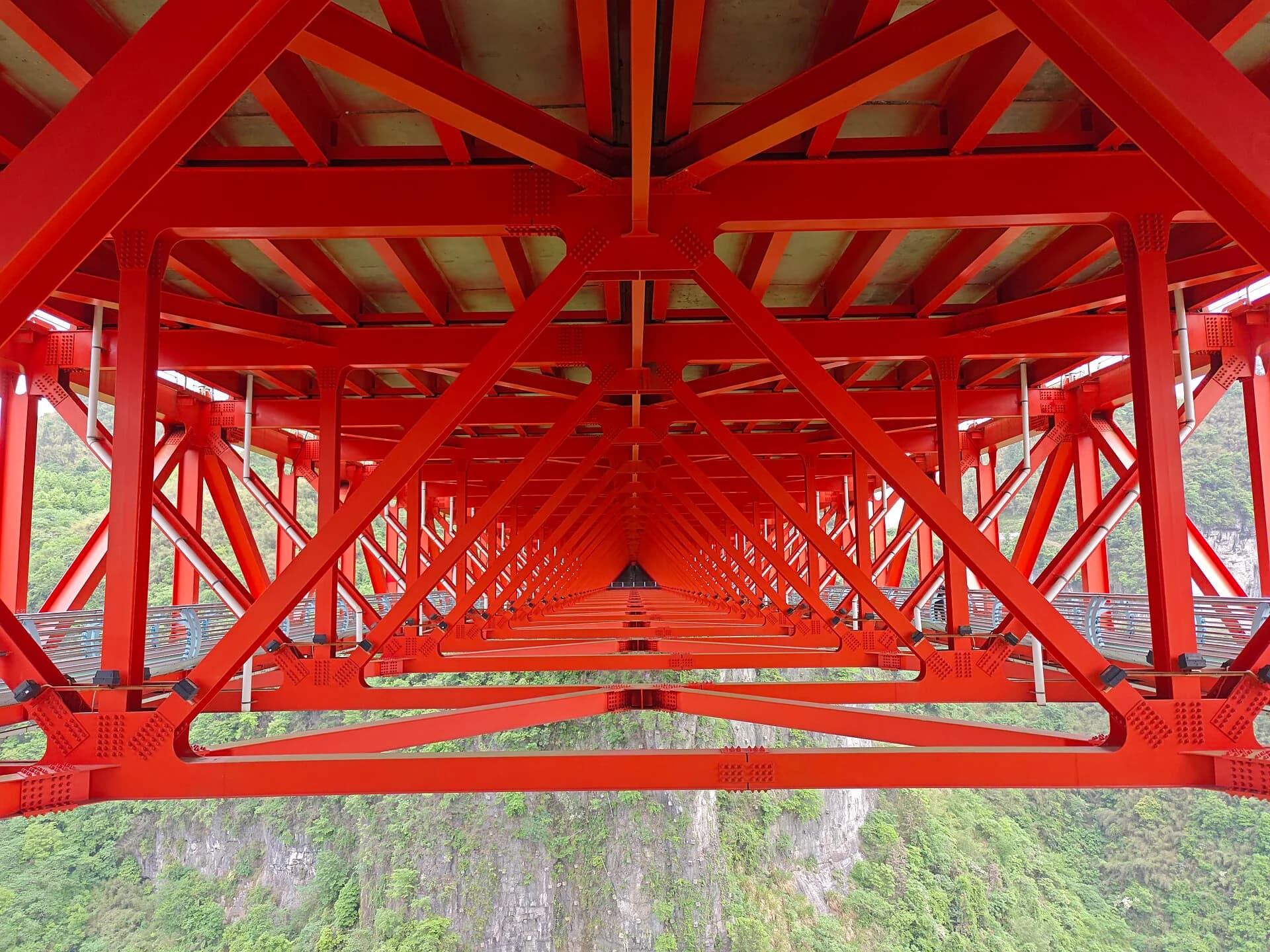
Aizhai Bridge and Dehang Canyon form Xiangxi's strongest mountain day, but they remain distinct scenic products with separate visitor centres and ticket boundaries. Choose the bridge for gorge scale and engineering viewpoints, Dehang for village-and-canyon walking, or combine them only after confirming the current connection and a comfortable return to Jishou.
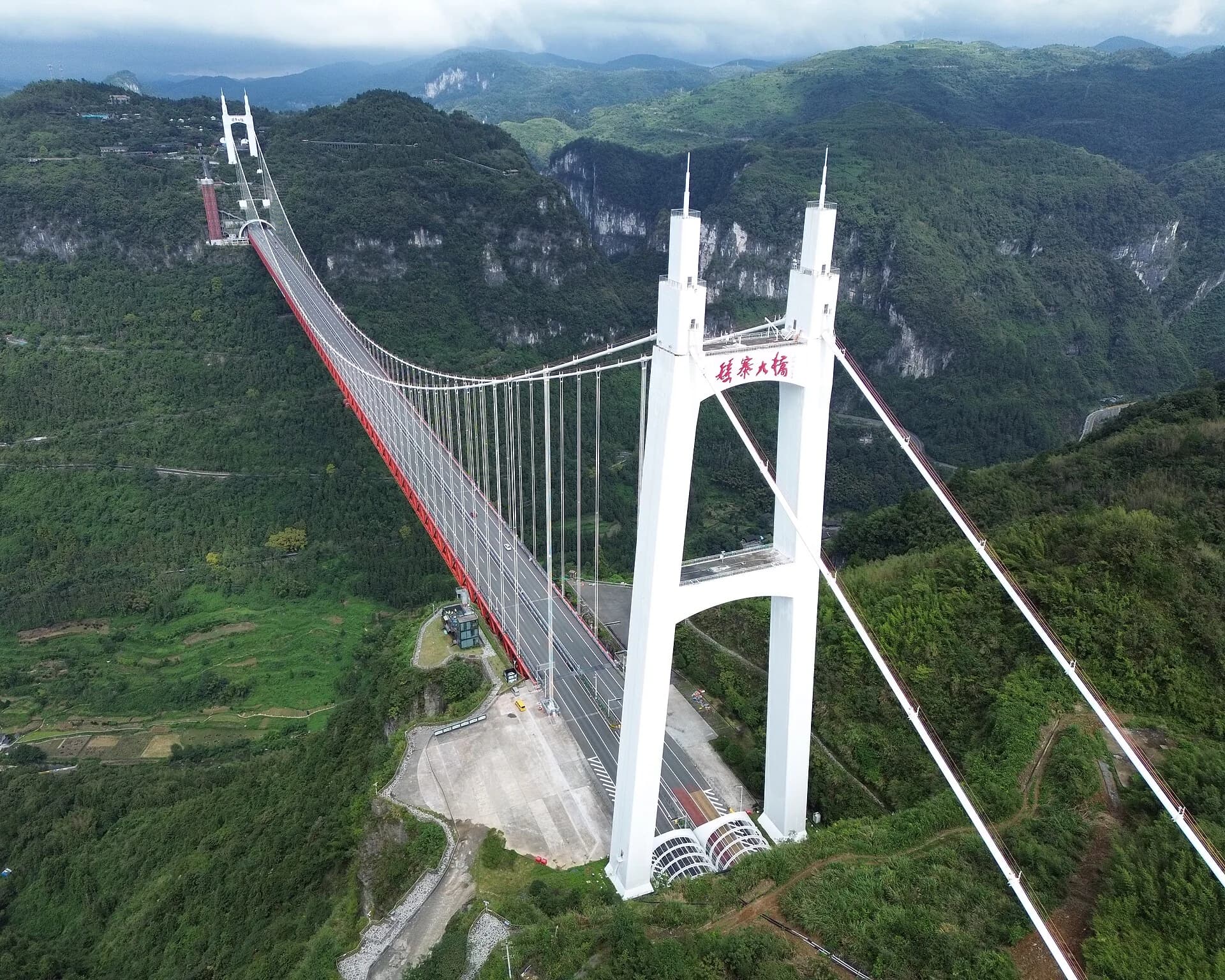
Photo: Glabb · Source · CC BY-SA 3.0
AMap's road model checked on 21 August 2026 measured Jishou East Station to the Aizhai visitor centre at 30.4 km / 37 minutes by car, and to the Dehang visitor centre at 31.8 km / 49 minutes. These are planning baselines, not proof of taxi supply, public-bus frequency or scenic admission. The two visitor centres are also separate; a short path shown by a map does not establish that it is open, staffed or suitable for a public through-route.
Combine Xiangxi without turning it into a transfer race
- Two days / one night: choose Fenghuang or Furong and enjoy one complete town rhythm.
- Three days / two nights: give Fenghuang one night and Furong either a well-timed stop or its own night, after confirming the rail or road inventory between them.
- Four to five days: add Jishou/Qianzhou and protect one full day for Aizhai–Dehang.
- From Zhangjiajie: Furong often makes the most natural first Xiangxi stop, followed by Fenghuang. Treat that as a corridor shape, then build it from current train or road inventory rather than a fixed timetable.
Fenghuang, Furong and Jishou are separate bases. Changing hotels for a repeated night view adds little; changing bases because the next day's experience requires it can transform the trip.
Make one live check before each outdoor day
Heavy rain, high water, strong wind or maintenance can affect river boats, waterfall-adjacent paths, canyon trails and exposed bridge activities. Check the official scenic notice and weather forecast close to departure, follow staffed barriers, and keep one town-level alternative when the mountain or water route changes.
For paid products, one reproducible foreign-passport checkout and collection flow is not currently published. Confirm the accepted document field and staffed collection point before paying, and carry the original passport used for the booking.
Illustrated guides
The best Xiangxi trip has a clear rhythm: choose the base, complete its signature experience, then move only when the next landscape genuinely changes.