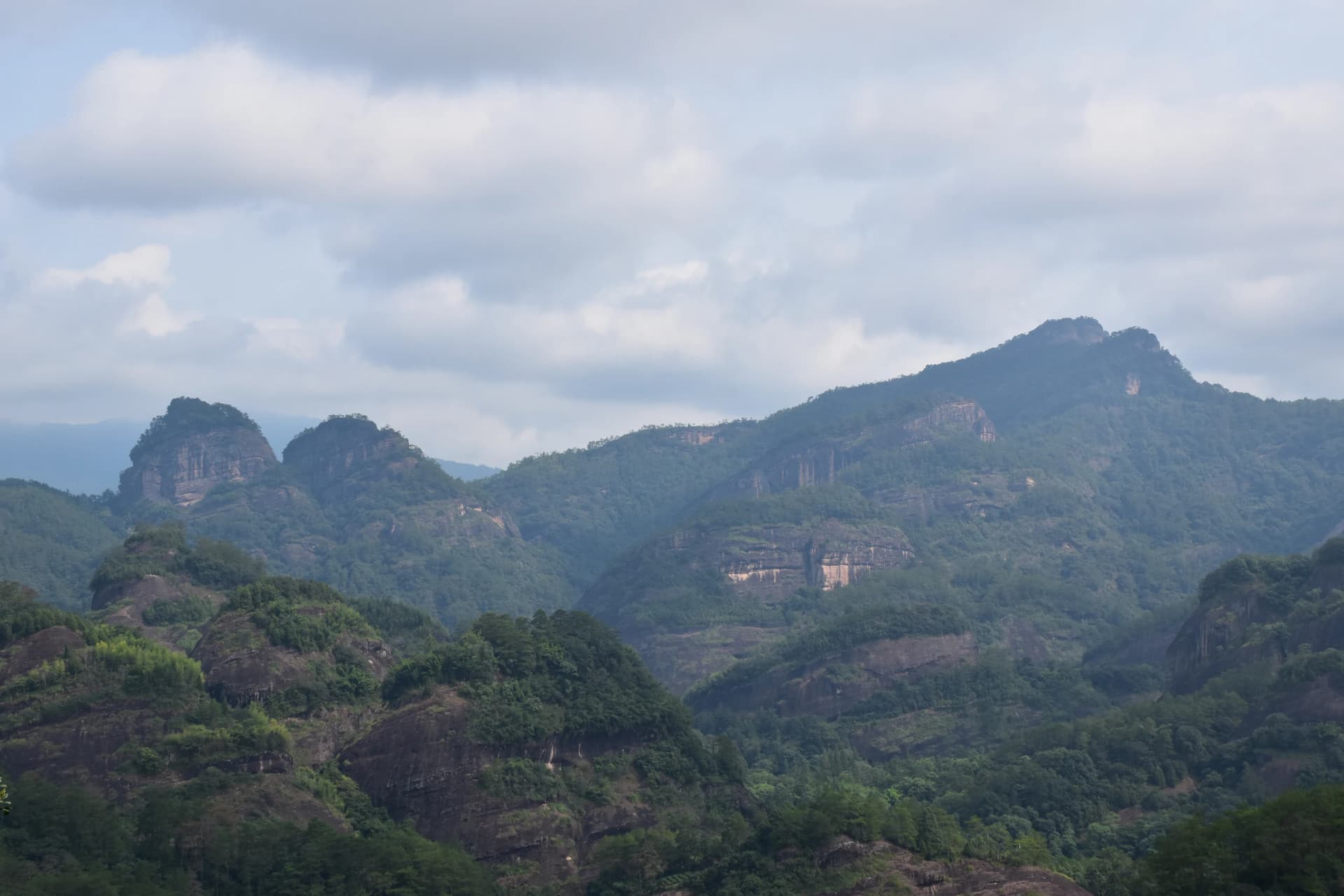
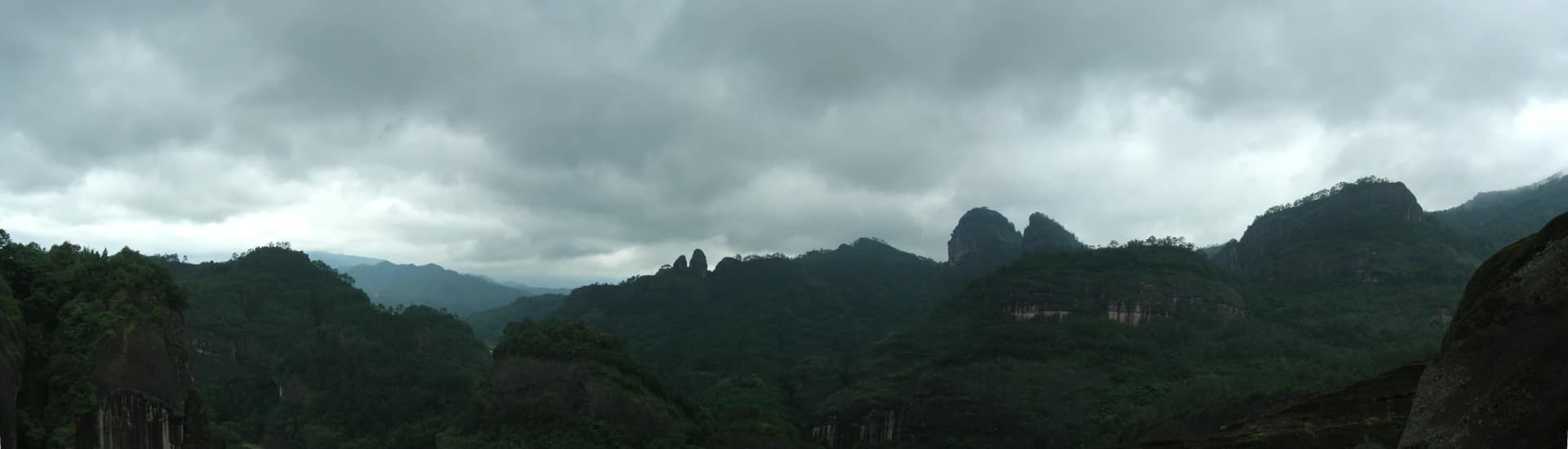
Nine-Bend River Bamboo Rafting
Nine-Bend River bamboo rafting (九曲溪竹筏漂流, Jiǔqǔ Xī Zhúfá Piāoliú) reveals Wuyi Mountain from water level: bends, cliffs, inscriptions and peaks unfold downstream instead of appearing as one summit panorama. Its value is the river perspective, but its planning logic is closer to a timed excursion than a scenic shuttle. Booking, Xingcun reporting, check-in, launch, landing and return are separate jobs.
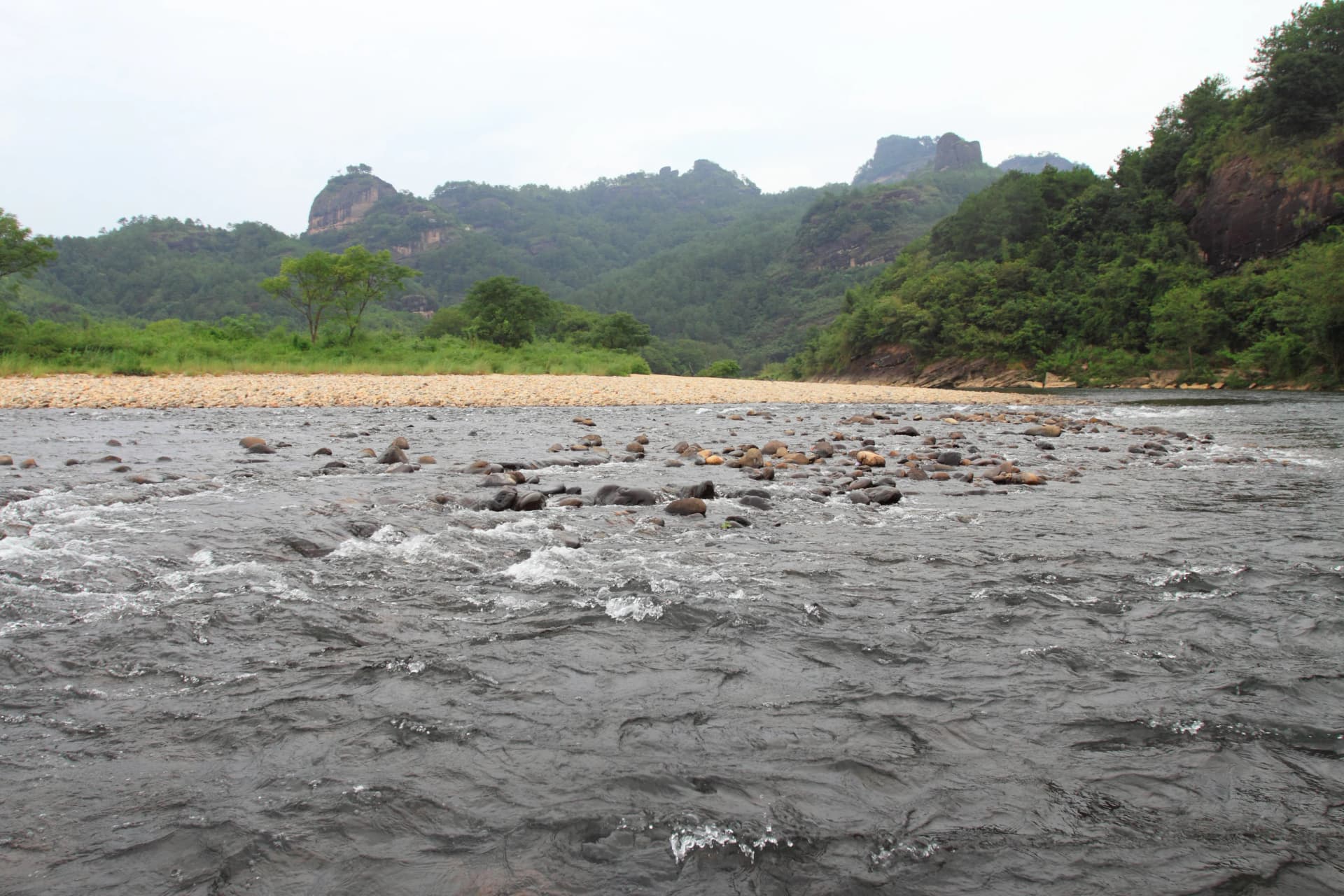
Photo: Zhangzhugang · Source · CC BY-SA 3.0
At water level, the mountains arrive as a sequence of reflections, shallows, bends and cliff faces rather than one distant panorama.
Understand what the raft does—and does not include
The raft is not free with Wuyi Mountain's first-gate registration. It is not automatically included with the paid sightseeing vehicle, and a raft booking does not automatically include hotel pickup, English commentary, a post-raft vehicle or re-entry into the managed scenic network.
The operator identifies Xingcun (星村) as the arrival/embarkation side and describes a downstream scenic section. Current inventory, reporting point, active pier, launch, grouping, documents, landing, weather treatment and refund terms remain live fields. Give the river product its own arrival and return plan instead of fitting it loosely around a mountain route.
Follow the booking-to-return sequence
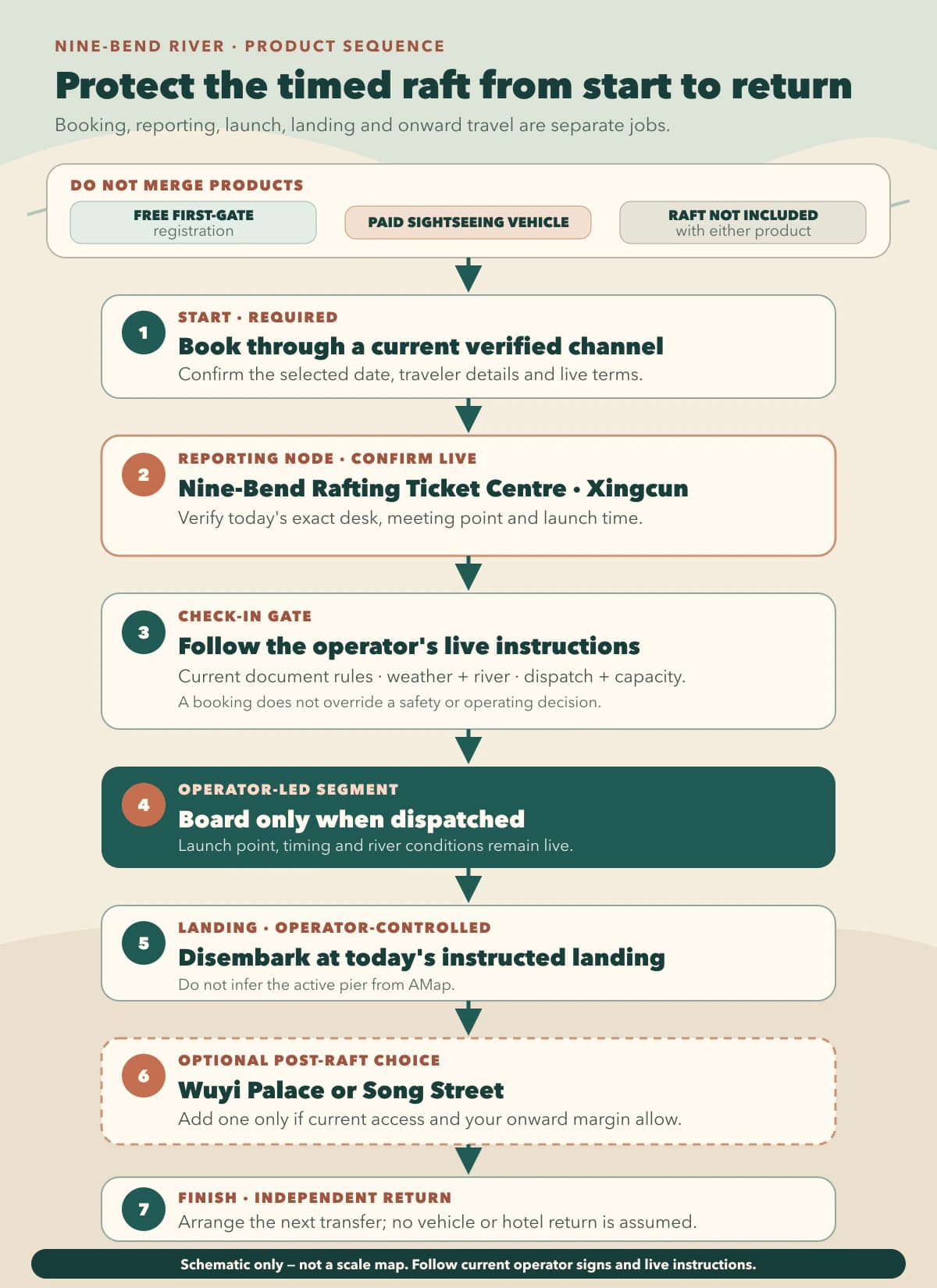
The diagram is a product sequence, not a river map. Use it to protect the decisions, while the selected operator's current instructions control the exact desk, pier, time and landing.
- Book through a current verified channel. Confirm the selected date, traveler details, cancellation and weather terms.
- Confirm the exact Xingcun reporting node. Match the named ticket centre to the desk and berth in the current booking instructions.
- Complete check-in. The operator controls document, name, capacity, weather and river checks.
- Board only when dispatched. Keep the group's assigned sequence even if another raft leaves first.
- Use the instructed landing. Continue through the signed exit before deciding whether to add Wuyi Palace.
- Add Wuyi Palace or Song Street only if access and return margin allow.
- Make an independent return or onward transfer. Do not assume the raft returns you to Xingcun, Sangu or a hotel.
Confirm the reporting point before leaving Sangu
The Nine-Bend Rafting Ticket Centre on AMap, at 九曲溪竹筏票务中心 in Xingcun, is the clearest named orientation point. Ask the selected operator which desk and pier to use, then follow the signed check-in route on arrival.
From the Sangu Roundabout reference, AMap's model checked on 23 August 2026 measured about 14.2 km / 21 minutes by car to the ticket centre. From the South Entrance Visitor Centre, the road model was about 11.6 km / 18 minutes. These are dated road estimates, not a fixed pickup, fare, bus or reporting margin. Ask the selected operator for the exact desk and arrival requirement, then build extra margin around that answer.
Keep the original passport and booking confirmation available, but do not assume that the sightseeing vehicle's passport workflow applies to the raft. The selected raft operator must confirm the exact name spelling, document, child/health eligibility and check-in process.
Choose raft-first or mountain-first by slot and heat
| Order | When it works | Main risk to control |
|---|---|---|
| Raft first | The allocated slot is early and you can reach Xingcun without a fragile transfer | Leaving a car or luggage upstream without a downstream plan; assuming the landing or return |
| Mountain first | A cooler Tianyou climb matters more and the confirmed raft slot leaves a protected transfer margin | Heat on the later raft, mountain delay, live dispatch or a missed reporting window |
| Separate days | You have two or three days and want the most resilient plan | Booking two rigid products on weather-sensitive days without a fallback |
Recent visitors reasonably disagreed about the best raft time. Some preferred an early river for cooler conditions; another preferred a cool Tianyou climb and accepted a warmer raft later. The useful rule is not “always go early.” Protect the allocated raft slot and put the most physically demanding exposed activity in the best remaining weather window.
Use the river for details you cannot see from Tianyou
Use the ride as a sequence of changing views rather than a checklist of nine photographs. Where the river is open, look across the water to see how several peaks overlap. As the raft rounds a bend, notice how a distant cliff becomes the foreground and another part of the valley disappears behind it. Clear-water shallows and reflections can add detail when conditions allow, but the changing relationship between rock and river is the reliable theme.
When the boatman identifies Tianyou, compare the view from below with the panorama you saw—or plan to see—from the mountain. Follow the rock face with your eyes before reaching for the phone: its height and the river's position explain more than an isolated summit photograph. If commentary is in Chinese, keeping the name 天游峰 available can help you ask which feature you are passing; English interpretation should be arranged separately when essential.
At closer cliff sections, choose one inscription or rock surface to study. Look for contrasts between carved characters, natural cracks and water-darkened stone, then look back along the bend while remaining seated. Keep some stretches free of photography so you can experience the movement and quiet of the river. The raft offers a different perspective on the mountain day, without requiring you to identify every formation.
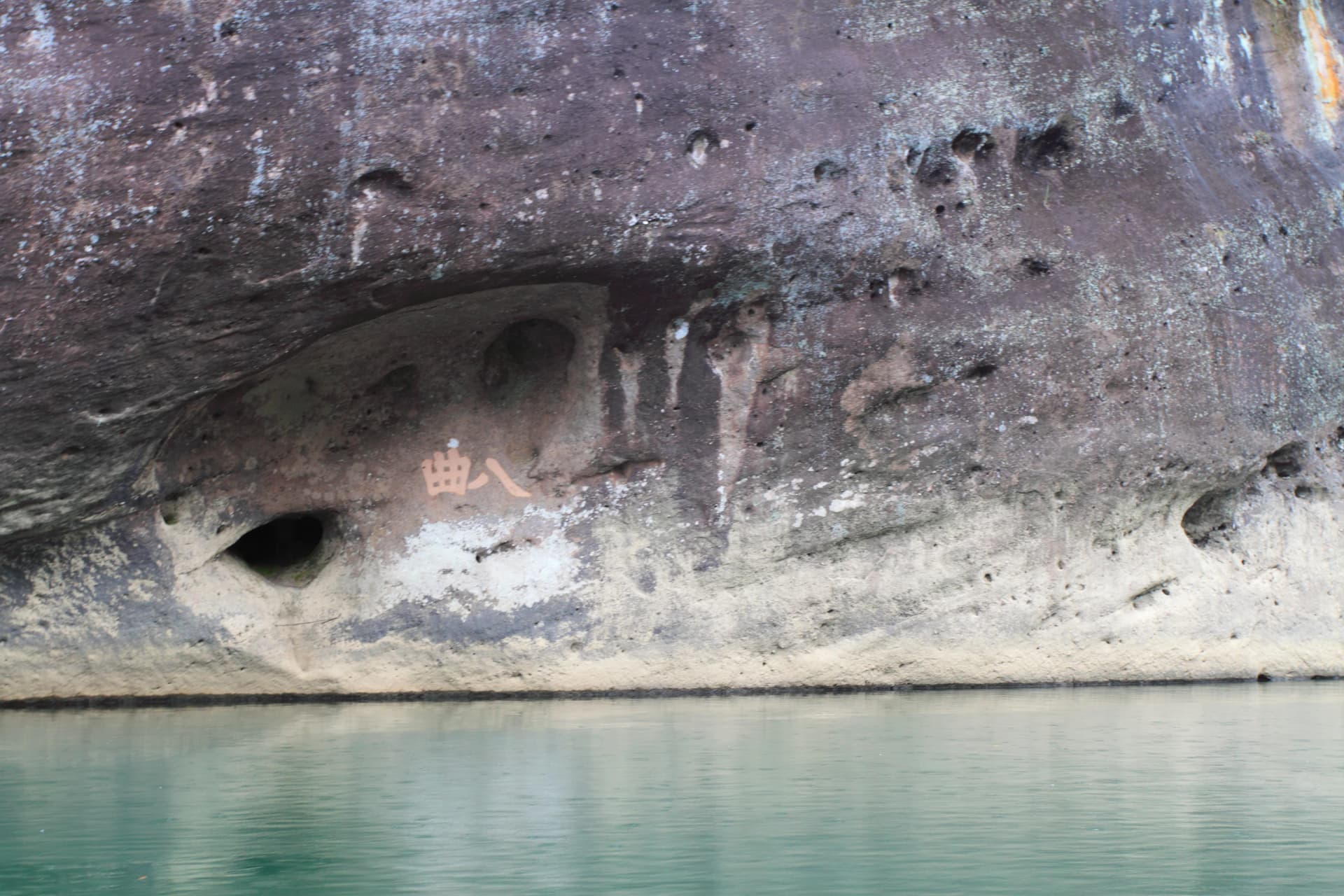
Photo: Zhangzhugang · Source · CC BY-SA 3.0
Watch for carved inscriptions where the river draws close to the rock. They add a human layer to the danxia walls and reward looking sideways as well as upstream.
Add Wuyi Palace only after confirming the landing
Multiple recent visitors paired the downstream experience with Wuyi Palace and a short Song Street walk. It is a satisfying change of pace: the open river gives way to timber architecture, cultural details and a gentle final stroll. Confirm the active landing and exit before committing to the pairing, then protect the return margin.
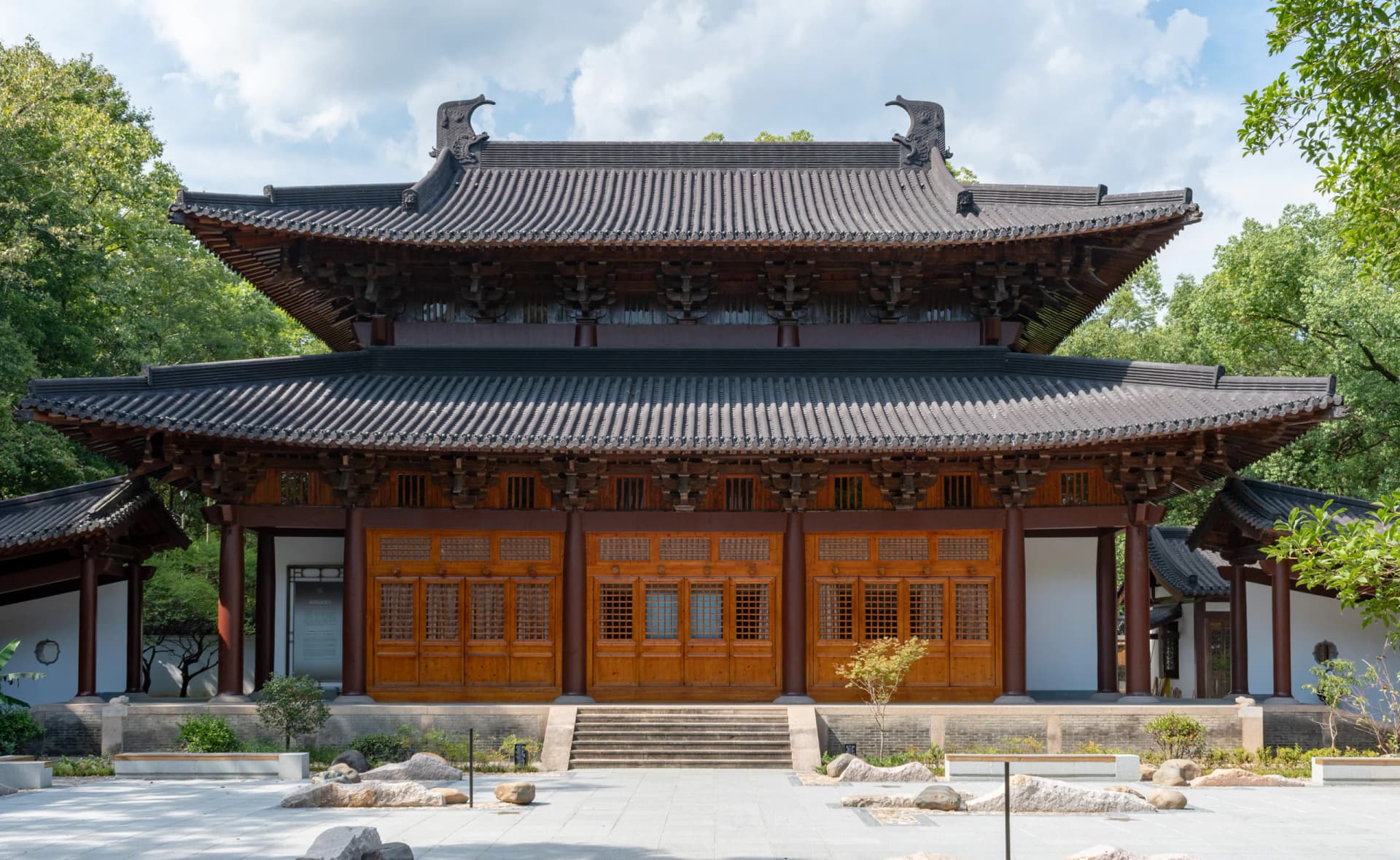
Treat Wuyi Palace as the cultural finish if it is open and your return margin is secure. Song Street is optional and brief; it is not a reason to risk the last practical transfer.
Choose and check the rafting product
For a direct vehicle-plus-raft combination, ask the supplier to state the passport and redemption process, exact terminal, child and health rules, weather cancellation, refund and transfer after rafting before you pay.
Optional Mandarin-guided group day
A Mandarin-guided group day is a different product from an independent raft ticket. English reception refers to contact before the tour; the driver and guide are Chinese-speaking. The current Package D lists shared road transport, designated Sangu-area pickup or a south-gate fallback, and the raft. It excludes the internal sightseeing vehicle, meals, child seat, audio guide, gratuities and Impression Dahongpao. Reconfirm pickup, passport handling, selected package and the route around the raft slot.
If that language and inclusion boundary fits, check the current Mandarin-guided Package D on Trip.com. Otherwise use a current official or staffed channel and arrange every transfer independently.
Weather, river and personal fit are final gates
Rain, high water, lightning, typhoon conditions, capacity or another safety decision can move or stop the product. Confirm cancellation and refund treatment before paying; do not infer it from a scenic-area vehicle ticket. Ask the operator about baggage, phone protection, footwear, life jackets, grouping, commentary and any child, pregnancy, mobility or health restriction rather than copying another visitor's experience.
Use the Wuyi Mountain Scenic Area guide to build the mountain day without endangering the raft slot, and the Wuyishan guide to choose Sangu, trip length and arrival station.