What to Eat in Changsha
Changsha is a rice-and-chile city: breakfast rice noodles, shared Hunan stir-fries, fermented or fresh chile, cured meats and a compact night-snack culture. Do not confuse the longest downtown queue with the city's full food identity.
Start with these dishes
- Rice noodles (米粉): choose a topping (mǎzi, 码子) such as beef, pork, offal or simple broth; breakfast is the natural time.
- Chile-fried pork (辣椒炒肉): a benchmark home-style dish, best with rice.
- Steamed fish head with chopped chile (剁椒鱼头): large and salty-spicy; order for a group.
- Cured-meat platter (腊味合蒸): smoky preserved pork, sausage or fish steamed together.
- Stinky tofu (臭豆腐): crisp fried tofu with broth, chile and pickles; buy one small portion fresh from the fryer.
- Sugar-oil rice cakes and scallion cakes: dense snacks to share, not a full crawl.
- Cold dressed dishes and shaved jelly: useful contrast to hot stir-fries.
- Crayfish or barbecue: seasonal late-night formats; verify price, size and freshness.
Eat beyond one pedestrian street
Wuyi Square, Pozi Street and the central core
Useful for atmosphere and comparing famous snack formats, but heavily commercial and crowded. Sample one item, then eat the main meal in a proper restaurant or nearby side street.
Neighborhood Hunan restaurants
Look along Metro Lines 1 and 2 beyond the tightest core. A busy family restaurant with a short seasonal menu is often more representative than a brand built around one social-media dish. Order one chile-heavy main, one mild or sour dish, one vegetable and rice.
Rice-noodle shops
There is no need to queue on a branded “rice noodle street.” Choose a breakfast shop with visible broth, steady local turnover and toppings prepared that morning. Point to the topping and specify spice.
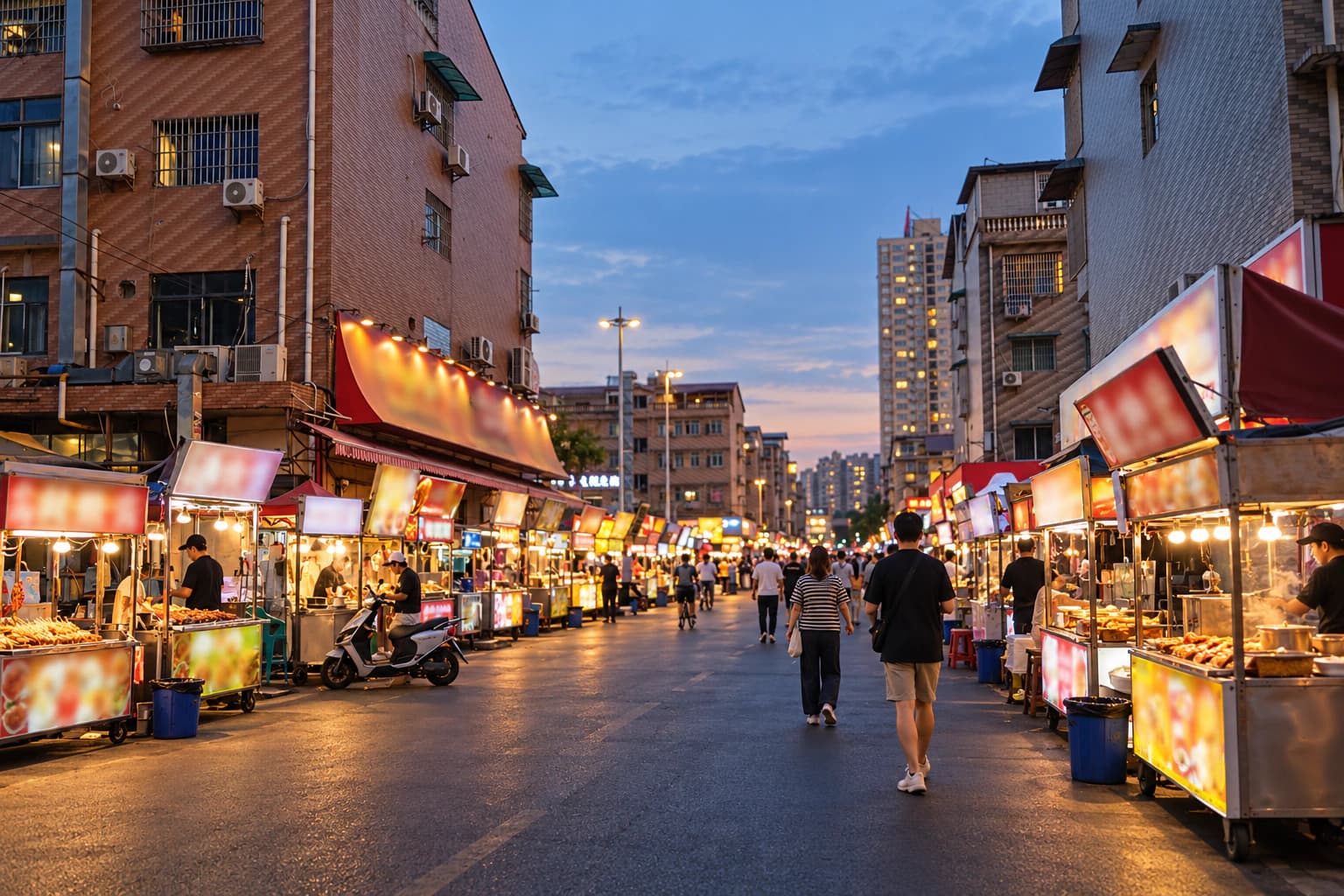
Night food
Freshly skewered barbecue and high-turnover crayfish are safer choices than food sitting pre-cooked. Do not let a photo set or giant retro dining hall substitute for checking the current kitchen.
Named places locals keep recommending
Changsha's best-loved places are usually small, crowded and plain. Treat this as a shortlist to check on a map near your hotel, not a cross-city checklist.
| Type | Places | What to order |
|---|---|---|
| Rice noodles and noodles | Xingcheng Huiji (星城辉记面粉店), Liu San Mifen (刘三米粉), Li Yi Mianguan (李易面馆) | Stir-fried topping rice noodles (炒码粉) at Huiji; spicy beef or duck toppings; Li Yi's dry-tossed spicy duck noodles |
| Home-style Hunan | Ai Fan (爱饭), Longji Benwei (隆记本味菜馆), Qiaobadia Lubiancai (俏八嗲炉边菜) | Chile-fried pork, braised duck with bullfrog, pork-broth rice, stove-side tabletop dishes |
| Old Changsha snacks | Huanan Xiaochi (华南小吃), Jinji Tangyou Tuotuo (金记糖油坨坨), Yangdia Tianjiu (杨嗲甜酒) | Sugar-oil rice cakes, sweet fermented rice wine, a spread of small snacks for about ¥10–20 a head |
| Late-night barbecue and fried skewers | Xiong Yingjun Charcoal Barbecue (熊英俊果木炭烧烤), Hongyuan Barbecue (鸿源烧烤), Xiaji Youzhapu (夏记油炸铺) | Charcoal-grilled skewers, huge beef skewers, fried chicken strips in old-style chile dip |
| Dessert soups (糖水) | Shifenman (实分满糖水铺子) in University Town | Coconut-milk base with a dozen toppings; long evening queues |
| Drinks | Sexy Tea (茶颜悦色), Goodme Lemon (古德墨柠) | Changsha-born tea chains; you will pass several branches a day |
Timing. Most of these places work like this:
- Noodle shops: busiest from 07:00 to 09:00.
- Hunan restaurants: full at 12:00 and 18:30.
- Barbecue and late-night stalls: barely start before 21:00, and some small ones open only in the evening.
Arrive at opening, or a little before the meal rush, to avoid 30–60 minute waits.
What to carry home. Good small-food souvenirs:
- Dried fruit: the shops around Nanmenkou (南门口) near Pozi Street sell bags for about ¥6.
- Packaged chopped chile (剁辣椒): a classic Hunan condiment.
- Perilla-and-ginger peaches (紫苏桃子姜): sweet and sour pickled peaches, available bottled.
- Vacuum-packed braised duck (酱板鸭): this is the one to buy if you want to fly with it.
Check whether your destination country allows meat products before buying the duck.
A balanced Changsha day
- Breakfast: one bowl of rice noodles with a chosen topping.
- Lunch: chile-fried pork, a green vegetable and rice.
- Afternoon: one stinky tofu or sweet snack portion.
- Dinner: shared Hunan meal with fish or cured meat, one sour dish and a non-spicy soup.
- Late night: optional barbecue only if appetite remains.
Spice is not one scale
Hunan cooking uses fresh green/red chile, dried chile, chopped salted chile and fermented sour-hot flavors. 少辣 can reduce the quantity, but a chile-centered dish cannot become truly non-spicy without changing its identity. Ask staff for naturally mild dishes rather than requesting zero chile in everything.
For smoked/cured meat, expect salt; balance with rice and vegetables. For fish head or crayfish, confirm price unit and portion. Serious allergies require a diet card because peanuts, sesame, soy and shared oil may not be visible.
Avoid the viral-list trap
Local social posts disagree sharply about the same brands and stalls, sometimes because branches, batches and expectations differ. Use current reviews to check queue, hygiene and price, not to outsource taste. A short walk to a busy neighborhood dining room is often the better meal.
Final rule
Start with rice noodles, eat one real shared Hunan meal and treat central snacks as samples. Changsha's strength is everyday stir-fry and preserved flavor, not collecting every black-tofu sign in one evening.