Hohhot
Hohhot gives Inner Mongolia a strong urban starting point: Tibetan Buddhist architecture in the older city, regional history and archaeology at the new Inner Mongolia Museum, and meals that connect the capital to the grassland economy. Two focused days work well. A grassland excursion is a separate journey whose quality depends on season, driving distance and the actual operator—not a photo stop automatically included in a city afternoon.
Two days with different jobs
Day 1 — old-city temples and food. Begin at Dazhao Temple, then walk the surrounding streets and choose another nearby religious or architectural stop only if it adds something new. Xilituzhao, the Five Pagoda Temple and the old commercial streets are not one combined admission. Save time for a meal of hand-pulled noodles, shaomai or lamb, and ask about portion sizes before ordering for one.
Day 2 — regional context. Visit the new Inner Mongolia Museum with a chosen exhibition plan, then leave room for another city stop or a slow meal. Large collections can easily absorb most of a day. If you only have one day, choose between the temple cluster and the museum based on your interest rather than spending it all in transfers.
Walk the old city in a sensible order
Morning, Great Mosque → Kuanxiangzi → Dazhao. Start in the old commercial quarter near the Great Mosque. It is a place of worship: view the exterior and enter only where visitors are welcomed at that time. Use nearby Kuanxiangzi as a food lane rather than a compulsory shopping stop. A breakfast of shaomai in Hohhot often means small, rich lamb-filled dumplings ordered in local portions; ask how many make one serving before ordering, then add tea. From the mosque/food quarter to Dazhao the map shows roughly 1.3 km / 20 minutes' walk. This is an easy urban link with time for streets, not a car transfer.
Late morning, Dazhao → Xilituzhao. Give Dazhao's courtyards, rooflines and active worship time before moving about 300 m / 5 minutes on foot to Xilituzhao. The pair lets you compare neighboring temple spaces without rushing between distant districts. Check each site's own admission and hall access; never treat a closed prayer hall as part of a guaranteed photo route. Eat nearby before the afternoon walk.
Afternoon, Five Pagoda Temple or a slower old-city finish. From Xilituzhao the Five Pagoda Temple area is about 1 km / 15 minutes on foot. Go for its distinctive pagoda form and stone detail if it is open, then finish with a sit-down meal. If temple fatigue has set in, spend the same time on the lanes around Dazhao and the older commercial streets. This walk is roughly 3 km between named anchors, plus wandering inside sites; it is a full cultural day when visited rather than merely photographed.
Give the museum its own block
On Day 2 go to the new museum near Hohhot East, not the former site. Hohhot East Station is about 1.3 km / 17 minutes on foot from the mapped new museum; the practical exit and accessible path should be checked on site. Reserve two to four hours and choose a sequence: begin with regional geography or natural history, move into archaeology and the long exchange between steppe and settled routes, then choose one focused cultural or temporary gallery. The point is to leave with a sense of how climate, movement and trade shaped the region, not to skim every label. Gallery order and temporary shows can change, so take a current floor plan at entry.
After the museum, use the remaining afternoon for a slow meal or a rail departure from the correct station. Do not bolt a distant grassland tour onto this same afternoon. If you have a third full day, pick a named grassland destination and operator with a published drive and return plan. Ask whether the experience is a working pastoral landscape, a managed resort or a performance package; these are different days and budgets. In cold or windy weather, keep the museum as the flexible day and walk the old city when conditions improve.
Eat and stay with the route
The old quarter suits a traveler who wants morning shaomai, temples and walkable dinners; the East Station area suits a rail arrival and museum-first plan. Besides shaomai, try a lamb dish or local dairy in a restaurant that clearly states portions and ingredients. Dairy can be rich and sweetened; ask rather than ordering every sample as the same thing. For a late train, stay near the station that is actually printed on your ticket—Hohhot and Hohhot East are separate rail stops.
Museum relocation changes the map
The museum moved to a new site at 76 Xinhua East Street, Saihan District in 2025. Old travel posts, maps and hotel advice may still point to the former building. A 2025 opening notice gave Tuesday–Sunday, 09:00–17:00, last entry 16:00, Monday closed, with Hohhot East metro station Exit F roughly 800 m away. Treat those hours as a dated baseline and confirm the present exhibition calendar, holiday exceptions and passport reservation channel before travelling across town. Search for 内蒙古博物院新馆 when setting a map pin.
Give the galleries a theme: steppe archaeology and trade, Mongolian material culture, natural history, or modern regional history. Labels and temporary exhibitions vary, so an English-speaking visitor may benefit from translation on their phone. Do not promise that one famous object or fossil is on display that day.
Dazhao and worship etiquette
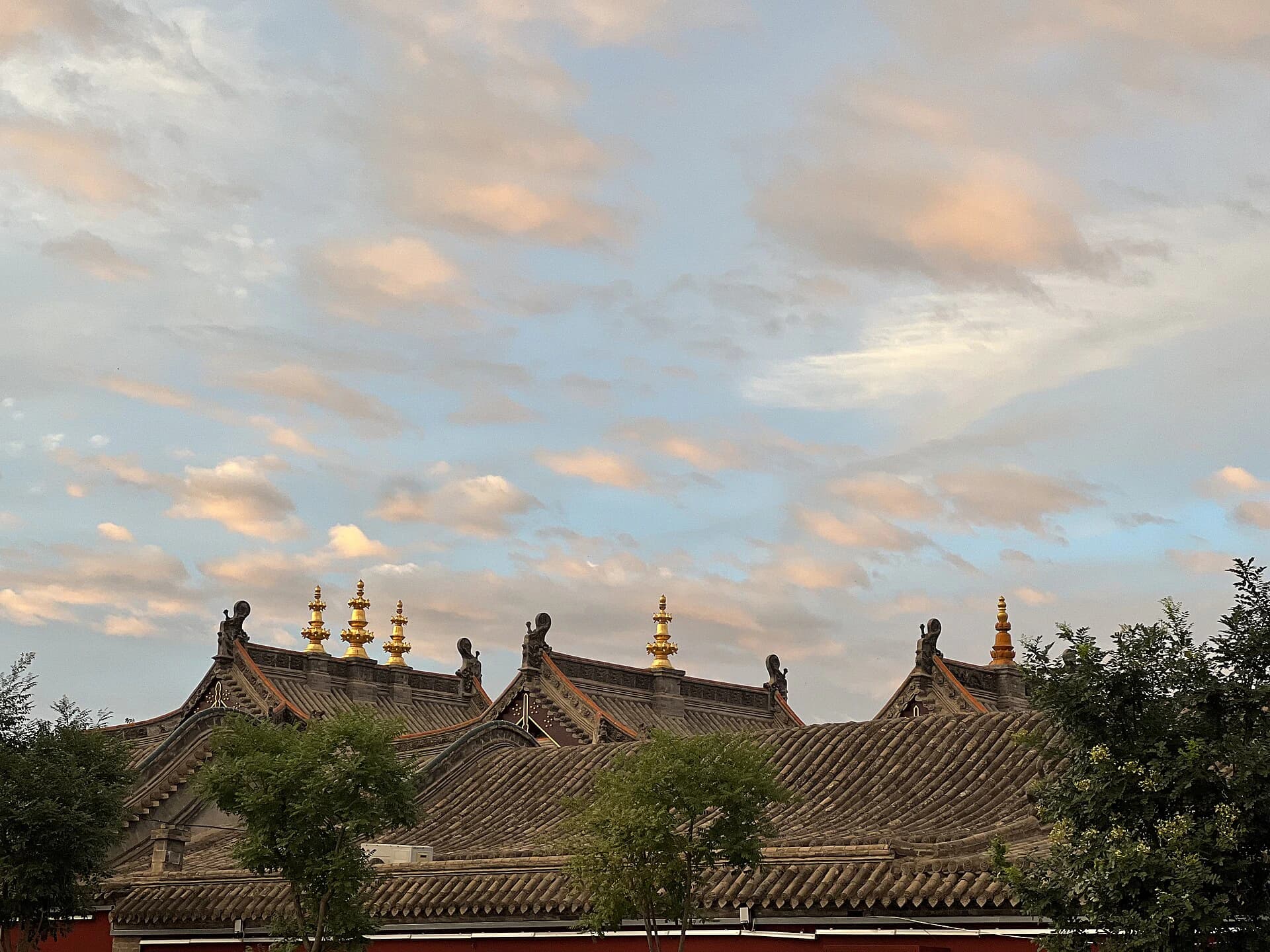
Dazhao is both a historic complex and an active religious setting. Its rooflines and courtyards deserve a slower look, but interior access and photography can vary by hall. Allow roughly one to two hours for a focused visit, longer if you prefer architecture and interpretation. Follow the route and signs at each shrine, make space for worshippers and ask before photographing people. The temple guide linked above explains how to pair it with the old city.
Where to stay and how to extend
Base near the old city if the temple cluster and food walks matter most; check room noise and the exact pickup point on narrow streets. Base near Hohhot East for a rail-led trip and easier museum access, accepting a transfer into the old quarter. Compare Hohhot hotels on Trip.com after checking the actual station and building.
For a grassland experience, ask for the named destination, door-to-door drive, return time, actual accommodation type and weather cancellation terms. A distant resort day should not erase the city museum or become a rushed afterthought. For the great open landscapes of the northeast, plan a separate Hulunbuir journey rather than assuming it is near Hohhot. Check train options when your onward city is fixed.
Plan your Hohhot Travel Guide: Dazhao, the New Inner Mongolia Museum and a City Route trip
Useful bookings related to this city guide
Make the five decisions
Plan Hohhot without adding random stops
Choose the trip shape first, then use live booking and transport information for your exact date.
How Many Days?
Two days allow an old-city temple-and-food walk and a separate visit to the relocated Inner Mongolia Museum.
Choose Your Route
- Day one: Dazhao and one complementary old-city site. Day two: the museum’s new Xinhua East Street building and a slower meal.
Book These First
- Check the museum’s current calendar, new-building location and passport entry; confirm temple access on festival dates.
Explore by Area
- Dazhao, Xilituzhao and the Five Pagoda Temple sit in the older city; the new museum is in Saihan District near Hohhot East.
Where to Go Next
A named grassland excursion needs a separate road-and-operator plan. Hulunbuir is a multi-day journey far from Hohhot.