Fenghuang Ancient Town: See the Town Before the Neon
Fenghuang Ancient Town (凤凰古城) is in western Hunan's Xiangxi region, not inside Zhangjiajie. Treat it as a one- or two-night extension rather than the last rushed stop of a Zhangjiajie park day. Its best contrast is simple: walk the old lanes, residences, walls and bridges in daylight, then return to the Tuojiang River after dark if you want the illuminated skyline.
The old-town streets are free to enter and walk. Former residences, exhibitions, boat trips and performances may require separate tickets or bundles. Ignore old guides that describe a compulsory ¥148 town entrance ticket; check the exact inclusions of any product before paying.
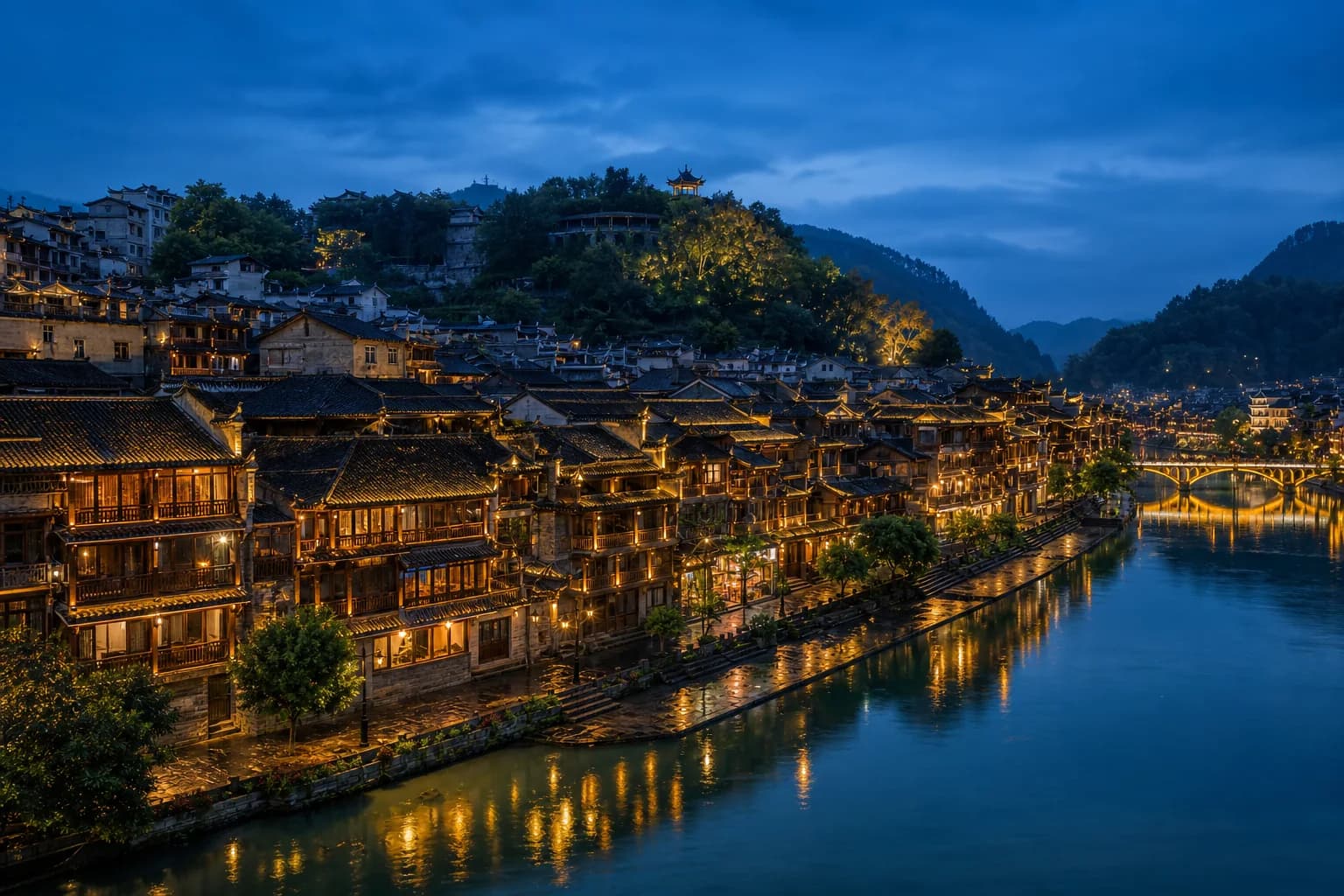
A Daylight Walk That Gives the Town a Story
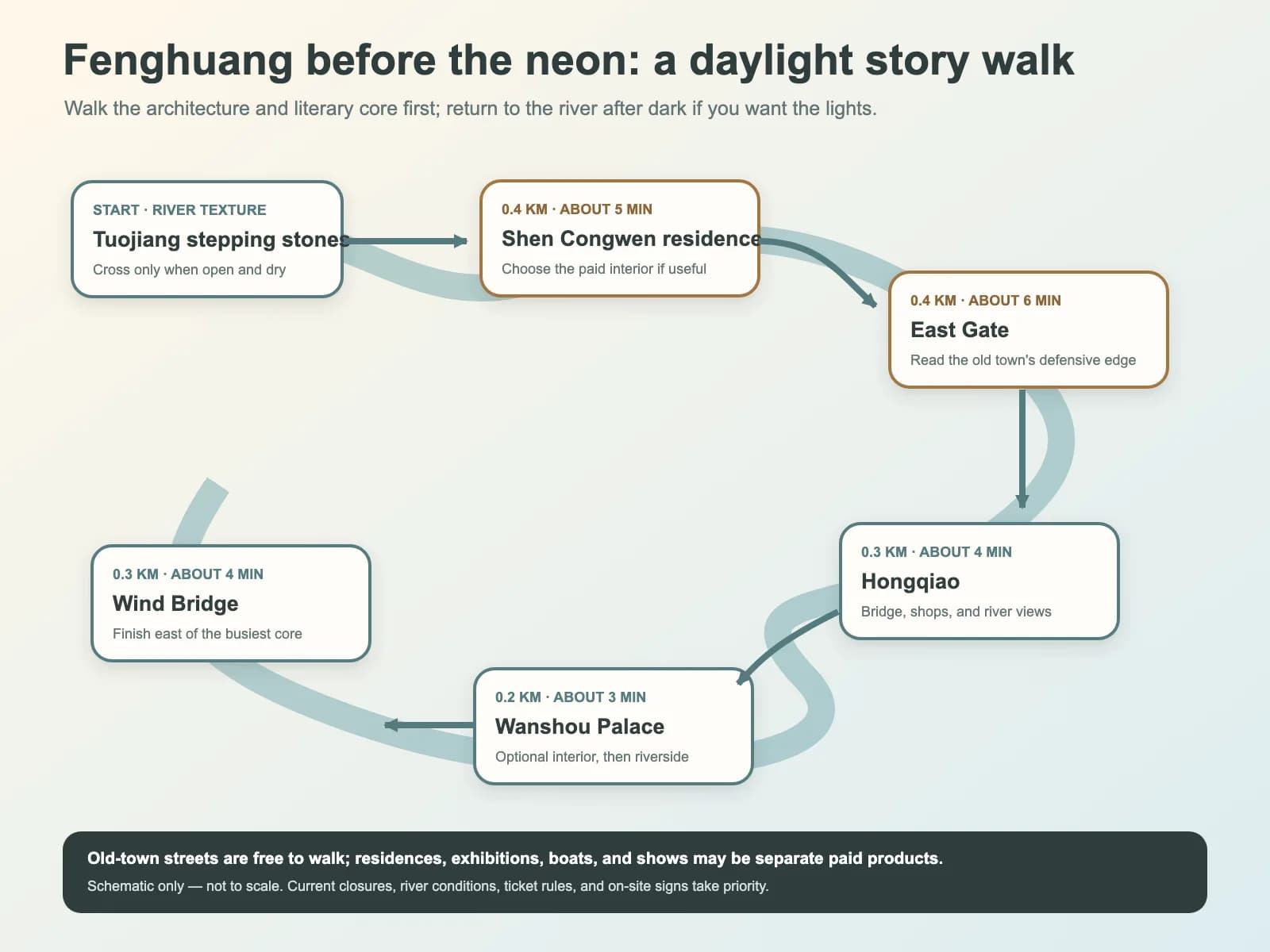
This is a sequence diagram, not a geographic map. Current closures, river conditions and on-site signs take priority.
- Tuojiang stepping stones: start early, before costume-photo traffic fills the riverbank. Cross only when the stones are open and dry; do not use them in high water.
- Shen Congwen's former residence: about 0.4 km and five minutes on foot by Amap. The compact courtyard gives literary context to the town. Buy the interior ticket only if the exhibition matters to you.
- East Gate: another 0.4 km and roughly six minutes. Read the gate and wall as parts of a defended town, not just a photo frame.
- Hongqiao: about 0.3 km and four minutes. Walk through the covered bridge, then step away from the busiest retail strip for clearer river views.
- Wanshou Palace: about 0.2 km and three minutes. The interior is optional; the riverside setting still works as part of the walk.
- Wind Bridge: about 0.3 km and four minutes. Finish east of the densest old-town core, then decide whether to retrace the riverbank at blue hour.
These are short Amap walking legs, but stone paving, stairs, crowds and photo queues make the real outing much longer. Allow three to five hours for a calm daylight visit, not the 22 minutes suggested by adding only the navigation times.
What Is Free and What May Be Paid
Walking the old streets, looking at the stilt-house riverfront and crossing public bridges does not require a town entrance ticket. Pay selectively for experiences that add a layer you actually want:
- Shen Congwen's former residence for literature and domestic architecture.
- A Tuojiang boat trip for a low river-level view of the stilt houses.
- Museums, halls or performances when the current exhibition or show is clearly described.
- A bundled product only after confirming every included venue and the valid time window.
Hours, boat boarding points and show schedules change. Use the official Fenghuang Ancient Town site and the notice at the actual ticket window as the final authority. You can also compare the live Trip.com Fenghuang Ancient Town page, but read the inclusions rather than assuming “Fenghuang ticket” means admission to the streets.
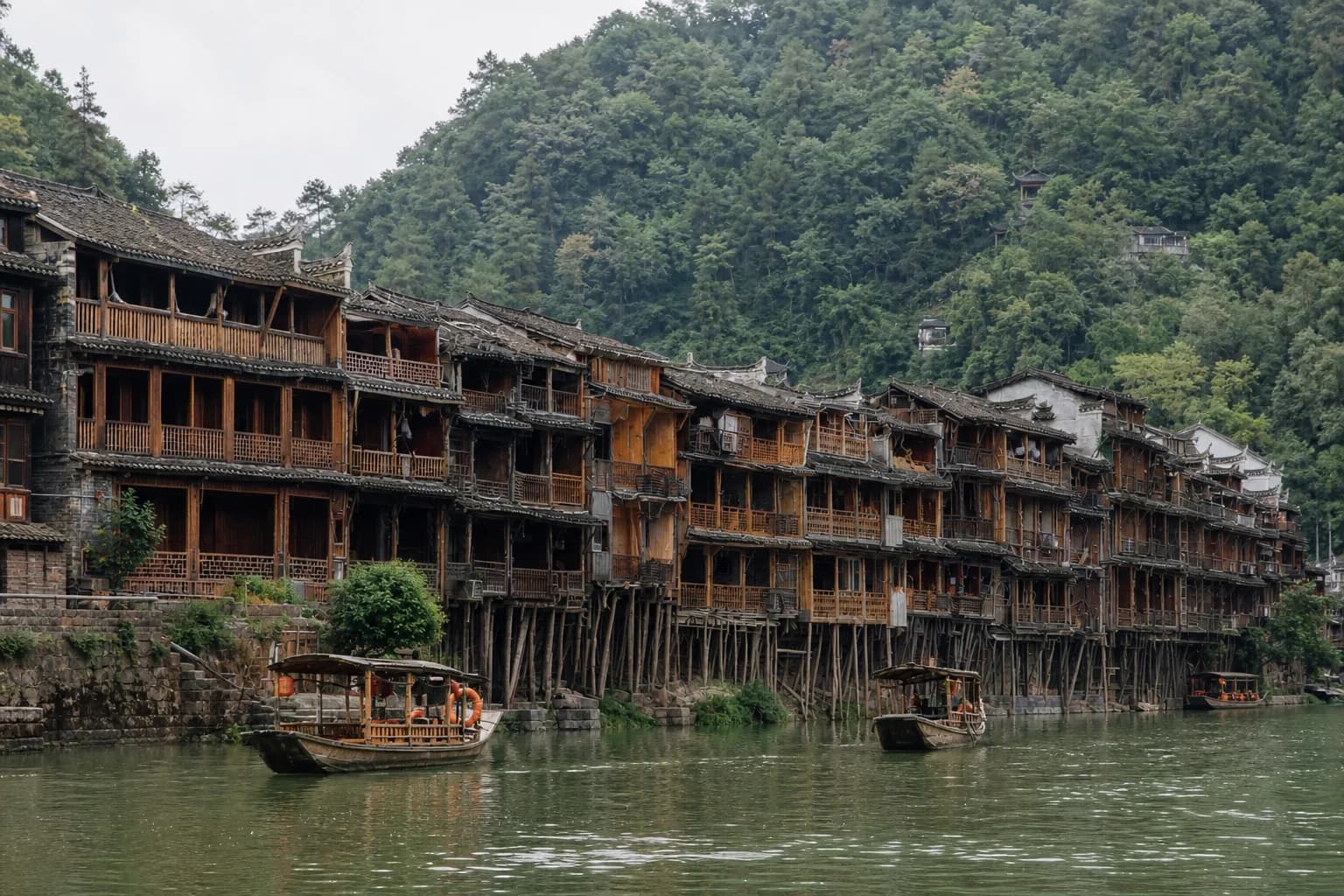
Three Details More Distinctive Than Another Night Photo
Shen Congwen and the river town
Shen Congwen wrote about western Hunan with unusual attention to river life, trades and human character. Visiting his former residence before the riverbank turns into an evening spectacle gives the town intellectual context. The goal is not to memorize a biography; it is to notice the modest courtyard scale, timber construction and relationship between lanes and water.
Diaojiaolou stilt-house architecture
The wooden riverside houses are adapted to narrow, sloped banks. Look across the river rather than only from directly below them: you can read the vertical supports, overhanging rooms, layered roofs and how commercial ground floors now sit within older building forms. Avoid entering residential lanes for photographs without permission.
Miao silverwork and batik
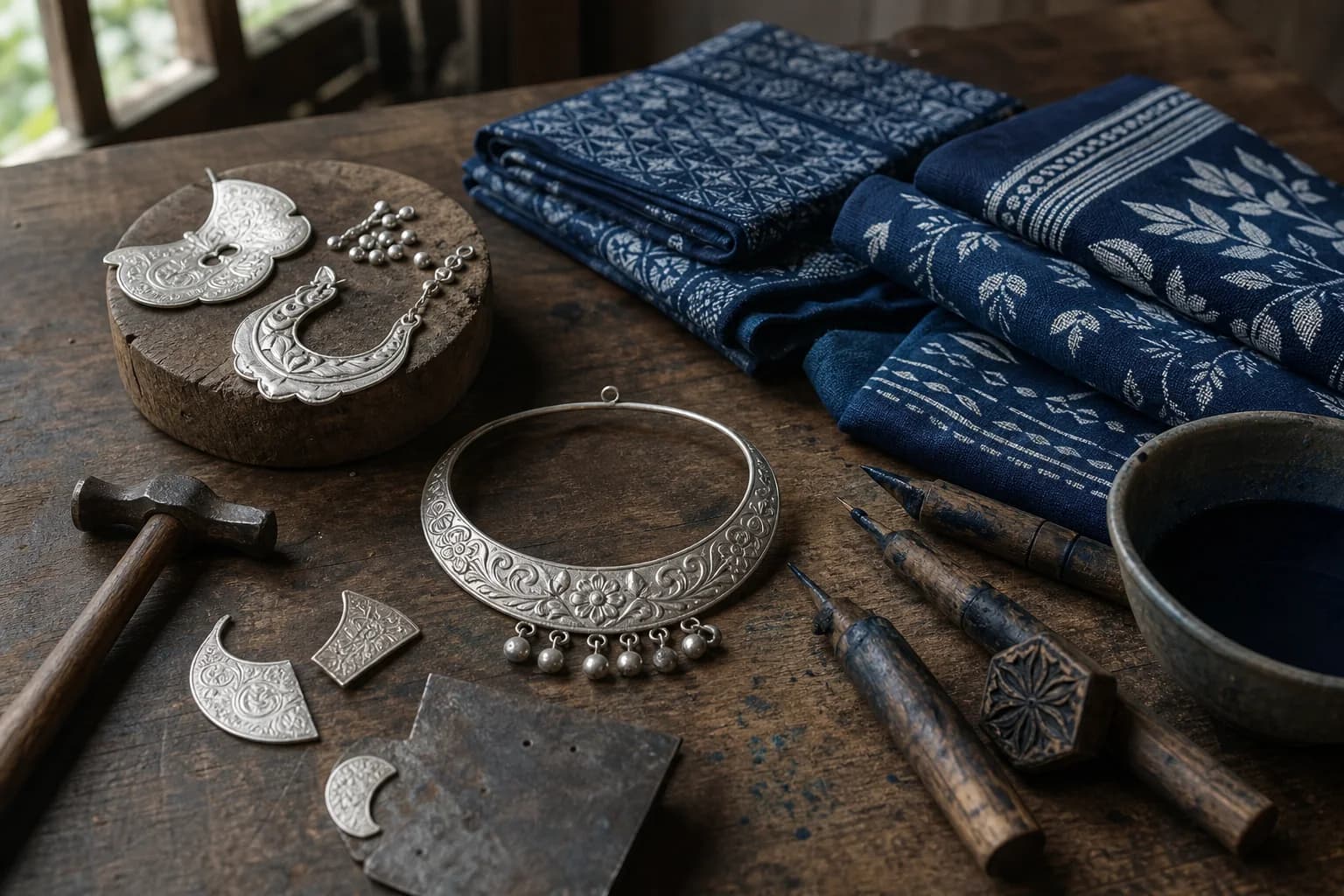
Silver ornaments and resist-dyed cloth are meaningful regional crafts, but “ethnic style” labels alone prove neither origin nor handwork. Ask what part was made locally, whether a silver item is solid, plated or alloyed, and whether the seller can explain the dyeing process. Buy the object for its workmanship, not a staged claim that every shop is a heritage studio.
What to Eat—and How to Choose It
Blood duck (血粑鸭) is the most place-specific full dish: duck cooked with blood-rice cakes into a dark, savory, often spicy braise. Ask about the portion before ordering; it is better shared than treated as a snack. Sour soup fish can be excellent, but confirm whether the fish is priced per dish or by weight and ask to see the total before cooking. For breakfast or a lighter meal, look for rice noodles away from the most theatrical riverfront strip.
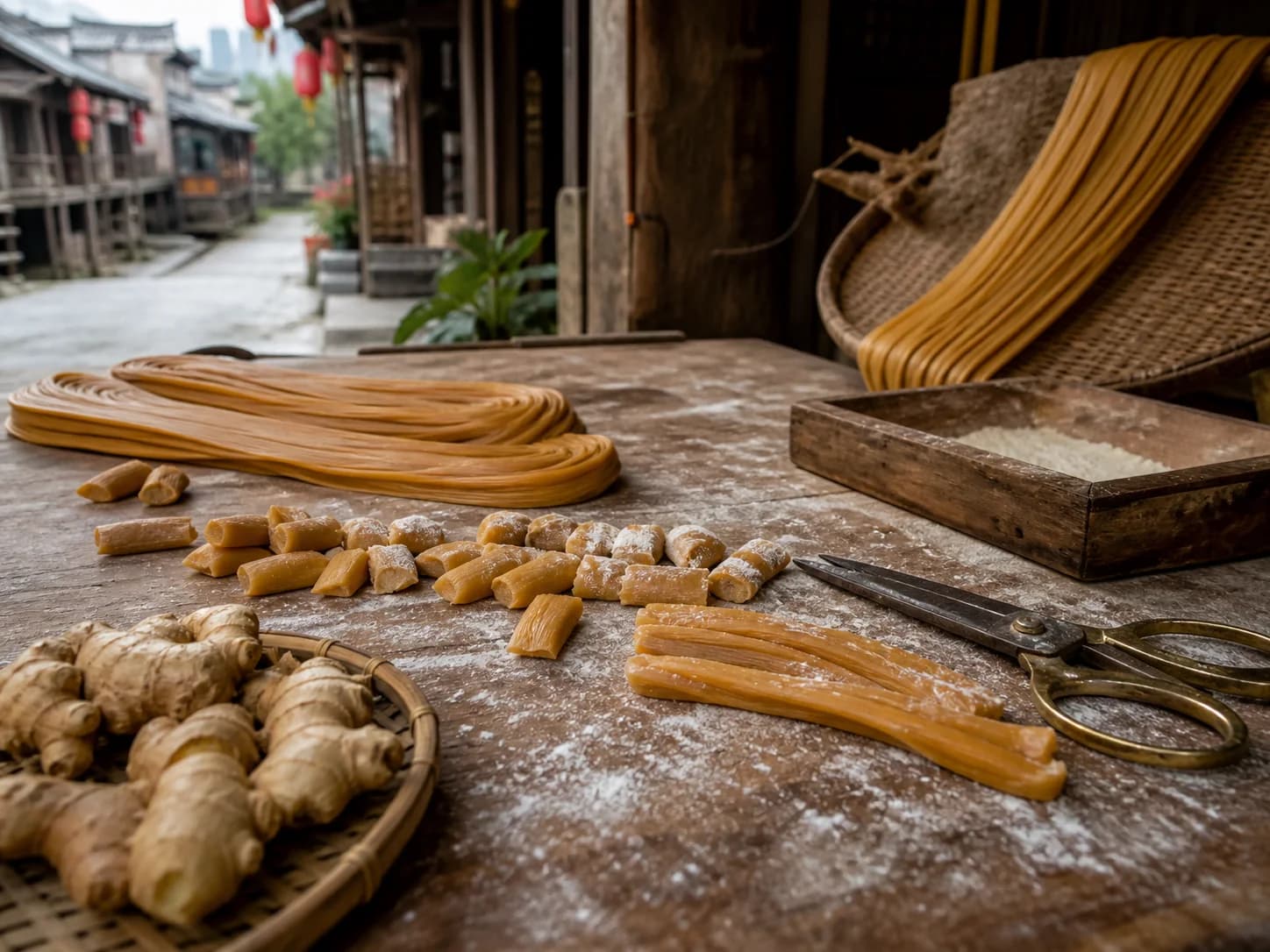
Ginger candy (姜糖) is the practical souvenir. A useful shop should let you compare texture and ginger intensity, show a clear packed-on date, and seal the product. Fresh candy is fragrant and pleasantly hot rather than merely sugary. Humidity softens it, so do not buy unpackaged pieces days before a long summer journey.
Where to Stay
Choose by sleep quality and luggage access, not by the broad label “ancient town”:
- Immediate Tuojiang riverfront: best for balcony views and blue-hour photography, but vulnerable to bar noise, performance sound, stairs and difficult luggage access. Confirm the exact room faces the river; a hotel name containing “river view” proves nothing.
- One or two lanes behind the river: the best compromise for most visitors—walkable, atmospheric and usually quieter. Ask whether there is an elevator and where a taxi can stop.
- North visitor-center / old-town edge: easiest for drivers and rolling luggage, with less atmosphere at the door but a calmer night.
In the wet season, ask about recent flood access, dampness and whether the route from drop-off to reception includes steep steps. Compare Fenghuang hotels on Trip.com on the map and verify the walking route with your luggage before booking.
Arriving by High-Speed Train
Fenghuang Ancient Town Railway Station is outside the old town. Amap currently measures the station to the north visitor center at about 8.0 km / 12 minutes by car, or roughly 7.7 km / 26 minutes on the Fenghuang high-speed-rail shuttle line with about 324 metres of access walking. These are planning estimates, not promises in traffic.
Maglev, shuttle and taxi arrangements can change, so check the same day rather than reproducing an old fixed timetable. For trains from Zhangjiajie West or another city, use live inventory and leave transfer slack. Check China train availability on Trip.com.
Tongren Fenghuang Airport is another option, but its road transfer should be planned against your actual arrival time. Do not rely on a generic “40-minute taxi” claim without checking current traffic and pickup rules.
A Realistic One-Night Plan
- Arrival day: check in, eat an early dinner, see the river illumination once, then leave the loudest strip.
- Next morning: start at the stepping stones, complete the daylight story walk, choose one paid interior, eat lunch and depart after retrieving luggage.
- Add a second night for craft shopping, slow photography or a weather buffer—not to repeat the same neon loop.
Mistakes to Avoid
- Treating Fenghuang as the final few hours of a Zhangjiajie park day.
- Paying a supposed mandatory town entrance fee without checking what is actually included.
- Booking a “river-view” room without confirming the room direction, noise and stair access.
- Spending only the night in costume-photo crowds and missing the daylight architecture.
- Copying an old maglev, boat or show timetable into a fixed connection.