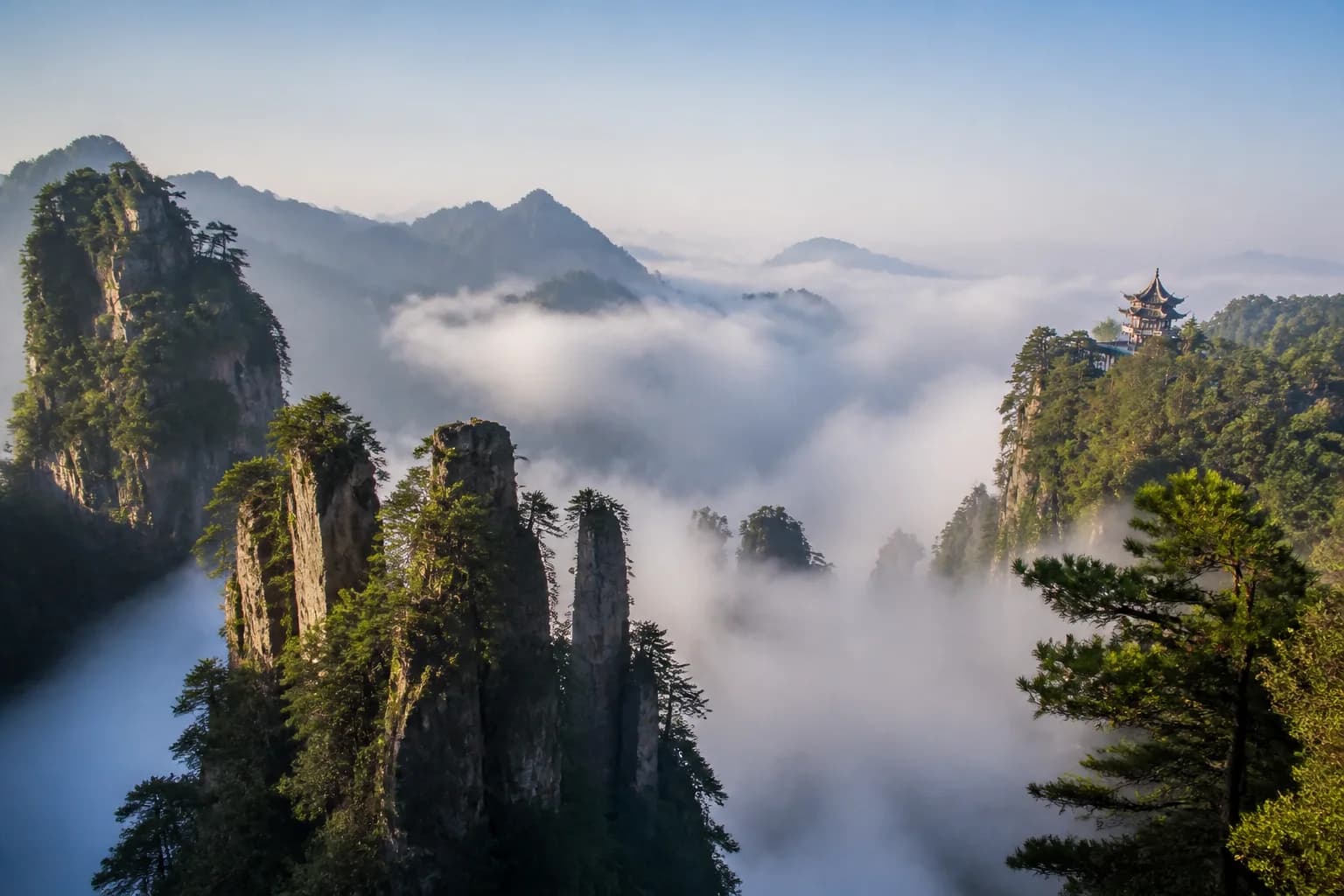
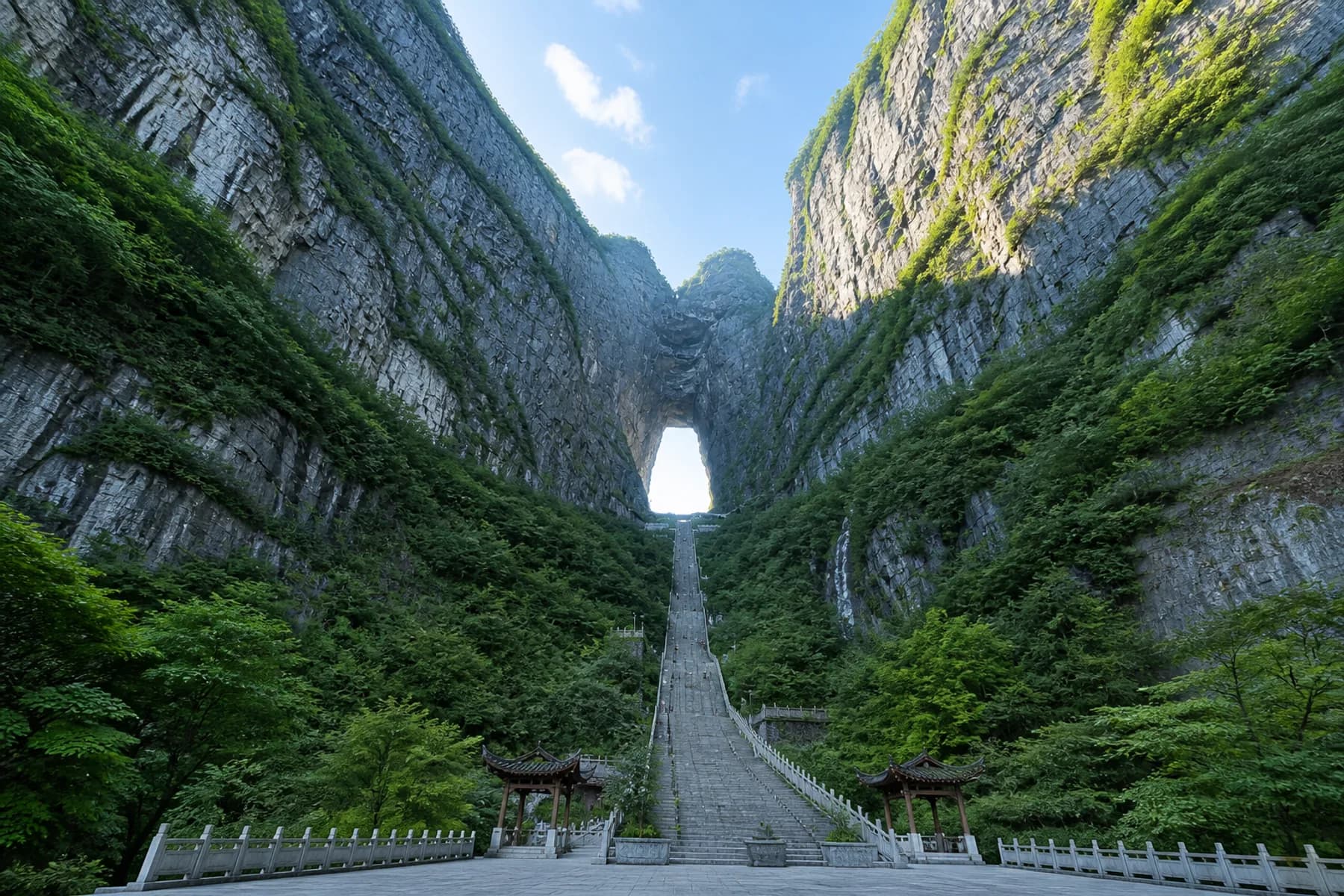
Bailong Elevator Zhangjiajie
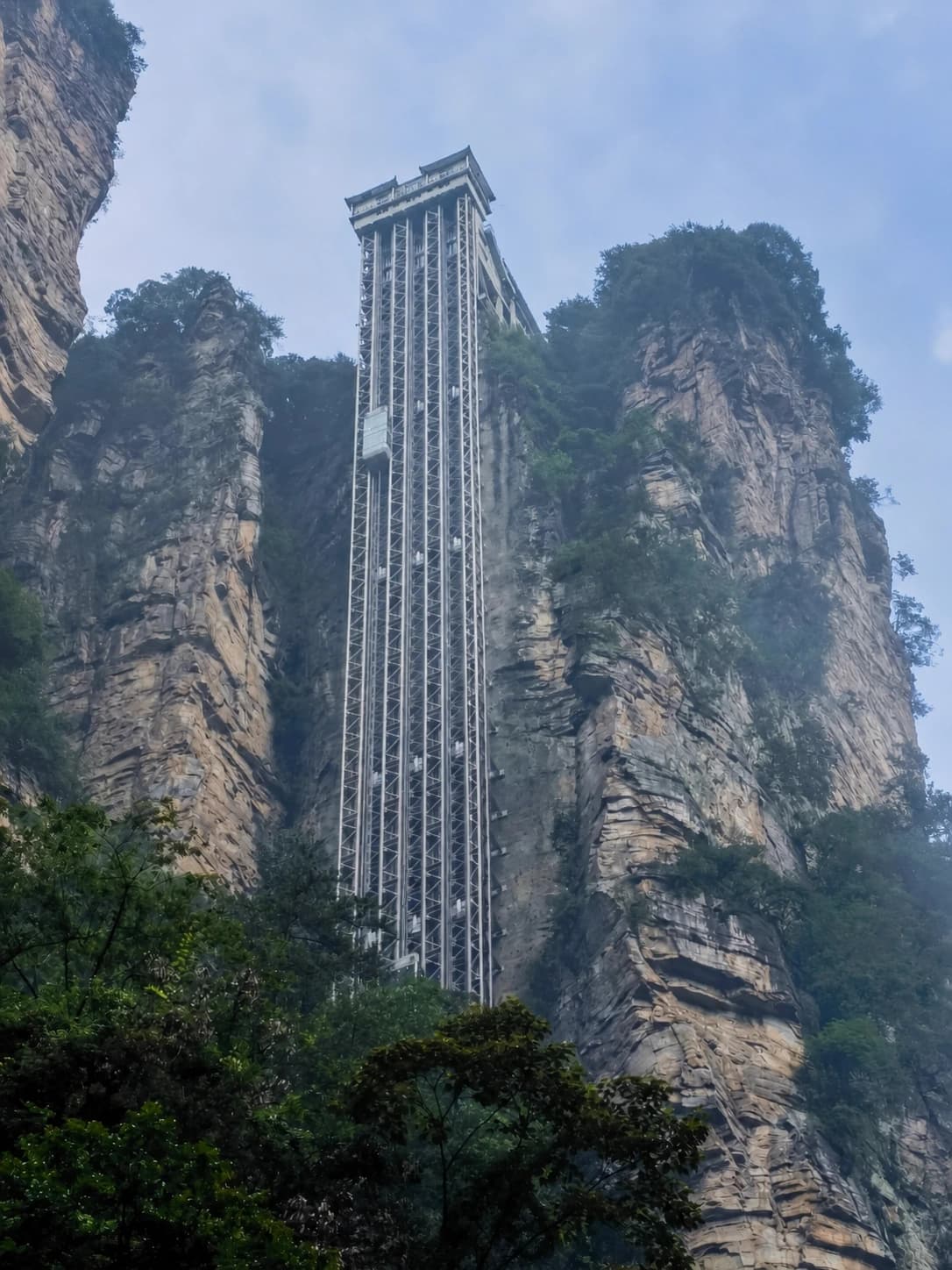
The Bailong Elevator (百龙天梯) joins the valley-level shuttle network with the Yuanjiajie plateau inside Wulingyuan. That position matters more than the short cabin ride. Use it to make a one-way mountain route coherent; do not travel across the park simply to ride up and immediately ride down.
Guinness World Records verifies a 326-metre operating height and the record for the tallest outdoor elevator. Current Chinese official reporting describes a 335-metre vertical difference, with 154 metres inside the mountain and a 172-metre cliff-side steel structure, served by three double-deck elevators. Cabin speed, journey time and hourly capacity are widely repeated with conflicting figures, so this guide does not use them for planning.
Where It Fits in a Three-Day Plan
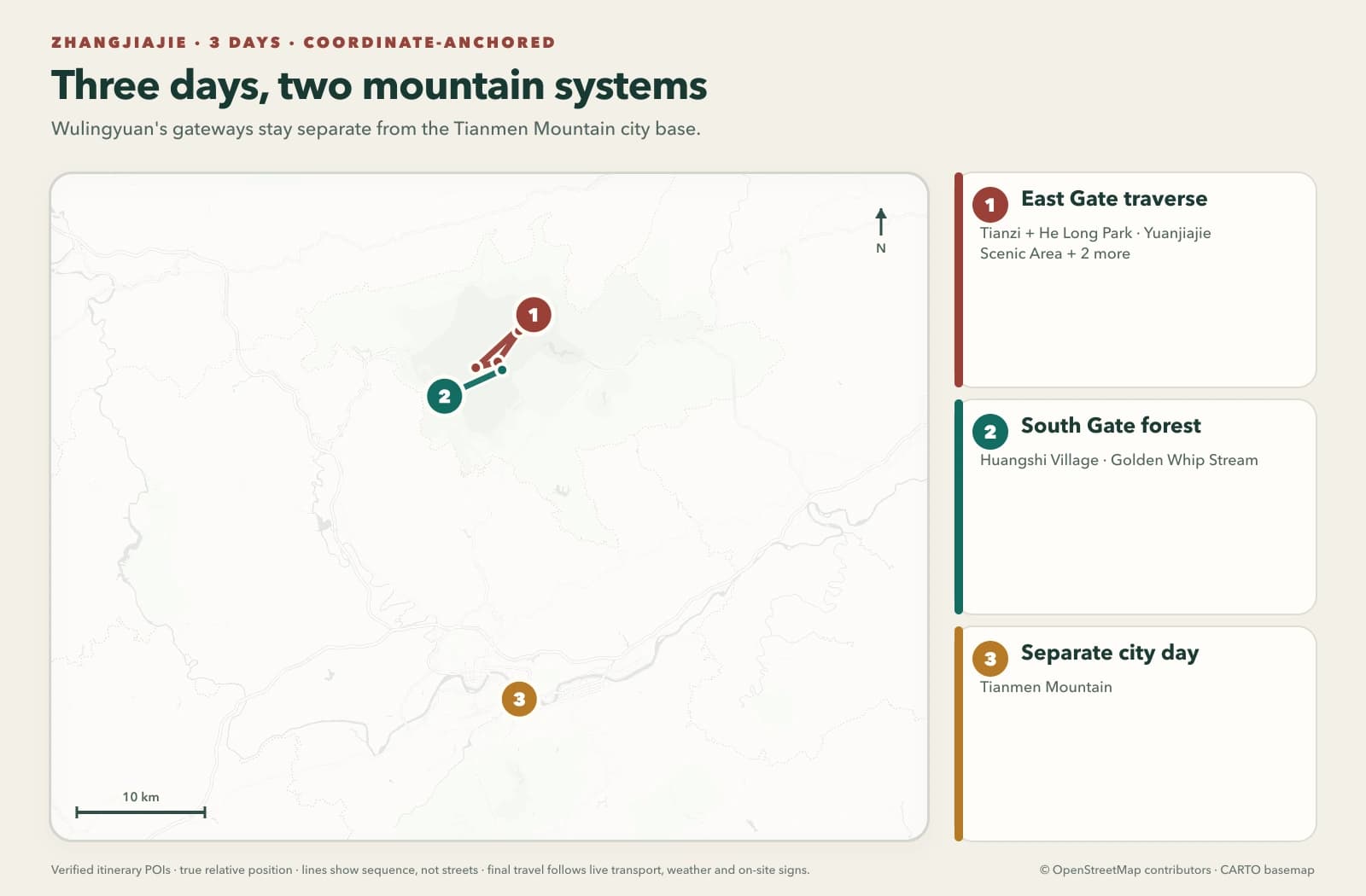
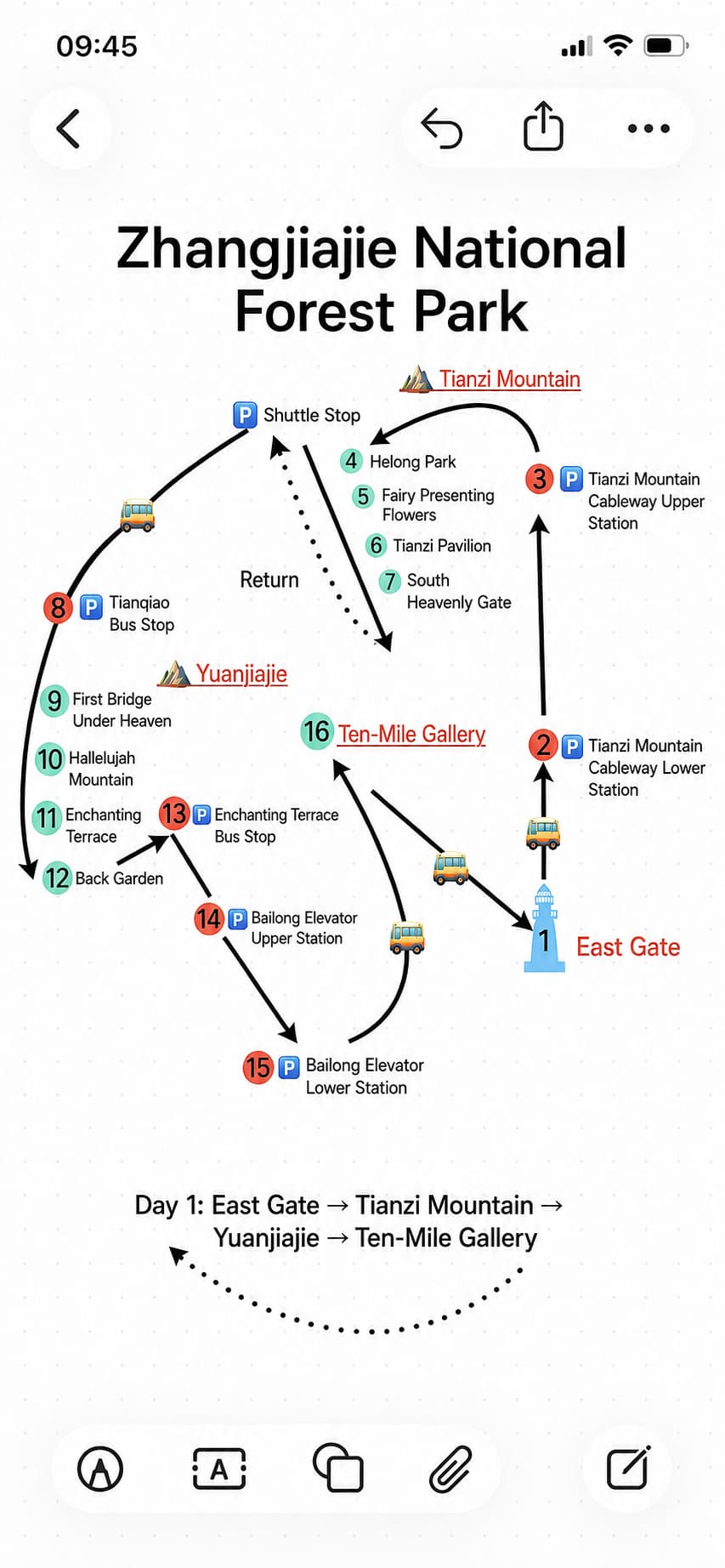
The diagram is a sequence guide, not a scale map. Wulingyuan's scenic shuttles, cableways, gates and closures can change; the entrance and route printed on your current ticket control the day.
Best first-time use: ride down
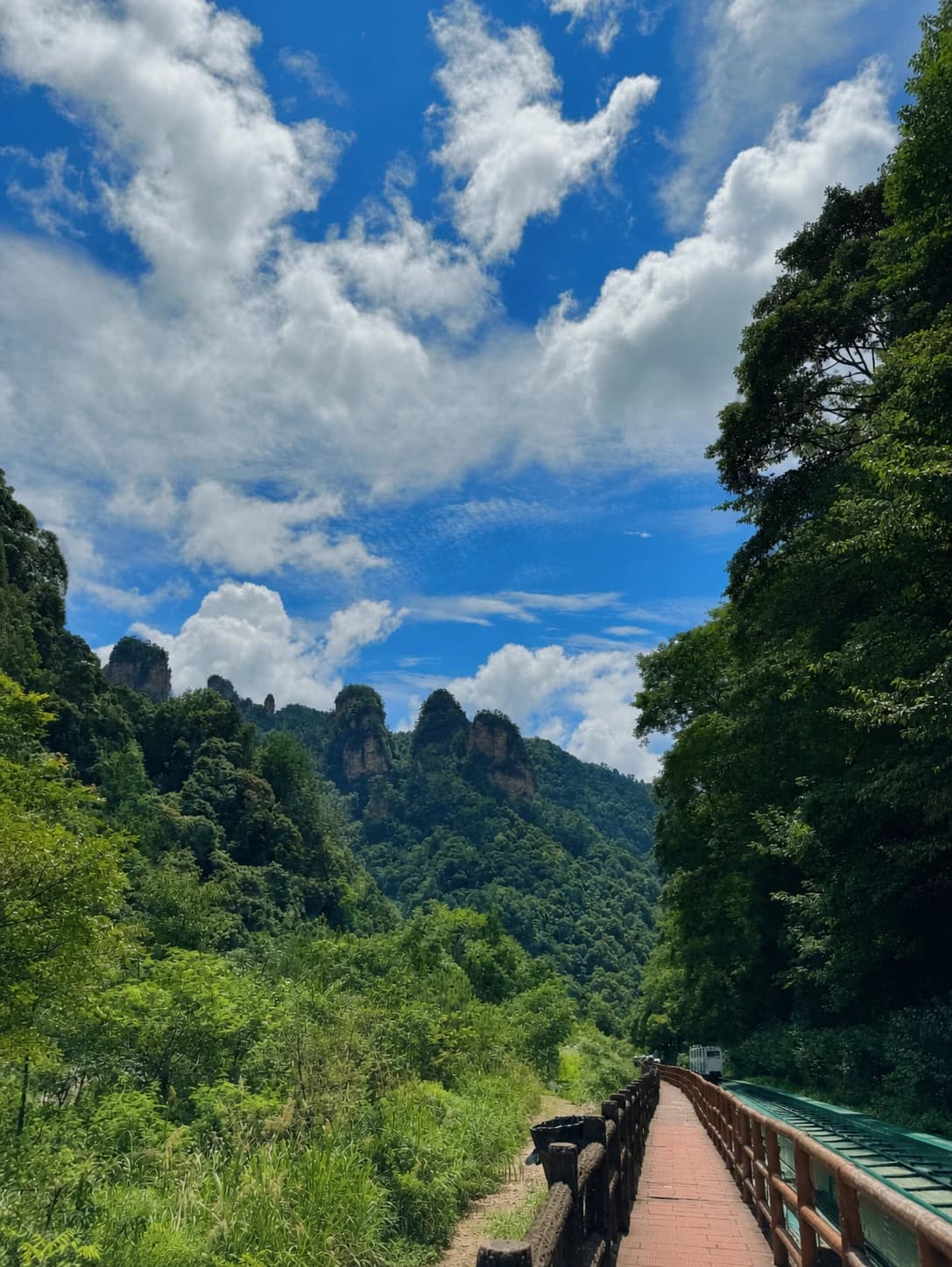
For a clear upper-to-lower traverse, enter at Wulingyuan East Gate, take the scenic shuttle to the lower Tianzi cableway, ride up, visit Tianzi Mountain and He Long Park, continue by upper shuttle to Yuanjiajie, then use the Bailong Elevator down. From the lower station, connect by the current shuttle arrangement toward Ten-Mile Gallery or the East Gate.
This direction works because the elevator solves a real elevation change after the plateau viewpoints. It also avoids pretending that Yuanjiajie, Golden Whip Stream and Ten-Mile Gallery are adjacent urban stops.
When riding up makes sense
Ride up when your booked route deliberately starts from the lower elevator side and Yuanjiajie is the first major plateau area. This can be efficient early, but it is sensitive to morning queues. Do not promise yourself a precise arrival time at the top; ticket checks, shuttle waits and cabin queues matter more than the brief vertical trip.
When to skip it
Skip the elevator if heights or crowded glass cabins cause distress, if severe weather or maintenance closes it, or if your chosen loop already uses a different cableway efficiently. A closure does not mean the whole national park is closed; ask staff which signed shuttle-and-cableway alternative matches your gate and ticket.
What the Ride Is Actually Like
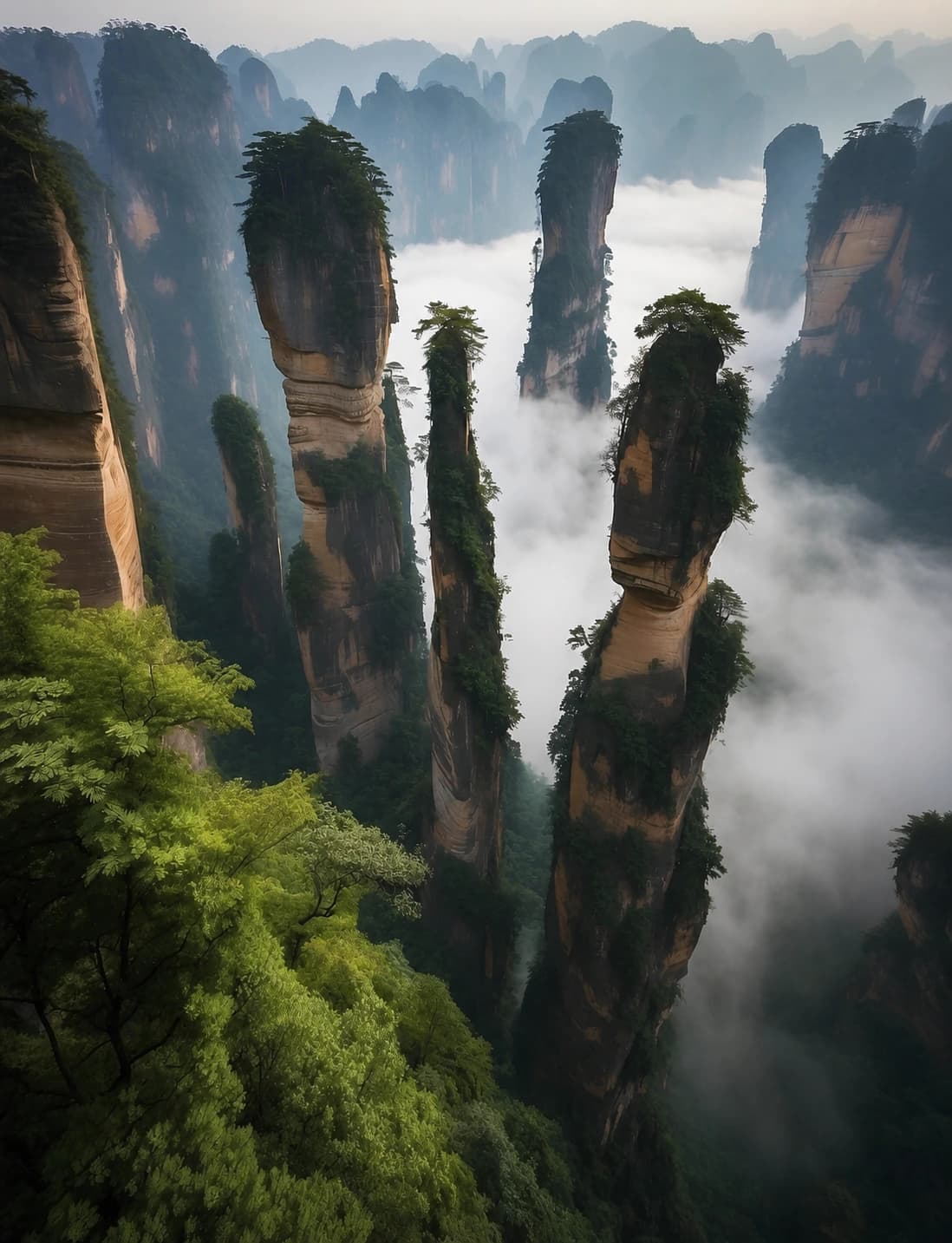
Part of the journey is inside the mountain, so the view is not a continuous 326-metre glass panorama. When the cabin emerges beside the cliff, the sandstone pillars appear quickly. Your view depends on where you stand, mist, reflections and crowding; treat any clear cabin glimpse as a bonus rather than the day's main scenic reward.
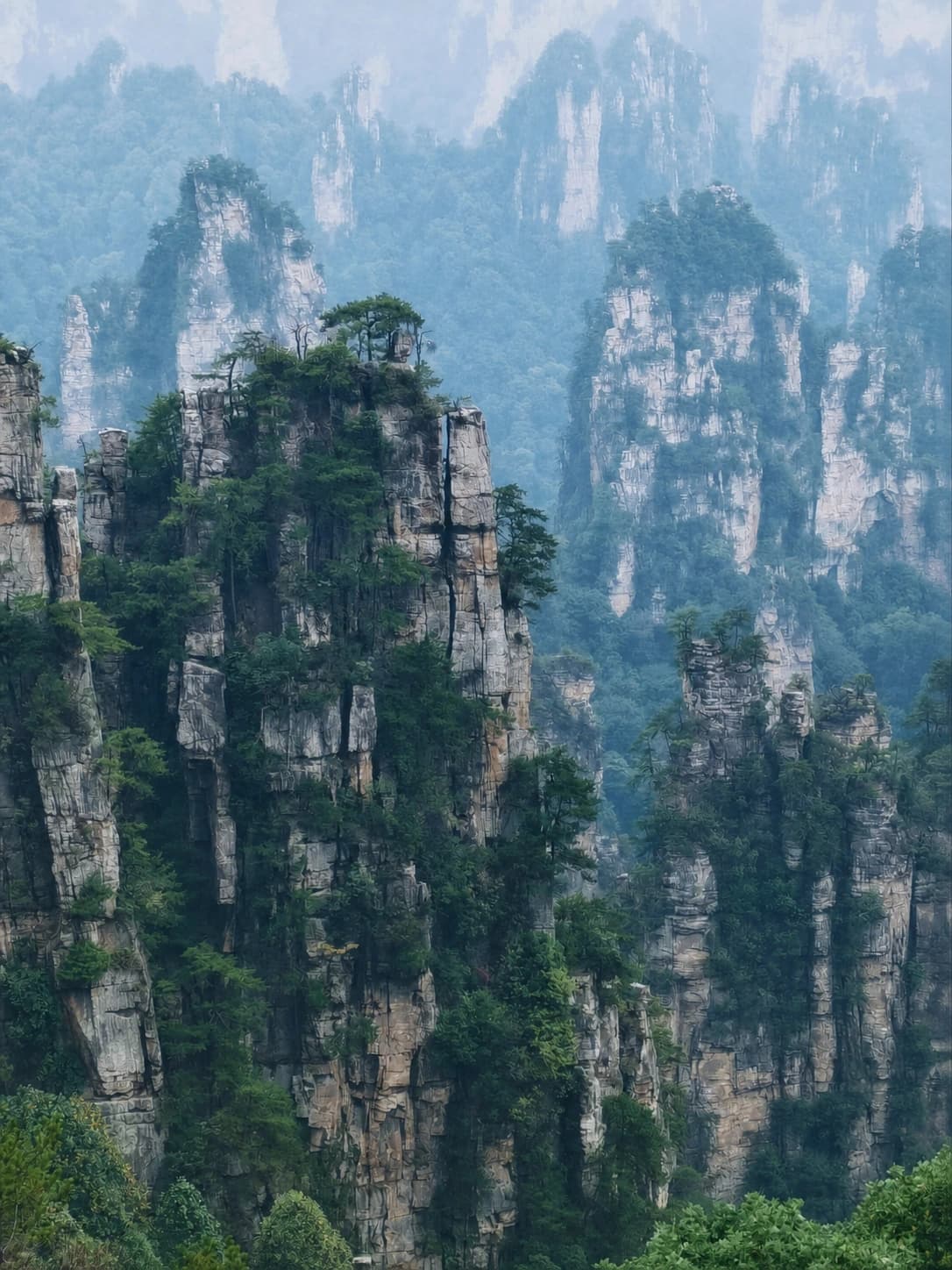
People uncomfortable with heights can stand away from the glass. The larger challenge for many visitors is crowd density and the rapid change in pressure, not an exposed outdoor platform. Follow staff instructions, let passengers exit first and keep bags compact.
Tickets, Queues and Current Operations
The elevator is normally a separate paid transport product in addition to Wulingyuan admission. Prices, opening windows and packages can change by season or sales channel, so an old ¥65 screenshot is not a booking rule. Confirm:
- one-way versus return inclusion;
- direction and usable station;
- required passport or booking document;
- operating window on your date;
- refund or rerouting rules for weather and maintenance.
Check current park notices before leaving and re-check on arrival. The Wulingyuan ticket inquiry numbers currently published by Trip.com are +86-744-5712189, +86-19374446879 and +86-744-5518000; availability and English support are not guaranteed. Compare the current Trip.com Bailong Elevator page and Wulingyuan / forest-park listing, but let the official ticket and on-site notice override marketplace summaries.
Queue strategy is simple: arrive early, keep a buffer before the final shuttle, and never design a day that fails if the elevator adds an hour. On Chinese public holidays, reduce the number of plateau viewpoints instead of sprinting between queues.
Food: Save the Regional Meal for After the Park
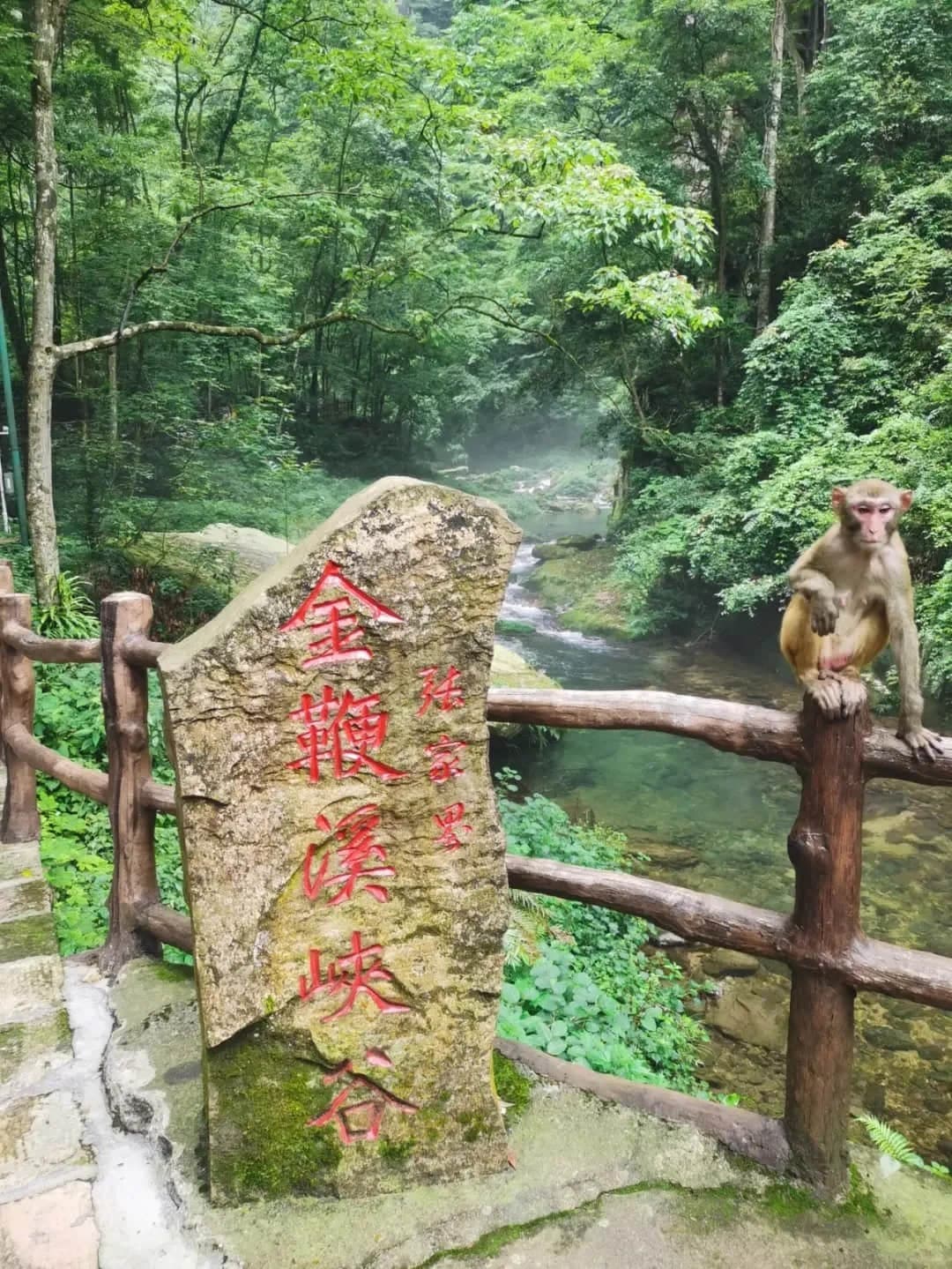
Inside the scenic area, food is primarily fuel. Carry water and a compact snack, and use clearly priced outlets close to your actual route rather than making a long detour for a viral stall. Do not feed macaques or carry visible loose food around them.
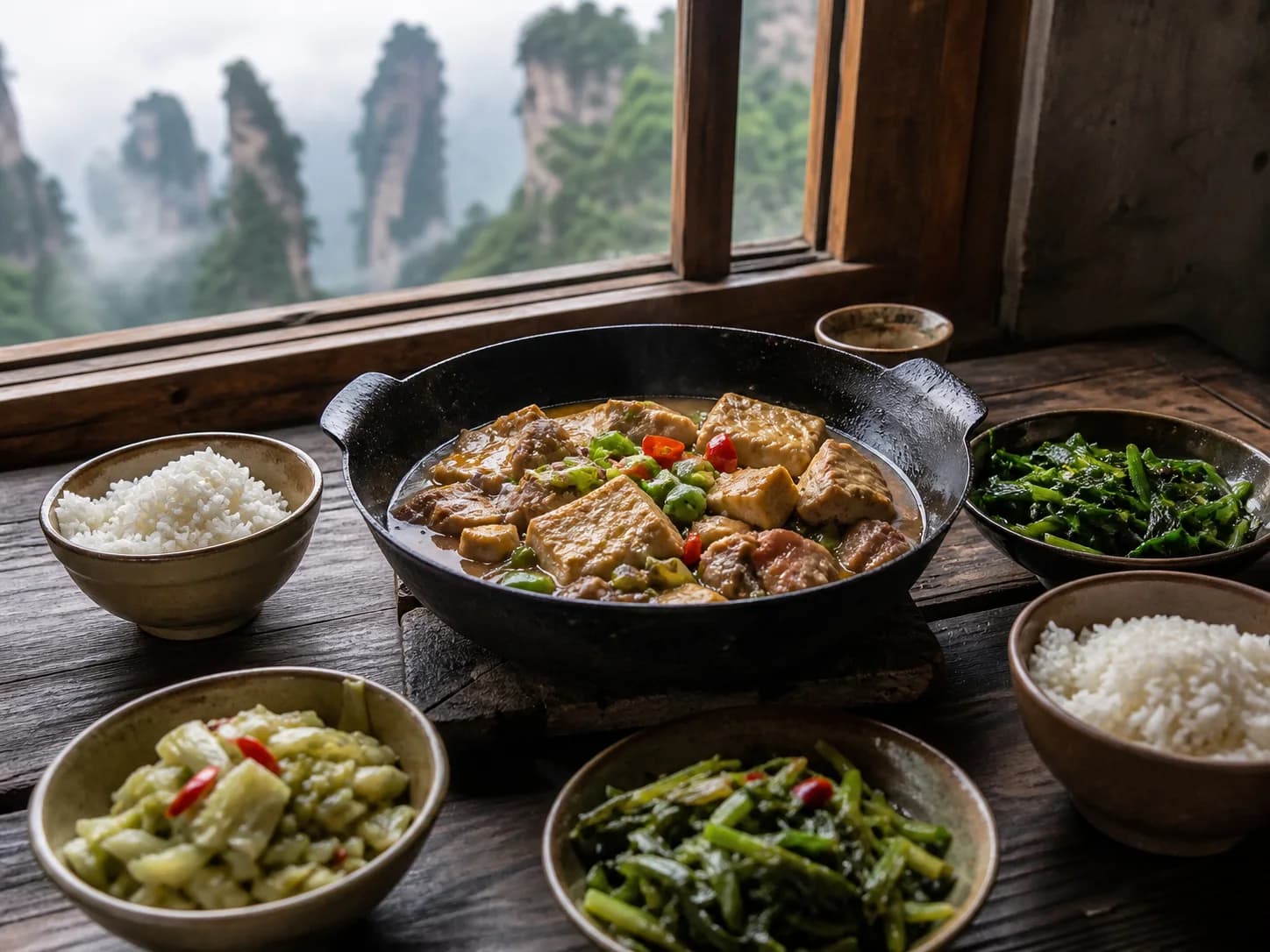
After exiting at Wulingyuan, try sanxiaguo (三下锅), a Zhangjiajie/Tujia-style mixed braise commonly combining several ingredients such as pork, tofu and vegetables. Versions vary widely. Ask whether it is dry or soupy, how spicy it is, which three main ingredients are included and whether the stated price is for the whole pot.
Where to Stay
Stay near Wulingyuan East Gate for park days: it minimizes the morning transfer and keeps restaurants and shops within reach after you exit. Verify the walking distance to the gate rather than trusting “Wulingyuan” in a hotel name.
Stay in Zhangjiajie city near the Tianmen cableway station for a Tianmen Mountain day or a late railway/airport connection. The city and Wulingyuan are separate bases; moving once can be sensible when the itinerary changes from Wulingyuan to Tianmen. Compare Zhangjiajie hotels on Trip.com using the exact gate or cableway station on the map.
Five Route Errors to Avoid
- Riding up and down only to collect the elevator name.
- Treating Yuanjiajie and Golden Whip Stream as the same map location or a short street crossing.
- Using a road-navigation time for travel inside the scenic shuttle network.
- Copying old hours, prices, speed or queue estimates into a fixed plan.
- Scheduling Fenghuang or Furong after a full Wulingyuan day; both deserve separate extension time.
The Bailong Elevator is impressive engineering, but its highest value is practical: it turns a complicated vertical park into a legible one-way route.