Luoyang Ancient Tombs Museum
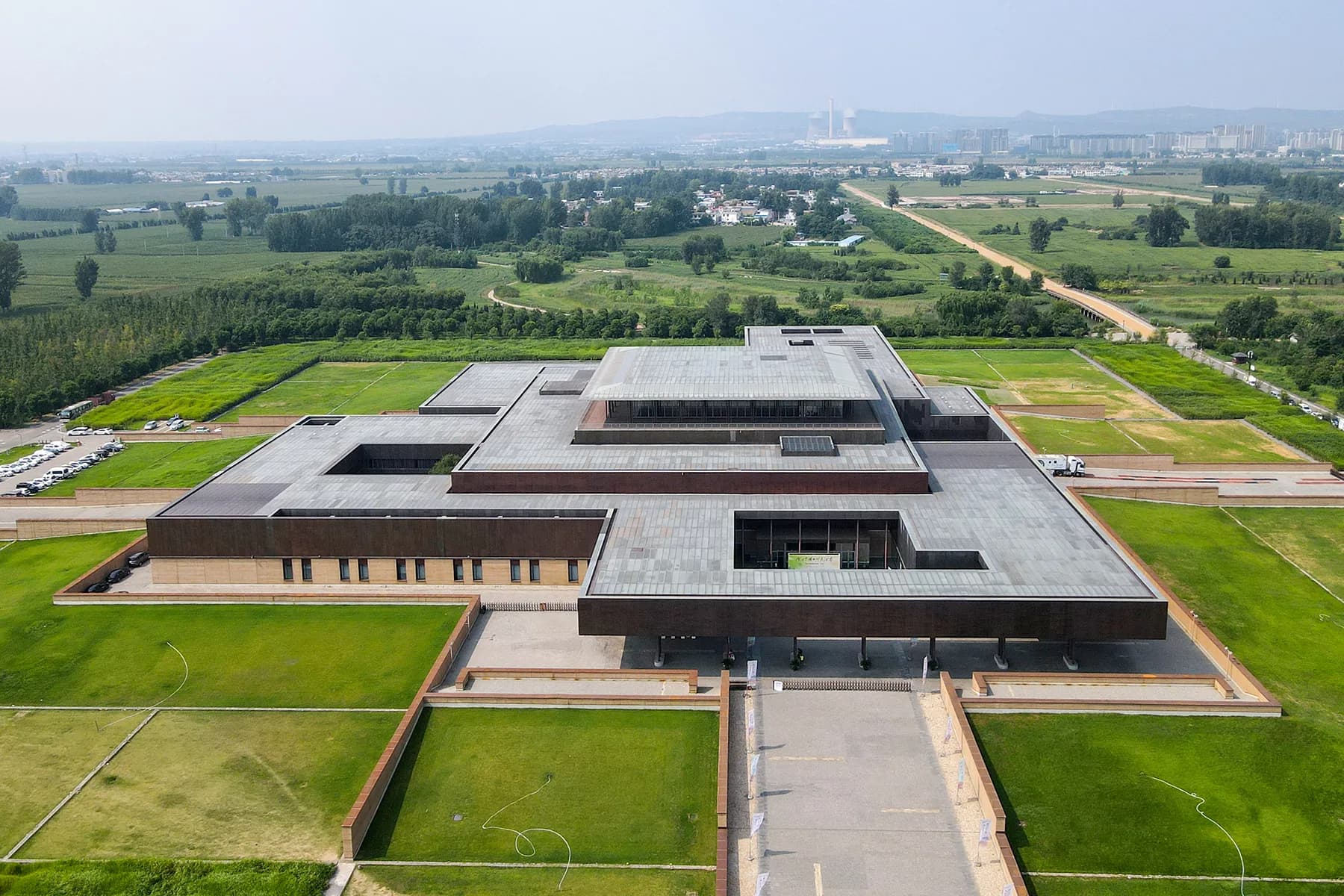
Luoyang Ancient Tombs Museum is a rare spatial introduction to burial culture. Its curated sequence of tomb chambers, architectural forms, murals and funerary interpretation lets you compare how different periods imagined status, ritual and the afterlife.
The museum presents original, relocated and reconstructed tomb spaces for comparison. Its provenance labels are part of the experience: they show which architectural and painted elements survive and how each chamber has been presented.
Why visit before Luoyang Museum
Recent visitors repeatedly found that tomb layout and burial context made later objects at Luoyang Museum easier to understand. This creates two sensible plans:
- Context-first full day: Ancient Tombs in the first major block, a real meal and transfer break, then selected galleries at Luoyang Museum.
- Two slower days: use one museum per day if you read carefully, travel with children or need interpretation and rest time.
Give either venue a substantial block. One family report spent roughly two and a half hours in each, while a slower visitor needed much longer; these are useful pacing examples rather than official durations.
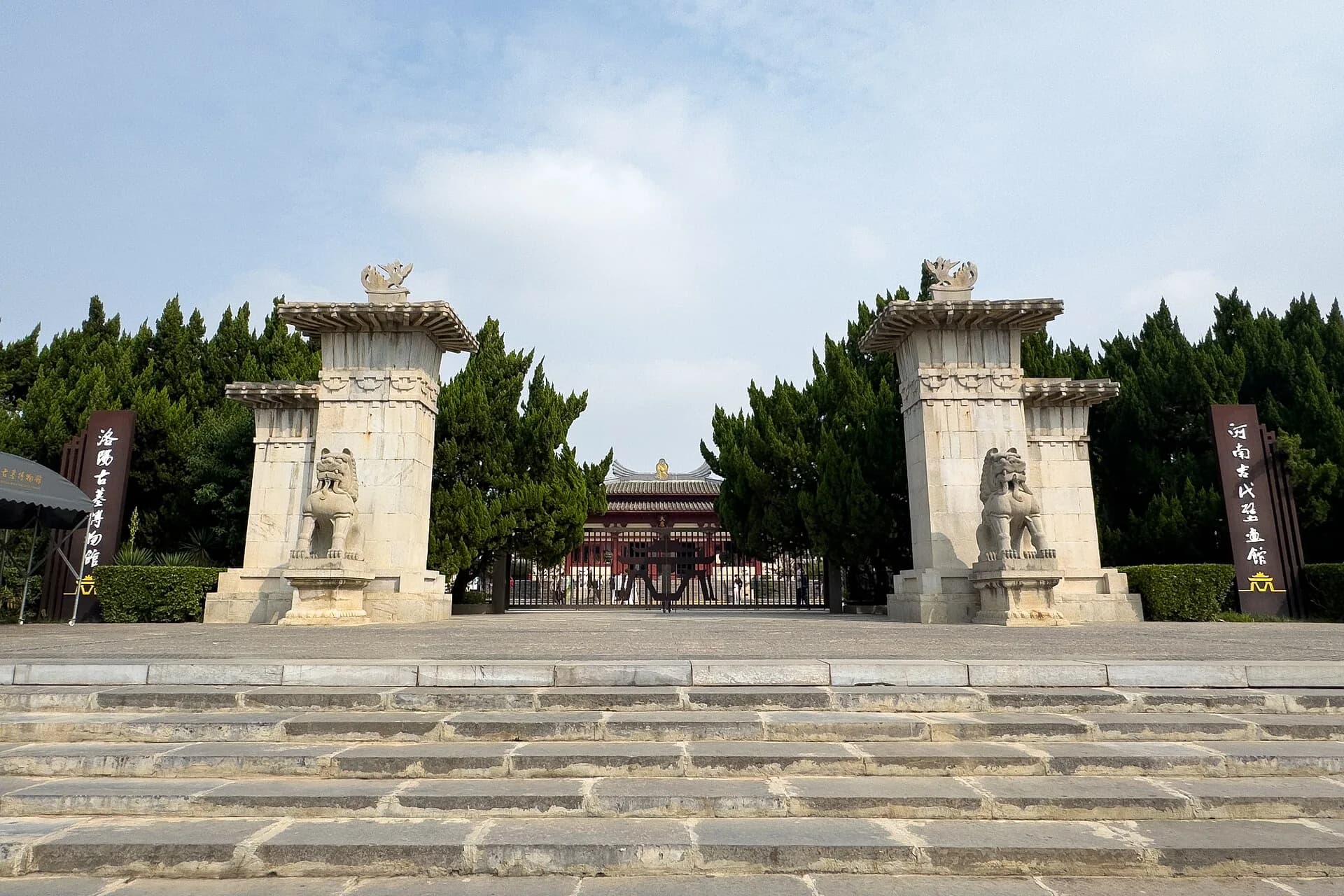
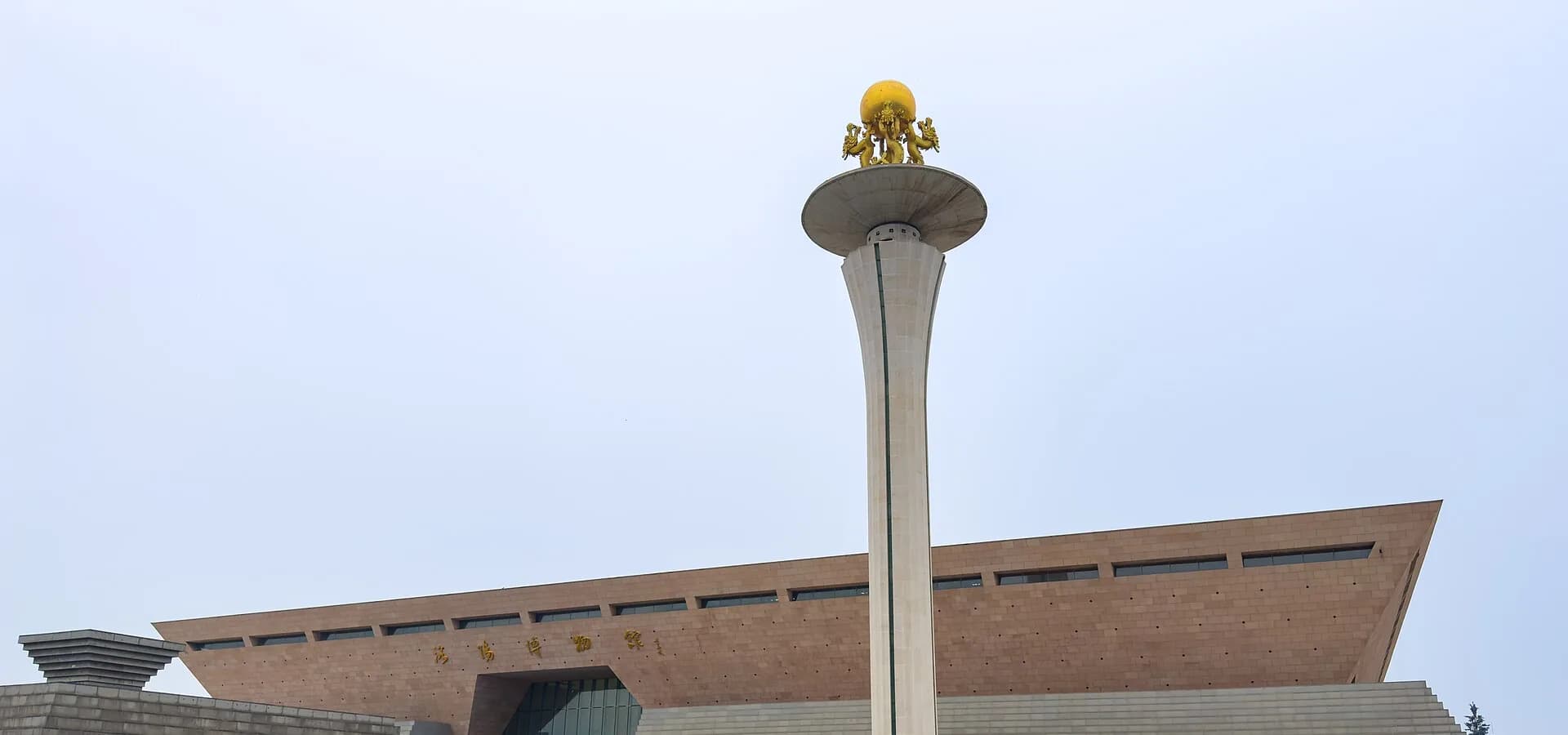
Photo: Tim Wu · Source · CC BY-SA 4.0
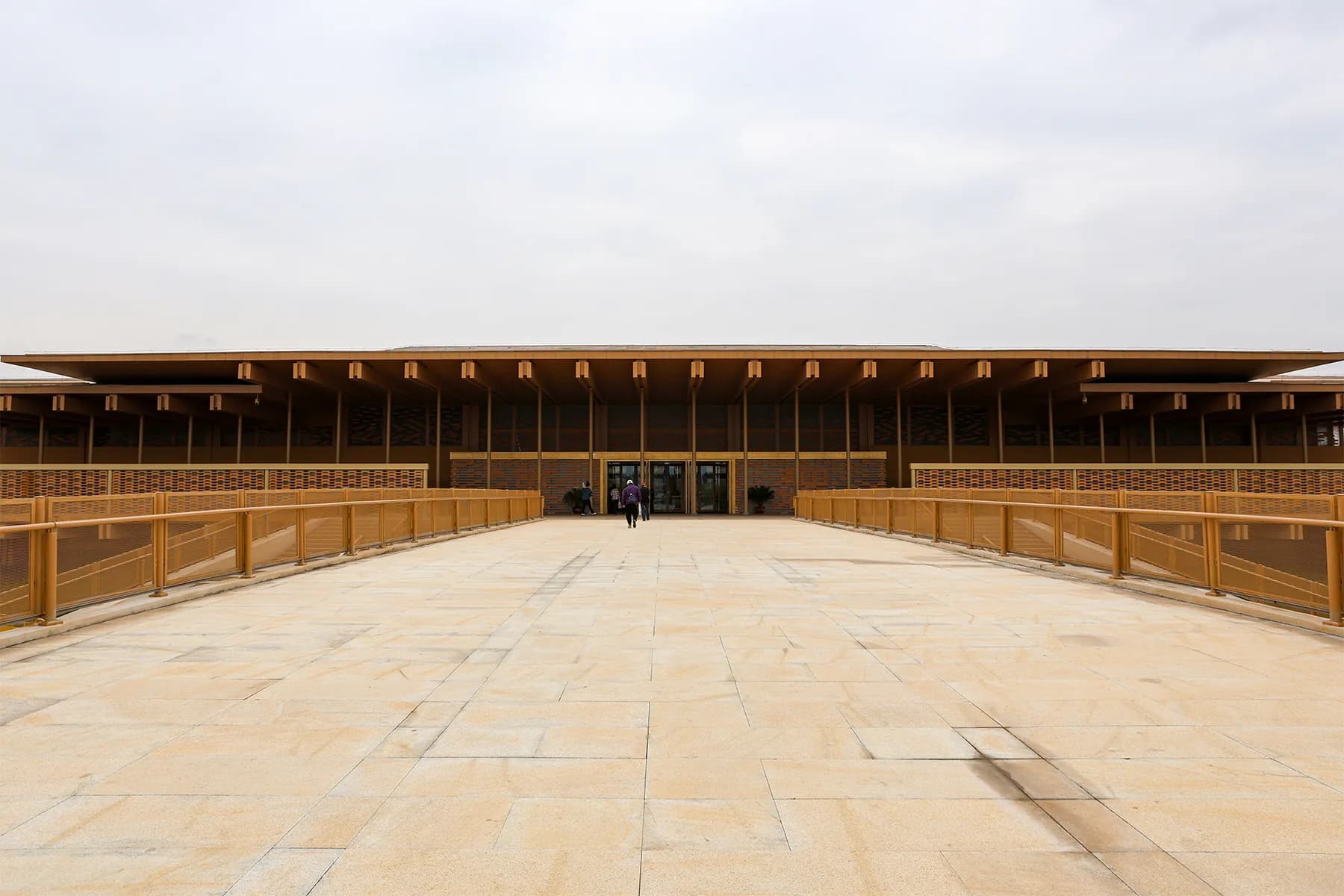
The image identifies the museum approach; current signs lead to the day's gate, accessible route, galleries and reservation check.
Reserve through the museum
The official visitor guide currently requires advance real-name reservation and explicitly provides a passport route: reserve with the document, bring the original passport and show the order QR code to staff. Its normal checked baseline is Tuesday through Sunday, 09:00–17:00, with last entry at 16:30; holiday changes override it.
Recheck the live guide before visiting. A standard calendar and an interpretation booking remain separate from a confirmed official admission slot.
A context-first route
Start with the overview that explains tomb chronology and construction. In each chamber, ask three questions:
- Is this space original, relocated or reconstructed?
- Which details are architectural, painted or reproduced for interpretation?
- What belief, status or ritual practice does the arrangement support?
Then choose a few murals or chambers for close reading rather than racing through every period. Low light and conservation barriers shape the atmosphere, while the live gallery plan determines which murals are available.
Compare spaces before adding another section
A recent visitor describes moving from the entrance overview into the chronological tomb displays, then the mural gallery and the Jingling mausoleum area. Use that as a choice of experiences, not a promise that every chamber is accessible. In the tomb displays, compare the room shape and passage arrangement of two periods. In the mural section, choose one scene and read what its figures and setting tell you about burial beliefs.
Add Jingling only after confirming access and the physical route with staff. If time is short or enclosed spaces are uncomfortable, give the overview and selected displays more attention rather than forcing every underground section. The “90-minute” route in one post is a personal pace, not a target you need to meet.
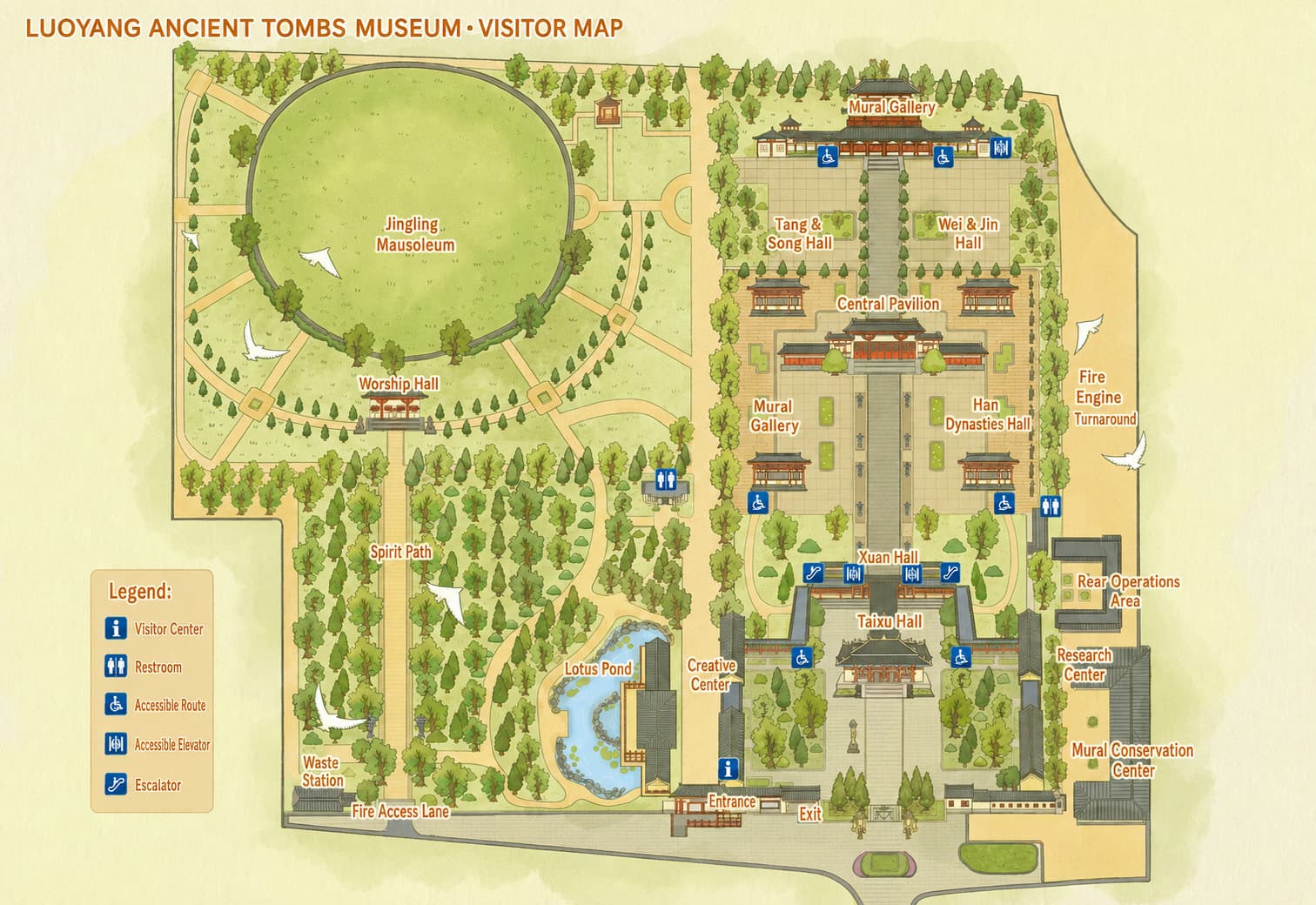
Use the museum’s official visitor guide and on-site plan for current access; this overview does not certify the availability of each marked room, lift or accessible path.
The official guide lists free same-day storage at the entrance or visitor service desk. Store large bags before starting. Where photography is allowed, flash and tripods are prohibited; individual exhibitions can prohibit photography altogether. Check the sign before taking out the camera.
Interpretation and access boundaries
Official talks can materially improve the visit, but their language, schedule, capacity and route must be checked on the day. Prepare a self-guided fallback instead of depending on an unverified session.
Use the verified Ancient Tombs Museum map location. AMap places it about 13.1 km / 21 minutes by car from Luoyang Museum; the metro/bus result is about 49 minutes. The venue still controls vehicle drop-off and step-free access, so use the signed public entrance.
Final verdict
Choose Ancient Tombs when spatial context, mural art and burial practice matter more than a broad dynastic showcase. Visit it before Luoyang Museum for the clearest narrative, but split the pair if interpretation and careful looking are the point of the trip.