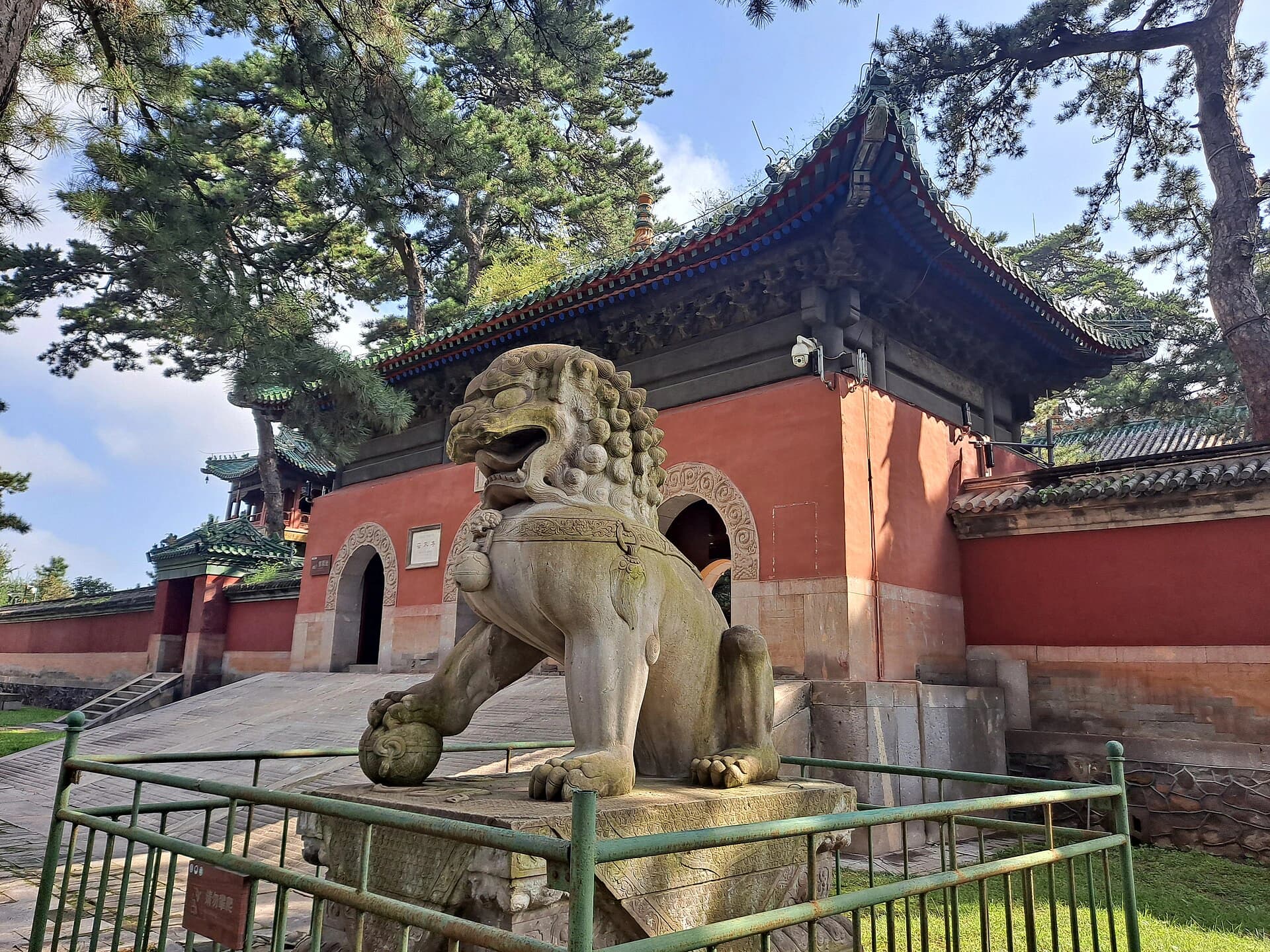
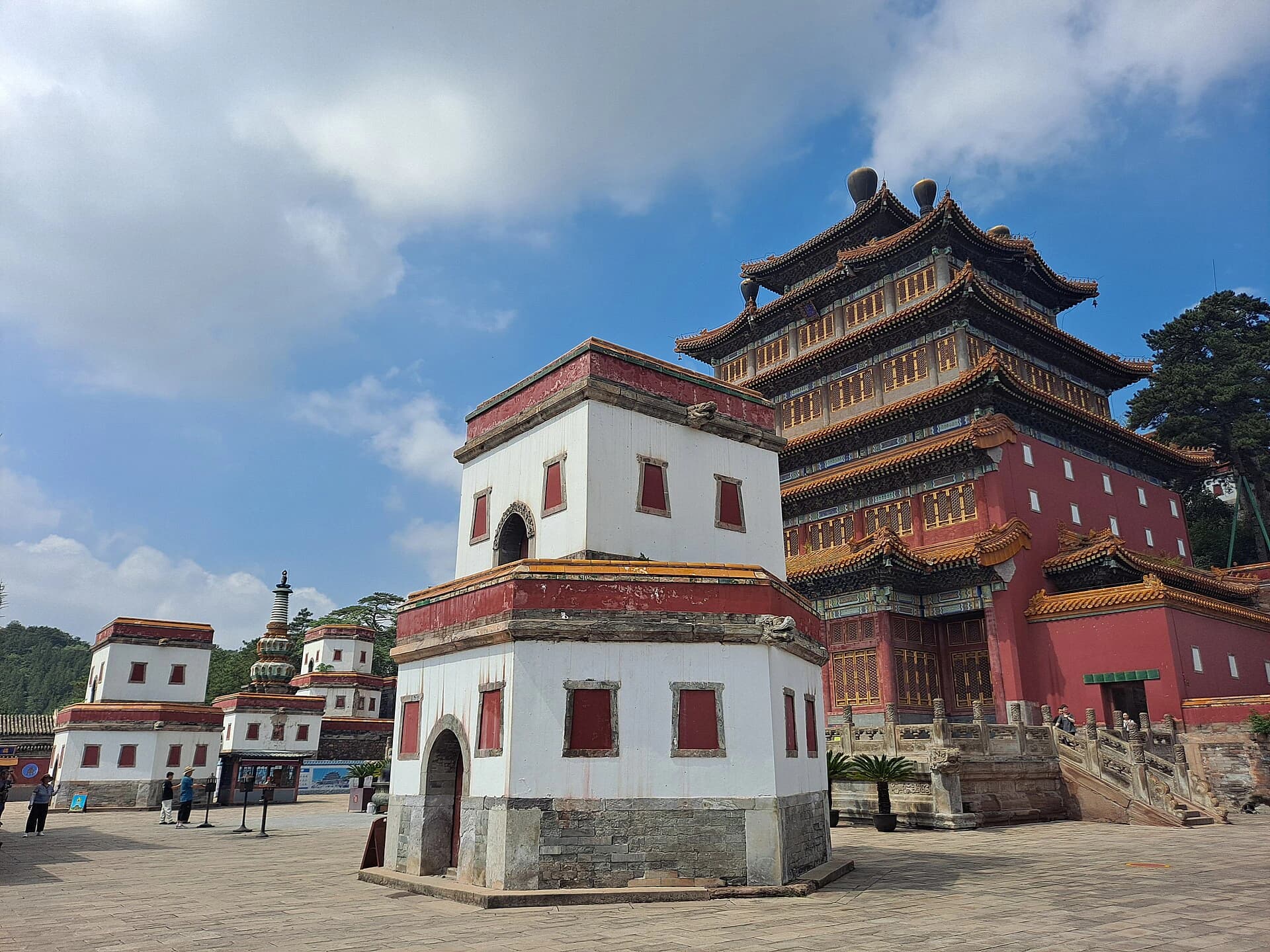
Jinshanling Great Wall
Jinshanling Great Wall (金山岭长城) is one of Chengde's strongest outward trips, but it is not close to the urban UNESCO cluster. AMap estimates Lizheng Gate to the main visitor centre at about 88.3 km / 1 hour 20 minutes by car and returned no public-transit itinerary on the check date.
No transit result does not prove that every scenic or holiday bus has stopped. It does mean you should not arrive in Chengde expecting an automatic daily connection. Confirm the outbound and return vehicle before buying a non-refundable ticket.
Choose one bounded route
Short first visit
Use the main entrance and a verified open section around the central towers, returning by the same legal route or cableway. This is appropriate for families and visitors who want views without committing to a through-hike.
East-to-west traverse
A recent fit visitor reported roughly 9 km and 500 m of ascent over about four hours on the wall, plus access walking and shuttle time. The report also encountered a closed eastward section. Only attempt a traverse when the operator confirms both access points, open wall sectors, shuttle/vehicle arrangements and the final exit.
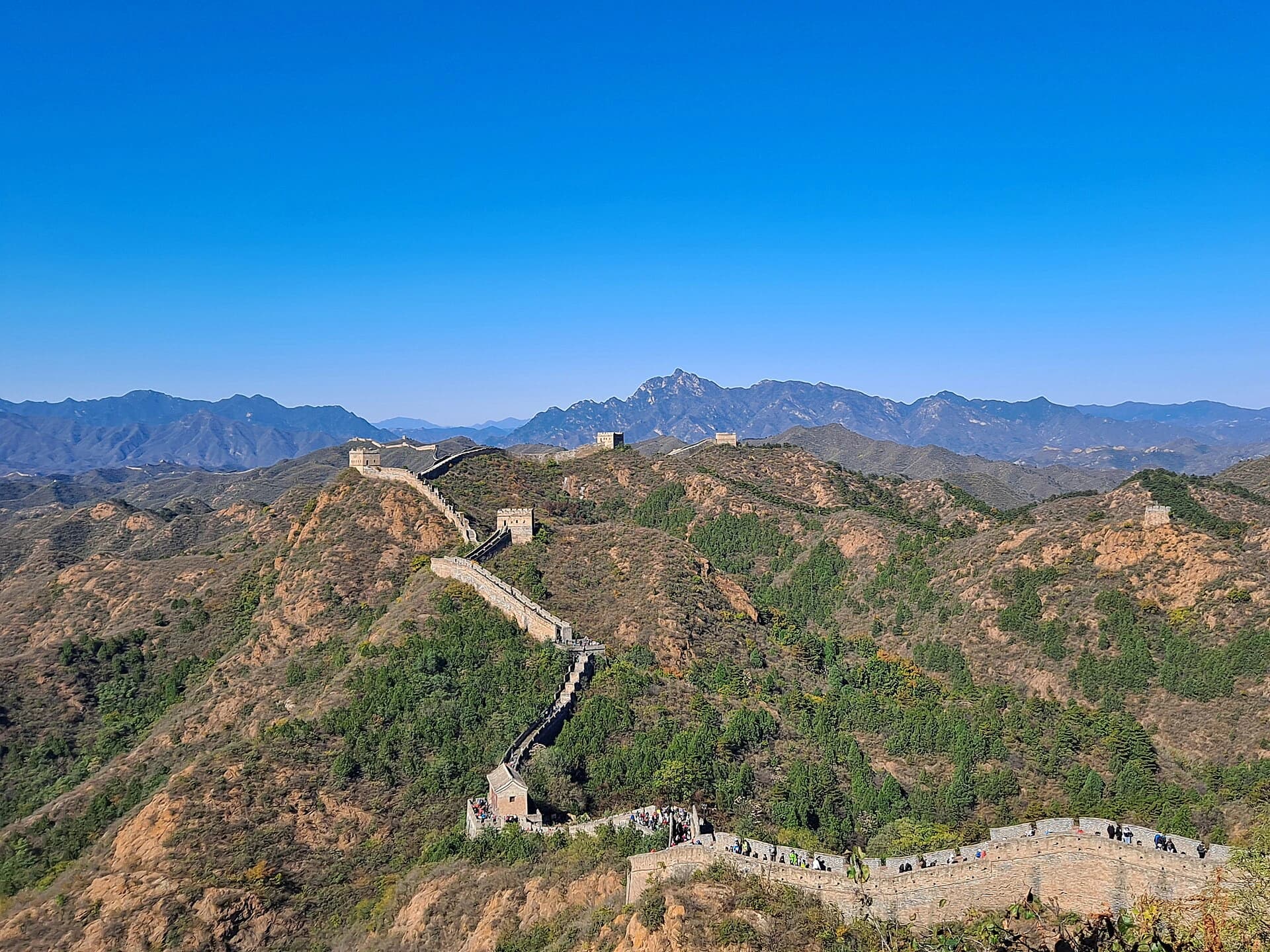
Walk in sections, not toward a distant finish at any cost
Use the first open tower as a pause to look along the ridge, then compare the next section before continuing. Notice how towers sit above bends and how the wall rises and falls between them. Look back periodically: a ridge you have just crossed often gives a different view from the forward-facing photograph.
Save energy for those repeated climbs even if you take the cableway up. One visitor's longer eastern walk took over five hours including photographs and rest, with much steeper steps later on. The four-hour example above is therefore a report, not a completion promise. Ask staff which open descent you can use to shorten the day and set a turnaround time around the confirmed return transport.
A central out-and-back can still give a satisfying mountain-wall experience. Finish after several well-observed sections if the next climb would consume your return margin; do not follow another hiker past a closure or assume a vehicle will appear at a remote exit.
Cableway and visitor centre
Plan arrival at visitor centre Jinshanling visitor centre — open in AMap. The parking/visitor centre, scenic gate and cableway are separate nodes. A cableway can conserve energy for the wall's repeated ridges, but last operation changes by season and weather. Check it at the ticket desk; do not reuse a time from a social post.
Sunrise, sunset and photography
Early or late access may have special gates, tickets or lodging conditions. Never assume a normal daytime ticket permits sunrise or that the wall remains open until the photographed sunset. Tripods and drones can be restricted.
Stay on the maintained, open wall. Do not cross a barrier toward an unrestored “wild” section. Carry water, sun protection and a layer for wind; after rain, stone and brick can be slippery. Turn around before the route becomes a test of pride.
Foreign passports
Confirm whether the operator's booking channel accepts passports and whether staffed entry is available. Also verify the exact name on any direct bus or tour product; “Jinshanling” transport can depart from Beijing rather than Chengde.
Verdict
Jinshanling deserves a dedicated day. Its advantage is not that it is empty or easy, but that a well-chosen open sector offers a powerful mountain-wall experience without relying on an illegal route.
Confirm the final downhill transport before climbing; mobile signal and available cars should never be the only return plan.